


How Air Ambulance Flight Stretcher Assists in Emergencies


Emergencies don’t wait. When minutes matter, an air ambulance flight stretcher can change the outcome. It keeps patients lying flat. Monitors stay on. Care continues in the air. Families get a safe bridge from bedside to bedside. But how does it work when pressure rises? Who approves the route and the escort team? What if the nearest runway is remote? In the next sections, we follow a transfer from the first call to final handover. We show the steps, the choices, and the risks. One small decision often decides everything. Ready to find it?
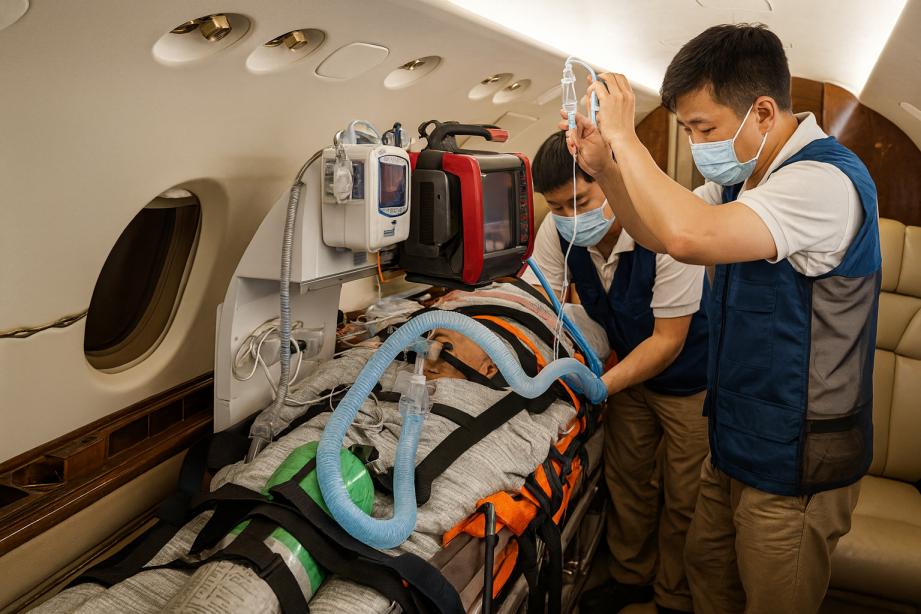
Why an Air Ambulance Flight Stretcher Changes the Outcome
Families do not plan for medical travel. Emergencies push them into decisions that feel urgent and unclear. When a patient cannot sit or is unstable, commercial air travel is no longer safe. An air ambulance flight stretcher restores clinical space, monitoring, and quiet control. It allows our clinicians to stabilize, observe, and treat while the aircraft moves. This is how risk is lowered and minutes are saved.
✅ Pain Points Families Face – and How We Solve Them
• Time pressure with no clear path: we activate fast and assign one coordinator
• Fragmented logistics: we manage bedside-to-bedside medical transport end to end
• Unclear airline approvals: we secure permissions for commercial stretcher cases
• Cost anxiety and paperwork: we provide transparent quotes and documentation support
Many families ask when a commercial stretcher is enough, and when a dedicated air ambulance is required. The answer depends on stability. For patients who are stable but must lie flat, a commercial stretcher transfer – with airline approval and full medical escort – is a cost-effective choice for cross-border transport. For time-sensitive evacuations or higher-acuity cases, our dedicated air ambulance creates a controlled environment with advanced life support and specialized clinicians. We match the mode to the clinical profile, not the other way around.
❓ What “Bedside to Bedside” Really Means
The phrase sounds simple, but it hides dozens of moving parts: hospital handovers, documentation, customs, tarmac access, and oxygen planning. With TKP, bedside-to-bedside is literal. We manage the handoff at origin, monitor through every leg, and complete a formal transfer at the destination. The patient is never without clinical oversight. That is the value of an air ambulance flight stretcher backed by an operations team that never sleeps.
How TKP Medical Assistance Delivers Seamless Transfers
Our network spans domestic and international routes, including remote fields with limited infrastructure. We operate six branch offices across China and coordinate closely with partners abroad. This footprint lets us mobilize quickly while keeping decision-making close to the family and the hospital team.
1) Integrated Modes for Safety, Speed, and Budget
In many cases, the fastest safe plan includes more than one mode. We integrate air, rail, and ground so each leg serves the medical need.
• Commercial stretcher transport with airline approval
• Dedicated air ambulance with full onboard medical escort
• High-speed rail and ground ambulance links for efficient last-mile care
This multimodal approach gives us flexibility. We reduce transfers, avoid long layovers, and keep the clinical setup consistent. It protects the patient and respects the budget.
2) Route Planning That Cuts Minutes, Not Corners
Our route design favors reach and reliability. We use strategic airports, including those with minimal infrastructure, to shorten time-to-care and improve access to underserved areas. We also coordinate with hospitals and embassies to keep the path clear.
• Dynamic flight scheduling tailored to condition and urgency
• Global coverage spanning domestic and international locations
• Access to remote airports with minimal infrastructure requirements
• Optimized routing to reduce flight time and enhance safety
• Close coordination with medical institutions and embassies for smooth clearances
Behind the scenes, our operations team tracks every flight in real time. If conditions change, we adjust. This is how we maintain continuity without adding risk.
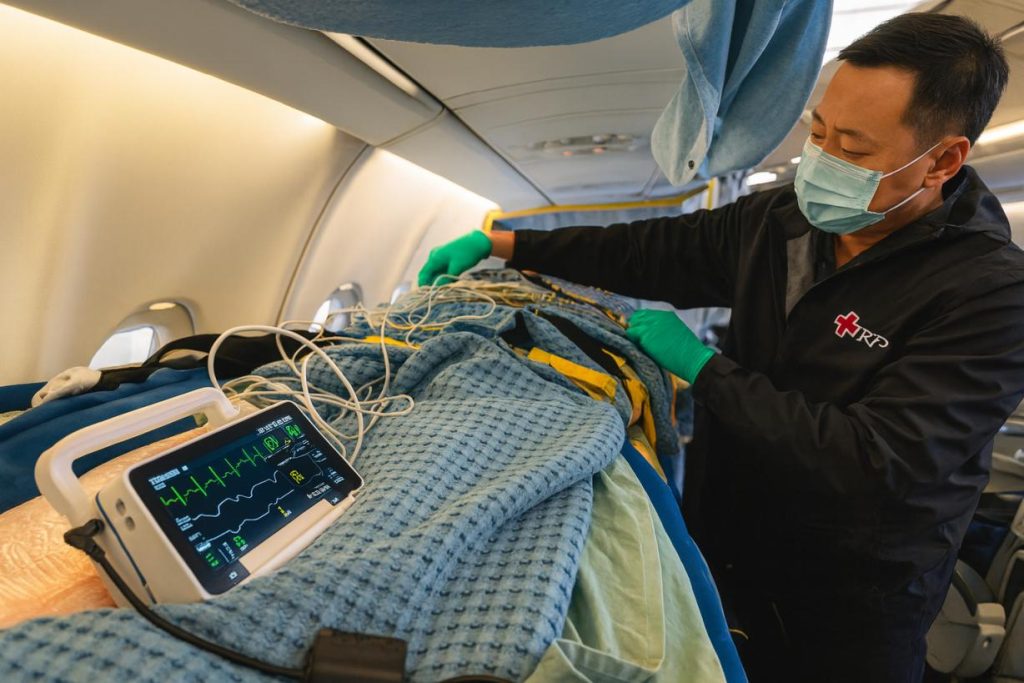
3) A 9-Step Activation Flow That Brings Order to Chaos
From the first call to the final handover, our process is structured and transparent:
• Step 1: Receive Inquiry – 24/7 intake with medical and insurance details
• Step 2: Clinical Review – nurse or physician assessment; escort and equipment plan
• Step 3: Route & Mode Plan – air, ground, and rail options matched to acuity
• Step 4: Quotation & Consent – clear estimate and required preauthorizations
• Step 5: Activate Resources – flight nurses, equipment, and life-support systems
• Step 6: On-site Pickup – bedside handover and safety checks before departure
• Step 7: In-transit Care – continuous monitoring and treatment adjustments
• Step 8: Destination Handover – formal transfer with complete medical report
• Step 9: Follow-up & Claims – outcome follow-ups and billing/claim submissions
This flow reduces guesswork for families and gives hospitals a clear framework for collaboration. It also keeps every party aligned on timelines, equipment, and responsibilities.
Getting Ready for Cross-Border Medical Evacuation
Good preparation accelerates approvals and reduces bedside waiting. Before we dispatch an air ambulance flight stretcher or a commercial stretcher case, gathering the right documents helps us move at pace.
Start with clinical clarity. Provide recent records, discharge summaries, current medications, and the attending physician’s contact. If you can, share English translations to help the receiving team review quickly. Next, confirm travel documents: passports for the patient and companions, visas when required, and any supporting papers for minors. For insurance, send the policy, contact details, and the responsible payer if coverage is limited. Some cases need upfront guarantees and consent for us to coordinate directly with insurers.
Designate one reachable family representative who can make decisions. Tell us if you have a preferred hospital or country; if you are unsure, we recommend based on medical need and visa accessibility. Share special requirements early – medical oxygen, language support, or mobility assistance – so everything is ready at departure.
Many routes involve cross-border medical evacuation China visas or humanitarian permits. We help with invitation letters and embassy communication. Processing can take 24-72 hours, so beginning early prevents delays. Our team keeps you updated as each clearance arrives.
✅ Quick Checklist
• Medical records and medication list
• Passports/visas (patient and companions)
• Insurance policy and payer confirmation
• Primary and secondary emergency contacts
• Special needs (oxygen, language, mobility)
Call to Action
If your family or organization needs an air ambulance flight stretcher or a commercial stretcher transfer, contact TKP Medical Assistance now. Our Shenzhen-based coordination center is on duty 24/7 to plan, approve, and activate the fastest safe route. From the first call to the final handover, we deliver bedside-to-bedside medical transport with continuous, high-quality care.
Submit Your Request
Recent Posts

Tags
- Air Ambulance
- Bedside To Bedside
- Cross Border Aid
- Emergency Evacuation
- Global Medical Rescue
- How can I ensure the patient's stability while in the air?
- How do I request an air medical transport?
- How is it different from an air ambulance
- how to activate emergency aircraft service
- how to request an air ambulance
- Is air medical transport safe
- Is international transport possible
- Medical Rescue
- Medical Transport
- Patient Repatriation
- Remote Rescue
- Seamless Coordination
- Telemedicine Support
- Tourists And Expats Medical Escort
- What are the benefits of a cross-border medical transfer
- What are the different types of transfers
- What are typical use cases
- What documents do I need to prepare for a transfer?
- What does high-speed rail patient transfer stands for
- What is air ambulance
- What is air medical transport?
- What is cross-border medical transfer
- What is emergency aircraft
- what is high-speed rail patient transfer
- What is medical charter flight
- what is neonatal ICU transfer
- What is patient air transfer
- What medical equipment is available on board the aircraft
- What situations shouldn't use air medical transport?
- What types of air ambulance are there?
- What types of air ambulance exist
- What's the difference between international and domestic transfers?
- what’s the difference between air medical transport and regular ambulance?
- When is emergency air transport necessary
- Which patients require air medical transport?
- who is included in the medical team
- who needs an air ambulance