


What Are the Air Ambulance Safety Standards?


Air Ambulance Safety Standards decide how patients survive a flight. These rules inform how we ready the aircraft, staff the mission, coordinate airport and ground segments, and protect patients from first bedside contact to the final handover. They also tackle real pain points: uneven national regulations, gaps between aviation and hospital protocols, variable airport infrastructure, and the challenge of keeping a fragile patient stable for long hours at cruising altitude. Our purpose is direct – convert complexity into a predictable pathway that families and clinicians can trust.
Why These Standards Matter In Real Missions
Safety standards are practical tools, not paperwork. They keep a ventilated patient stable at 30,000 feet and guide what to do during a long layover when medications, power, and oxygen must be managed with precision. The industry struggles with fragmented rules across agencies, inconsistent airline approvals for commercial stretchers, and language or time-zone barriers that slow urgent decisions. Air Ambulance Safety Standards bring order with clear criteria for aircraft readiness, crew qualifications, infection control, oxygen reserves, and documentation that follows the patient across borders.
Two concepts often shape our planning: international medevac safety protocols and cross-border patient transfer standards. They help determine when a full air ambulance is safer than a commercial stretcher, how altitude affects neurosurgical or pulmonary cases, and how to hand off cleanly to ground teams on arrival. For families and hospitals, this means transparency – evidence-based risk scoring, documented approvals, and an end-to-end care plan everyone can follow.
- Case: West Africa To Beijing, Bed-To-Bed
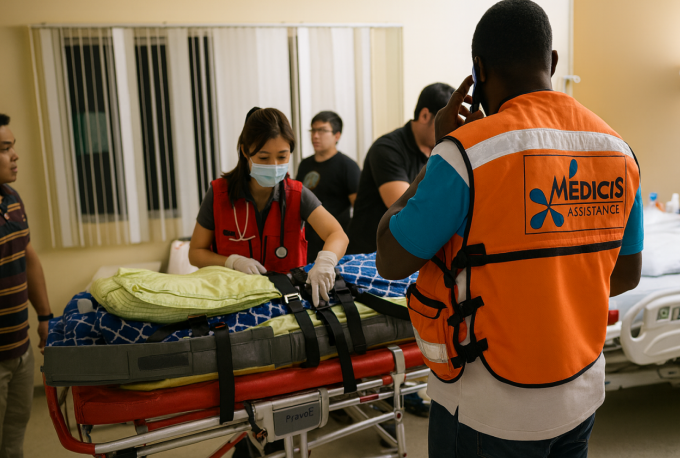
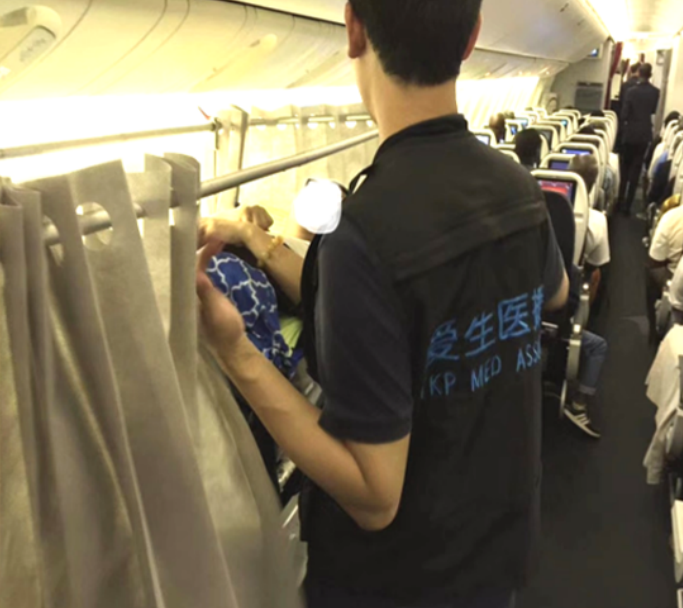
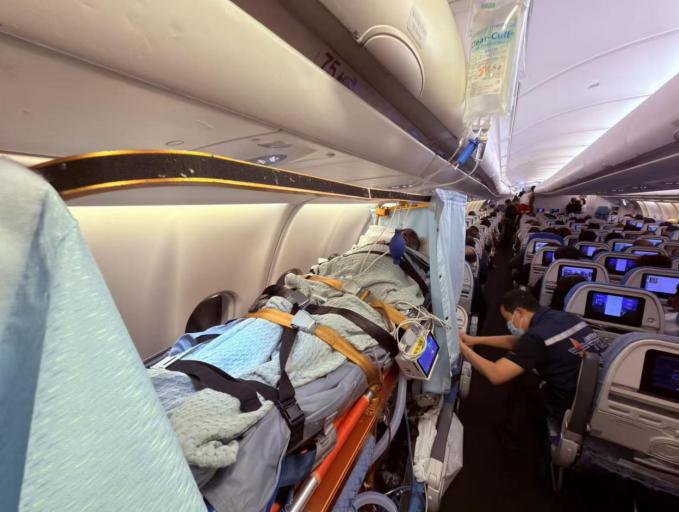
On September 14, 2017, we coordinated a multi-leg stretcher transfer for a post-cranial surgery patient in a coma, traveling Abidjan → Paris → Beijing. The mission used an airline-approved stretcher with medical escort and several ground segments. A 10-hour ICU-style setup at CDG allowed real-time stabilization, while in flight the patient rested on a secured stretcher with continuous monitoring. On landing, a ground ambulance completed the final leg. Behind the scenes, Air Ambulance Safety Standards governed pre-flight bedside assessment, oxygen and medication buffers, bilingual communication, and escalation pathways – linking Africa, Europe, and Asia without breaking clinical continuity.
How TKP Medical Assistance Applies And Elevates The Standards
At TKP Medical Assistance, we align with international best practices, then add redundancy where real-world missions need it most. We provide commercial stretcher transfers, dedicated air ambulance flights, high-speed rail segments, and ground ambulances. Each mode is matched to the patient’s clinical profile, with a strong focus on post-stabilization critical care transfers and time-sensitive evacuations.
1) Equipment, Crew, And In-Flight Monitoring
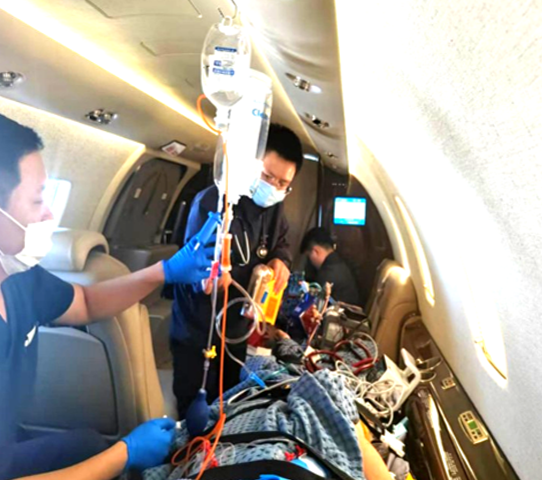
Our air ambulance missions include ICU-grade monitors, ventilators, and life-support equipment. Intensive-care physicians and flight-trained nurses manage sedation, airway protection, and ventilator settings tuned for altitude. When a commercial stretcher is appropriate, we send physician or nurse escorts, arrange airline approvals, and prepare contingencies for diversions. Before wheels-up, a final bedside assessment verifies the patient meets Air Ambulance Safety Standards for the chosen mode.
- Commercial Stretcher: Airline-approved stretcher bay, continuous medical escort, cost-effective for stable patients.
- Air Ambulance: Dedicated aircraft with full ICU capability and specialist team for unstable or time-critical cases.
- Integrated Rail – Ambulance: High-speed rail combined with coordinated pick-up and drop-off, ideal for neonatal or post-surgical monitoring when a non-flight segment is safer.
2) Route Planning And Regulatory Compliance
Global transfers succeed on tight routing and clean paperwork. Our operations center monitors flights in real time, coordinates with hospitals and embassies, and selects airports that support medical handling – even those with limited infrastructure when time matters. Standards guide oxygen resupply, cold-chain medications, infection control, and cross-border documentation from departure to arrival.
- Dynamic flight scheduling matched to patient condition and urgency
- Worldwide coverage across domestic and international locations
- Optimized routes to reduce flight time and clinical risk
- Close coordination with medical institutions for seamless handovers
Call-to-Action: Planning a complex transfer? Contact TKP Medical Assistance for a rapid, standards-driven assessment and a route plan that fits the patient‘s condition and timeline.
Choosing The Right Mode Under Air Ambulance Safety Standards
Selecting the correct mode is where many cases succeed – or fail. Standards help you balance speed, range, onboard care, comfort, and cost against clinical risk.
- Ground Ambulance (Local): Best for short distances or hospital-to-hospital moves. Speed depends on road conditions, and onboard care is basic. Not ideal for fragile neurosurgical or ventilated patients over long ranges.
- Commercial Flight With Escort: Works for non-critical patients who qualify for an airline-approved stretcher or seated travel with medical escort. Reach and cost are moderate, but limited onboard equipment demands strict screening against Air Ambulance Safety Standards.
- Air Ambulance (Chartered Medical Jet): Fast activation – often within 6 – 24 hours – and global reach, including remote or restricted areas. Highest onboard support and patient comfort; the right choice for unstable or time-critical cases.
When families and hospitals face uncertainty – language barriers, different discharge criteria, or unclear airline rules – robust Air Ambulance Safety Standards provide a shared checklist. TKP Medical Assistance turns that checklist into action: pre-flight stabilization, mode selection, bed-to-bed coordination, and continuous communication across time zones. The outcome is a safer journey and a more predictable arrival.
Ready To Begin? Speak with TKP Medical Assistance today for a clear, standards-based transport plan. We will review the patient’s condition, compare modes, and propose a reliable timeline – so the right care arrives exactly when and where it is needed.
Submit Your Request
Recent Posts

Tags
- Air Ambulance
- Bedside To Bedside
- Cross Border Aid
- Emergency Evacuation
- Global Medical Rescue
- How can I ensure the patient's stability while in the air?
- How do I request an air medical transport?
- How is it different from an air ambulance
- how to activate emergency aircraft service
- how to request an air ambulance
- Is air medical transport safe
- Is international transport possible
- Medical Rescue
- Medical Transport
- Patient Repatriation
- Remote Rescue
- Seamless Coordination
- Telemedicine Support
- Tourists And Expats Medical Escort
- What are the benefits of a cross-border medical transfer
- What are the different types of transfers
- What are typical use cases
- What documents do I need to prepare for a transfer?
- What does high-speed rail patient transfer stands for
- What is air ambulance
- What is air medical transport?
- What is cross-border medical transfer
- What is emergency aircraft
- what is high-speed rail patient transfer
- What is medical charter flight
- what is neonatal ICU transfer
- What is patient air transfer
- What medical equipment is available on board the aircraft
- What situations shouldn't use air medical transport?
- What types of air ambulance are there?
- What types of air ambulance exist
- What's the difference between international and domestic transfers?
- what’s the difference between air medical transport and regular ambulance?
- When is emergency air transport necessary
- Which patients require air medical transport?
- who is included in the medical team
- who needs an air ambulance