


What an Air Ambulance Stretcher Can Do? Patient Stability Guide 2026


Air Ambulance Stretcher systems are the quiet backbone of safe medical flights. This guide will help you master the following: what an Air Ambulance Stretcher is, why stability matters in flight, how design choices protect patients, how workflow reduces risk, answers to common questions, and how TKP Medical Assistance partners with you end to end.
What Is an Air Ambulance Stretcher?
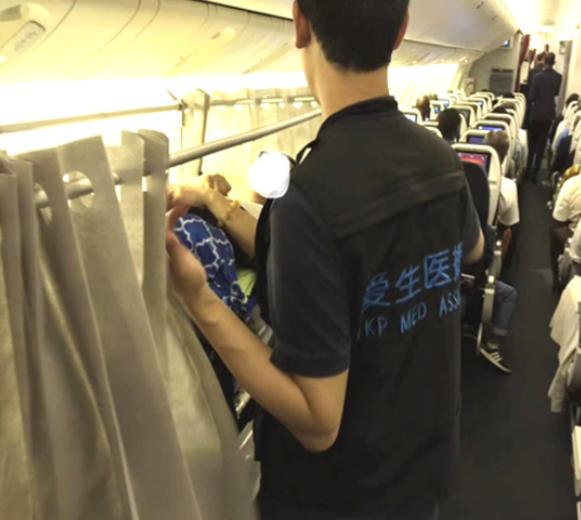
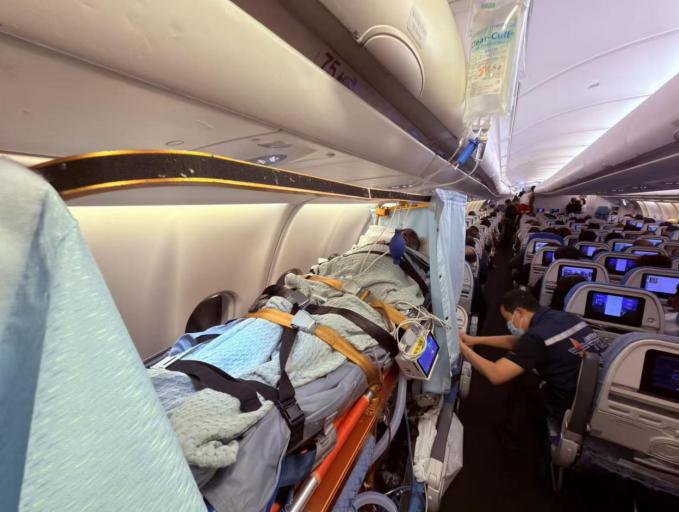
An Air Ambulance Stretcher is a crashworthy, aircraft-integrated patient platform. It is not a hospital gurney. It locks into a certified aircraft interface, secures the patient with medical-grade restraints, and carries essential life-support devices. Oxygen, suction, power, and monitoring must be available at altitude. The stretcher must also allow safe loading in tight cabins and rapid transfer at the hospital handover.
At TKP Medical Assistance, we operate Air Ambulance Stretcher systems that are engineered for aircraft use. Integration is achieved through Supplemental Type Certificates under FAA/EASA oversight. The mounting, rails, and restraints are tested to aviation loads, not just road ambulance standards. That is the difference between “fits in an airplane” and “designed for flight.”
Why Patient Stability Matters at 30,000 Feet
In flight, the patient faces unique stressors. Turbulence, vibration, cabin pressure, and limited space change the clinical picture. Stability is not only comfort; it is safety.
Pressurized cabins typically simulate up to about 8,000 feet of altitude. At that cabin altitude, gases can expand by roughly 25–30% compared with sea level. This affects air in the stomach, bowel, and any sealed devices. It also reduces oxygen reserve. A secure Air Ambulance Stretcher with proper positioning and oxygen delivery mitigates that risk.
Acceleration during takeoff, turns, and landing can shift weight and lines. Poor restraint causes shear forces and device displacement. A crash-tested stretcher with 5-point harnesses and lateral supports reduces movement. Vibration can aggravate pain and increase oxygen demand. Damping layers and vacuum mattresses improve stability. In trauma and spinal cases, micro-movements matter. A stable platform protects against secondary injury.
Inside the Air Ambulance Stretcher: Design That Protects
Every component of a professional Air Ambulance Stretcher has a clinical purpose. The goal is predictable stability, even in unpredictable air.
•Crashworthiness and restraints: Certified systems are tested to withstand 16 g forward and 9 g lateral loads in line with aviation interior requirements. Multi-point harnesses, head immobilizers, and side bolsters prevent translation and rotation. Positive-lock deck mounts stop drift during turbulence.
•Clinical integration: Oxygen ports, regulated suction, and 12/28 V DC medical power are integrated on board. IV poles, monitor arms, and ventilator brackets keep devices secured but within reach. Adjustable backrest allows head elevation for respiratory distress. Antimicrobial, easy-clean surfaces support infection control between missions.
•Patient interface: Pressure-redistributing mattresses reduce ulcer risk on long legs. Vacuum mattresses cradle the body and immobilize fractures. For pediatric cases, size-adaptable restraints and incubator mounts support neonatal transport.
TKP Medical Assistance selects and maintains stretcher systems with these features because they translate into fewer line dislodgements, fewer pressure injuries, and smoother handovers. We audit the restraint points, the power ports, and the oxygen plumbing as part of preflight checks.
From Tarmac to ICU: Workflow That Reduces Risk
Stability is a process, not only a product. The Air Ambulance Stretcher is the center of a workflow that must be fast, repeatable, and safe.
We start at bedside. The patient is prepared on a vacuum mattress and secured with color-coded straps. Lines and tubes are routed along marked channels to avoid pinch points. The stretcher height is set to match the referring facility bed to reduce lift load.
On the apron, the stretcher docks to the aircraft interface with a two-step lock and a visual green indicator. This prevents partial latching. Device cables connect to aircraft power and oxygen, so battery and cylinder draw is preserved for contingencies. In flight, the crew uses standardized tie-down points for additional equipment. This keeps the center of gravity predictable and reduces shift during turbulence.
At destination, we reverse the process. The stretcher undocks with a guarded release. Our team performs a line pat-down before moving, checking that nothing snags. Each step removes variance. This protects the “golden hour” in trauma and maintains continuity for cardiac, neuro, and critical care cases.
Questions We Hear Most About the Air Ambulance Stretcher
•Can bariatric patients fly safely? Yes, but only on stretcher systems and aircraft configured for higher weight and width envelopes. We provide pre-mission fit checks and weight-and-balance analysis. Additional loading aids and wider restraint kits are used to maintain stability.
•How is vibration managed? Damping layers, vacuum mattresses, and suspension mounts reduce transmission of aircraft vibration. This lowers discomfort and helps keep invasive lines secure.
•Is it certified for our aircraft type? Certification depends on the aircraft and installation. TKP Medical Assistance operates stretcher systems with approved aircraft interfaces under FAA/EASA Supplemental Type Certificates. We verify tail-specific documentation before dispatch.
•What about infection control? Non-porous surfaces, removable mattress covers, and defined cleaning protocols enable fast turnaround with high-level disinfection. Accessory mounts are designed to minimize crevices.
•How does altitude affect care? At typical cabin altitudes, lower ambient pressure reduces oxygen partial pressure and expands gas. Our protocols adjust FiO2 and positioning, and we avoid transporting patients with untreated air-trapping conditions unless decompression precautions are in place.
How TKP Medical Assistance Delivers Stability You Can Measure
TKP Medical Assistance combines certified hardware, trained crews, and audited processes. We measure stability as part of patient care.
•Before we fly: We follow checklists to make sure restraints are secure, oxygen is stocked, power is on, and docking is correct.
•How we train: Clinicians and mechanics practice together on docking stretchers, mounting devices, and getting out fast in emergencies, with drills for turbulence and equipment problems.
•How we improve: After each mission, we review any line shifts, skin issues, or latch problems and use what we learn to update maintenance and training.
When you combine a crashworthy Air Ambulance Stretcher, a rehearsed workflow, and data-driven quality, you reduce avoidable harm and improve patient experience.
Call to Action
If you are planning international repatriation, high-acuity interfacility transfers, or neonatal flights, partner with a team that treats stability as a science. TKP Medical Assistance can perform a readiness audit of your route and receiving facilities, demonstrate our Air Ambulance Stretcher integration, and provide a clear clinical plan.
•Request a stretcher fit-check for your aircraft and patient profile.
•Book a live demonstration with our medical and operations teams.
•Contact our 24/7 desk to schedule a mission or discuss a case.
Your patient’s safest hour in the air begins with the right Air Ambulance Stretcher – and the right partner beside it. Reach out to TKP Medical Assistance to put a stable, certified, and proven system to work for you.
Submit Your Request
Recent Posts

Tags
- Air Ambulance
- Bedside To Bedside
- Cross Border Aid
- Emergency Evacuation
- Global Medical Rescue
- How can I ensure the patient's stability while in the air?
- How do I request an air medical transport?
- How is it different from an air ambulance
- how to activate emergency aircraft service
- how to request an air ambulance
- Is air medical transport safe
- Is international transport possible
- Medical Rescue
- Medical Transport
- Patient Repatriation
- Remote Rescue
- Seamless Coordination
- Telemedicine Support
- Tourists And Expats Medical Escort
- What are the benefits of a cross-border medical transfer
- What are the different types of transfers
- What are typical use cases
- What documents do I need to prepare for a transfer?
- What does high-speed rail patient transfer stands for
- What is air ambulance
- What is air medical transport?
- What is cross-border medical transfer
- What is emergency aircraft
- what is high-speed rail patient transfer
- What is medical charter flight
- what is neonatal ICU transfer
- What is patient air transfer
- What medical equipment is available on board the aircraft
- What situations shouldn't use air medical transport?
- What types of air ambulance are there?
- What types of air ambulance exist
- What's the difference between international and domestic transfers?
- what’s the difference between air medical transport and regular ambulance?
- When is emergency air transport necessary
- Which patients require air medical transport?
- who is included in the medical team
- who needs an air ambulance