


Air Medical Emergency Transfer Services: A Family’s Essential Guide


Air Medical Emergency Transfer is not a buzzword – it’s the work we do every day when a loved one needs to cross borders for care, fast and safely. At TKP Medical Assistance, our coordinators, clinicians, and logistics specialists move as one team. We arrange commercial stretcher approvals, dispatch dedicated air ambulances, connect high-speed rail segments, and synchronize ground ambulances so that clinical care never pauses between hospitals. While we manage permissions, routing, and medical continuity, you can stay focused on the patient.
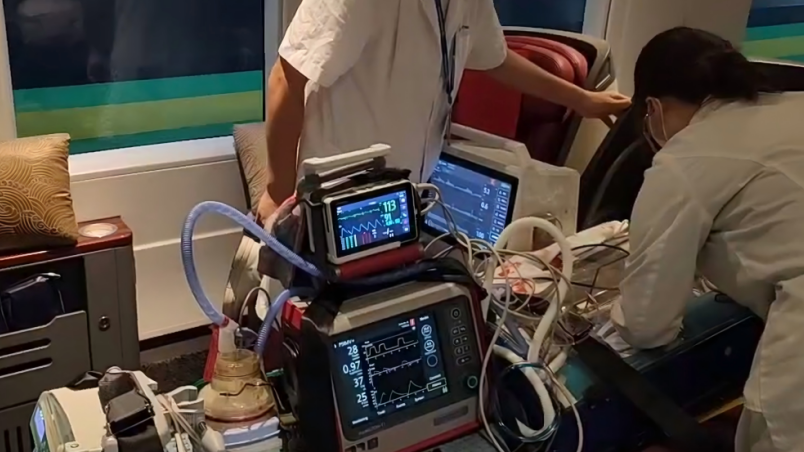
How We Move Patients Across Borders – Safely and Without Delay
Speed matters, but precision matters more. Every case begins with a clinical review and a route feasibility check. We align the patient’s condition, the available transport assets, and the documentation timeline so the journey is both rapid and safe.
In practice, that means selecting the right platform – not the fanciest one, the right one:
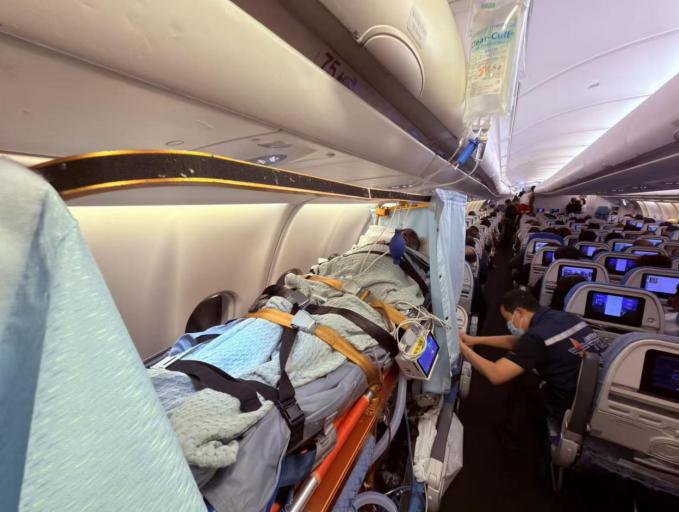
• Commercial stretcher with airline approval for stable patients who still need a flat position and continuous monitoring.
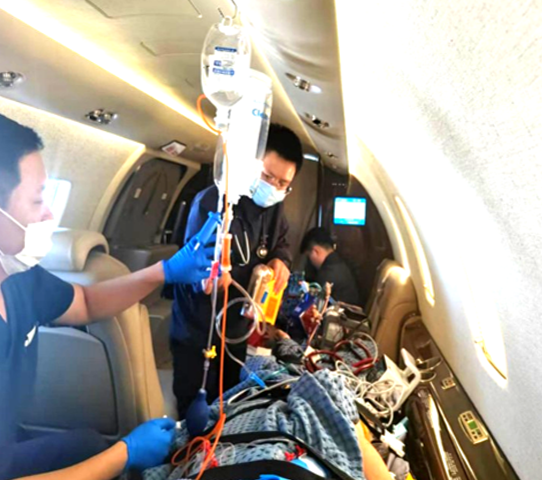
• Air ambulance with a full medical escort when the scenario calls for an airborne ICU staffed by critical-care professionals.
• Integrated high-speed rail + ground ambulance to bridge gaps where commercial flights or runways are limited.
Route design is where experience shows. Our network prioritizes airfields that shorten legs and reduce handoffs, including airports with minimal infrastructure when that gets you closer to the bedside. Dynamic scheduling lets us pivot around weather, slot constraints, or bed availability at the receiving facility. We keep line-of-sight on the mission from first pickup to hospital handover, adjusting in real time if a clinical or operational variable changes.
Continuity of care is non-negotiable. Bedside notes, medication lists, and treatment plans travel with the team; vitals are monitored continuously; oxygen therapy and essential interventions are onboard. We coordinate directly with the sending and receiving clinicians so the handover is crisp and the next medical action starts the moment the wheels stop. Families receive timely, plain-language updates rather than jargon.
What Families Can Prepare to Accelerate Approval
Preparation doesn’t just reduce stress – it compresses timelines. Once you contact TKP Medical Assistance, having the following ready helps us launch your cross-border medical evacuation sooner:
• Recent medical records and contacts. Discharge summaries, current diagnoses, medication lists, and a phone number or email for the attending physician. English copies or translations, when possible, speed clinical review.
• Passports and travel documents. Patient and accompanying family IDs; visas where required. For minors, include a birth certificate or authorization letter. Digital scans help when minutes matter.
• Insurance details and financial authorization. A copy of the policy, insurer contact information, and the designated payer if insurance is out of scope. Some missions require a financial guarantee; completing this early avoids delays.
• Decision-maker on call. Appoint an authorized representative who can sign forms 24/7, plus a secondary contact. Share any preferred receiving hospital or target country; we’ll recommend options based on clinical fit and visa accessibility.
• Special needs and equipment. Oxygen flow rates, mobility support, interpreter requirements, or dietary restrictions – flag them early so we configure the aircraft and escorts accordingly.
• Visa support for medical transfers. Many routes require a medical visa or humanitarian permit. We issue invitation letters and liaise with embassies; typical processing windows are 24-72 hours, so starting immediately is wise. Family escorts should confirm their own visa status in parallel.
Once these pieces are in hand, we finalize mode, route, and schedule, then share a simple plan with milestones and contacts. You will always know the next step and who is responsible for it.
Choosing the Right Transfer Option: Practical Trade-Offs
Not every case needs an air ambulance, and not every case should wait for a commercial seat. The safest plan weighs clinical urgency, distance, airport access, and budget – always in that order.
Ground ambulance (local or regional). Best for short hops between facilities when the patient is stable and the roads are dependable. It’s cost-effective but slower over long distances, and ride quality can be hard on fragile patients.
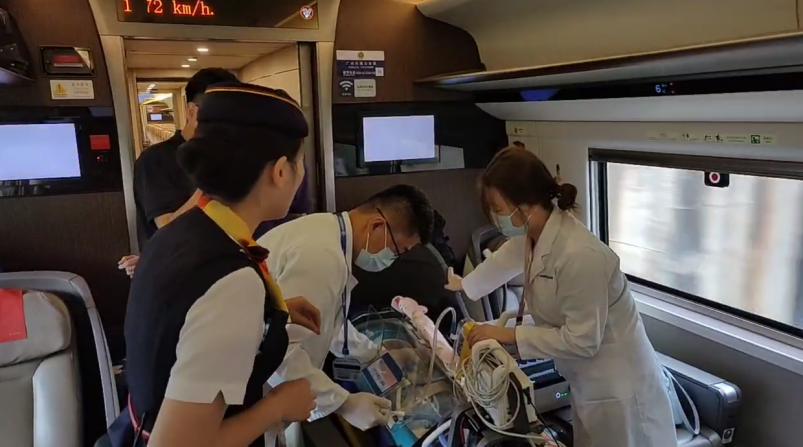
Commercial flight with medical escort. A strong option for non-critical travelers who need monitoring, medications, or a commercial stretcher approval. You benefit from airline reach and schedules, but medical equipment is limited by carrier policies, and connections can add time and handoffs.
International air ambulance services. This is the gold standard for urgent or unstable cases. Dedicated aircraft function as ICUs with ventilators, infusion pumps, monitors, and a seasoned medical crew. Launch times are fast – often within 6-24 hours – and the aircraft can access airports beyond the standard commercial network, including remote locations.
Here’s how families often think about the trade-offs:
✅ Speed vs. cost. Air ambulances move the fastest and carry the most capability; that performance commands a higher price.
✅ Range and access. Commercial seats depend on schedules and routes; air ambulances go where the medical need dictates.
✅ Comfort and safety. Fewer transfers reduce risk. Critical patients benefit from a single, configured environment from bed to bed.
✅ Clinical continuity. The right choice keeps monitoring and treatment continuous, not stop-start.
At TKP Medical Assistance, we never force a one-size-fits-all path. We propose options with clear clinical reasoning, transparent budgets, and realistic timelines. If a commercial route is safe and sensible, we’ll say so. If the situation calls for an ICU-equipped aircraft, we’ll explain why and move decisively.
Why TKP Medical Assistance?
Families don’t need another vendor in a crisis; they need a steady partner. Our coordinators speak the language of hospitals and the language of aviation – two worlds that rarely meet without friction. We work directly with airlines, airport authorities, embassies, and hospital administrators to clear obstacles before you feel them. Our teams operate 24/7, monitor missions minute by minute, and escalate instantly if conditions change. That’s how Air Medical Emergency Transfer becomes a controlled process rather than a scramble.
Call to Action – Talk to a Coordinator Now
If you’re facing an urgent transfer today, or simply want to be prepared, contact TKP Medical Assistance. We’ll review the case, outline the safest options, and help you gather the documents that unlock approvals. From the first phone call to the final hospital handover, our job is simple: keep the patient moving and keep the care continuous.
About TKP Medical Assistance
We specialize in Air Medical Emergency Transfer, post-stabilization critical care moves, and time-sensitive evacuations worldwide. Whether the plan calls for a commercial stretcher with escort or a dedicated air ambulance, we design routes that respect clinical reality and family priorities. When minutes matter, we deliver bedside-to-bedside precision.
Submit Your Request
Recent Posts

Tags
- Air Ambulance
- Bedside To Bedside
- Cross Border Aid
- Emergency Evacuation
- Global Medical Rescue
- How can I ensure the patient's stability while in the air?
- How do I request an air medical transport?
- How is it different from an air ambulance
- how to activate emergency aircraft service
- how to request an air ambulance
- Is air medical transport safe
- Is international transport possible
- Medical Rescue
- Medical Transport
- Patient Repatriation
- Remote Rescue
- Seamless Coordination
- Telemedicine Support
- Tourists And Expats Medical Escort
- What are the benefits of a cross-border medical transfer
- What are the different types of transfers
- What are typical use cases
- What documents do I need to prepare for a transfer?
- What does high-speed rail patient transfer stands for
- What is air ambulance
- What is air medical transport?
- What is cross-border medical transfer
- What is emergency aircraft
- what is high-speed rail patient transfer
- What is medical charter flight
- what is neonatal ICU transfer
- What is patient air transfer
- What medical equipment is available on board the aircraft
- What situations shouldn't use air medical transport?
- What types of air ambulance are there?
- What types of air ambulance exist
- What's the difference between international and domestic transfers?
- what’s the difference between air medical transport and regular ambulance?
- When is emergency air transport necessary
- Which patients require air medical transport?
- who is included in the medical team
- who needs an air ambulance