


Global Air Medical Transport Trends You Need to Know


What’s happening in Air Medical Transport trends in 2025? Patients, hospitals, and insurers now expect safer, faster, and more coordinated journeys across borders. The goal is not only speed. It is consistent, bedside-to-bedside care that protects outcomes and budgets. As TKP Medical Assistance, a trusted provider of cross-border medical evacuation and patient transfer services, we see three trends reshaping decisions worldwide.

1) Smarter Multi-Modal Air Medical Transport Networks
The first shift is integration. Hospitals want fewer handoffs. Families want clear timelines and visible medical oversight. That is why multi-modal planning is becoming the default approach. Instead of forcing every case into a single mode, we build a route around the patient’s condition, budget, and destination.
At TKP Medical Assistance, we coordinate emergency and non-emergency transfers using commercial stretcher, dedicated air ambulance, high-speed rail, and ground ambulance. This mix gives us flexibility without sacrificing clinical standards. We match escort teams and equipment to the mode, so the level of care stays consistent from ward to ward.
Integrated choices for different clinical needs
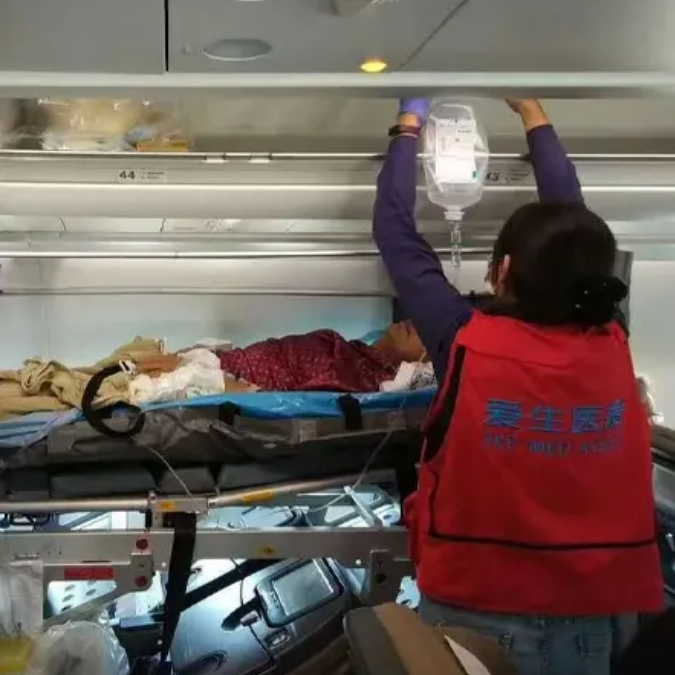
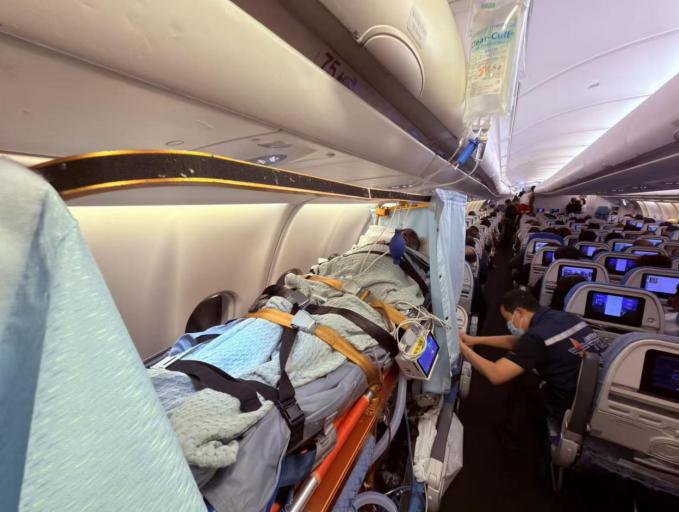
• Commercial stretcher with airline approval. A cost-effective option for stable, bedridden patients on domestic or international flights. A dedicated stretcher compartment is arranged, and a medical escort stays with the patient throughout.
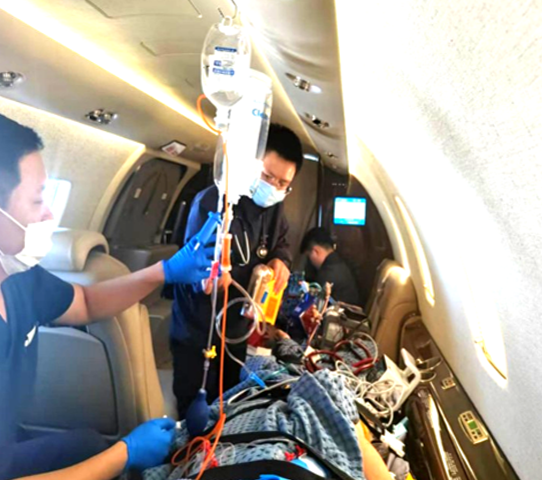
• Air ambulance with full medical escort. ICU-grade monitoring, ventilators, and life support for critical patients. Missions are managed by intensive care physicians and flight-trained nurses to maintain stability at altitude.
• Rail-based transfers integrated with ambulances. Ideal for intercity or cross-border cases when flight is not suitable. Neonatal and post-surgery patients benefit from continuous monitoring between hospital and station.
- Pain point solved: fragmented journeys. Multi-modal planning reduces delays, avoids unnecessary risks, and aligns cost with clinical need – key for organizations exploring cross-border patient transfer services (long-tail keyword). It also gives families a clear plan that explains why each leg exists and how care will be maintained.
2) Route Planning For Remote Access And Clinical Continuity
The second trend is smarter routing. Static flight paths rarely fit real life. Weather shifts. Infrastructure varies. Paperwork takes time. Patients decompensate. To keep care continuous, routes must be flexible and designed for remote access.
Our route map connects underserved regions to centers of excellence around the world. We use strategically selected airports, including those with limited infrastructure, to shorten time to definitive care. Where aviation constraints exist, we integrate rail segments and ground ambulances to bridge the gaps. The goal is always the same: reduce risk and compress the time between stabilization and arrival.
Real-time operations monitoring allows mid-route adjustments. If a patient’s condition changes, our team can re-sequence segments, swap aircraft types, or extend ground coverage. Close coordination with hospitals and embassies keeps clearances on track and prevents last-minute surprises at borders or transit points.
What it looks like in practice:
- Dynamic scheduling aligned to patient acuity and stability windows
- Global coverage for domestic and international evacuations
- Remote access via airports with minimal infrastructure requirements
- Optimized routes to cut flight time and protect outcomes
- Tight coordination with medical institutions and embassies for smooth transfers
- Pain points solved: access to remote areas, approval bottlenecks, and route uncertainty. Because every leg is mapped to a clinical goal, treating teams understand why we choose a mode, an airport, or a timetable. Families get clarity without technical jargon. Most importantly, the patient receives continuous care from pick-up to handover.
3) From Cost Clarity To Bedside-To-Bedside Quality
The third trend is transparency. Decision-makers want clear clinical criteria and clear pricing logic. Families ask why one mode costs more than another. Providers must explain how medical risk, escort composition, aircraft configuration, and approvals shape the plan.
We start with the clinical picture, then choose the mode and explain the trade-offs in plain language:
- Commercial Stretcher (with airline approval): Best for stable patients. Escorted end-to-end. Often the most cost-efficient cross-border option with strong safety controls.
- Air Ambulance & ICU Transfers: Built for critical patients who need ventilators, life support, and ICU-grade monitoring at altitude. Managed by intensive care doctors and flight-trained nurses.
- High-Speed Rail + Ambulance: Useful when flying is not suitable or when intercity transfer is faster and clinically appropriate. Continuous monitoring covers the non-flight segments.
Cost clarity must pair with quality. That is why TKP Medical Assistance standardizes bedside-to-bedside steps: pre-flight stabilization checks, escort briefings, equipment readiness, and documented handovers. Each checkpoint reduces risk. Each handover is scripted. Families know who is responsible at every stage, and hospitals receive clean, timely reports.
To address the market’s call for international air ambulance cost transparency (long-tail keyword), we show how the clinical profile drives the escort team, equipment, and aircraft requirements. We also present alternatives where appropriate. If the patient can safely travel by commercial stretcher, we will say so – and explain the savings and the safeguards. If the patient needs an air ambulance, we justify the choice with clinical criteria and route constraints.
✅ Why TKP Medical Assistance
- Continuous, high-quality care from first mile to last mile
- Mode flexibility to align cost with medical need
- Real-time operations monitoring with rapid route adjustments
- Embassy and hospital coordination for frictionless clearances
- Pain points solved: unclear pricing, inconsistent care, and anxiety around approvals. Our single, accountable case lead stays with the mission until handover is complete. You get one number to call and a team that anticipates problems before they appear.
Final Words
Have a patient who needs safe, timely, cross-border Air Medical Transport? Get in touch with TKP Medical Assistance for a rapid clinical review, route plan, and mode recommendation – aligned with your timeline, budget, and bedside-to-bedside care goals.
Submit Your Request
Recent Posts

Tags
- Air Ambulance
- Bedside To Bedside
- Cross Border Aid
- Emergency Evacuation
- Global Medical Rescue
- How can I ensure the patient's stability while in the air?
- How do I request an air medical transport?
- How is it different from an air ambulance
- how to activate emergency aircraft service
- how to request an air ambulance
- Is air medical transport safe
- Is international transport possible
- Medical Rescue
- Medical Transport
- Patient Repatriation
- Remote Rescue
- Seamless Coordination
- Telemedicine Support
- Tourists And Expats Medical Escort
- What are the benefits of a cross-border medical transfer
- What are the different types of transfers
- What are typical use cases
- What documents do I need to prepare for a transfer?
- What does high-speed rail patient transfer stands for
- What is air ambulance
- What is air medical transport?
- What is cross-border medical transfer
- What is emergency aircraft
- what is high-speed rail patient transfer
- What is medical charter flight
- what is neonatal ICU transfer
- What is patient air transfer
- What medical equipment is available on board the aircraft
- What situations shouldn't use air medical transport?
- What types of air ambulance are there?
- What types of air ambulance exist
- What's the difference between international and domestic transfers?
- what’s the difference between air medical transport and regular ambulance?
- When is emergency air transport necessary
- Which patients require air medical transport?
- who is included in the medical team
- who needs an air ambulance