


Why Air Medical Transport Cost Varies: Explain Key Pricing Factors 2026


Air Medical Transport Cost is shaped by clinical needs, aircraft selection, routing, and regulation. This guide will help you master the essentials: what air medical transport means, what services are included, why prices vary in 2026, and how TKP Medical Assistance safeguards safety, speed, and budget for cross-border transfers.

What Air Medical Transport Is and What You Receive
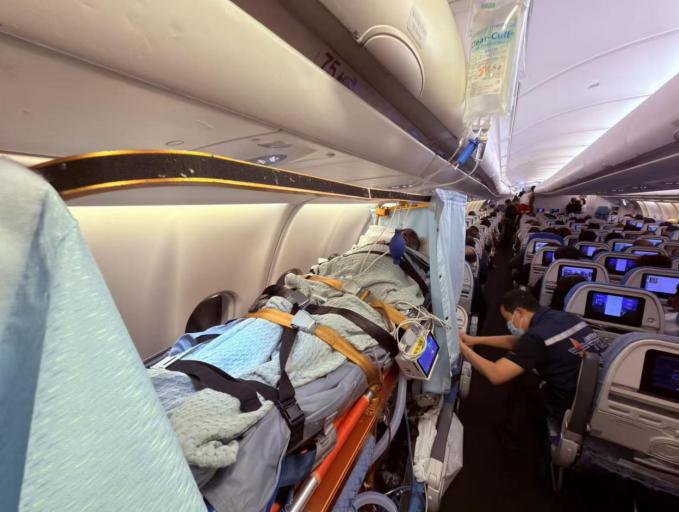
Air medical transport moves critically ill or mobility-restricted patients between facilities using medically equipped aircraft and specialist teams. The objective is bed-to-bed continuity with minimal disruption. A complete service covers pre-flight clinical assessment, aircraft with a certified stretcher and ICU-grade equipment, onboard medical staff, permits and airport handling, and ground ambulances at both ends with continuous monitoring.
For orientation, regional fixed-wing missions of about 800 – 2,500 km often range from USD 20,000 – 60,000. Intercontinental ICU transfers can exceed USD 100,000. Actual budgets depend on aircraft type, distance, staffing, equipment intensity, activation speed, and local fees. TKP Medical Assistance, established in 2001 and based in Shenzhen, China, delivers tailor-made, clinically guided transfers backed by over 24 years of global experience. Our focus is safe continuity of care and predictable outcomes for families, hospitals, and insurers.
Key 2026 Drivers of Air Medical Transport Cost
In 2026, several predictable drivers influence the final quote. Aircraft selection is pivotal. Turboprops are efficient on shorter sectors. Light or midsize jets reduce flight time on longer routes or weather-exposed corridors but carry higher hourly costs. Distance multiplies fuel burn, crew hours, and airport charges. Routing may change due to curfews, weather, or airspace restrictions, which can extend flight time and fees.
Time sensitivity matters. Same-day activation often requires aircraft positioning, expedited permits, and overnight ground support. These add premium charges. Regulatory and environmental rules in certain regions now trigger surcharges, especially at night or for noise-sensitive airports. Ground segments also shape the total. Urban access, ambulance mileage, waiting time, and after-hours operations can add unplanned costs.
•Aircraft type and performance: efficiency versus speed on route
•Distance and routing: fuel, crew duty limits, potential detours
•Activation speed: positioning flights and urgent permits
•Airport and environmental fees: curfews, night or noise surcharges
•Ground transfers: city-specific handling and after-hours exposure
Clinical Complexity and Crew Level Drive Cost
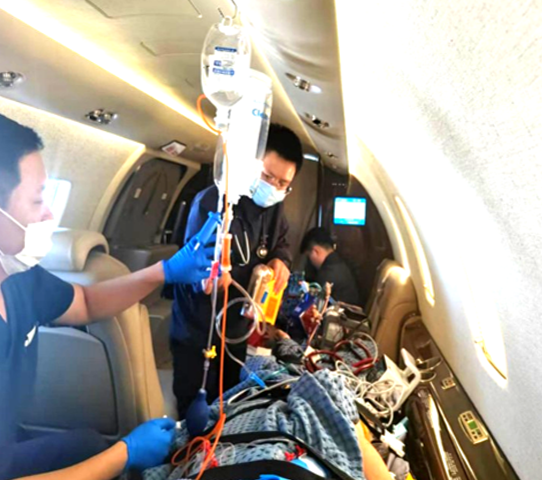
Clinical acuity determines staffing, equipment, and redundancy. A stable patient on oxygen and monitoring may travel with a flight nurse and paramedic. A ventilated ICU patient can require a flight physician, a critical care nurse, a respiratory therapist, and duplicate devices for resilience. Neonatal, cardiac, or neurocritical cases demand specialized equipment and careful oxygen and battery planning, especially on long sectors.
Longer flights need more oxygen cylinders and batteries. This increases weight and consumption and can necessitate an aircraft with higher payload capacity. Rigorous pre-flight screening reduces in-flight risk and lowers the chance of diversion. Avoiding a diversion protects both patient stability and budget. Insurance also plays a role. Many policies fund medically necessary evacuation with pre-authorization. If criteria are not satisfied, reimbursement may be reduced by exclusions or caps. TKP maps documentation to policy language to support benefit eligibility.
•Appropriate clinical/aviation crew pairing improves safety and prevents overdeployment
•Redundant life-support and avionics lower risk on extended or remote legs
•Structured medical and operational screening minimizes delays and diversion probability
Cross–Border Permits, Airports, and Hidden Charges
International missions add layers of compliance. Overflight and landing permits can require several hours to one day, depending on jurisdiction, day of week, and time of request. Urgent permits may carry premium processing fees. Airport handling for medical stretcher loading, oxygen replenishment, parking, and privacy arrangements varies widely by location. Some hubs now apply environmental or noise surcharges, especially at night.
Ground access is often underestimated. City traffic, hospital loading constraints, and security procedures can extend ambulance time. After-hours surcharges and waiting-time accrual are common. Positioning flights add cost when the nearest suitable aircraft is not at the departure city. Curfews or weather can force detours or schedule changes that cascade into crew duty resets and extra handling fees.
•Urgent permits: premium processing on short notice
•Airport handling: medical loading, oxygen services, parking, and slots
•Ground legs: after-hours surcharges, urban access, and waiting time
•Positioning and curfews: added flight hours and handling exposure

How TKP Controls Air Medical Transport Cost
TKP Medical Assistance converts operational expertise into direct client value. Our Shenzhen-based, 24/7 multilingual operations and global partner network stabilize timelines and suppress hidden charges. Each element is designed to protect care quality and the budget.
•Clinically optimized planning: physician-led reviews match crew and equipment to acuity. You avoid unnecessary staffing while maintaining safety.
•Route and permit intelligence: experienced dispatchers time permits and select efficient paths. You gain fewer delays, shorter routes, and lower handling spend.
•Bed-to-bed coordination: integrated control of discharge, transfer, and admission. You reduce handover gaps and minimize additional ground costs.
•Transparent quotations: itemized pricing for aircraft, crew, equipment, permits, handling, and ambulances. You see each Air Medical Transport Cost component before activation.
•24/7 responsiveness: rapid windows improve clinical timing and reduce overnight premiums when planning allows.
•Global network integration: vetted hospitals and ground providers keep service quality consistent and reduce variability.
What you receive end to end includes pre-flight clinical assessment and risk mitigation, confirmed receiving facility and admission coordination, an aircraft with a certified stretcher and ICU-grade equipment, the right medical escort team, complete permits and airport handling, and ground ambulances at both ends with continuous monitoring.
Practical FAQs and Next Steps
•How fast can a mission launch? Same-day activation is often feasible for regional flights once clinical clearance and permits are secured. International routes may need several hours to one day for permits.
•Is the Air Medical Transport Cost fixed? TKP issues firm quotes when route, crew, equipment, and timing are defined. Weather diversions, hospital-initiated delays, or airport curfews can add fees. Potential ranges are disclosed in advance.
•Cost-smart, care-first: early records, confirmed receiving hospital, planned daytime departures, flexible airports to dodge curfews and extra fees.
•Insurance: many plans cover pre-authorized, medically necessary evacuations. TKP handles the letters and documentation to fit policy criteria.
Call to Action
For transparent pricing on cross-border air medical transport, message TKP Medical Assistance. Our 24/7 Shenzhen team will review your case, chart the safest route, and send a clear itemized quote – balancing safety, speed, and budget.
Submit Your Request
Recent Posts
Tags
- Air Ambulance
- Bedside To Bedside
- Cross Border Aid
- Emergency Evacuation
- Global Medical Rescue
- How can I ensure the patient's stability while in the air?
- How do I request an air medical transport?
- How is it different from an air ambulance
- how to activate emergency aircraft service
- how to request an air ambulance
- Is air medical transport safe
- Is international transport possible
- Medical Rescue
- Medical Transport
- Patient Repatriation
- Remote Rescue
- Seamless Coordination
- Telemedicine Support
- Tourists And Expats Medical Escort
- What are the benefits of a cross-border medical transfer
- What are the different types of transfers
- What are typical use cases
- What documents do I need to prepare for a transfer?
- What does high-speed rail patient transfer stands for
- What is air ambulance
- What is air medical transport?
- What is cross-border medical transfer
- What is emergency aircraft
- what is high-speed rail patient transfer
- What is medical charter flight
- what is neonatal ICU transfer
- What is patient air transfer
- What medical equipment is available on board the aircraft
- What situations shouldn't use air medical transport?
- What types of air ambulance are there?
- What types of air ambulance exist
- What's the difference between international and domestic transfers?
- what’s the difference between air medical transport and regular ambulance?
- When is emergency air transport necessary
- Which patients require air medical transport?
- who is included in the medical team
- who needs an air ambulance