


How Air Medical Transport For Seniors Ensures Timely Emergency Care


Air Medical Transport For Seniors gives families a direct line to urgent, hospital-level care when minutes matter. At TKP Medical Assistance, a trusted provider of cross-border medical evacuation and patient transfer services, we’ve built a system that moves older adults quickly and safely – pairing medical precision with clear, predictable logistics. Families rely on us to solve three problems at once: speed, clinical stability in transit, and smooth coordination across borders.
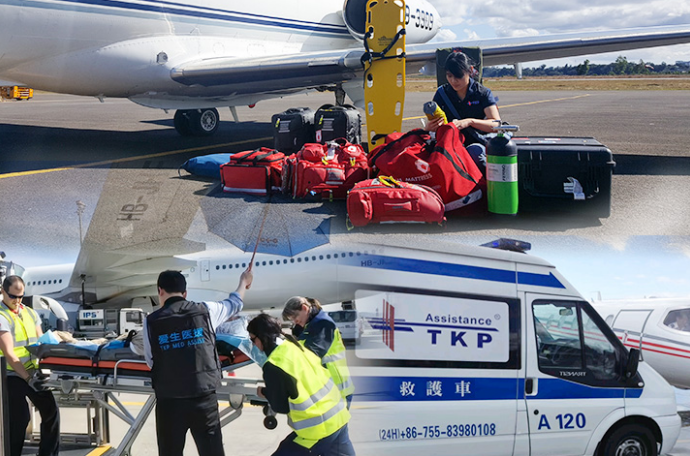
Why Speed For Seniors Requires More Than A Fast Aircraft
Delays for older patients rarely come from a single cause. Atypical symptoms can mask urgency, local facilities may lack specialists, and comorbidities complicate transport decisions. We address these friction points from the very first call. Our coordination team triages the case, confirms stabilization, and designs the fastest viable path to a receiving hospital. Crucially, we align air, rail, and ground legs in parallel rather than one after another. That orchestration shortens the departure window and keeps the handovers tight.
We focus on post-stabilization critical care transfers and time-sensitive evacuations, ensuring continuous, appropriate care while en route. The escort team and equipment are matched to the patient’s condition, which reduces mid-journey risk and increases the chances of a timely handover to the right specialists. Families know not only where we’re going, but how we’ll get there – and what clinical safeguards are in place at every step.
- Choosing The Right Mode For The Right Patient
Transport profile matters as much as distance. Different conditions call for different platforms, and sometimes a combination is best:
• Commercial stretcher with airline approval. We reserve dedicated stretcher compartments on domestic or international flights for stable, bedridden seniors. A medical escort stays with the patient from bedside to bedside. It’s a cost-effective option for long routes when ICU-level inflight care isn’t required.
• Air ambulance with full ICU capability. For critical cases, our aircraft carry ICU-grade monitors, ventilators, and life support. Intensive care doctors and flight-trained nurses manage high-altitude physiology, medication titration, and real-time communication with the receiving team.
• Integrated high-speed rail plus ambulance. When weather, airport constraints, or clinical nuance favor rail, we coordinate high-speed rail segments with ambulance pick-up and drop-off. This pathway is ideal for post-surgery seniors needing continuous monitoring, or when cabin pressure changes are not advisable.
This modular approach means Air Medical Transport For Seniors is never one-size-fits-all – it’s a medical and logistical plan tailored to the patient, the geography, and the clock.
Route Design That Shrinks The Timeline, Not The Safety Margin
Getting a plane in the air is only part of the job. The route must be designed to shorten time to care without increasing risk. Our transfer map links remote and underserved locations to major hospitals worldwide using strategically selected airports – including those with minimal infrastructure – so we can move sooner and land closer to the care that’s needed.
- Dynamic scheduling. Routes reflect the patient’s urgency and stability, balancing speed with clinical safety.
- Domestic and international reach. We move seniors within one country or across continents, syncing plans with the receiving facility’s readiness.
- Remote access. Using airports with minimal requirements lets us reach islands, mountain towns, and rural areas faster.
- Optimized legs. We reduce flight time, avoid avoidable weather chokepoints, and time ground segments to eliminate idle gaps.
- Tight coordination. Our team works with hospitals, insurers, and embassies to secure clearances and documentation – vital for elderly travelers with complex medication lists or implants.
Behind the scenes, our operations center tracks every segment in real time. If conditions change, routes change – without breaking clinical continuity. Families receive clear status updates and the next milestone on the timeline, which turns an anxious wait into an informed journey. This is cross-border medical evacuation for seniors designed for speed, safety, and transparency.
- Bed-To-Bed Continuity Protects The Most Vulnerable Minutes
Handoffs are often where evacuations stumble. We close the gaps with a bed-to-bed model. Clinicians transfer the patient’s medical history, imaging, and medication regimen forward; monitoring continues through every transition – ambulance to aircraft, aircraft to rail, rail to ambulance. Because older adults are more vulnerable to interruptions in oxygen therapy, pain control, or rhythm monitoring, keeping the clinical thread unbroken is essential. The result is fewer delays on arrival and a cleaner handover to the receiving team.
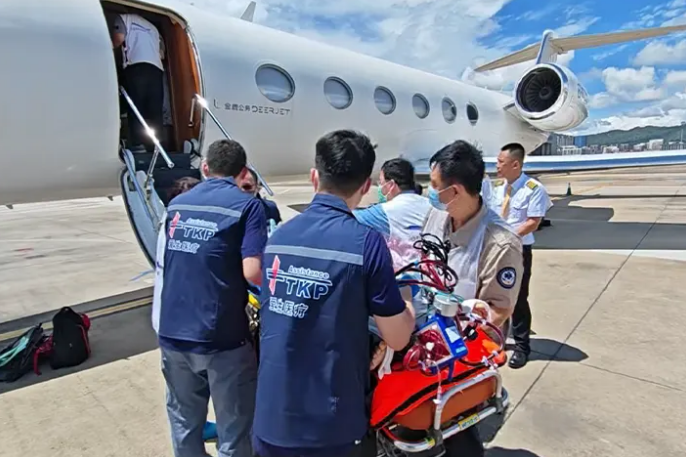
When To Call TKP Medical Assistance (And What You Can Expect)
If a parent, grandparent, or senior patient is stabilized but needs higher-level care elsewhere – or must return home for treatment – call us first. We’ll assess whether a commercial stretcher, an ICU-equipped air ambulance, or an integrated rail-and-road plan fits best. Our aim is to cut clinical risk and financial stress while preserving speed.
- Call us when: the local hospital can’t provide the needed specialty, distance is long, time is short, or bureaucracy is getting in the way.
- Expect from us: a firm route plan, named clinical escorts, and transparent inclusions – no guesswork and no last-minute surprises.
Beyond the logistics, we attend to what seniors feel. Unfamiliar languages, bright cabins, and long transfers can be exhausting. Our escorts manage comfort measures, hydration, medications, and simple reassurance. That human touch reduces agitation and keeps the journey efficient – central to successful outcomes in emergency medical transport for elderly patients.
✅ Key Advantages Of Partnering With TKP Medical Assistance:
- Faster access to definitive care through tailored mode selection
- ICU-level capability for critical seniors at altitude
- Airline-approved commercial stretchers for cost-effective long hauls
- High-speed rail integration when flying isn’t optimal
- Real-time operations oversight with rapid route adjustments
- Coordination with hospitals, insurers, and embassies for smooth clearances
✅ Transparent Features Families Appreciate:
- Clear clinical criteria for mode selection
- Bedside assessment and escort continuity
- Medication and device compatibility checks (e.g., pacemakers, oxygen)
- Documentation support for cross-border clearances
Your Next Step
If time is pressing, don’t let logistics slow care. Contact TKP Medical Assistance at Email info@tkpma.cn / Tel +86 755 83980108 for a rapid case review. We’ll propose the fastest safe route, assemble the right team, and mobilize the necessary assets – so Air Medical Transport For Seniors delivers on its promise: timely emergency care, a stable transfer, and peace of mind for everyone involved.
Submit Your Request
Recent Posts

Tags
- Air Ambulance
- Bedside To Bedside
- Cross Border Aid
- Emergency Evacuation
- Global Medical Rescue
- How can I ensure the patient's stability while in the air?
- How do I request an air medical transport?
- How is it different from an air ambulance
- how to activate emergency aircraft service
- how to request an air ambulance
- Is air medical transport safe
- Is international transport possible
- Medical Rescue
- Medical Transport
- Patient Repatriation
- Remote Rescue
- Seamless Coordination
- Telemedicine Support
- Tourists And Expats Medical Escort
- What are the benefits of a cross-border medical transfer
- What are the different types of transfers
- What are typical use cases
- What documents do I need to prepare for a transfer?
- What does high-speed rail patient transfer stands for
- What is air ambulance
- What is air medical transport?
- What is cross-border medical transfer
- What is emergency aircraft
- what is high-speed rail patient transfer
- What is medical charter flight
- what is neonatal ICU transfer
- What is patient air transfer
- What medical equipment is available on board the aircraft
- What situations shouldn't use air medical transport?
- What types of air ambulance are there?
- What types of air ambulance exist
- What's the difference between international and domestic transfers?
- what’s the difference between air medical transport and regular ambulance?
- When is emergency air transport necessary
- Which patients require air medical transport?
- who is included in the medical team
- who needs an air ambulance