


Air Medical Transport vs Ground Ambulance: When to Choose


Air medical transport vs ground ambulance is the decision families and clinicians face when every minute feels tight. The right call can save time and life. The wrong call can cost both. Families and clinicians face this moment every day. Distance, weather, borders, and bedside stability all matter. So do ECMO, IABP, and neonatal needs. Yet no two transfers are the same. What looks faster may not be safer. What seems simple may hide risk at the handoff. How do you decide in minutes, not hours? In the next sections, we share a field-tested way to choose – and one case where timing changed everything.
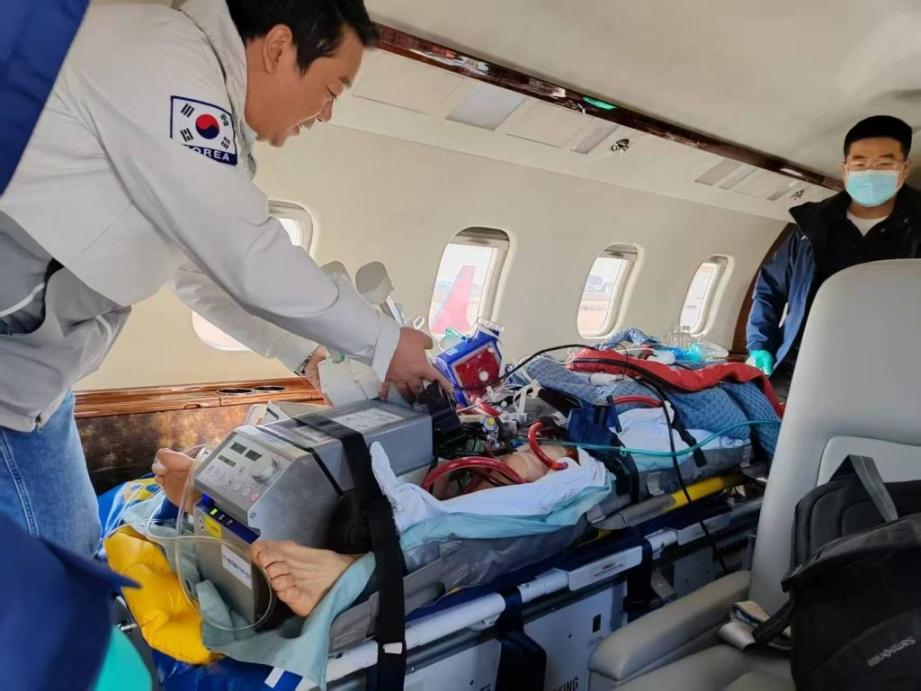
Choosing Air Medical Transport vs Ground Ambulance
We never begin with the vehicle. We begin with the patient. Our physicians and ICU nurses evaluate clinical status, route constraints, and handover risk before matching the mode and the escort team. The question is not “How do we move the patient?” but “How do we keep the ICU intact while moving?”
1) Patient Condition and Onboard Support
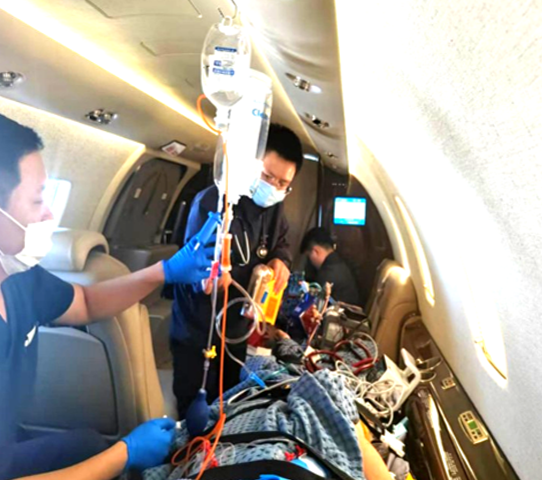
When continuous life support is essential, the transport must function like a mobile ICU. Our teams provide comprehensive operation of ECMO, IABP, ventilators, and other life-sustaining systems for the entire trip, including international flight segments. This standard is crucial for critically ill neonates and pediatric patients who cannot tolerate pauses in support. For premature infants, we bring specialized neonatal transport equipment and protocols that protect fragile lungs and temperature control. Whether the route is ground or air, our rule remains constant: stable perfusion, secured airway, accurate ventilation, and zero-gap handoffs.
2) Distance, Access, and Cross-Border Complexity
Geography often decides what medicine cannot. Mountain passes, island hops, long distances, or blocked highways can stretch a short clinical window into a dangerous delay. Our global route network connects remote or underserved origins to leading medical centers by using airports with minimal infrastructure when needed. We optimize flight paths to reduce total time and coordinate with hospitals and embassies for smooth border crossings. Operations staff track flights in real time and adjust routing if conditions change. When borders or access are the bottleneck, air transport restores the timeline; when roads are open and close, ground may be the safer, faster choice.
When to Choose
Good decisions join clinical needs with reliable logistics. These are the patterns we see most often at TKP Medical Assistance, and they can help you weigh Air medical transport vs ground ambulance with confidence.
✅ Choose Air: Typical Triggers
- Continuous ECMO/IABP is required and any interruption risks deterioration.
- Critically ill neonates or premature infants need incubator-level support and rapid transfer to a pediatric center.
- Cross-border transfers require coordinated clearances and predictable timelines.
- Remote origin or destination, where airfields – but not highways – offer reliable access.
- Long distances where extended ground transport would increase exposure to transport risks.
✅ Choose Ground: Typical Triggers
- Short, urban transfers with a nearby receiving ICU and stable hemodynamics.
- Patients who are stable and do not need continuous high-complexity support en route.
- Weather or temporary airfield constraints make ground faster and safer at that moment.
In every case, we weigh Air medical transport vs ground ambulance against the same priorities: stability first, then speed, then comfort. We also script the journey in detail. Each handover – ward → ambulance cabin → tarmac → aircraft → receiving ICU – has its own micro-protocol to protect flow, oxygenation, sedation, and equipment. Planning the handoffs is as important as choosing the vehicle.
Proof in Practice & Why TKP Stands Apart
Our methods are built for complex cases and tested in real operations. The following snapshot shows how our teams maintain ICU standards end-to-end while navigating borders and timelines.
• Case Snapshot: March 14, 2025 – Xiamen → South Korea
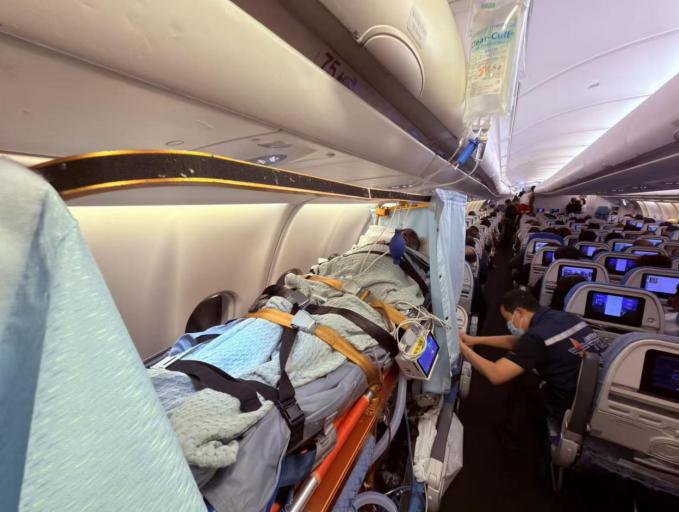
A patient with severe pulmonary infection required ECMO + IABP to maintain vital signs. The transfer was conducted by air ambulance. From departure to arrival, specialist physicians and ICU nurses delivered continuous monitoring and intervention. A mobile power supply protected uninterrupted support. On the tarmac, ECMO was transitioned to onboard systems with zero interruption during the critical handoff. At cruising altitude, the team evaluated ECMO flow and secured the airway, rotating shifts to prevent fatigue and preserve vigilance. This is the standard we apply to ECMO transport services: precision at each step, no gaps in care.
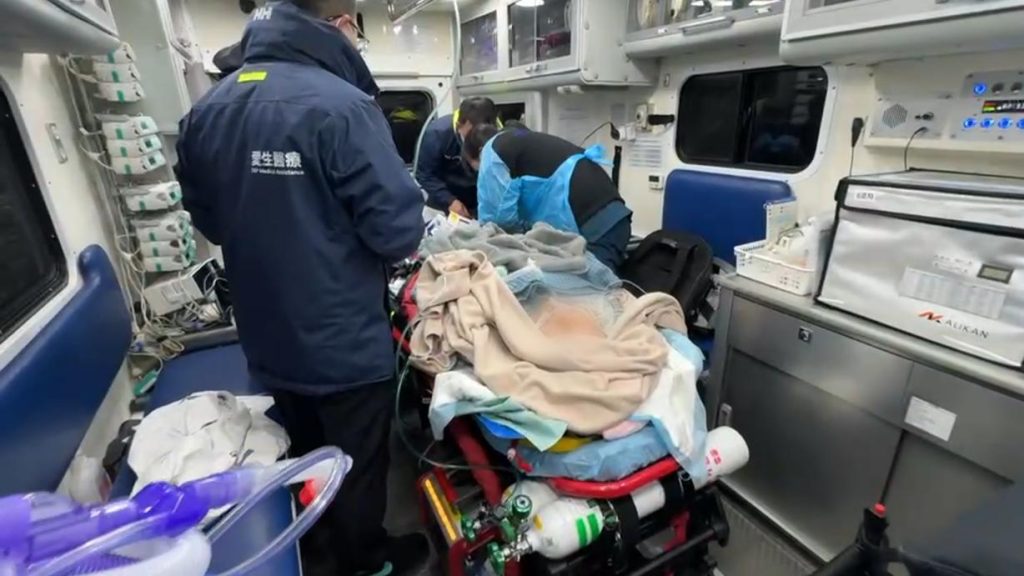
We also conduct regional and international pediatric transfers for top institutions, including Guangzhou Women and Children’s Medical Center. Hospitals choose us because complex transfers depend on orchestration, not only vehicles. Our planning aligns clinical urgency with the most reliable route, then locks in the clearances and bedside handovers that keep support stable.
Beyond a single case, our transfer route map reflects a flexible and extensive network of flight paths built to connect patients from remote, underserved, or emergency locations to leading facilities worldwide. By using strategically selected airports – including those with limited infrastructure – we move quickly without sacrificing safety. Dynamic scheduling adapts to the patient’s condition and urgency. Global coverage spans domestic and international locations. Routes are optimized to reduce flight time and protect patient safety. Throughout, our operations team monitors flights in real time and adjusts when needed so care remains continuous and arrival is timely.
What Makes TKP Different
At TKP Medical Assistance, we bring ICU discipline to every mile:
- Specialized teams & clinical standards – Every medical escort is ICU/ER-trained with deep experience in emergency and in-flight care.
- ICU-level escort care – Each transfer is matched with ICU-trained doctors, nurses, and critical medications for high-acuity support.
- Seamless global coverage – From mainland China to Southeast Asia, Europe, and North America, our network keeps transfers moving.
- Multilingual case coordination – Mandarin, English, and Cantonese enable clear communication with patients, hospitals, and families.
- One-stop case oversight – A dedicated medical coordinator runs a closed-loop process from pre-assessment to receiving-ICU handover.
- Personalized critical transport plans – From ECMO to pediatric incubators, every detail is aligned with clinical needs and patient condition.
Call to Action
Deciding between Air medical transport vs ground ambulance for a complex or cross-border case? Contact TKP Medical Assistance for a rapid pre-assessment. We will outline route options, confirm equipment and staffing, and assemble the right ICU-trained team. Your patient’s ICU does not stop at the hospital door – and neither do we.
Submit Your Request
Recent Posts

Tags
- Air Ambulance
- Bedside To Bedside
- Cross Border Aid
- Emergency Evacuation
- Global Medical Rescue
- How can I ensure the patient's stability while in the air?
- How do I request an air medical transport?
- How is it different from an air ambulance
- how to activate emergency aircraft service
- how to request an air ambulance
- Is air medical transport safe
- Is international transport possible
- Medical Rescue
- Medical Transport
- Patient Repatriation
- Remote Rescue
- Seamless Coordination
- Telemedicine Support
- Tourists And Expats Medical Escort
- What are the benefits of a cross-border medical transfer
- What are the different types of transfers
- What are typical use cases
- What documents do I need to prepare for a transfer?
- What does high-speed rail patient transfer stands for
- What is air ambulance
- What is air medical transport?
- What is cross-border medical transfer
- What is emergency aircraft
- what is high-speed rail patient transfer
- What is medical charter flight
- what is neonatal ICU transfer
- What is patient air transfer
- What medical equipment is available on board the aircraft
- What situations shouldn't use air medical transport?
- What types of air ambulance are there?
- What types of air ambulance exist
- What's the difference between international and domestic transfers?
- what’s the difference between air medical transport and regular ambulance?
- When is emergency air transport necessary
- Which patients require air medical transport?
- who is included in the medical team
- who needs an air ambulance