


Hong Kong Tourist Suffers Traumatic Brain Injury While Skiing in Japan — TKP Coordinates Air Stretcher Repatriation


A young Hong Kong traveler sustained a life-threatening head injury during a ski accident in Nagano, Japan. Following emergency neurosurgery and intensive care, TKP Medical Assistance arranged her safe repatriation to Hong Kong via commercial air stretcher for continued treatment.
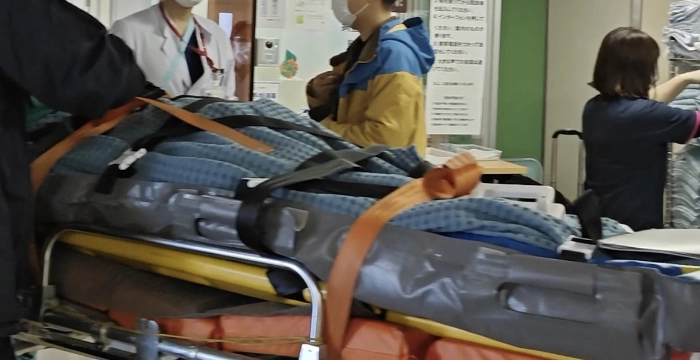
TKP’s medical escort team coordinates closely with local clinicians during handover to ensure uninterrupted treatment and precise clinical communication.
A Vacation Turns Critical: Ski Fall Leads to Coma
While snowboarding in Nagano, Japan, Ms. Zhang from Hong Kong suffered a severe fall and lost consciousness on site. Emergency responders performed intubation and transported her to a nearby facility, then transferred her to the Nagano Red Cross Hospital. Imaging revealed a right-sided acute subdural hematoma. She underwent an emergency burr hole drainage followed by a craniotomy and decompressive craniectomy. Despite stabilization, she remained semi-comatose with dilated pupils and limited responsiveness.
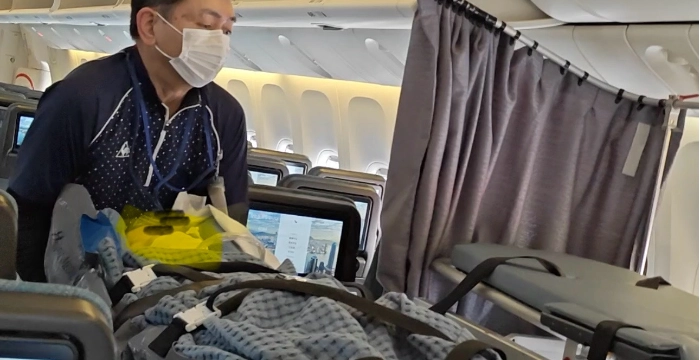
KP medical team ensures patient stability during cabin-to-cabin air transfer.”
Family Seeks Medical Repatriation—TKP Steps In
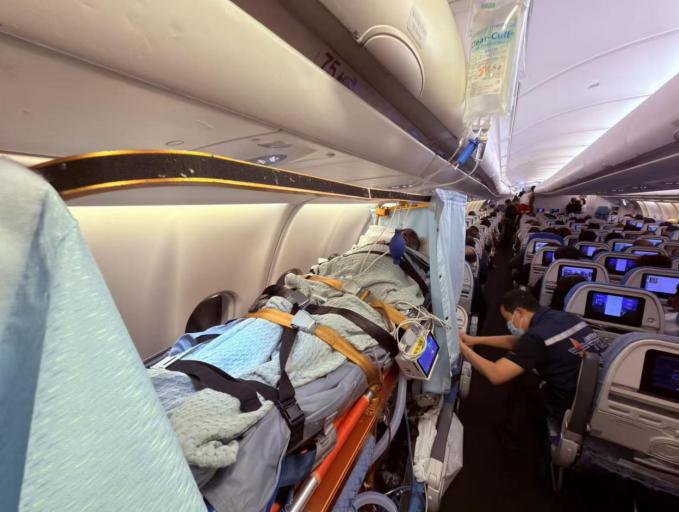
After nearly two weeks in the neurosurgical ICU, Ms. Zhang began breathing spontaneously but showed minimal neurological improvement. Her family contacted TKP Medical Assistance for possible return to Hong Kong. Upon reviewing her full clinical records and neurological status, TKP determined that she was medically fit for long-distance travel under monitored conditions. A commercial air stretcher—a medically-equipped reclining bed aboard a scheduled flight—was selected as the optimal solution, offering safe and cost-effective repatriation.

Escorts patient to Prince of Wales Hospital for further treatment
Safe Return to Hong Kong for Further Care
The TKP team coordinated all medical and logistical aspects of the journey. After a five-hour flight, the aircraft landed safely at Hong Kong International Airport, where an ambulance transferred Ms. Zhang directly to Prince of Wales Hospital for continued neurocritical care. Her case highlights the importance of seamless cross-border medical evacuation for patients requiring sustained monitoring.
Frequently Asked Questions – Cross-Border Medical Rescue
Need help understanding how international medical rescue works? Browse our most common questions to learn about service coverage, response times, documentation requirements, and more. We’re here to support you every step of the way.
Q: Which countries are covered by the cross-border medical rescue service?
A: We cover major countries and regions worldwide to ensure timely rescue
Q: How can I request cross-border medical rescue?
A: Please submit an emergency rescue request through our official website or customer service.
Q:What documents are needed for medical rescue?
A: Patient ID, medical diagnosis report, and emergency contact information are required.
Q: How is the rescue service fee settled?
A: Fees can be paid via insurance claims or direct payment for the service.
Q: How quickly does the rescue response start?
A: In emergencies, rescue operations typically begin within a few hours.
Submit Your Request
Recent Posts

Tags
- Air Ambulance
- Bedside To Bedside
- Cross Border Aid
- Emergency Evacuation
- Global Medical Rescue
- How can I ensure the patient's stability while in the air?
- How do I request an air medical transport?
- How is it different from an air ambulance
- how to activate emergency aircraft service
- how to request an air ambulance
- Is air medical transport safe
- Is international transport possible
- Medical Rescue
- Medical Transport
- Patient Repatriation
- Remote Rescue
- Seamless Coordination
- Telemedicine Support
- Tourists And Expats Medical Escort
- What are the benefits of a cross-border medical transfer
- What are the different types of transfers
- What are typical use cases
- What documents do I need to prepare for a transfer?
- What does high-speed rail patient transfer stands for
- What is air ambulance
- What is air medical transport?
- What is cross-border medical transfer
- What is emergency aircraft
- what is high-speed rail patient transfer
- What is medical charter flight
- what is neonatal ICU transfer
- What is patient air transfer
- What medical equipment is available on board the aircraft
- What situations shouldn't use air medical transport?
- What types of air ambulance are there?
- What types of air ambulance exist
- What's the difference between international and domestic transfers?
- what’s the difference between air medical transport and regular ambulance?
- When is emergency air transport necessary
- Which patients require air medical transport?
- who is included in the medical team
- who needs an air ambulance