


How Business Class Charter Flights Coordinate Curb-to-Cabin Timing?


In medical transport, speed isn’t a number on a speedometer; it’s the choreography that links a hospital bedside to an aircraft door without a single wasted step. When patients are fragile and variables multiply, minutes matter. This field guide explains how to plan and execute Business Class Charter Flights with a focus on the critical path, the levers that truly move timelines, and the safeguards that keep care central while momentum stays high.
About TKP Medical Assistance
Founded in 2001 in Shenzhen, TKP Medical Assistance has more than 24 years of hands-on global medical transport experience and six branch offices across South, East, Central, and Southwest China. Our role is to turn multi-agency complexity into predictable, patient-centered movement – coordinating clinicians, hospitals, ambulances, airport handlers, immigration, and charter operators so the journey runs on one clock.
Why Timing Is a Strategy, Not a Rush
- A Real-World Snapshot
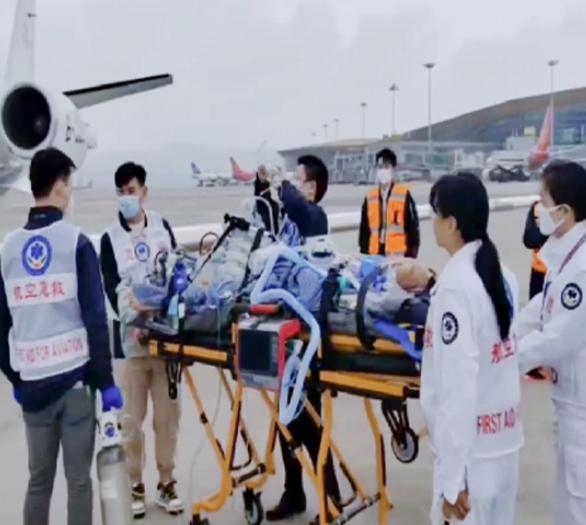
Lhasa → Chengdu → Beijing; same-day air ambulance for a comatose patient with severe pneumonia and respiratory failure.
TKP builds a high-altitude transport window at ~3,000 m, aligning ICU discharge, staging a hospital-ramp ambulance, and securing an airport handling slot.
Employer’s charter authorization woven into airside access, crew coordination, and handler briefings for compliant, rapid movement.
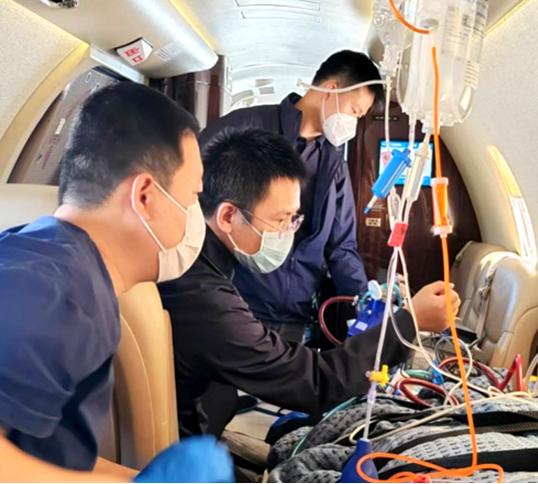
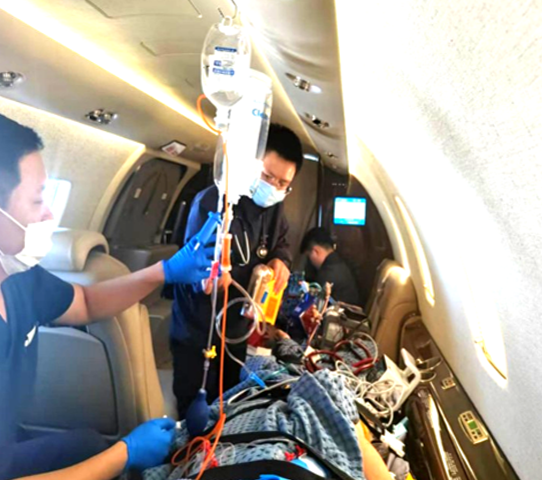
On-site assessments: ABG reviewed; ventilator PEEP optimized; sedation and vasopressors titrated; lines secured; oxygen cleared with a ground-delay buffer; plateau permits validated.
Departure-spacing advisory extends intervals; case manager adjusts ambulance roll to avoid apron dwell while the handler protects the slot with updated ETAs.
Boarding via airside vehicle; stretcher mount locked; doors-closed monitoring begins; cabin pressurization and respiratory support configured for hypoxia. Chengdu quick turn resets oxygen, swaps ventilator batteries, re-zeros arterial lines; onward clearance confirmed; en route vitals tracked continuously – no time lost because clinical and cabin plans were integrated from the start.
The bedside-to-airside journey looks linear but works best as a set of parallel tasks guided by clinical readiness. It begins at the hospital with stabilization: confirming fit-to-fly status, setting analgesia and antiemetic plans, securing IV lines, arranging oxygen flows, and handing over to the escort team. Administrative tasks run alongside – discharge clearance and payment guarantees where needed.
On wheels, the ground ambulance transfer is preplanned to the minute. We use pre-alerted routes, hospital ramp access, and direct handshakes with airport handlers to keep motion continuous. At the airport, the plan shifts to permits, security, and border controls. For Business Class Charter Flights, coordinated kerb-to-apron flow and priority handling reduce friction. Security processes are adjusted under applicable medical exemptions; customs and immigration are pre-cleared where feasible to avoid waiting. The ultimate checks encompass apron permissions, equipment loading, escort placement, and oxygen/power configurations approved for taxi and potential tarmac holds.
What You Can Control – and What You Can‘t
- Controllable
•Ambulance dispatch timing and route confirmation
•Hospital documentation readiness and discharge coordination
•Luggage, medical device staging, and escort briefings
•Wheelchair or compact stretcher allocation and elevator access at facilities
- Semi-Controllable
•Airport handling slot selection within available windows
•Airside vehicle coordination and gate allocation
•Security screening lane selection and escort arrangements
•Customs documentation sequencing for faster border processing
- Uncontrollable
•Weather and sudden NOTAMs
•Air traffic flow restrictions and airport curfews
•Unexpected hospital events or clinical deterioration
The aim is to lock down every controllable segment, build buffers around semi-controllable ones, and preplan safe pivots for the rest.
How TKP Compresses the Timeline Without Cutting Corners
- Local-First Response
With teams in six major Chinese regions, we shorten the first mile – getting to the bedside faster and smoothing hospital access and language nuances. Earlier on-site coordination reduces late ambulance launches and prevents airport slot misses.
- Orchestrated Permits and Handling
Two decades of cross-border casework mean permits, medical waivers, special handling notes, and escort credentials are bundled and pre-validated. Instead of tackling security, customs, and ground handling as separate queues, we present a synchronized package that moves together.
- Clinical Planning that Drives Operations
We match aircraft and cabin configuration to the patient’s clinical profile. If continuous oxygen or cardiac monitoring is required, we stage equipment and staffing before the ambulance departs – not on the tarmac. Power compatibility checks, oxygen provisioning for taxi and holds, and documented carriage approvals are completed early to avoid last-minute pauses.
- Cross-Border Fluency
Based in Shenzhen with established exit/entry workflows, our multilingual case managers align hospital, ground, and airport teams on both ends. Clear roles and a single point of contact reduce duplicate calls and speed up decisions when variables change.
- One Timeline, One Owner
Fragmented communication is the most common cause of delay. TKP assigns a dedicated case manager who runs the master timeline, confirms every handoff, and executes resequencing when conditions shift.
Business Class Charter Flights: Clinical and Cabin Fit
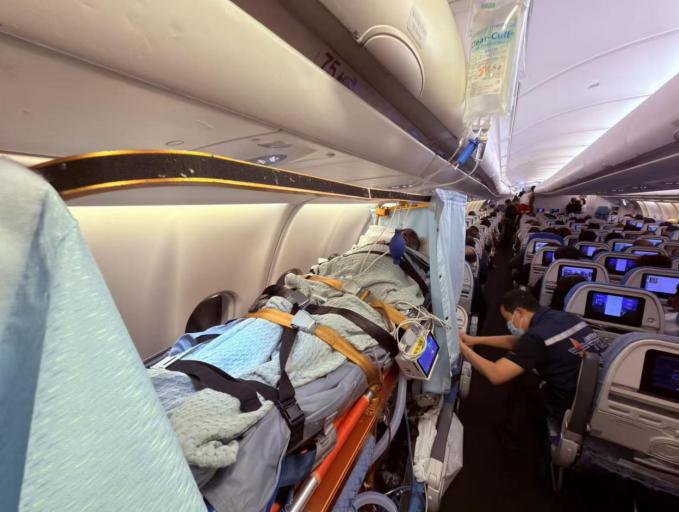
Business Class Charter Flights are chosen for patients who benefit from lie-flat comfort, lower exposure to crowds, and a flexible schedule without the cost of a full air ambulance. Cabin features directly influence transfer speed and safety:
•Lie-flat seating helps with pressure management and pain control, shortening boarding adjustments.
•Aisle width and seat layout determine how quickly a wheelchair or compact stretcher can maneuver.
•Galley and lavatory access support infection control and preserve dignity during longer ground holds.
•Oxygen capacity must cover cruise demand plus buffers for delays; power points must be tested against medical devices and inverters. We secure approvals that allow oxygen to remain available during taxi and any ATC holds.
Readiness Milestones to Track
- Clinical
•Fit-to-fly confirmed by attending physician
•Analgesia and antiemetics administered on schedule
•IV lines secured; pressure areas protected
- Operational
•Ambulance dock and hospital egress route confirmed
•Ground handler pre-briefed; airport slot validated
•Security and customs documents compiled and pre-filed
- Cabin
•Seat assigned for medical access and privacy
•Oxygen and monitors tested for in-flight and ground phases
•Disinfection complete; PPE protocols briefed
Common Bottlenecks – and Practical Mitigations
- Communication Drift
Separate teams often work off different timelines. Mitigation: one case manager, time-stamped handoffs, and a shared operations log. If a step slips, the downstream sequence is reflowed immediately rather than discovered at the terminal.
- Slots and Curfews
Airports can compress or shift handling windows. Mitigation: request flexible slots at planning stage and align hospital discharge with the confirmed window to prevent idle terminal waits. Maintain a secondary slot where the airport allows.
- Security and Customs Friction
Incomplete documentation triggers secondary checks. Mitigation: pre-compile medical letters, oxygen carriage approvals, and escort credentials; flag any exemptions in advance with handlers so the process remains transparent and expedited.
- Apron Access Limits
Not every operation allows airside vehicles or close-up boarding. Mitigation: secure airside permits early and keep a fallback plan using an airbridge or a dedicated gate with lift access.
- Receiving Facility Delays
A departure without confirmed destination readiness is a recipe for holding patterns. Mitigation: verify bed acceptance, specialist availability, and destination ambulance timing before leaving the hospital. If the receiving facility slips, resequence the ground and airport timeline to hold at the hospital – not on the apron.
FAQs About Business Class Charter Flights
•How fast can bedside-to-airside happen?
When documentation is ready and local teams are in place, same-day transfers are common. Variables include hospital discharge timing, road distance, airport slot, and security throughput. If weather or curfews intervene, we resequence to the earliest safe window rather than risking avoidable holds.
•What clinical escorts and equipment are provided?
Escort level is matched to condition – nurse or physician – using equipment calibrated to the aircraft environment. Oxygen flow rates, monitors, and power interfaces are tested and documented before leaving the hospital.
•How do you manage cross-border paperwork?
Cross-border specialists prepare exit/entry clearances, medical waivers, and equipment carriage approvals in advance. This minimizes time at immigration and reduces the chance of late-stage denials.
Planning Your Next Move
To ensure safe, seamless Business Class Charter Flights for a critically ill or mobility-limited passenger, engage TKP Medical Assistance at the beginning. Send the clinical summary, departure/arrival points, and any constraints. We will craft a bedside-to-airside roadmap, coordinate all teams end-to-end, and deliver a structured schedule with contingencies. Contact our Shenzhen headquarters or any of our regional offices to start a time-secure transfer plan where safety and precision come first.
Submit Your Request
Recent Posts

Tags
- Air Ambulance
- Bedside To Bedside
- Cross Border Aid
- Emergency Evacuation
- Global Medical Rescue
- How can I ensure the patient's stability while in the air?
- How do I request an air medical transport?
- How is it different from an air ambulance
- how to activate emergency aircraft service
- how to request an air ambulance
- Is air medical transport safe
- Is international transport possible
- Medical Rescue
- Medical Transport
- Patient Repatriation
- Remote Rescue
- Seamless Coordination
- Telemedicine Support
- Tourists And Expats Medical Escort
- What are the benefits of a cross-border medical transfer
- What are the different types of transfers
- What are typical use cases
- What documents do I need to prepare for a transfer?
- What does high-speed rail patient transfer stands for
- What is air ambulance
- What is air medical transport?
- What is cross-border medical transfer
- What is emergency aircraft
- what is high-speed rail patient transfer
- What is medical charter flight
- what is neonatal ICU transfer
- What is patient air transfer
- What medical equipment is available on board the aircraft
- What situations shouldn't use air medical transport?
- What types of air ambulance are there?
- What types of air ambulance exist
- What's the difference between international and domestic transfers?
- what’s the difference between air medical transport and regular ambulance?
- When is emergency air transport necessary
- Which patients require air medical transport?
- who is included in the medical team
- who needs an air ambulance