


South Korean Businessman Suffers Cardiac Arrest in Hong Kong — TKP Coordinates Lifesaving ECMO Air Evacuation


A South Korean national visiting Hong Kong for business collapsed due to sudden cardiac arrest, later diagnosed as acute myocarditis. After emergency ECMO placement at Queen Mary Hospital, TKP Medical Assistance successfully coordinated his repatriation to Seoul via specialized air ambulance, ensuring continuous critical care during the cross-border transfer.
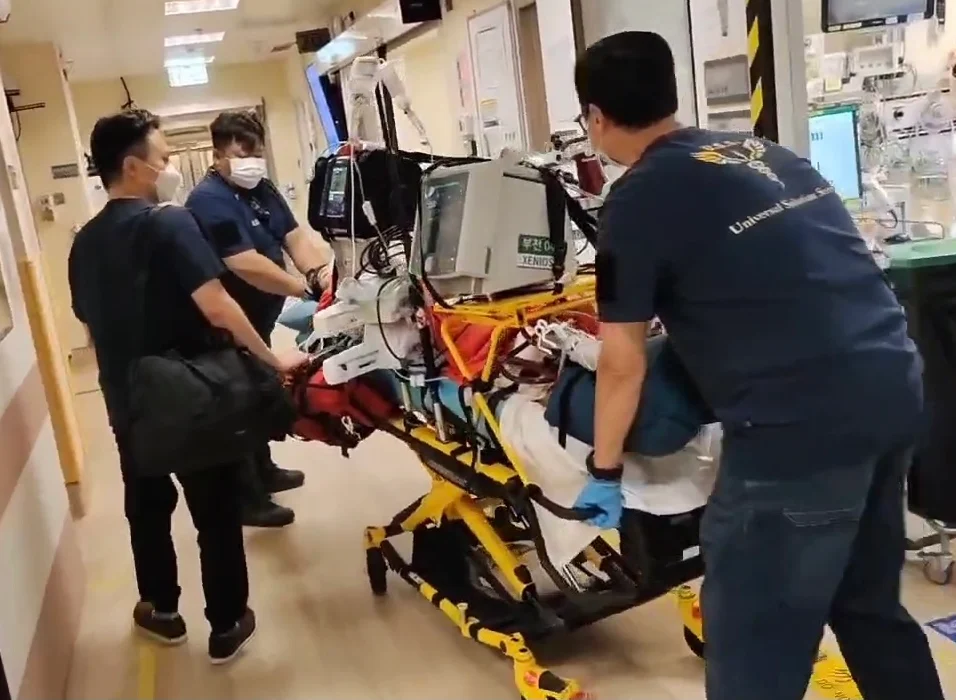
The TKP team collaborates with the Hong Kong nursing staff to safely escort Mr. Park to the airport for air ambulance evacuation
Sudden Collapse and Emergency ECMO Initiation
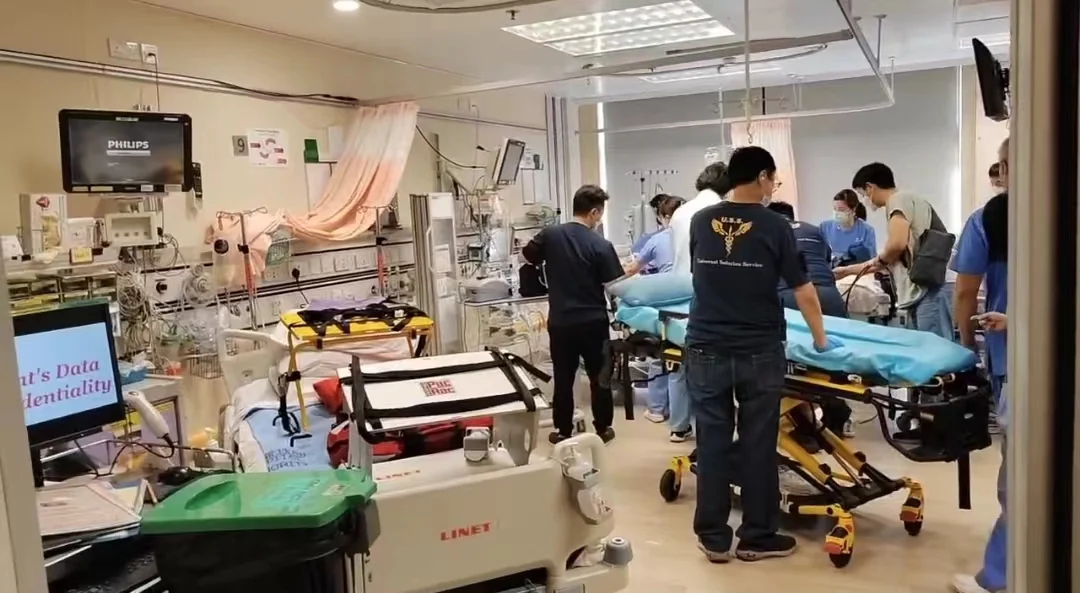
Mr. Park, a businessman from Seoul, began experiencing chest pain and shortness of breath during a business trip in Hong Kong. After collapsing, he was rushed to Queen Mary Hospital’s emergency department. Despite immediate CPR efforts, he went into cardiac arrest. Suspecting acute myocarditis—possibly triggered by a recent viral infection—doctors performed emergency intubation and Veno-Arterial ECMO insertion during resuscitation. He was then transferred to the ICU for further support.
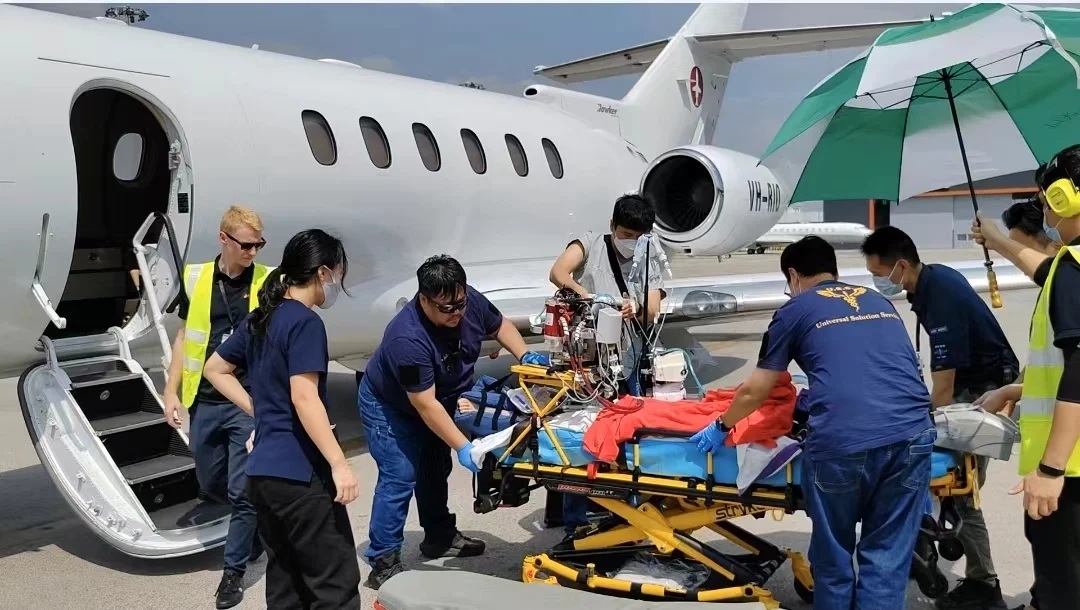
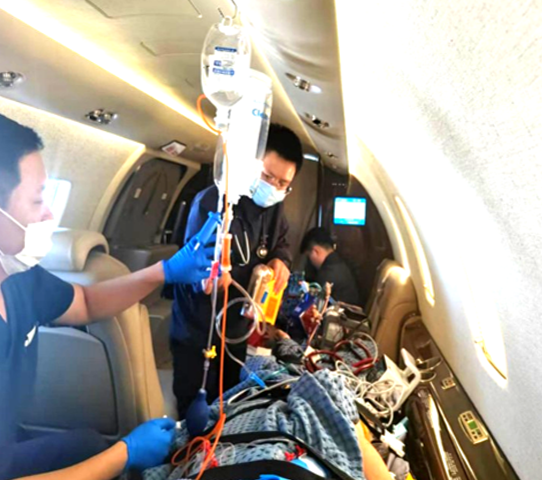
Final checks on the mobile ECMO system and equipment onboard the dedicated air ambulance before departure to Seoul
Critical Condition Requires Repatriation for Advanced Treatment
After one week of intensive care, Mr. Park regained consciousness but remained dependent on ECMO due to poor cardiac function. A multidisciplinary team from both Queen Mary Hospital and Seoul National University Hospital determined that he required a left ventricular assist device (LVAD) or heart transplant—treatments only available back in Korea. The family contacted TKP Medical Assistance to arrange for a safe and urgent medical repatriation.
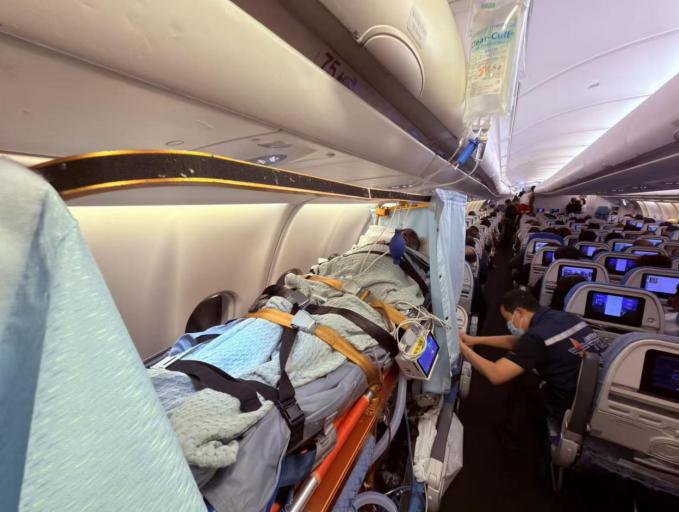
Mr. Park is safely transferred to the ambulance upon landing in Seoul, escorted to Seoul National University Hospital for further cardiac care
Seamless International Transfer via Air Ambulance
TKP’s experienced critical care team traveled from Shenzhen to Hong Kong to assess Mr. Park and prepare the ECMO air evacuation. A medically configured fixed-wing aircraft was arranged with ICU-level onboard support. The team ensured the safety and stability of the ECMO system throughout the 3-hour flight to Seoul, including backup power systems, oxygen supply, and altitude-adjusted care protocols. Upon arrival, Mr. Park was swiftly transferred to Seoul National University Hospital for continued treatment.
Frequently Asked Questions
Need help understanding how international medical rescue works? Browse our most common questions to learn about service coverage, response times, documentation requirements, and more. We’re here to support you every step of the way.
Q: Which countries are covered by the cross-border medical rescue service?
A: We cover major countries and regions worldwide to ensure timely rescue
Q: How can I request cross-border medical rescue?
A: Please submit an emergency rescue request through our official website or customer service.
Q: What documents are needed for medical rescue?
A: Patient ID, medical diagnosis report, and emergency contact information are required.
Q: How is the rescue service fee settled?
A: Fees can be paid via insurance claims or direct payment for the service.
Q: How quickly does the rescue response start?
A: In emergencies, rescue operations typically begin within a few hours.
Submit Your Request
Recent Posts
Tags
- Air Ambulance
- Bedside To Bedside
- Cross Border Aid
- Emergency Evacuation
- Global Medical Rescue
- How can I ensure the patient's stability while in the air?
- How do I request an air medical transport?
- How is it different from an air ambulance
- how to activate emergency aircraft service
- how to request an air ambulance
- Is air medical transport safe
- Is international transport possible
- Medical Rescue
- Medical Transport
- Patient Repatriation
- Remote Rescue
- Seamless Coordination
- Telemedicine Support
- Tourists And Expats Medical Escort
- What are the benefits of a cross-border medical transfer
- What are the different types of transfers
- What are typical use cases
- What documents do I need to prepare for a transfer?
- What does high-speed rail patient transfer stands for
- What is air ambulance
- What is air medical transport?
- What is cross-border medical transfer
- What is emergency aircraft
- what is high-speed rail patient transfer
- What is medical charter flight
- what is neonatal ICU transfer
- What is patient air transfer
- What medical equipment is available on board the aircraft
- What situations shouldn't use air medical transport?
- What types of air ambulance are there?
- What types of air ambulance exist
- What's the difference between international and domestic transfers?
- what’s the difference between air medical transport and regular ambulance?
- When is emergency air transport necessary
- Which patients require air medical transport?
- who is included in the medical team
- who needs an air ambulance