


Comatose Patient Transfer Services You Can Rely on Globally


Comatose Patient Transfer Services are at the heart of TKP Medical Assistance’s mission to move the most fragile patients safely and smoothly across borders. We function simultaneously as both a clinical transport partner and a logistics command center. From bedside assessment to final handover, our teams keep life-sustaining therapy continuous while we handle carriers, visas, ground legs, and language barriers. For families and hospitals, that means one accountable team protecting stability, dignity, and time.
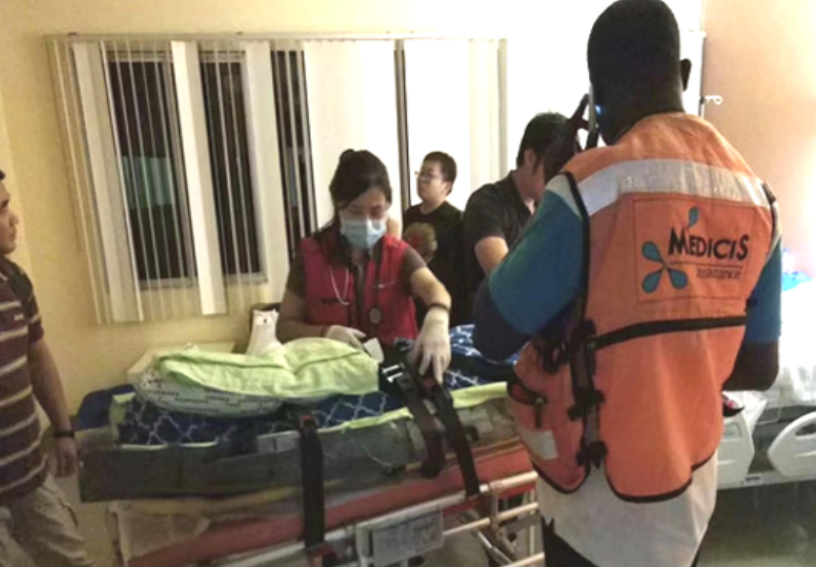
Comatose Patient Transfer Services You Can Trust Globally
Families and hospitals work with us for one important reason: predictability. We keep bedside-to-bedside movement simple, safe, and transparent, so treatment never pauses. Our operations team aligns aviation schedules, ground ambulances, and clinical teams. We manage the paperwork so physicians can focus on clinical decisions, not forms or phone trees.
✅ The gaps we close
When a patient is comatose, details are not small – they are clinical risks. Delays, unclear roles, or missing equipment can erode stability during long layovers or multi-leg flights. We solve the common pain points we see in international transfers: fragmented communication, inconsistent standards between regions, and the need to stabilize during airport holds. Our answer is straightforward: one plan, one accountable team, clear updates from the first call to the final handover. For families, that means clarity. For clinicians, it preserves the treatment plan and reduces variance across borders. If you are searching for an international comatose patient air ambulance, this is the difference between a difficult journey and a controlled one.
Critical Care Capability for the Most Fragile Patients
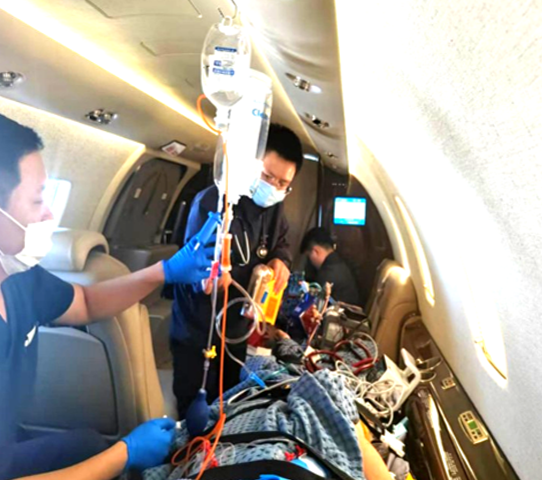
Our ICU-trained teams sustain advanced life support throughout the journey, in the air and on the ground. We match equipment and staffing to the clinical reality, not to a preset bundle. Adult critical care is covered, and our pediatric capability goes deeper for fragile cases that cannot tolerate gaps in support.
- Complete ICU support in the air and on the ground
• Full support for ECMO, IABP, ventilators, and other life-sustaining systems – including during international flight segments where stable operation is non-negotiable.
• Disciplined handovers at each waypoint so vital signs, sedation plans, and device parameters remain aligned from departure to arrival.
- Specialized pediatric and neonatal teams
We provide specialized neonatal and pediatric transport, including premature infants and postoperative neonates with complex conditions. Each mission is staffed with pediatric specialists and tailored equipment to fit the patient’s size and physiology. Hospitals select us for repeated missions because we meet the standard every time, not just the first time. We are trusted by leading hospitals such as Guangzhou Women and Children’s Medical Center for regional and cross-border neonatal transfers. For families and clinicians planning an Emergency Neonatal ICU Transfer, our model keeps invasive support continuous while documenting each transition for the receiving team.
- Route planning that reduces risk
Our transfer route map connects remote or underserved points to leading medical centers. We plan flight paths that shorten exposure, match aircraft capability with clinical risk, and keep ground segments lean. Dynamic scheduling lets us adjust when a patient improves – or when weather and airport conditions change. We coordinate with medical institutions and embassies so visas, letters, and clearances move in parallel with clinical prep. The goal is simple: fewer handoffs, shorter time in transit, and stable physiology at wheels-down.
• Dynamic flight scheduling tuned to patient condition and urgency
• Global coverage across domestic and international locations
• Access to airports with minimal infrastructure to reach remote areas
• Optimized routes to limit flight time and maintain safety
• Tight coordination with hospitals and embassies for smooth transfers
Case in Point & What Families Should Prepare
The following mission shows how meticulous planning and disciplined clinical work come together to protect patient stability while delivering dependable Comatose Patient Transfer Services.
✅ Real case: Abidjan → Paris → Beijing – September 14, 2017
• Profile: Post-cranial surgery patient in a comatose condition
• Mode: Multi-leg stretcher transfer over two international flights and several ground segments
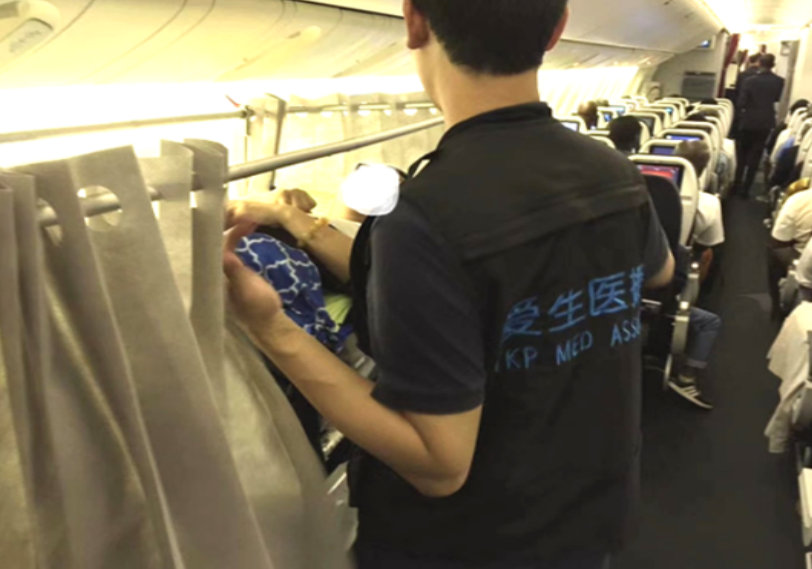
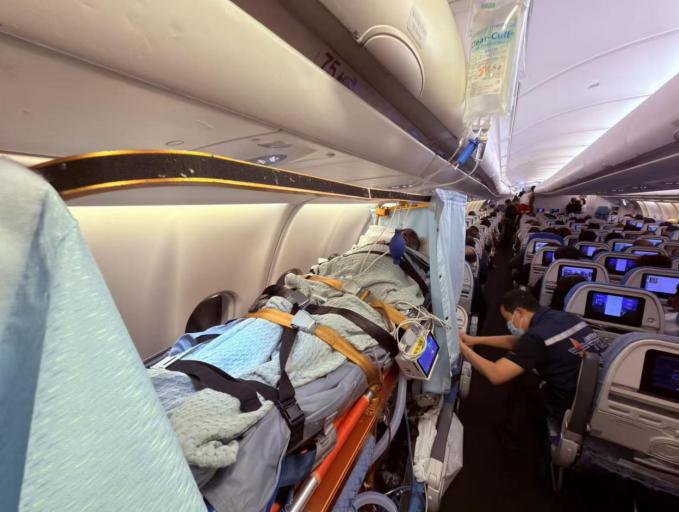
Moving from Africa to Europe to Asia required precision at every segment. We navigated language and time-zone barriers and set up medical support at each handover point. A 10-hour layover ICU setup at CDG (Paris) enabled continuous monitoring and real-time stabilization. Before departure, our team completed a final bedside assessment to confirm readiness for long-haul flight. At 30,000 feet, the patient rested on an in-flight stretcher while vital signs and device parameters were tracked without interruption. Aparation guide: your essential checklist
Preparing early speeds approvals and reduces ground time. Please gather the following before we mobilize:
• Patient medical information: Recent records, discharge summaries, diagnoses, treatment plans, and current medications. If possible, provide English translations and the current attending physician’s contact.
• Travel and ID documents: Patient passport, IDs for accompanying family members, and visas if required. For minors, include birth certificates or authorization letters. Keep scanned copies ready.
• Insurance or payment details: Policy copies and insurer contacts. If insurance will not apply, confirm the payor and any required financial guarantees or consent forms so providers can speak with the insurer.
• Authorized representative: Assign a reachable family decision-maker and a secondary contact. Share any preferred receiving hospital or country, and flag needs such as medical oxygen, language assistance, or mobility support.
• Visa considerations: Some routes require medical visas or humanitarian permits. We assist with invitation letters and embassy communication, but processing can take 24–72 hours – start as early as you can.
At TKP Medical Assistance, our mission is constant: keep the patient stable, shorten the journey, and make every handover seamless. If you are evaluating Comatose Patient Transfer Services, we invite you to request a no-obligation route and risk review. Our clinical and operations teams will outline the safest path, equipment plan, and staffing profile for your case, then coordinate next steps so you can focus on what matters most – your patient. For hospitals seeking a partner for complex pediatric moves or an international comatose patient air ambulance deployment, we will bring the same discipline to your next mission that we bring to all of ours.
Submit Your Request
Recent Posts

Tags
- Air Ambulance
- Bedside To Bedside
- Cross Border Aid
- Emergency Evacuation
- Global Medical Rescue
- How can I ensure the patient's stability while in the air?
- How do I request an air medical transport?
- How is it different from an air ambulance
- how to activate emergency aircraft service
- how to request an air ambulance
- Is air medical transport safe
- Is international transport possible
- Medical Rescue
- Medical Transport
- Patient Repatriation
- Remote Rescue
- Seamless Coordination
- Telemedicine Support
- Tourists And Expats Medical Escort
- What are the benefits of a cross-border medical transfer
- What are the different types of transfers
- What are typical use cases
- What documents do I need to prepare for a transfer?
- What does high-speed rail patient transfer stands for
- What is air ambulance
- What is air medical transport?
- What is cross-border medical transfer
- What is emergency aircraft
- what is high-speed rail patient transfer
- What is medical charter flight
- what is neonatal ICU transfer
- What is patient air transfer
- What medical equipment is available on board the aircraft
- What situations shouldn't use air medical transport?
- What types of air ambulance are there?
- What types of air ambulance exist
- What's the difference between international and domestic transfers?
- what’s the difference between air medical transport and regular ambulance?
- When is emergency air transport necessary
- Which patients require air medical transport?
- who is included in the medical team
- who needs an air ambulance