


Commercial Stretcher Medical Equipment for Cross-Border Care


Commercial stretcher medical equipment allows stable, bedridden patients to move across borders safely and cost-effectively – and at TKP Medical Assistance, we take ownership of every step, from bedside handover to hospital admission, with quiet precision and human warmth.
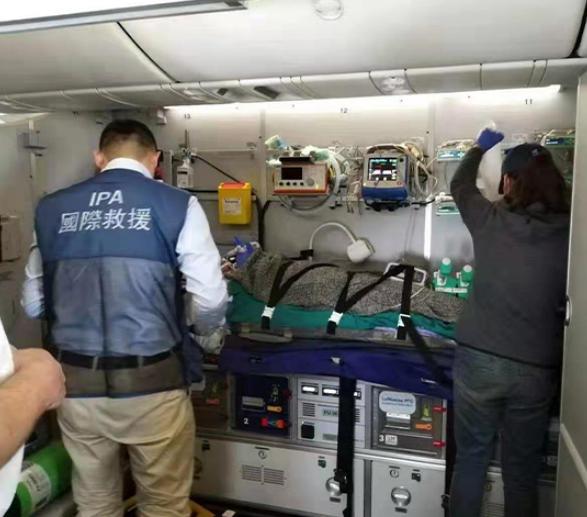
Why Commercial Stretcher Medical Equipment Matters in Cross-Border Care
Families and hospitals face predictable hurdles when a patient cannot travel upright: clock-ticking discharge deadlines, airline paperwork, unfamiliar routes, and the need for constant clinical oversight. With airline approval, a dedicated stretcher compartment can be installed on international or domestic commercial flights, turning a standard cabin into a controlled transport space for patients who must remain supine. Our medical escort stays with the patient throughout, managing monitoring, oxygenation, comfort, and communication. For stable cases, this solution provides a practical alternative to a full air ambulance – one that protects safety, preserves dignity, and reduces cost without compromising care.
At TKP Medical Assistance, we focus on post-stabilization critical care transfers and time-sensitive evacuations. We do not reuse templates. We design around the patient: condition, route, timing, and handovers. That means rigorous pre-flight assessment, the right clinical kit, and real coordination with sending and receiving teams. When commercial stretcher medical equipment is the right tool, we secure approvals, plan cabin configuration and boarding, and keep the schedule predictable. When it isn’t the best fit, we pivot to other modes without friction, maintaining one continuous clinical narrative.
- Airline-approved stretcher flights for stable, supine patients
- Bedside-to-bedside medical escort for continuity and clarity
- Integration with air ambulance, high-speed rail, and ground ambulance when needed
How TKP Medical Assistance Ensures Door-to-Door Care
Our route planning is built to overcome geography, time zones, and administrative complexity. We maintain a flexible network that links remote, underserved, or emergency locations to leading medical facilities worldwide. By choosing airports strategically – including those with minimal infrastructure – we shorten total transit time and keep transfers moving, even when the origin or destination sits far from a major hub. The objective is simple: a smooth chain of custody, fewer handoffs, and steady, transparent communication for families and clinicians.
- Airline-approved Setups and Continuous Clinical Oversight
We configure commercial stretcher medical equipment only after airline sign-off to ensure proper space, securement points, and safe access for clinical tasks. On board, our medical escorts connect monitoring devices, oversee oxygenation, and watch trends instead of snapshots. If clinically appropriate, sedation is administered to reduce discomfort and motion-related stress. During cruise and descent, our team shares meaningful updates with the receiving hospital so that admission can proceed without delay. The result is not just transport – it is sustained care in motion, with the aircraft serving as a controlled extension of the ward.
- Route Design and Real-time Control
The plan matters, but so does the ability to rewrite it on the fly. We tailor scheduling to the patient’s stability and coordinate directly with medical institutions and embassies to clear administrative obstacles. Our operations team monitors each leg in real time and adjusts when weather, slots, or ground logistics shift.
- Dynamic flight scheduling matched to clinical status and urgency
- Global coverage across domestic and international routes
- Use of airports with minimal infrastructure for remote access
- Optimized paths to cut total transit time and protect safety
- Close coordination with hospitals and embassies for smooth transfers
Because we combine modes, we can connect the dots end-to-end: commercial stretcher segments, air ambulance for higher acuity or route limitations, high-speed rail when ground-level speed and comfort align with the plan, and ground ambulance for secure bedside pickup and delivery. This integrated approach underpins a long-tail need many families search for – cross-border patient transfer services – and it does so with one point of accountability.
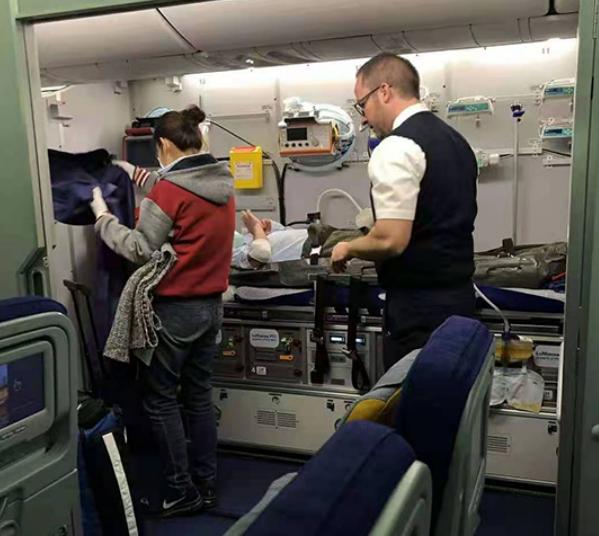
Proof in Practice
On February 14, 2019, we coordinated a transfer from Milan → Eastbourne using a Patient Transport Compartment (PTC) for a patient with traumatic brain injury. The PTC kept the patient safely secured in a stretcher configuration, with monitoring devices connected and ready before taxi. Oxygenation was managed throughout. The medical escort tracked vital trends, communicated updates to the receiving team, and kept the environment calm. What families remember from such missions is not the acronyms – it is the sense that the journey never slipped out of control.
Some journeys demand careful staging. In a separate intercontinental operation spanning Africa → Europe → Asia, language barriers and time zone gaps were real, but solvable. At Charles de Gaulle Airport, we established a 10-hour transfer ICU to stabilize the patient between flights. Real-time blood gas monitoring and vital-sign adjustments protected clinical stability before the next leg. By inserting a planned pause, we maintained momentum while respecting physiology – a decision that turns a risky itinerary into a safe, sequenced transfer.
Not every case qualifies for a stretcher on a commercial flight, and not every route will accept one. That’s why our planning begins with clinical reality, then maps transport around it. When commercial stretcher medical equipment aligns with the patient’s condition and the airline’s rules, it becomes a powerful option – especially for an international patient stretcher flight that must balance safety, timing, and cost. When acuity rises or a route won’t approve a stretcher, our air ambulance capability takes the lead. High-speed rail and ground ambulance fill in the edges, linking hospital wards to jetways and jetways back to wards with minimal disruption.
Throughout, the constant is continuity: one team, one plan, one clinical narrative. Families see fewer surprises and clearer milestones. Hospitals receive patients whose status has been monitored and communicated, not merely transported. The patient experiences a journey that feels steady, deliberate, and compassionate.
Ready to Move from Uncertainty to a Confirmed Plan?
Contact TKP Medical Assistance to evaluate whether commercial stretcher medical equipment suits your case. We will confirm airline eligibility, outline route options, and define the clinical escort profile for each leg – commercial stretcher, air ambulance, high-speed rail, and ground ambulance as required. From the first bedside handshake to the receiving unit’s welcome, we keep the chain intact and the communication honest.
Start your case review today. We’ll map an efficient, safe itinerary and assign a dedicated coordinator so you always know who is accountable – and what happens next.
Submit Your Request
Recent Posts

Tags
- Air Ambulance
- Bedside To Bedside
- Cross Border Aid
- Emergency Evacuation
- Global Medical Rescue
- How can I ensure the patient's stability while in the air?
- How do I request an air medical transport?
- How is it different from an air ambulance
- how to activate emergency aircraft service
- how to request an air ambulance
- Is air medical transport safe
- Is international transport possible
- Medical Rescue
- Medical Transport
- Patient Repatriation
- Remote Rescue
- Seamless Coordination
- Telemedicine Support
- Tourists And Expats Medical Escort
- What are the benefits of a cross-border medical transfer
- What are the different types of transfers
- What are typical use cases
- What documents do I need to prepare for a transfer?
- What does high-speed rail patient transfer stands for
- What is air ambulance
- What is air medical transport?
- What is cross-border medical transfer
- What is emergency aircraft
- what is high-speed rail patient transfer
- What is medical charter flight
- what is neonatal ICU transfer
- What is patient air transfer
- What medical equipment is available on board the aircraft
- What situations shouldn't use air medical transport?
- What types of air ambulance are there?
- What types of air ambulance exist
- What's the difference between international and domestic transfers?
- what’s the difference between air medical transport and regular ambulance?
- When is emergency air transport necessary
- Which patients require air medical transport?
- who is included in the medical team
- who needs an air ambulance