


Why Air Medical Transport Demands Specialized Commercial Stretcher Equipment


Commercial Stretcher Medical Equipment impacts whether an airborne transfer feels smooth or risky. At TKP Medical Assistance, we plan every movement around the stretcher system: how it mounts, how it protects the patient, how it fits airline approvals, and how it supports continuous care between aircraft, rail, and road.
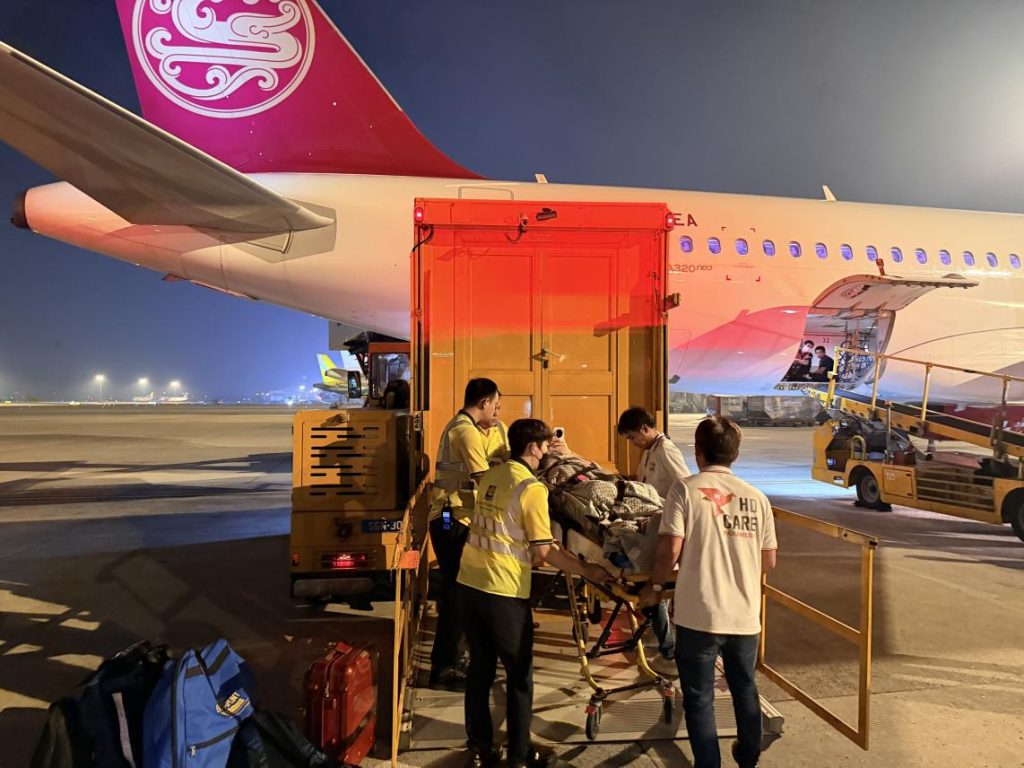
Why Specialized Stretchers Matter
Moving a patient by air is unlike any other transfer. Cabins are narrow, movement is restricted, and turbulence is unpredictable. A device that looks fine in a hospital corridor can create risk in flight. That is why Commercial Stretcher Medical Equipment must be engineered for airworthiness, fast installation, and clinical reliability. These traits safeguard three priorities at once: patient safety, aircraft safety, and continuity of care.
At TKP Medical Assistance, we design itineraries around real-world constraints – time zones, airport slots, and connecting ground legs. We deliver post-stabilization critical care transfers and time-sensitive evacuations with one rule: the patient should never feel the handoff. Our team secures airline approvals for dedicated stretcher compartments on international or domestic flights, assigns an onboard medical escort, and integrates high-speed rail and ground ambulances at both ends when needed. For stable, bedridden travelers, this route often lowers costs without lowering standards.
- Pain Points We Eliminate In The Air
Air operations expose hidden friction: weight ceilings, incompatible cabin mounting points, slow conversions, and vibration that increases discomfort or clinical risk. We respond with Commercial Stretcher Medical Equipment built from lightweight alloys, positive-lock interfaces, and vibration-damping mattresses. Cleanability matters too; sealed surfaces that wipe down quickly reduce infection risk and shorten turnarounds during multi-leg journeys.
❓ Why Airline Approvals Are Non-Negotiable?
A perfect stretcher without paperwork can still ground a mission. Airline acceptance lists, documented load paths, and clear installation procedures prevent last-minute cancellations. Because we work cross-border, our coordination team maintains current acceptance data and confirms aircraft type compatibility before a family ever leaves the hospital.
What Sets Commercial Stretcher Medical Equipment Apart
Specialized equipment is not a marketing label; it is a specification. Every bracket, latch, and rail must withstand takeoff loads while keeping clinical tasks simple.
- Built For Fast, Predictable Installs
Airlines run tight schedules. We deploy stretcher kits that pair with approved cabin layouts and use rapid-install hardware. Shorter ground time benefits everyone – crews, operators, and families waiting at the destination.
• Airline Compatibility & Swift Setup
• Positive-Lock Rails With Secondary Retention
• Slim Profiles To Preserve Aisle Access
- Safety First: Restraints, Vibration, And Ergonomics
Four-point restraint systems and quick-release side rails prevent shear and roll during turbulence. Shock-absorbing mattresses limit micro-movements that cause pain and pressure injuries on long-haul flights. For staff, height-adjustable frames and transfer aids reduce lifting strain and shorten door-to-door times – a win for both safety and efficiency.
• Four-Point Restraints And Quick-Release Rails
• Vibration-Damping Mattress And Pressure Relief
• Height Adjustment And Glide Aids For Safer Transfers
- Clinical Integration That Keeps Care Continuous
A tidy cabin is a safer cabin. Purpose-built mounts for oxygen cylinders, suction, and monitors keep lines organized and accessible. Integrated IV poles and power interfaces support therapy across every segment, so our escort team avoids risky re-rigging mid-journey. Smooth, antimicrobial surfaces and tool-light maintenance keep cleaning efficient between legs.
• Dedicated Mounts For Oxygen, Suction, Monitoring
• Power Interfaces For Long-Haul Therapy
• Antimicrobial, Seam-Sealed Surfaces For Fast Turnaround
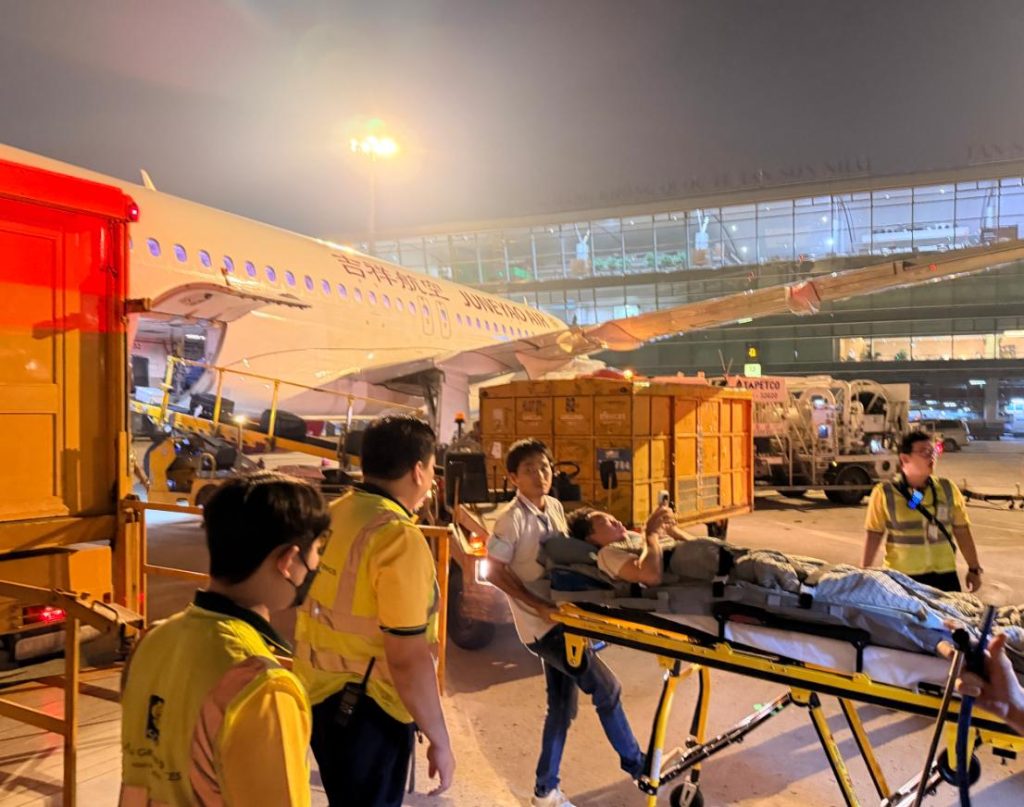
Commercial Stretcher Or Air Ambulance?
Not every case warrants a dedicated air ambulance. For stabilized patients who must travel supine, Commercial Stretcher Medical Equipment on a scheduled airline can reduce costs while preserving clinical safeguards. When a patient is unstable, requires complex ventilatory support, or must depart from a remote airfield, an air ambulance with ICU capability is the safer and faster answer. Our role is to audit the case, balance risk and budget, and – when appropriate – blend modes so the patient receives the right care at the right cost.
✅ Typical Use Cases We Support
• Post-Stabilization ICU Transfers where the patient tolerates cabin pressurization and scheduled departures.
• Orthopedic Trauma with strict immobilization and lateral transfer needs across multiple borders.
• Neurology And Stroke Follow-Ups where vibration control and line security reduce complication risk.
• Oncology Travel requiring low-stress, supine positioning with continuous oxygen and monitoring.
What To Verify Before You Fly
If you source equipment internally, evaluate against these essentials to avoid delays and inflight surprises:
• Airworthiness Documentation: Current approvals and airline acceptance to prevent cancellations.
• Mounting Integrity: Positive-lock rails plus secondary retention to withstand turbulence loads.
• Patient Handling: Transfer boards, glide sheets, and stable working heights for safer staff movement.
• Power & Oxygen: Clearly labeled routing with capacity for long-haul sectors.
• Cleanability: Surfaces that disinfect quickly between segments.
- Cost, Delays, And The Real Price Of “Cheap”
Low upfront cost often hides high operational risk. If the stretcher cannot be cleared by the airline, or if the mounting kit does not match the aircraft layout, the mission stalls. Each delay adds overnight stays, extra ground legs, and family stress. By standardizing on proven Commercial Stretcher Medical Equipment and coordinating approvals early, TKP Medical Assistance compresses timeline risk and keeps total journey cost in check. This is vital for families and insurers alike – and central to our international patient repatriation services.
- Plan A Safer Transfer With TKP Medical Assistance
Every journey is different, but the principle is the same: protect the patient and remove friction. Whether you need an airline-approved stretcher compartment on a scheduled flight or a door-to-door ICU air ambulance, our team handles clinical escorts, airline clearances, and ground integrations so care never breaks.
Call-to-Action
Get A Free Case Assessment Today. Let TKP Medical Assistance design a route that matches your clinical needs, budget, and timeline – powered by specialized Commercial Stretcher Medical Equipment that’s built for the sky.
Submit Your Request
Recent Posts
Tags
- Air Ambulance
- Bedside To Bedside
- Cross Border Aid
- Emergency Evacuation
- Global Medical Rescue
- How can I ensure the patient's stability while in the air?
- How do I request an air medical transport?
- How is it different from an air ambulance
- how to activate emergency aircraft service
- how to request an air ambulance
- Is air medical transport safe
- Is international transport possible
- Medical Rescue
- Medical Transport
- Patient Repatriation
- Remote Rescue
- Seamless Coordination
- Telemedicine Support
- Tourists And Expats Medical Escort
- What are the benefits of a cross-border medical transfer
- What are the different types of transfers
- What are typical use cases
- What documents do I need to prepare for a transfer?
- What does high-speed rail patient transfer stands for
- What is air ambulance
- What is air medical transport?
- What is cross-border medical transfer
- What is emergency aircraft
- what is high-speed rail patient transfer
- What is medical charter flight
- what is neonatal ICU transfer
- What is patient air transfer
- What medical equipment is available on board the aircraft
- What situations shouldn't use air medical transport?
- What types of air ambulance are there?
- What types of air ambulance exist
- What's the difference between international and domestic transfers?
- what’s the difference between air medical transport and regular ambulance?
- When is emergency air transport necessary
- Which patients require air medical transport?
- who is included in the medical team
- who needs an air ambulance