


Why Commercial Stretcher Services Reduce Hidden Transport Risks


Commercial Stretcher Services sound simple: a bed on a plane, a nurse by the side, a smooth journey from A to B. But real transfers are rarely that neat. Risks hide in the gaps – at the jet bridge, during handoffs, inside paperwork, even in oxygen planning. One missed detail can turn a stable trip into a crisis. Why do some journeys stay calm while others spiral? What quiet systems keep patients safe when the schedule slips? And how can families choose a safer, smarter route without overspending? In the next sections, we open the black box – and reveal what really prevents harm.
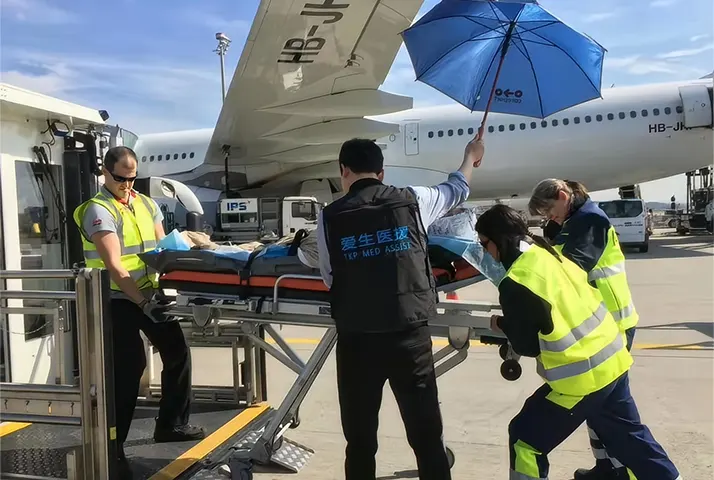
What are the Hidden Transport Risks
Hospital-to-hospital or international transfers look simple: book a flight, arrange ground transport, assign a nurse. In reality, risk hides in the gaps. A handoff missed at the jet bridge, a poorly timed medication window, an airport with limited lifts, or a route that crosses borders without pre-cleared approvals – each detail can cause delays, pain, or deterioration. At TKP Medical Assistance, we design Commercial Stretcher Services to make those gaps disappear. Since 2001 in Shenzhen, we’ve completed 10,000+ missions across borders. Our focus is post-stabilization critical care and time-sensitive evacuations, so continuity matters more than speed alone; we engineer both.
Hidden risk often appears when stable patients are moved like regular passengers. Bedridden travelers need airline-approved stretcher compartments, trained medical escorts, oxygen planning, and predictable transfer corridors. Without this scaffolding, “routine” trips become fragile. That’s why Commercial Stretcher Services exist: to turn uncertain logistics into clinical pathways.
✅ Where Risks Hide In Routine Transfers
• Misaligned flight times with medication and monitoring schedules
• Aircraft changes that remove stretcher-compatible layouts
• Airports lacking lifts or airside access for bedridden patients
• Border paperwork, visas, or medical clearances not pre-arranged
• Communication breaks across hospitals, airlines, ambulances, and families
❓ Why The Right Partner Matters?
To reduce hidden risk, the transport plan must be clinical by design. TKP‘s operations run 24/7, syncing physicians, case managers, airlines, and ground teams so handoffs are timed, not improvised. The result: fewer surprises, faster lanes at chokepoints, and safer outcomes for non-emergency but medically dependent travelers.
How Commercial Stretcher Services Reduce Hidden Risks
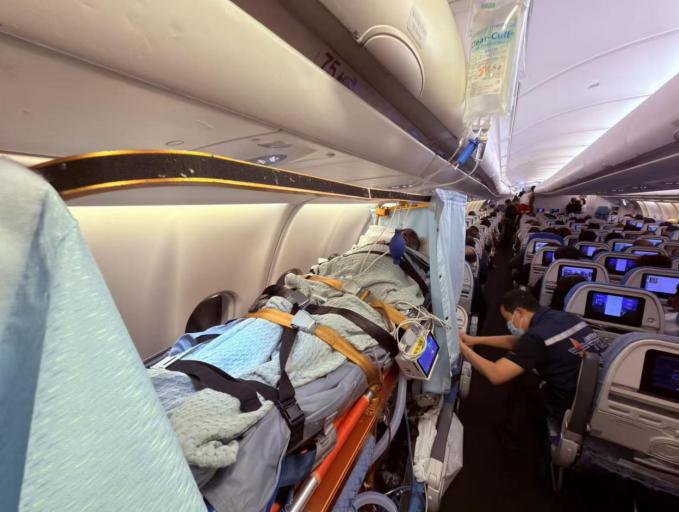
Commercial Stretcher Services place approved stretcher compartments on international or domestic flights and keep a medical escort with the patient from bed to bed. This approach is often more cost-effective than a dedicated air ambulance for stable cases, while preserving clinical oversight.
• Airline Approval & Cabin Configuration – We secure carrier authorization and allocate a dedicated stretcher area, protecting airway access, privacy, and monitoring space.
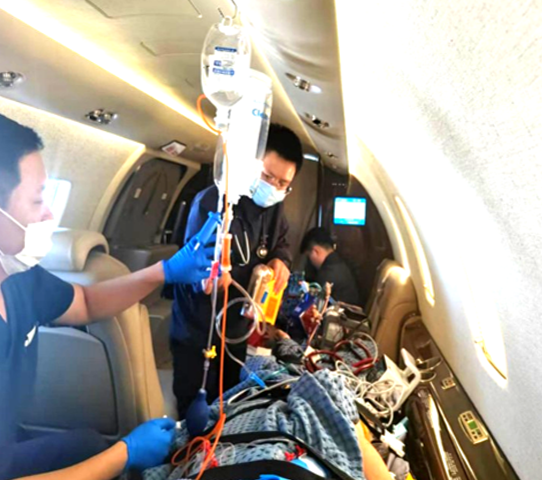
• Continuous Medical Escort – Multidisciplinary teams manage pain, airway, fluids, and pressure relief; they also coordinate handovers at each leg.
• Integrated Modes – When a direct flight is impossible, we blend air ambulance, high-speed rail, and ground ambulance to maintain clinical continuity end-to-end.
• Pre-Cleared Paperwork – Clearances with hospitals, insurers, and embassies remove border friction that typically creates risk.
• Time Windows Locked – Medication, nutrition, and repositioning schedules are mapped to flight slots and ambulance ETAs.
- Route Planning That Protects Patients
Our transfer route map connects remote or underserved locations to major centers with optimized legs. We routinely select airports with minimal infrastructure requirements to shorten distance-to-care. Dynamic scheduling adapts to patient status and weather. Real-time monitoring allows our ops team to re-route when necessary, keeping the clinical plan intact instead of starting over. This is how we cut unplanned layovers, reduce pressure injury exposure, and keep oxygen and power assumptions true from origin to destination.

What Sets TKP Medical Assistance Apart
With 24+ years in cross-border medical transport, TKP pioneered China’s aero-medical evacuation ecosystem and now operates from six regional branches to speed local response across South, East, Central, and Southwest hubs. Our difference is systems engineering: the same attention we give to a ventilator setting is given to a gate assignment, a rail connection, or an embassy note. The details below translate directly into fewer hidden risks.
First, we design for continuity of care. The team that begins the journey remains accountable through every handoff, including ambulance-to-aircraft transfers and the final hospital admission. Second, we scale clinical governance to logistics: pre-flight assessments, stabilization checks, and escalation playbooks live in the route plan – not separate from it. Third, we match the mode to the medical need. For stable yet bedridden patients, Commercial Stretcher Services deliver safety with better economics; for unstable patients, we pivot to air ambulance with a full onboard medical escort. Having both options inside one command framework lets us choose the safest, fastest, and most cost-sensible path.
✅ When To Choose Commercial Stretcher Services
• The patient is stable but requires continuous monitoring and a lying position
• Cross-border transfer is needed, and cost control matters
• The origin or destination is remote, and integrated modes will shorten time-to-care
• A family requests privacy and predictability without sacrificing clinical oversight
Call To Action – Let‘s Plan Your Safe Transfer
If you’re planning an international or long-distance move for a bedridden or mobility-restricted patient, talk to TKP’s clinicians early. We’ll assess eligibility for Commercial Stretcher Services, align airline approval, map the safest route, and coordinate every handoff – from ward bed to aircraft stretcher to receiving hospital. Contact TKP Medical Assistance today for a rapid case review and a clear, risk-reduced plan.
Submit Your Request
Recent Posts
Tags
- Air Ambulance
- Bedside To Bedside
- Cross Border Aid
- Emergency Evacuation
- Global Medical Rescue
- How can I ensure the patient's stability while in the air?
- How do I request an air medical transport?
- How is it different from an air ambulance
- how to activate emergency aircraft service
- how to request an air ambulance
- Is air medical transport safe
- Is international transport possible
- Medical Rescue
- Medical Transport
- Patient Repatriation
- Remote Rescue
- Seamless Coordination
- Telemedicine Support
- Tourists And Expats Medical Escort
- What are the benefits of a cross-border medical transfer
- What are the different types of transfers
- What are typical use cases
- What documents do I need to prepare for a transfer?
- What does high-speed rail patient transfer stands for
- What is air ambulance
- What is air medical transport?
- What is cross-border medical transfer
- What is emergency aircraft
- what is high-speed rail patient transfer
- What is medical charter flight
- what is neonatal ICU transfer
- What is patient air transfer
- What medical equipment is available on board the aircraft
- What situations shouldn't use air medical transport?
- What types of air ambulance are there?
- What types of air ambulance exist
- What's the difference between international and domestic transfers?
- what’s the difference between air medical transport and regular ambulance?
- When is emergency air transport necessary
- Which patients require air medical transport?
- who is included in the medical team
- who needs an air ambulance