


Why Cross-Border or Intercontinental Medical Transfer Needs Better Coordination


Cross-Border or Intercontinental Medical Transfer is only as safe as the coordination behind it. When missions cross borders, time zones, and transport modes, small gaps can trigger big problems: schedule slips, airway instability, and surprise costs. At TKP Medical Assistance, a trusted provider of cross-border medical evacuation and patient transfer services, we design every mission around one principle – clear roles, shared data, and a single chain of custody from bed to bed.
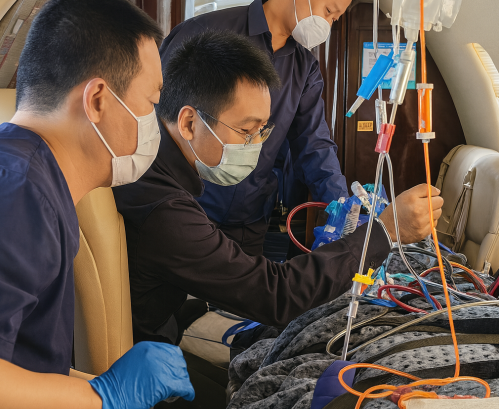
Why Coordination Decides Outcomes
Moving a fragile patient across countries is not a simple booking exercise; it is clinical logistics. A ventilator setting, an IV rate, or a customs delay can change the risk picture in minutes. That is why our teams plan routes, approvals, and staffing around the patient’s current condition – not around the cheapest or fastest itinerary on paper. We call this coordination-first care.
In practical terms, it means aligning aircraft capability, oxygen duration, power access, and cabin configuration with bedside needs. It also means syncing ground ambulances to block times so the stretcher never waits on the apron. Our operations center tracks each leg in real time and pushes updates to hospital liaisons, embassy contacts, and family spokespeople. When a runway slot moves or weather shifts, the plan updates instantly. The patient never becomes the buffer for uncertainty.
- What Fails Without Coordination
- Misaligned timelines create idle tarmac time and oxygen depletion risk.
- Missing airline approvals derail Cross-Border or Intercontinental Medical Transfer at the last gate.
- Fragmented paperwork slows customs, immigration, and hospital admission.
- Inconsistent care protocols can cause pressure injuries or airway events.
Coordination removes these weak points. With one communication spine and standardized handovers, every professional along the path – ICU physician, flight nurse, dispatcher, customs broker, and driver – works from the same, current facts.
Case In Point: Chengdu To Eastbourne, Built Around Stability
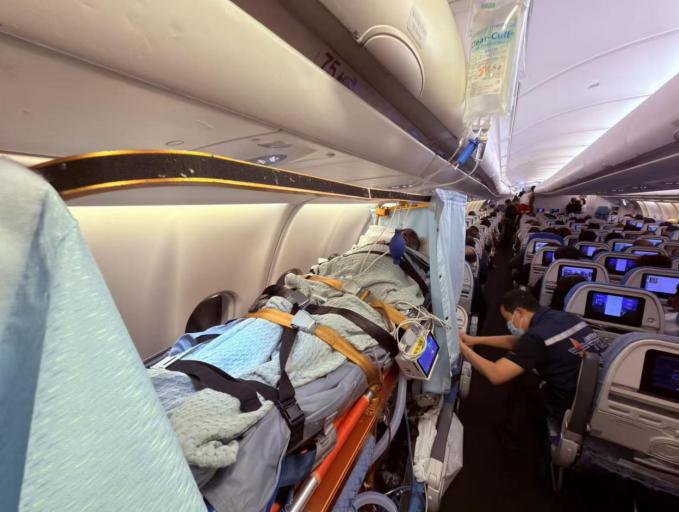
On February 12, 2025, TKP Medical Assistance completed a bed-to-bed transfer from Chengdu to Eastbourne, UK using a commercial flight stretcher service with timed ambulance handovers in Europe. The patient had a post – spinal cord injury, tracheostomy, and ventilator-assisted breathing. The objective was simple to say and hard to do: keep the airway secure, maintain sedation targets, and avoid pressure injury during a long, multi-leg journey.
Before departure, we obtained airline approvals for a dedicated stretcher compartment and confirmed power compatibility for equipment. We agreed on ventilator parameters with the sending ICU and documented contingency settings for ascent and descent. Border formalities were pre-cleared. A receiving bed and team in Eastbourne were booked and briefed.
During the flight, our escort team adjusted IV infusions and sedation to match cabin conditions. Vital signs were logged against ambulance rotation plans, so every crew downline knew the latest trend, not just a snapshot. The stretcher moved steadily from Cabin-1 to Cabin-2, through the jet bridge, and into the medical corridor, with assigned roles for lift, monitor, airway, and documentation. On landing, the ground ambulance received the patient within minutes. No idle time. No oxygen stress. No handover confusion.
This mission illustrates what effective international patient transport coordination looks like: one clinical plan traveling with the patient; one record of equipment, drugs, and events; one accountable lead for each segment. The result is a stable, traceable journey across continents.
Addressing The Real Pain Points
- Regulatory Friction: Each border adds rules for medical devices and controlled drugs. We liaise early with airlines, airports, embassies, and hospitals to keep the mission moving.
- Handover Fatigue: Every transfer risks line kinks, accidental disconnections, and data loss. We rehearse lifts, assign named roles, and record a standard bedside-to-ambulance checklist.
- Documentation Drift: Paperwork diverges across teams. Our digital handover pack follows the patient, ensuring consistent ventilator settings, sedation scales, and medication histories.
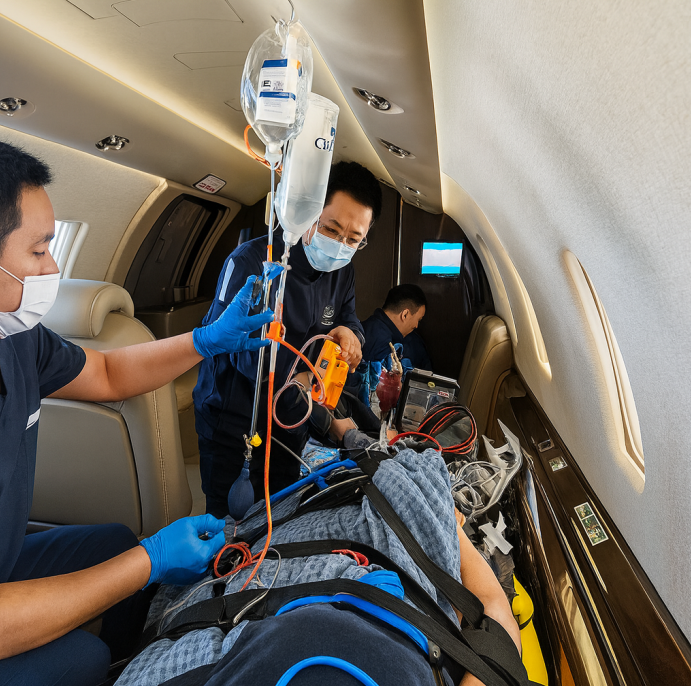
The TKP Blueprint: Turning Complexity Into A Clear Path
A safe Cross-Border or Intercontinental Medical Transfer starts with route design. Our network links remote, underserved, and emergency locations to leading hospitals worldwide. We use strategically chosen airports – including those with limited infrastructure – to shorten exposure time and avoid unnecessary hops. When flight is not ideal, we integrate high-speed rail plus ambulance to maintain continuity.
1.Modes Matched To Clinical Need
- Commercial Stretcher Transport: Airline-approved stretcher compartments on domestic or international flights, escorted by medical staff. A cost-effective choice for stable patients who must remain supine.
- Air Ambulance & ICU Transfers: Aircraft with ICU-grade monitoring, ventilators, and life support. Staffed by intensive-care physicians and flight-trained nurses for high-acuity cases.
- Rail-Based Medical Transfers: Coordinated high-speed rail segments with ambulance pick-up and drop-off. Useful for neonatal or post-surgery patients when geography or weather makes rail safer than air.
2.How The Plan Holds Together
- One Plan, Many Legs: Air, rail, and road stitched into a single, timestamped line of movement.
- Named Custody Of Care: Clear leads for cabin, ramp, and road. Everyone knows who is in charge at every minute.
- Pre-Cleared Borders: Customs and immigration briefed in advance. Less waiting, less risk.
- Continuous Monitoring: Trend-based decisions at handover, not single-point readings.
- Documented Handover: Standardized checklists and event logs at every transition.
Behind the scenes, our operations team monitors ATC changes, weather, and crew duty limits in real time. If a slot delay appears, oxygen usage and sedation plans are recalculated immediately. If a hospital’s intake window shifts, we re-time the ambulance leg. Because the plan is centralized, updates cascade to every stakeholder without phone-tag or guesswork.
Why Hospitals And Insurers Choose TKP
Hospitals need fast, defensible decisions; insurers need predictable costs; families need clear updates. TKP Medical Assistance delivers all three by aligning clinical safety with logistics discipline. We do not chase the cheapest routing only to pay for it later in risk. We build the mission around the patient’s physiology first, then the timetable, then the budget – always in that order.
Call To Action: Planning a Cross-Border or Intercontinental Medical Transfer or seeking a second opinion on route, approvals, or mode selection? Contact TKP Medical Assistance for a rapid case review and a coordination-first plan that protects clinical stability, keeps timelines realistic, and controls costs – without cutting corners.
Submit Your Request
Recent Posts

Tags
- Air Ambulance
- Bedside To Bedside
- Cross Border Aid
- Emergency Evacuation
- Global Medical Rescue
- How can I ensure the patient's stability while in the air?
- How do I request an air medical transport?
- How is it different from an air ambulance
- how to activate emergency aircraft service
- how to request an air ambulance
- Is air medical transport safe
- Is international transport possible
- Medical Rescue
- Medical Transport
- Patient Repatriation
- Remote Rescue
- Seamless Coordination
- Telemedicine Support
- Tourists And Expats Medical Escort
- What are the benefits of a cross-border medical transfer
- What are the different types of transfers
- What are typical use cases
- What documents do I need to prepare for a transfer?
- What does high-speed rail patient transfer stands for
- What is air ambulance
- What is air medical transport?
- What is cross-border medical transfer
- What is emergency aircraft
- what is high-speed rail patient transfer
- What is medical charter flight
- what is neonatal ICU transfer
- What is patient air transfer
- What medical equipment is available on board the aircraft
- What situations shouldn't use air medical transport?
- What types of air ambulance are there?
- What types of air ambulance exist
- What's the difference between international and domestic transfers?
- what’s the difference between air medical transport and regular ambulance?
- When is emergency air transport necessary
- Which patients require air medical transport?
- who is included in the medical team
- who needs an air ambulance