


Emergency Air Ambulance Procedures Simplified for Families


Emergency Air Ambulance Procedures can feel like a maze when a loved one is in crisis, but at TKP Medical Assistance we turn that pressure into a clear, stepwise plan you can trust – what happens, who’s responsible, and how every risk is managed.
What Emergency Air Ambulance Procedures Involve
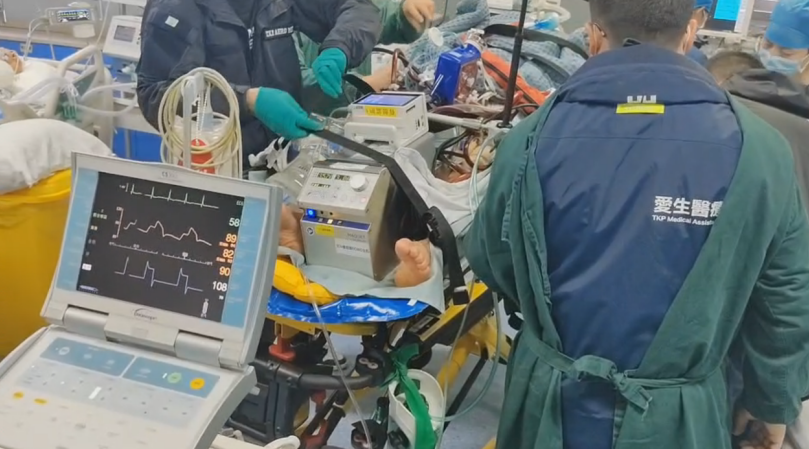
Families often tell us the hardest part is the first hour: too many decisions, too little certainty. Our job is to replace guesswork with process. We coordinate medical readiness, aircraft selection, ground ambulances, airport access, and bedside-to-bedside handovers as one continuous chain of care. A dedicated case manager explains options in plain English, keeps the timeline realistic, and confirms acceptance with the receiving hospital before anyone moves. You get the “why”behind each step, not just the “what.”
- How the Process Starts
Once you contact us, we confirm clinical suitability and assemble the right critical-care team for the case. We match equipment to the patient – ventilators, infusion pumps, and life-support interfaces – then run redundant pre-flight checks. On the ground, we secure priority lanes and coordinate the hospital handoff so there’s no waiting at the curb or the tarmac. In the air, our ICU clinicians track vitals, titrate therapy, and keep a real-time log of interventions. On arrival, we complete a structured, face-to-face transfer with the receiving team so there is no clinical gap. These Emergency Air Ambulance Procedures are built to cut delay at every touchpoint.
- What Families See and Hear
You can expect practical, calm communication. We share the flight plan, confirm documents and consents, and advise on what to pack and what to leave. We discuss communications during the flight and how updates will be delivered. The tone matters: straightforward, empathetic, and honest about constraints such as weather or airspace. The aim is not only safe transfer, but also a sense of control for you.
Critical Care & Neonatal Transport, Done Without Interruptions
Some missions demand life support that cannot pause – not for a lift onto a stretcher, not for a runway turn, not for a cabin climb. Our ICU-trained teams support ECMO and IABP end-to-end and provide specialized neonatal and premature infant transport. This is precision medicine practiced at altitude.
❓ Who We Safely Transfer
We specialize in premature infants, postoperative neonates, children with congenital heart disease, and pediatric patients in respiratory failure. Each mission includes pediatric specialists and equipment sized and configured for tiny patients – heat-regulated incubators, micro-infusion pumps, neonatal ventilators, and carefully secured lines. In aviation medicine, small details – line routing, cable strain relief, battery sequencing – prevent big problems. Our checklists and drills are set up accordingly.
❓ What “Uninterrupted Support” Really Means
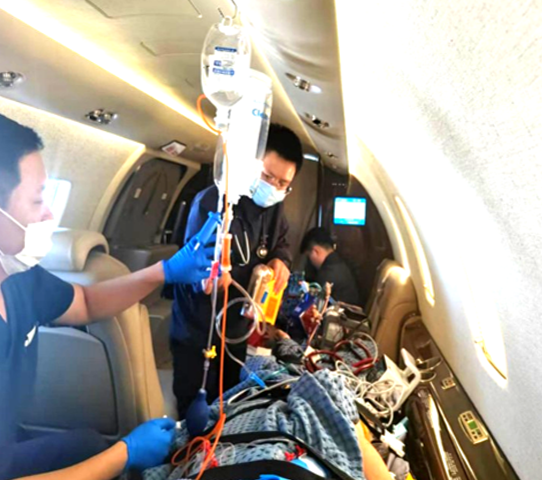
Our clinicians operate ECMO, IABP, ventilators, and related systems through every phase: bedside stabilization, the ambulance ride, the tarmac transfer, takeoff, cruise, descent, and handover. At each phase we run the same safety cadence: verify flows and pressures, confirm gas exchange, re-check connections, and document. These safeguards are part of our Emergency Air Ambulance Procedures and keep therapy stable when margins are thin.
• Full support for ECMO, IABP, and other advanced life-sustaining systems – including international flight segments.
• Expertise with premature infants, postoperative neonates, and pediatric patients with complex conditions.
• Trusted by leading hospitals such as Guangzhou Women and Children’s Medical Center for repeated neonatal transfers across provinces and borders.
For families, this translates to fewer surprises and fewer handoffs. For the patient, it means uninterrupted care from bed to bed. If you’re comparing providers, ask who runs the ECMO checklist at the gate and who signs the final handover – those answers matter.
CTA: Need a rapid clinical review? Contact TKP Medical Assistance for a confidential assessment and a step-by-step plan tailored to your case.
Cross-Border Route Planning – and a Real Case in 2025
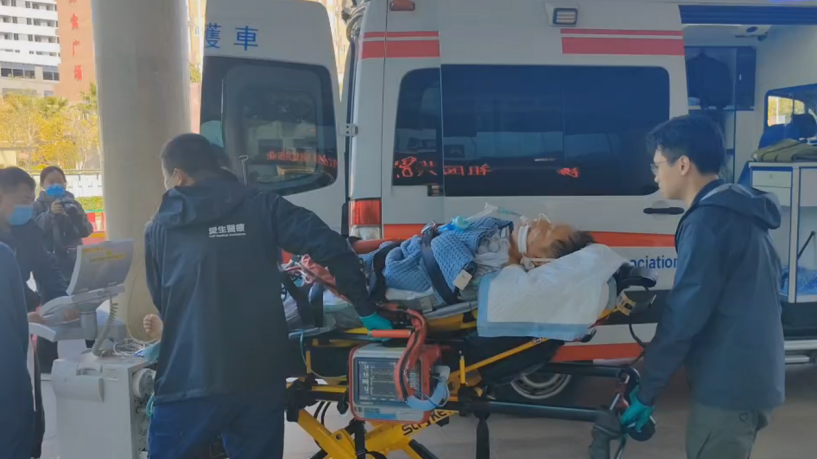
Route decisions are medical decisions. Our transfer route map spans domestic and international paths and includes airports with minimal infrastructure for remote access. We choose aircraft and alternates to reduce flight time, limit vibration, and maintain clinical stability. When the unexpected happens – weather changes, airspace restrictions – we adjust routes in real time while the clinical team continues care without pause.
How We Plan in Real Time
• Dynamic flight scheduling tuned to patient acuity and urgency
• Global coverage that links remote origins with top medical centers
• Use of airports with minimal infrastructure to reach underserved regions
• Optimized routes to trim time aloft and protect patient safety
• Close coordination with hospitals and embassies for cross-border clearances
Our operations center monitors every flight segment. Medical leadership is available around the clock to authorize therapy changes, and aviation dispatch is on the same line to shift slots or alternates. This tight loop is the practical core of our Emergency Air Ambulance Procedures and a key reason transfers stay on schedule.
✅ Case Snapshot – March 14, 2025
• Route: Xiamen → South Korea
• Mode: Air ambulance
• Diagnosis: Severe pulmonary infection requiring ECMO + IABP to maintain vital signs
What happened, step by step:
• Specialist doctors and ICU nurses traveled with the patient from ward to ICU to aircraft, maintaining continuous monitoring.
• A mobile power plan supported uninterrupted ECMO and IABP during ground movement and cabin climb.
• Cross-border paperwork and landing permissions were aligned in advance, enabling a direct, timely handover.
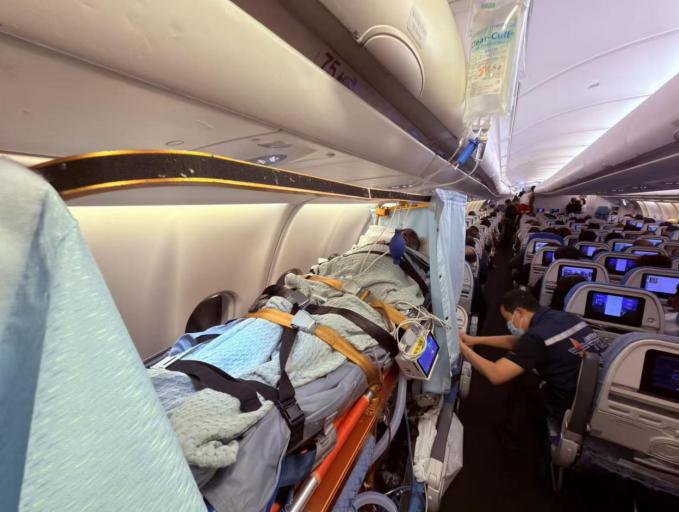
At the tarmac, ECMO was smoothly transitioned to onboard systems with zero interruption. During taxi and takeoff, we verified circuit integrity and gas exchange while the pilot maintained a climb profile matched to clinical tolerance. At cruising altitude, clinicians monitored ECMO flow, secured the airway, and rotated shifts to prevent fatigue. On landing, a structured handoff to the receiving ICU closed the loop. Not a single therapeutic pause. This is the standard we hold ourselves to.
Why TKP Medical Assistance
We blend clinical depth with precise logistics, combining pediatric intensive care expertise, ECMO/IABP proficiency, and agile route planning. For families, that means clarity in the middle of chaos; for referring hospitals, it means a reliable partner who can execute complex transfers across borders. Whether you need Emergency Air Ambulance Procedures for a premature infant, a postoperative neonate, or a child in respiratory failure, our bedside-to-bedside approach keeps care continuous.
If you want a second opinion on transport readiness – or simply need to understand the steps before you commit – speak with our team. We will walk you through eligibility, equipment, timelines, and the receiving-hospital acceptance process. We will also outline documentation and travel considerations so nothing stalls at the gate.
Call to Action: Talk to TKP Medical Assistance today for a clear, compassionate plan aligned with best-practice Emergency Air Ambulance Procedures – from bedside to ambulance to aircraft to receiving ICU. For families, that plan is peace of mind. For patients, it is stability when it matters most.
Submit Your Request
Recent Posts

Tags
- Air Ambulance
- Bedside To Bedside
- Cross Border Aid
- Emergency Evacuation
- Global Medical Rescue
- How can I ensure the patient's stability while in the air?
- How do I request an air medical transport?
- How is it different from an air ambulance
- how to activate emergency aircraft service
- how to request an air ambulance
- Is air medical transport safe
- Is international transport possible
- Medical Rescue
- Medical Transport
- Patient Repatriation
- Remote Rescue
- Seamless Coordination
- Telemedicine Support
- Tourists And Expats Medical Escort
- What are the benefits of a cross-border medical transfer
- What are the different types of transfers
- What are typical use cases
- What documents do I need to prepare for a transfer?
- What does high-speed rail patient transfer stands for
- What is air ambulance
- What is air medical transport?
- What is cross-border medical transfer
- What is emergency aircraft
- what is high-speed rail patient transfer
- What is medical charter flight
- what is neonatal ICU transfer
- What is patient air transfer
- What medical equipment is available on board the aircraft
- What situations shouldn't use air medical transport?
- What types of air ambulance are there?
- What types of air ambulance exist
- What's the difference between international and domestic transfers?
- what’s the difference between air medical transport and regular ambulance?
- When is emergency air transport necessary
- Which patients require air medical transport?
- who is included in the medical team
- who needs an air ambulance