


Why Emergency Neonatal ICU Transfer Needs Skilled Care Teams


Emergency Neonatal ICU Transfer is never a simple ride between hospitals. It is a moving ICU, a chain of clinical decisions, and a race against time. At TKP Medical Assistance, our single mission is to move fragile newborns quickly and safely while keeping every life-sustaining therapy stable from the first call to the final NICU handover.

1) What Specialized Teams Deliver in Emergency Neonatal ICU Transfer
Families and clinicians do not just need a vehicle and a medic. They need an ICU-trained team that can bring the NICU to the bedside, then keep that same level of care on the road, on the rails, and in the air. Our clinicians work to a clear playbook, carry tailored equipment, and keep communications calm and simple so every minute supports recovery rather than adding risk.
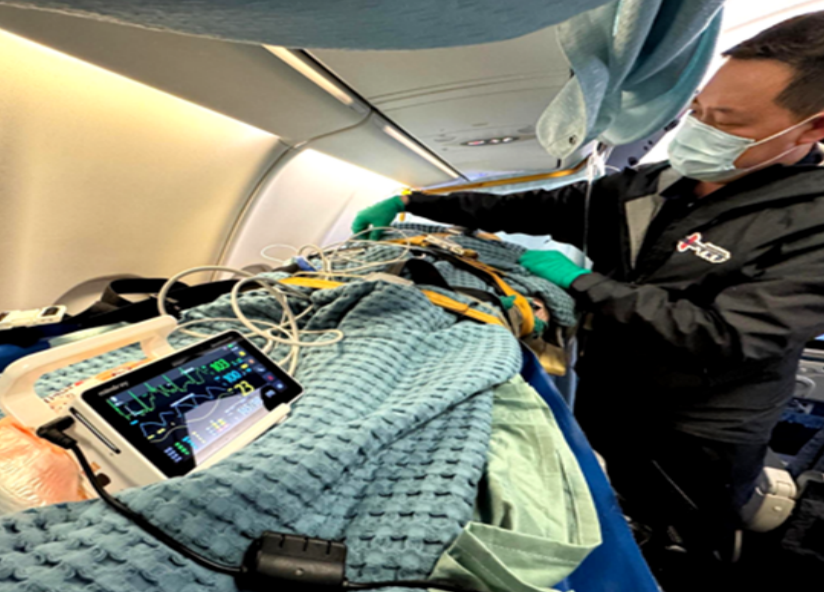
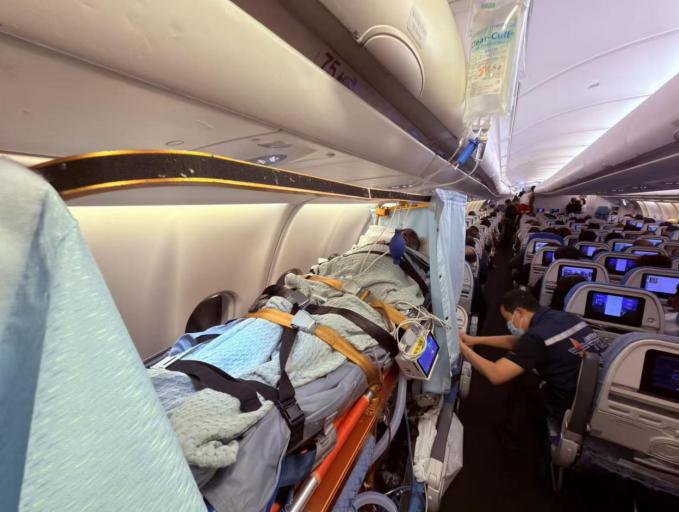
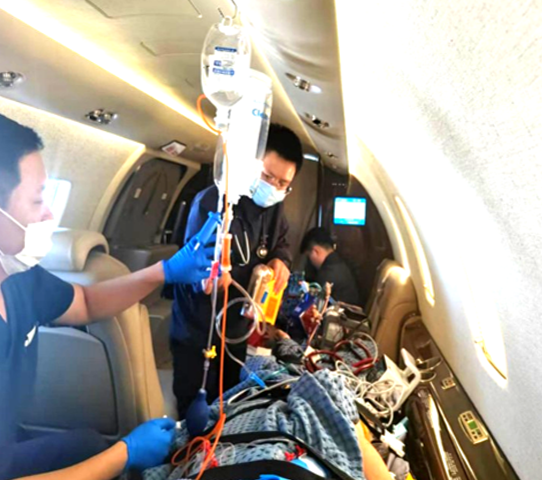
We uphold the same standards you expect inside a NICU, even in motion. Our teams are trained to operate ECMO and IABP, manage advanced ventilatory support, and handle complex pediatric physiology – including during international flights. This is how care remains continuous, not fragmented, throughout the transfer.
• End-to-end support for ECMO, IABP, ventilators, and other life-sustaining systems, including flight segments.
• Specialized staffing for premature infants, postoperative neonates, and pediatric patients with complex conditions.
• Trusted by leading hospitals – including Guangzhou Women and Children’s Medical Center – for repeated transfers across provinces and borders.
When a neonate depends on ECMO or high-acuity ventilation, tiny fluctuations matter. Our clinicians anticipate those moments, adjust settings in real time, and coordinate clean handovers so therapy never pauses. For hospitals seeking ECMO neonatal transport services, we operate as an extension of your NICU, not an outsourced ride.
2) Precision Planning
Every Emergency Neonatal ICU Transfer begins long before wheels move. Our route design prioritizes speed, safety, and flexibility. We maintain a transfer route map that links remote points with major NICUs worldwide, selecting airports and rail hubs that compress total travel time while meeting clinical needs. Where infrastructure is limited, we engineer alternatives that still protect stability and reduce handoffs.
Behind the scenes, our operations team tracks each mission in real time. If a delay appears, we reshape the plan on the fly. We coordinate with sending and receiving hospitals, ground ambulances, rail and airline partners, and – when required – embassies. The result is predictable handovers, minimal idle time, and a transport that feels seamless to the bedside teams.
✅ Key elements of our route planning include:
• Dynamic scheduling tuned to the infant’s condition and urgency.
• Global coverage spanning domestic and international routes.
• Use of airports with minimal infrastructure to reach remote locations.
• Optimized legs to reduce total travel time and clinical risk.
• Close coordination with medical institutions and embassies for smooth cross-border clearances.
✅ Case Snapshot: Guiyang → Guangzhou South (July 3, 2024)
On July 3, 2024, we completed a cross-regional transfer for a 2-month-old baby boy with severe pneumonia, respiratory failure, and pulmonary arterial hypertension. To shorten time to intensive care, we combined ground legs with a high-speed rail stretcher (CRH stretcher) and then an ambulance rendezvous in Guangzhou.
• Mode: High-speed rail stretcher (CRH stretcher)
• Route: Guiyang → Guangzhou South Station
• Therapies & Devices: Portable incubator, ventilator, and NO inhalation therapy device
• Green Channel: Priority access at the rail platform for rapid loading and unloading
• Continuous Monitoring: A pediatric nurse maintained stable vitals throughout; train crew secured a quiet medical compartment
• Seamless Handover: On arrival, an ambulance took over for direct NICU admission
This mission shows how detailed planning, decisive coordination, and NICU-grade equipment convert a complex itinerary into a smooth, NICU-to-NICU handover – the core promise of TKP Medical Assistance.
3) How TKP Partners With Hospitals and Families
An Emergency Neonatal ICU Transfer is stressful for families and demanding for clinical teams. Typical pain points are well known: unstable conditions, therapy continuity, route uncertainty, and administrative friction. Our model addresses each one with structure and empathy.
From the first consult, we assign an ICU-trained transport lead who aligns with the sending team. Therapy goals and risk thresholds are agreed before departure. We stage backup equipment, verify power and gas interfaces across all legs, and choreograph handovers so no one waits for the next update. Documentation travels with the infant, clear and complete, giving the receiving NICU confidence from minute one.
For cross-border neonatal transfer services, we manage clearances and liaise with institutions so clinical decisions are not delayed by paperwork. Families receive concise, plain-language updates throughout the mission: what is happening now, what comes next, and how the baby is doing. The aim is emotional clarity as well as clinical safety.
While most of the transfer is delivered through disciplined routines, our teams stay flexible. If a baby’s status changes, we can adjust ventilator strategies, reorder route segments, or escalate support – without losing momentum. That balance of protocol and adaptability is why specialized teams matter.
✅ How to engage TKP Medical Assistance:
• Hospitals: Share the clinical summary, therapy needs (e.g., ECMO/IABP/ventilation/NO), and destination NICU. We return a route and readiness plan quickly.
• Families: Ask your care team to connect us. We handle route design, equipment, crews, and the handover process end to end.
Call to Action
If you require an Emergency Neonatal ICU Transfer – domestic or international – choose a partner that brings the NICU with them. Contact TKP Medical Assistance for a rapid assessment, a clear route plan, and ICU-level care in motion. Your newborn’s safest path to the right bed can start today.
Submit Your Request
Recent Posts

Tags
- Air Ambulance
- Bedside To Bedside
- Cross Border Aid
- Emergency Evacuation
- Global Medical Rescue
- How can I ensure the patient's stability while in the air?
- How do I request an air medical transport?
- How is it different from an air ambulance
- how to activate emergency aircraft service
- how to request an air ambulance
- Is air medical transport safe
- Is international transport possible
- Medical Rescue
- Medical Transport
- Patient Repatriation
- Remote Rescue
- Seamless Coordination
- Telemedicine Support
- Tourists And Expats Medical Escort
- What are the benefits of a cross-border medical transfer
- What are the different types of transfers
- What are typical use cases
- What documents do I need to prepare for a transfer?
- What does high-speed rail patient transfer stands for
- What is air ambulance
- What is air medical transport?
- What is cross-border medical transfer
- What is emergency aircraft
- what is high-speed rail patient transfer
- What is medical charter flight
- what is neonatal ICU transfer
- What is patient air transfer
- What medical equipment is available on board the aircraft
- What situations shouldn't use air medical transport?
- What types of air ambulance are there?
- What types of air ambulance exist
- What's the difference between international and domestic transfers?
- what’s the difference between air medical transport and regular ambulance?
- When is emergency air transport necessary
- Which patients require air medical transport?
- who is included in the medical team
- who needs an air ambulance