


Why Emergency Patient Air Transfer Matters for Critical Survival


Emergency Patient Air Transfer is not just a flight; it is the moment when time, treatment, and logistics must align. At TKP Medical Assistance, we plan and execute these missions from bedside to bedside so care never pauses, even while crossing borders or changing vehicles. Our view is simple: when patients are fragile – especially neonates – minutes are clinical outcomes, not numbers on a clock.
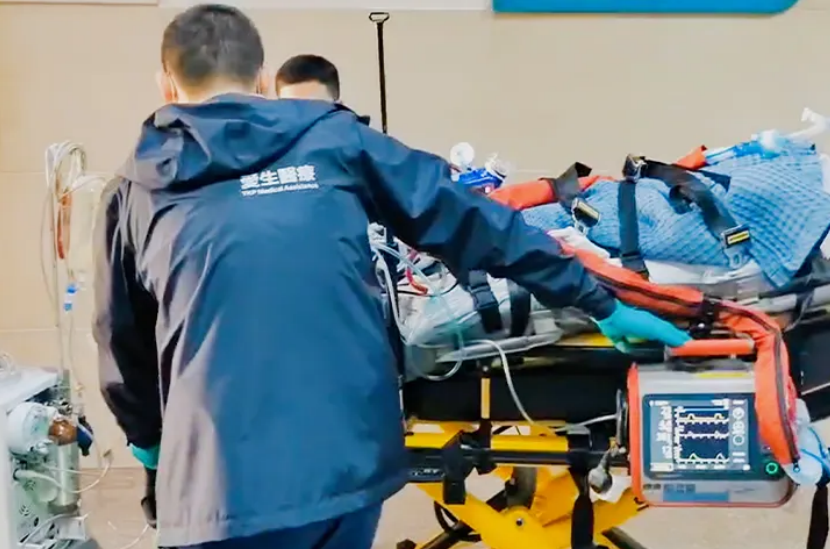
The Clock, the Care, and the Odds of Survival
When hospitals call us, they rarely ask for an aircraft first. They ask for time. Emergency Patient Air Transfer compresses that timeline by merging medical decisions, route planning, and border procedures into one plan of care. Instead of waiting on disparate vendors, we push a single pathway that covers aircraft readiness, ICU-level equipment, and receiving-bed confirmation. The fewer handoffs, the less chance of a stumble.
✅ Where Minutes Disappear – and How We Close the Gaps
Delays typically hide in paperwork, bed acceptance, incompatible devices, and limited aircraft able to support life-sustaining systems. We pre-brief both hospitals, align ventilator settings, and confirm device compatibility before wheels move. Our pediatric specialists plan airway and medication strategies tailored to age and diagnosis, so treatment continues in transit rather than restarting at every checkpoint. That continuity is what preserves survival time during Emergency Patient Air Transfer.
What We Do in the Air – and Between Doors
Our teams are ICU-trained and operate advanced support through every segment, including international flights. We keep high-risk patients on the therapies they need, rather than stepping down care mid-route. That means stable perfusion, oxygenation, and a predictable handover when we reach the receiving ICU.
- Neonatal and Complex Pediatric Expertise
We specialize in premature infants, postoperative neonates, children with congenital heart disease, and pediatric patients in respiratory failure. Each mission includes a pediatric clinician and equipment matched to the child’s condition: incubator, neonatal ventilator, monitoring, infusion, and, when indicated, inhaled nitric oxide to manage pulmonary pressures. The goal is steady physiology, not improvisation at altitude.
• Full support for ECMO, IABP, ventilators, and other life-sustaining systems – even across borders.
• Specialist teams for premature infants and complex pediatric cases, with tailored kits for size and diagnosis.
• Trusted by leading hospitals, including Guangzhou Women and Children’s Medical Center, for repeated neonatal transfers across provinces and countries.
- Route Intelligence, Documents, and Border Work
Flights are only one part of Emergency Patient Air Transfer. We build routes that link remote points to definitive care with minimal friction – sometimes by combining ground segments, rail stretchers, and aircraft to reduce total time. Our operations center monitors conditions in real time and can re-route if weather or patient status shifts. On the paperwork side, we coordinate visas, invitation letters, and customs/immigration steps so clearances do not erode the golden hour.
• Dynamic routing tuned to patient stability and urgency
• Use of airports with limited infrastructure to reach remote areas faster
• Embassy coordination and medical visa guidance to prevent border delays
A Case That Shows the Difference
On July 3, 2024, we were tasked to move a 2-month-old boy with severe pneumonia, respiratory failure, and pulmonary arterial hypertension from Guiyang to Guangzhou. The fastest end-to-end path was not a direct flight. After assessing airway risk, nitric oxide needs, and the child’s hemodynamics, we designed a multi-segment route using a CRH high-speed rail stretcher followed by ambulance transfer to the receiving hospital.
We mobilized a pediatric nurse and equipment set: a portable incubator, neonatal ventilator, continuous monitoring, and an inhaled nitric oxide device. The rail operator provided a green channel at the platform, which allowed rapid loading without jostling the child. During the journey, the nurse kept a steady cadence – ventilator checks, vascular access monitoring, sedation assessment – while the train crew maintained a quiet compartment so stimuli would not spike pulmonary pressures. On arrival at Guangzhou South Station, our ambulance team took over seamlessly; the NICU had been pre-briefed, ventilator settings shared, and medication drips matched. Handover took minutes, not hours.
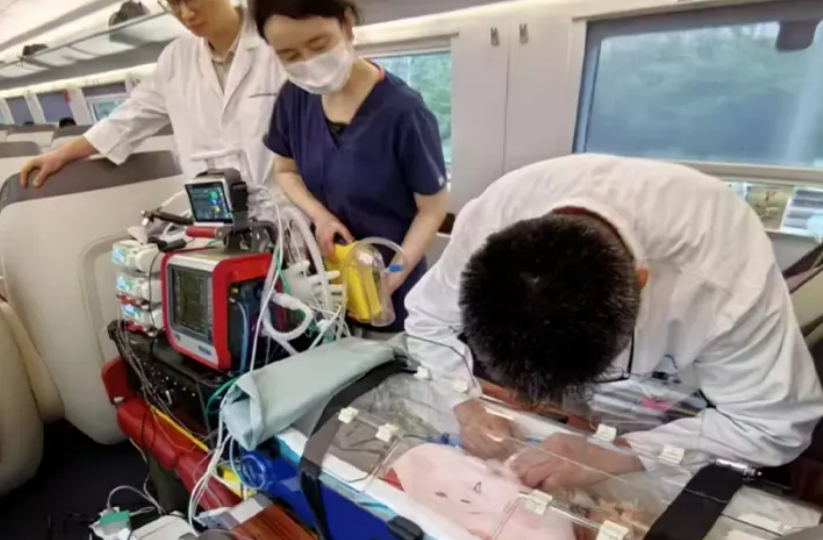
What mattered most was not the modality but the continuity. A single plan carried the child from the originating NICU to the receiving NICU without gaps in therapy. That is the core promise of Emergency Patient Air Transfer when survival time is tight: fewer pauses, fewer surprises, and clinical decisions that travel with the patient.
✅ How Families and Coordinators Can Accelerate the Process
• Recent medical records, treatment plans, and current medications – English versions speed coordination.
• Passports, visas if required, and documents for minors (e.g., birth certificate or authorization).
• Insurance details or financial guarantees; signed consents for insurer-provider communication.
• A reachable representative authorized to make decisions and a backup contact.
These basics allow us to confirm a bed, align equipment, and move without administrative drag – often the difference between “soon” and “now.”
Call to Action: Planning an Emergency Patient Air Transfer or exploring options for a high-risk infant or child? Contact TKP Medical Assistance for a rapid case review, route proposal, and equipment plan. We coordinate clinicians, aircraft, and border formalities so care stays continuous from first touch to final handover. For time-critical transport, let us compress the timeline – and protect the margin that saves lives.
Submit Your Request
Recent Posts

Tags
- Air Ambulance
- Bedside To Bedside
- Cross Border Aid
- Emergency Evacuation
- Global Medical Rescue
- How can I ensure the patient's stability while in the air?
- How do I request an air medical transport?
- How is it different from an air ambulance
- how to activate emergency aircraft service
- how to request an air ambulance
- Is air medical transport safe
- Is international transport possible
- Medical Rescue
- Medical Transport
- Patient Repatriation
- Remote Rescue
- Seamless Coordination
- Telemedicine Support
- Tourists And Expats Medical Escort
- What are the benefits of a cross-border medical transfer
- What are the different types of transfers
- What are typical use cases
- What documents do I need to prepare for a transfer?
- What does high-speed rail patient transfer stands for
- What is air ambulance
- What is air medical transport?
- What is cross-border medical transfer
- What is emergency aircraft
- what is high-speed rail patient transfer
- What is medical charter flight
- what is neonatal ICU transfer
- What is patient air transfer
- What medical equipment is available on board the aircraft
- What situations shouldn't use air medical transport?
- What types of air ambulance are there?
- What types of air ambulance exist
- What's the difference between international and domestic transfers?
- what’s the difference between air medical transport and regular ambulance?
- When is emergency air transport necessary
- Which patients require air medical transport?
- who is included in the medical team
- who needs an air ambulance