


How Flight Stretcher Medical Escort Improves Safety During Air Transfers?


Flight stretcher medical escort is more than a line item on a quote – it’s the safety architecture that keeps a patient stable, supervised, and protected from the first bedside touch to the final handover. At TKP Medical Assistance, we design and operate the full pathway: certified stretcher hardware, airline coordination, clinical teams, and the ground links that tie everything together. The result is a clear plan that travels with the patient, not a patchwork of vendors.
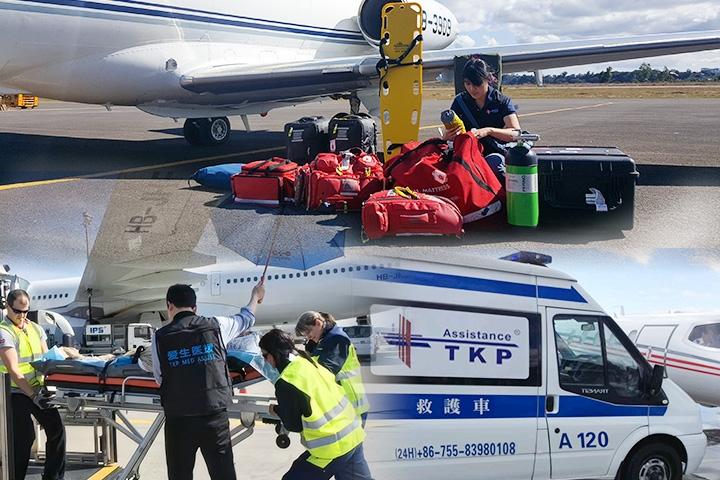
The Hidden Risks In Air Transfers – And TKP‘s Fix
Air travel introduces variables that hospitals don’t face on the ward. Aircraft change, gates shift, weather moves, and oxygen or power can become scarce at the wrong moment. Transfers at small or remote airports are often rushed. Documentation is sometimes incomplete, and each handover increases the chance of missed details. Families feel these gaps as uncertainty, delay, and cost.
TKP closes those gaps with one accountable chain of care. Our operations center builds a door-to-door route, secures commercial stretcher approvals or dispatches an air ambulance, assigns a flight stretcher medical escort team, and locks in ground ambulances or high-speed rail links. The escort carries the patient’s clinical story continuously, so care does not “reset” at every checkpoint. Vital signs are watched throughout; oxygen, suction, and power are matched to clinical need; and the loading plan keeps the airway visible and reachable at all times.
As a manufacturer, we pay special attention to the physics of flight. TKP stretcher systems anchor to approved aircraft points, absorb shock during taxi and landing, and keep caregivers close without blocking exits or equipment. Fast, unobstructed loading cuts minutes at each connection – and minutes matter when the patient is fragile or in pain.
✅ Pain Points We Solve, Practically
- Airline pre-approvals for commercial stretchers so bed-bound but stable patients can fly safely
- ICU-capable air ambulance when the case is urgent or complex
- Integrated ground and high-speed rail links to avoid oxygen or power gaps
- Post-stabilization transfers that balance safety with cost and time
What A Flight Stretcher Medical Escort Looks Like End-To-End
A strong plan starts on the map. TKP‘s route network connects remote or underserved regions to leading hospitals worldwide. We select airports and alternates that fit the aircraft and the patient – not the other way around. When infrastructure is minimal, we pre-position supplies and coordinate with hospital teams and embassies so clearances don’t become a last-minute scramble.
✅ Route Planning That Reduces Risk
- Dynamic scheduling aligned with the patient’s tolerance for time and altitude
- Global coverage across domestic and international legs
- Remote access capability using airports with minimal infrastructure when needed
- Optimized paths to reduce total flight time and turbulence exposure
- Tight coordination with receiving facilities for rapid, clean handovers
Our operations desk tracks every leg in real time. If weather or slot times shift, we re-sequence the plan and inform all parties immediately. The assigned flight stretcher medical escort has the authority to adapt protocols in flight and coordinate with ground teams, keeping clinical logic in front, logistics behind it.
ü Inside The Cabin: How Safety Is Delivered
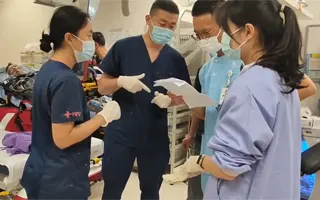
The escort team is built for the case: critical-care nurses, physicians, or paramedics experienced in aviation medicine. They bring pre-checked kits tailored to airline and aviation standards. Monitoring is continuous, and documentation is updated live, including pressure-area care, fluids, and medications.
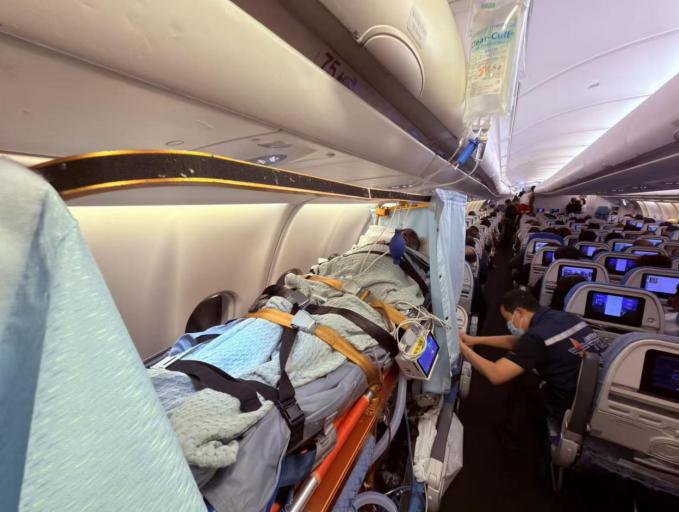
- Airway access remains visible and reachable during the entire flight
- Oxygen and power draw are calculated and double-checked before boarding
- Repositioning intervals are scheduled to prevent pressure injuries
- DVT risk is managed with timing, hydration, and medication as indicated
- Handover packets travel with the patient, reducing repetition and errors
When the plan uses multiple modes – commercial stretcher, air ambulance, high-speed rail, and ground ambulance – we keep one care plan across all legs. That lowers stress for families and for receiving teams, who get one consistent narrative and a patient who arrives stable and ready for the next step.
Choosing The Right Mode – And What Happens Next
Families often ask the same question: Which option is safe enough without overspending? Start with the patient’s stability and time sensitivity, then choose the mode that fits.
Commercial Stretcher: Safe And Cost-Conscious
If the patient is stable, requires bed positioning, oxygen, and continuous monitoring – but not an airborne ICU – commercial stretcher is often the best value. TKP secures airline approval, arranges a dedicated compartment, and places a flight stretcher medical escort beside the patient. You get predictable timelines, transparent pricing, and bedside-to-bedside continuity.
Air Ambulance: ICU Care In The Sky
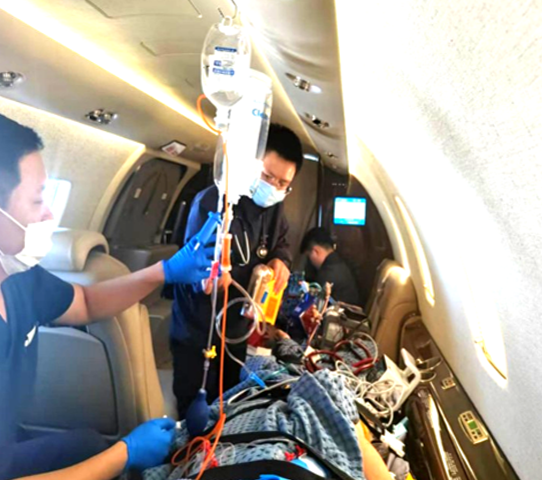
For time-critical transfers, complex ventilation, or cases where commercial approvals are not feasible, our air ambulance delivers ICU-level capability with full medical escort. Door-to-door time is shorter and schedules are controlled. The team can manage invasive airways and hemodynamics and coordinate directly with the receiving ICU.
Integrated Rail And Ground: Closing The Last Mile
High-speed rail can reduce vibration and speed regional hops. A prepared ambulance team protects oxygen and power between stations, airports, and hospitals. Because the same TKP plan governs every leg, equipment and documentation do not get lost in transit.
Across all modes, the flight stretcher medical escort remains the anchor. The team prevents dehydration, manages anticoagulation where appropriate, keeps pressure-relief timing, and records every intervention. Pre-briefs cover cabin power availability and oxygen flow; backup supplies are positioned at alternates; and clear contact points keep families informed.
Call To Action – Plan A Safe Transfer With TKP
Tell us the patient’s current condition, recent stabilization details, and destination. TKP will map the safest route, confirm any airline approvals, and assign a dedicated flight stretcher medical escort for continuous bedside-to-bedside care. Contact TKP Medical Assistance to begin planning and secure dates that align with the patient’s clinical window.
- Why TKP Medical Assistance?
We design the stretcher hardware, train the clinical teams, and run the logistics under one roof – so responsibility never scatters. Our systems are engineered for quick cabin integration and a clear airway line-of-sight. Our clinicians follow evidence-based protocols for oxygen titration and in-flight mobilization. Our planners coordinate with hospitals and embassies for smooth cross-border clearance. Fewer surprises, safer flights, faster arrivals.
In every scenario, our priority is simple: keep the patient stable, shorten the journey, and deliver a complete handover. That is how flight stretcher medical escort, executed the TKP way, turns air travel into safe, reliable medical transport – and gives families clarity when they need it most.
Submit Your Request
Recent Posts

Tags
- Air Ambulance
- Bedside To Bedside
- Cross Border Aid
- Emergency Evacuation
- Global Medical Rescue
- How can I ensure the patient's stability while in the air?
- How do I request an air medical transport?
- How is it different from an air ambulance
- how to activate emergency aircraft service
- how to request an air ambulance
- Is air medical transport safe
- Is international transport possible
- Medical Rescue
- Medical Transport
- Patient Repatriation
- Remote Rescue
- Seamless Coordination
- Telemedicine Support
- Tourists And Expats Medical Escort
- What are the benefits of a cross-border medical transfer
- What are the different types of transfers
- What are typical use cases
- What documents do I need to prepare for a transfer?
- What does high-speed rail patient transfer stands for
- What is air ambulance
- What is air medical transport?
- What is cross-border medical transfer
- What is emergency aircraft
- what is high-speed rail patient transfer
- What is medical charter flight
- what is neonatal ICU transfer
- What is patient air transfer
- What medical equipment is available on board the aircraft
- What situations shouldn't use air medical transport?
- What types of air ambulance are there?
- What types of air ambulance exist
- What's the difference between international and domestic transfers?
- what’s the difference between air medical transport and regular ambulance?
- When is emergency air transport necessary
- Which patients require air medical transport?
- who is included in the medical team
- who needs an air ambulance