


How Flight Stretcher Patient Transfer Services Ensure Comfort


Flight Stretcher Patient Transfer is the core service we deliver every day at TKP Medical Assistance, bringing critical care, logistics, and airline coordination together so patients move safely across borders with minimal stress.
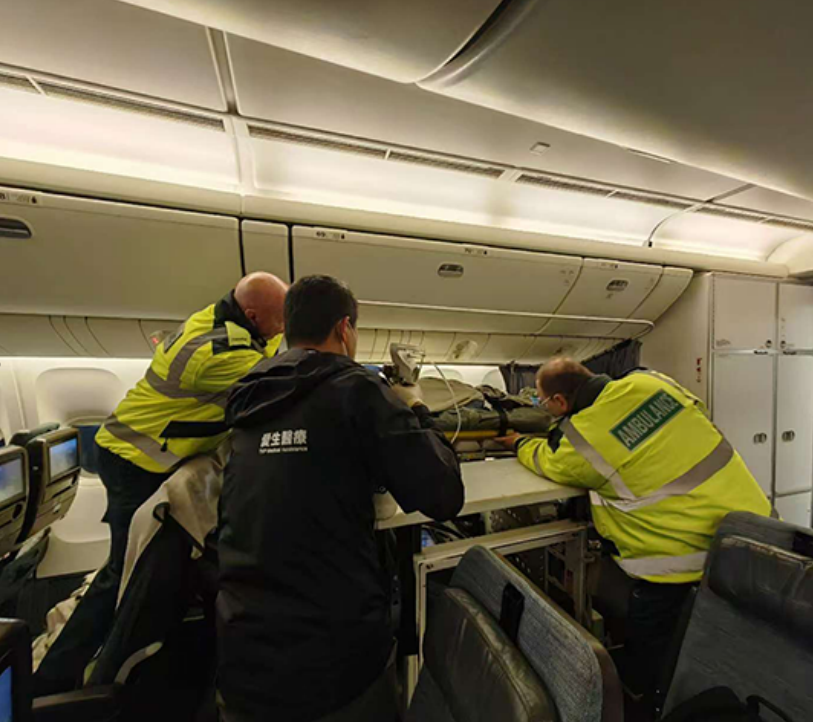
Why Flight Stretcher Patient Transfer Runs Smoothly
Families call us when time, distance, and medical complexity collide. We respond with a single, integrated workflow that removes friction at every step. Our 24/7 Coordination Center, clinical leadership, and logistics team operate as one unit, so the plan you approve is the plan we execute. This is how we keep schedules predictable, reduce avoidable delays, and maintain clinical stability throughout the journey.
- Clinical Continuity Without Gaps
Every Flight Stretcher Patient Transfer begins with a focused clinical review. A TKP nurse or physician evaluates the patient’ s diagnosis, current stability, and therapy needs, then prescribes the right escort team and equipment. From there, our medical escorts stay at the bedside, accompany boarding, and monitor in transit. Vital signs are tracked, medications are administered on schedule, and life-support settings are adjusted as needed. Because the same team oversees each leg – air, rail, and ground – the standard of care stays consistent, which is crucial for post-stabilization transfers and time-sensitive evacuations.
- Routing Built for Real-World Constraints
A smooth transfer depends on smart routing, not luck. Our route planning connects remote, underserved, and emergency locations to leading hospitals worldwide. We design itineraries that match clinical urgency and local realities: airport operating hours, aircraft configurations, ground-access limits, and clearance timings. When infrastructure is limited, we use airports with minimal requirements and synchronize ground handovers. Real-time flight monitoring lets our operations team make adjustments mid-journey to shorten travel time and protect patient stability – another reason our Flight Stretcher Patient Transfer services feel seamless rather than stressful.
Modes We Deploy for Flight Stretcher Patient Transfer
Different medical profiles call for different transport modes. We recommend the option that best fits acuity, distance, and timeline – always with bedside-to-bedside medical transport continuity.
- Commercial Stretcher Transport (Airline-Approved)
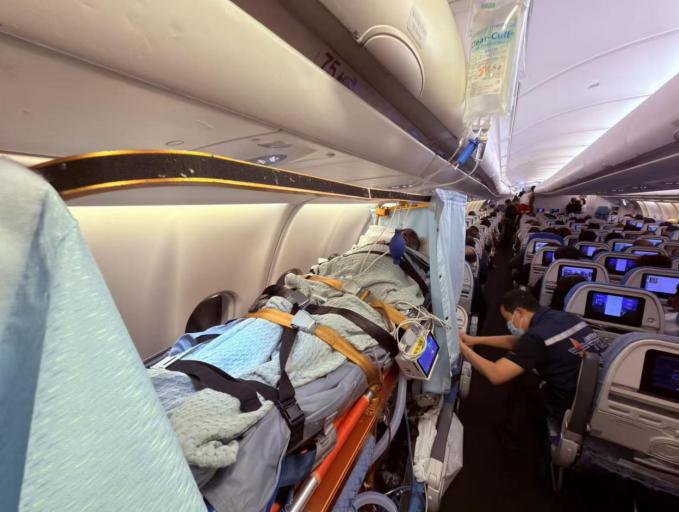
For stable patients who need cross-border movement without the cost of a dedicated aircraft, a commercial stretcher solution can be ideal. With airline approval, we arrange a dedicated stretcher compartment on domestic or international flights and coordinate the medical escort, oxygen, monitors, and documentation. This commercial flight stretcher service preserves dignity and comfort while keeping budgets under control. Our team manages seat reconfiguration, cabin clearances, and boarding logistics, so families deal with one schedule and one clinical contact instead of a maze of calls and forms.
- Air Ambulance & ICU-Level Transfers
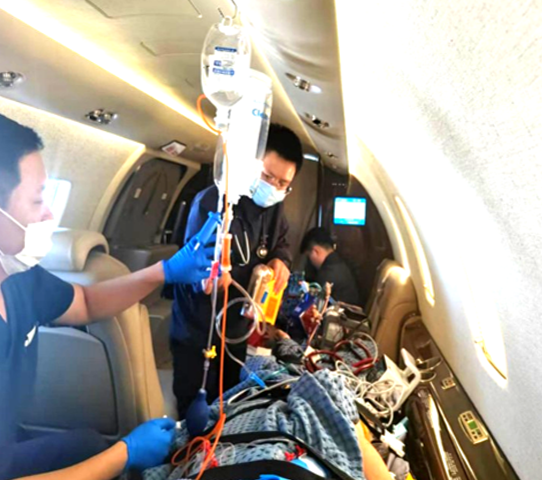
Critically ill patients require an aircraft that functions like a flying ICU. Our air ambulance missions are equipped with ventilators, ICU-grade monitors, and life-support systems operated by intensive-care physicians and flight-trained nurses. Their familiarity with high-altitude physiology and in-flight interventions keeps the clinical environment stable when minutes matter. If a patient needs advanced interventions and a tightly controlled setting, an air ambulance ICU transfer reduces risk and keeps escalation pathways at hand.
- Rail-Based Medical Transfers
When speed, comfort, or weather makes flying less practical, high-speed rail paired with ground ambulance offers a controlled alternative. This option suits neonatal or post-surgery patients who benefit from a smoother ride segment and continuous observation. TKP coordinates station access, stretcher handling, and ambulance pick-up and drop-off so there are no cold handovers. The same escort team and equipment travel with the patient, preserving the chain of care across non-flight segments.

From First Call to Safe Handover: Our 9-Step Activation Flow
A clear structure reduces anxiety. Our process keeps Flight Stretcher Patient Transfer simple for families and precise for clinicians.
1: Receive Inquiry – The 24/7 Coordination Center records patient details, medical history, preferred timing, and insurance information.
2: Clinical Review – A TKP nurse or physician confirms stability, specifies escort level, and lists required equipment.
3: Route & Mode Plan – We design the most efficient path across air, rail, and ground based on distance, acuity, and clearances.
4: Quotation & Consent – You receive a transparent cost estimate; we secure approvals and verify preauthorizations.
5: Activate Resources – Flight nurses, critical-care attendants, medical escorts, and life-support equipment are mobilized and tested.
6: On-Site Pickup – Bedside handover is completed; the patient is stabilized for travel and safety checks are documented.
7: In-Transit Care – Continuous monitoring and treatment are delivered; life-support settings are adjusted as needed.
8: Destination Handover – We transfer care to the receiving facility with full reports and equipment handoff.
9: Follow-Up & Claims – TKP conducts outcome follow-ups, manages billing, and submits insurance claims.
What families gain: fewer variables, fewer calls to make, and a single clinical lead who remains accountable from start to finish. By integrating planning and care delivery, we remove the usual pain points of international medical transport – unclear approvals, inconsistent escort standards, and last-minute routing changes.
How this protects patients: the route is built around the medical profile, not the other way around. We schedule dynamically when a delay would threaten stability, we select aircraft and airports that match equipment needs, and we coordinate with hospitals and embassies when documentation could slow a crossing. That’ s why our Flight Stretcher Patient Transfer missions feel orderly even under pressure.
✅ Where TKP Medical Assistance fits in your decision tree:
•Use commercial stretcher transport when the patient is stable and airline approval is feasible.
•Choose an air ambulance when ICU-level monitoring or advanced interventions are necessary.
•Opt for integrated rail and ambulance when a smoother ride phase or regional access makes clinical sense.
Across all modes, our standards remain the same: bedside-to-bedside medical transport, a unified clinical record, and continuous communication with the family. By keeping one team responsible for equipment, routing, and care, we prevent the handover gaps that create risk and cost.
CTA – Speak with a TKP Medical Coordinator Today
If you’ re evaluating options now, contact TKP Medical Assistance for a rapid clinical review and a tailored route plan. We’ ll confirm the safest mode, assign the right escort team, and coordinate approvals so your Flight Stretcher Patient Transfer stays smooth, humane, and on schedule.
Submit Your Request
Recent Posts

Tags
- Air Ambulance
- Bedside To Bedside
- Cross Border Aid
- Emergency Evacuation
- Global Medical Rescue
- How can I ensure the patient's stability while in the air?
- How do I request an air medical transport?
- How is it different from an air ambulance
- how to activate emergency aircraft service
- how to request an air ambulance
- Is air medical transport safe
- Is international transport possible
- Medical Rescue
- Medical Transport
- Patient Repatriation
- Remote Rescue
- Seamless Coordination
- Telemedicine Support
- Tourists And Expats Medical Escort
- What are the benefits of a cross-border medical transfer
- What are the different types of transfers
- What are typical use cases
- What documents do I need to prepare for a transfer?
- What does high-speed rail patient transfer stands for
- What is air ambulance
- What is air medical transport?
- What is cross-border medical transfer
- What is emergency aircraft
- what is high-speed rail patient transfer
- What is medical charter flight
- what is neonatal ICU transfer
- What is patient air transfer
- What medical equipment is available on board the aircraft
- What situations shouldn't use air medical transport?
- What types of air ambulance are there?
- What types of air ambulance exist
- What's the difference between international and domestic transfers?
- what’s the difference between air medical transport and regular ambulance?
- When is emergency air transport necessary
- Which patients require air medical transport?
- who is included in the medical team
- who needs an air ambulance