


How Do Flight Stretcher Services Handle Long-Distance Transfers?


Flight stretcher services can look simple from the outside: a patient on a stretcher, a team on board, and a flight to the next hospital. But behind every long-distance transfer is a chain of critical decisions. Which route is safest? How do we keep life-support running during handovers? Who coordinates across borders and time zones when something changes mid-flight? In this article, we ask a key question: How Do Flight Stretcher Services Handle Long-Distance Transfers? The real answers may surprise you – and they matter to every family facing an urgent move.
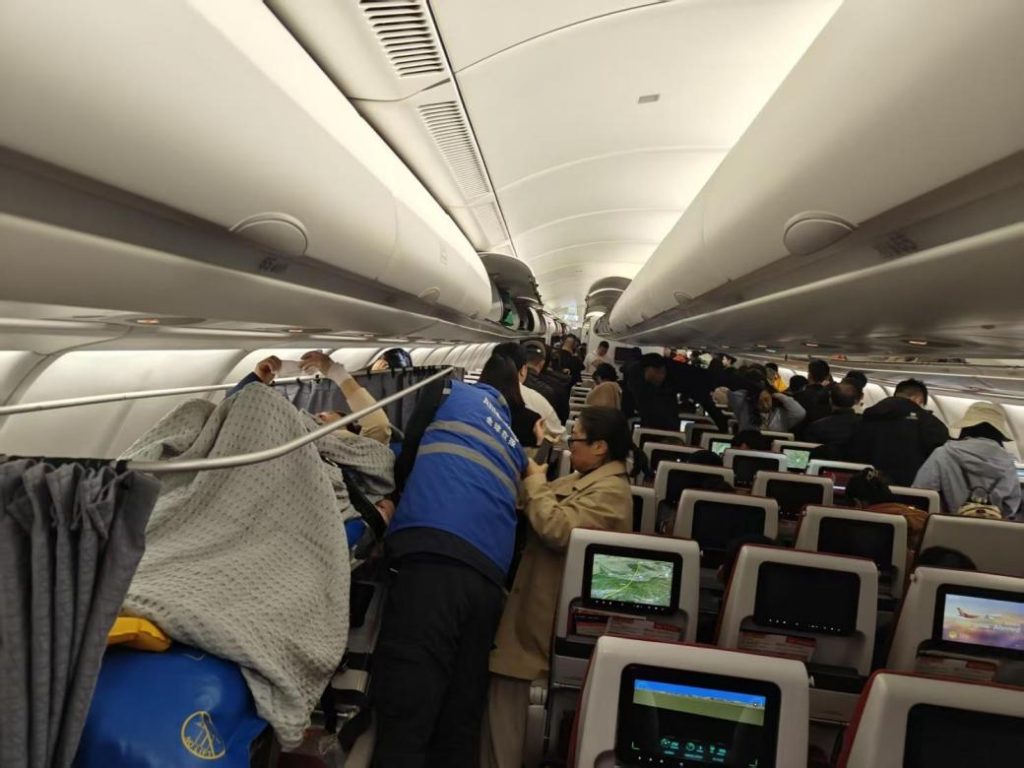
What Long-Distance Transfers Really Demand
Distance multiplies risk. A routine gate change can add an hour on the tarmac. Weather can close a hub and force a diversion. Borders add forms, clearances, and language gaps. Inside the cabin, pressure, vibration, and limited space challenge both equipment and staff. Families face the hardest trade-off of all: paying more for speed, or accepting delays that may worsen a condition.
TKP Medical Assistance builds around those realities. We combine commercial stretcher options on scheduled airlines, dedicated air ambulance, high-speed rail, and ground ambulance into one plan. Flight stretcher services become a continuous pathway rather than a single flight. The same medical escort remains at the bedside, through every elevator, gate, and handoff. We pre-approve routes, stage backup power, and brief receiving teams before departure. That is how we cut “hidden time” – the silent hours lost to coordination gaps – and keep care uninterrupted.
✅ Core Capabilities Patients Count On
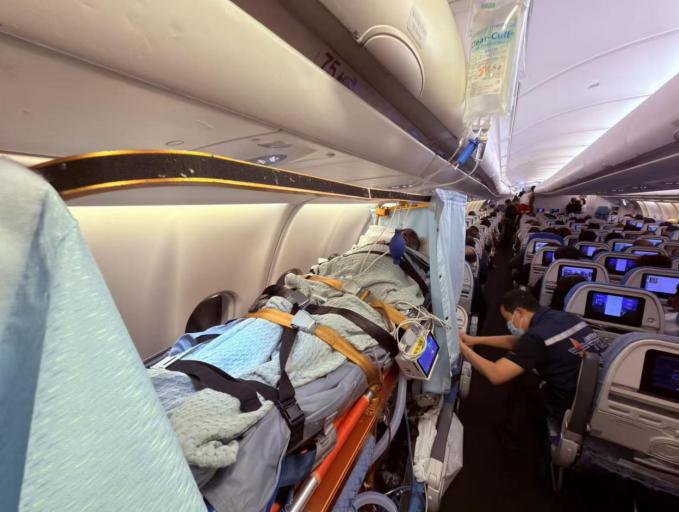
• Airline-approved commercial stretcher cabins for stable, bedridden travelers
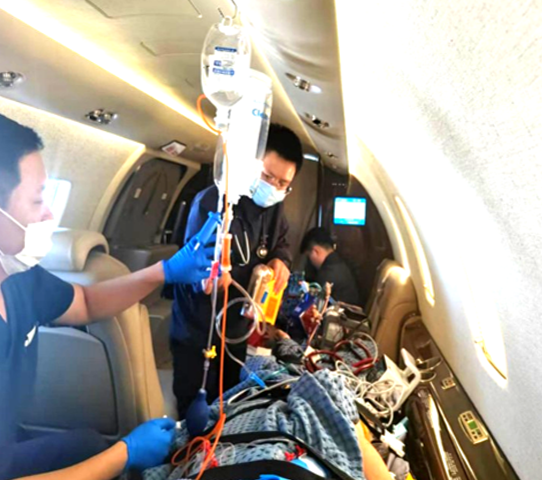
• Air ambulance with ICU-level escort and invasive monitoring when needed
• Integrated rail and ground links for true bedside-to-bedside coverage
• Real-time operations that re-route around weather and slot changes
• Hospital, embassy, and airport coordination for faster clearances
How We Turn Complexity Into A Clear Plan
Every case starts with a clinical assessment, not a mode of transport. Stable patients often qualify for commercial stretcher cabins – a cost-savvy path for cross-border moves with continuous medical supervision. When a patient needs advanced support, we launch air ambulance with physician-led care and ICU-grade devices. In both scenarios, the escort team and the equipment follow a single, risk-based care plan from first mile to last.
Route design is clinical. We use airports that shorten total exposure time, including remote fields with minimal infrastructure when it gets the patient closer to the bedside. Layovers are chosen for medical suitability, not just convenience. Alternates are planned to handle winds, slot constraints, or airspace restrictions. While airborne, the team tracks cabin environment and medication schedule; on the ground, pre-positioned ambulances and rail transfers keep the journey moving.
✅ Bedside-to-bedside workflow (simple, repeatable, accountable):
• Stabilize & Plan: ICU review, airway strategy, and a transport plan with clear escalation steps.
• Clearances & Setup: Airline approval for commercial stretchers or rapid air ambulance launch; visas and documents processed in parallel.
• Handoffs Without Gaps: Checklists at ward exit, ambulance loading, tarmac transfer, and aircraft entry prevent data loss or therapy breaks.
• Power & Monitoring: Redundant power for pumps and life-support with tested switch-over protocols; continuous vital, gas exchange, and device checks.
• Arrival & Transfer: Direct delivery to the receiving team plus a concise clinical report for immediate continuity.
- A Real-World Snapshot: Moving ICU-Level Care
• Date: March 14, 2025
• Route: Xiamen → Korea
• Mode: Air ambulance
• Condition: Severe pulmonary infection with ECMO + IABP support
This mission shows how flight stretcher services behave like a mobile ICU. Our team performed a bedside evaluation, secured the airway, validated ECMO flow, and prepared mobile power for both ECMO and IABP during all handoffs. Priority lanes reduced road time to the airport. At the tarmac, we transitioned from ground to aircraft power with zero interruption. At cruise, the escort team rotated duties to prevent fatigue while operations control tracked weather and airspace. Cross-border paperwork and the receiving ICU bed were pre-cleared, so the patient moved aircraft → ambulance → ICU without delay. The result: stable parameters all the way to handover.
Why TKP Medical Assistance Stands Out
It’s orchestration, not just equipment. Many transfers fail in the seams – between ward and ambulance, between ambulance and aircraft, or during power switch-over. Our structure removes those seams. The same command center oversees air, rail, and road. The same medical lead signs off on each phase. The same escort owns the patient narrative from start to finish.
We attack “hidden time.” That means pre-approved airline pathways for commercial stretchers, embassy contacts for fast document checks, and hospital-to-hospital protocols that avoid last-minute clarifications. When weather shifts, we re-file and re-route in real time. Minutes matter; we protect them.
✅ Clarity for families, hospitals, and insurers.
- Families receive a clear plan, plain-language updates, and realistic options that balance speed and cost.
- Hospitals offload coordination: we handle documents, bed confirmations, and standardized handoff summaries.
- Insurers see transparent planning and itemized medical justifications, aligning clinical safety with responsible spend.
✅ When To Choose Which Path (rule-of-thumb guidance):
- Use commercial stretcher when the patient is stable, requires monitoring but no invasive support, and airline approval is viable.
- Choose air ambulance when invasive ventilation, vasoactive support, ECMO/IABP, or rapid timeline is essential.
- Add rail/ground links to bring the aircraft closer to the bedside or to bypass congested hubs.
Quality you can measure: We focus on continuity (no unintended therapy breaks), timing (shorter total clinical time), and readiness (redundant power, documented switch-overs, trained escorts). These aren’t slogans; they’re practical safeguards that reduce risk on long routes.
In short: Flight stretcher services succeed when planning is clinical, timing is proactive, and handoffs are choreographed. That is the TKP Medical Assistance method – every border, every leg, every checklist.
Call To Action
Planning a complex, long-distance transfer? Talk to TKP Medical Assistance today. We’ll review the case, recommend the safest mode, map the route, and craft a bedside-to-bedside plan aligned with your timeline and budget. Let’s turn distance into a clear, controlled journey.
Submit Your Request
Recent Posts

Tags
- Air Ambulance
- Bedside To Bedside
- Cross Border Aid
- Emergency Evacuation
- Global Medical Rescue
- How can I ensure the patient's stability while in the air?
- How do I request an air medical transport?
- How is it different from an air ambulance
- how to activate emergency aircraft service
- how to request an air ambulance
- Is air medical transport safe
- Is international transport possible
- Medical Rescue
- Medical Transport
- Patient Repatriation
- Remote Rescue
- Seamless Coordination
- Telemedicine Support
- Tourists And Expats Medical Escort
- What are the benefits of a cross-border medical transfer
- What are the different types of transfers
- What are typical use cases
- What documents do I need to prepare for a transfer?
- What does high-speed rail patient transfer stands for
- What is air ambulance
- What is air medical transport?
- What is cross-border medical transfer
- What is emergency aircraft
- what is high-speed rail patient transfer
- What is medical charter flight
- what is neonatal ICU transfer
- What is patient air transfer
- What medical equipment is available on board the aircraft
- What situations shouldn't use air medical transport?
- What types of air ambulance are there?
- What types of air ambulance exist
- What's the difference between international and domestic transfers?
- what’s the difference between air medical transport and regular ambulance?
- When is emergency air transport necessary
- Which patients require air medical transport?
- who is included in the medical team
- who needs an air ambulance