


How High-Speed Rail Emergency Patient Transfer Saves Lives


High-speed rail emergency patient transfer is changing critical care on the move. It brings ICU-level support at bullet-train speed. The ride stays smooth. The handovers stay tight. Families gain hours when minutes matter. But can rail really beat traffic, weather, and chaos? Last summer, a two-month-old baby needed help fast. Doctors chose steel tracks over highways and runways. A tiny incubator rolled into a quiet carriage. Monitors beeped. Oxygen flowed. The doors closed. The clock kept ticking. What happened next surprised even our team – and it may change how you think about saving lives.
Why Rail Works When Every Minute And Every Movement Matters
Road traffic is unpredictable. Air requires weather windows, runway slots, and long preflight checks. Rail offers a third way: fast, smooth, and predictable. The cabin is quiet, vibration is low, and timetables are fixed. That combination keeps stress down for ventilated patients while keeping the transfer on schedule. It also enables clean handovers – platform to train, train to ambulance, and ambulance to the receiving ICU – without the bottlenecks that often slow other modes.
At TKP, we treat high-speed rail emergency patient transfer as a clinical project, not a travel task. We begin with a case review, define the physiological targets, and build the route around them. Platform access, stretcher layout, power outlets, oxygen reserves, and staffing are matched to diagnosis and risk. Documentation and pre-alerts go to both hospitals so the bed is ready before wheels stop. The result is a single, coordinated pathway with fewer surprises and faster arrival to definitive care.
Clinical Planning First, Logistics Second
Every mission follows ICU standards from the first phone call to the final handover. We align protocols for airway, ventilation, sedation, and hemodynamics. Escalation steps are agreed in advance, so the team can act immediately if the patient destabilizes. Rail crews are briefed to protect a quiet, secure compartment, and we maintain clear lines of communication from dispatch to bedside.
✅ What We Bring Onboard
• Portable incubator, ventilator, and nitric oxide inhalation therapy device
• Green-channel access on platforms for rapid loading and unloading
• ICU/ER-trained escorts with emergency and in-flight experience
• Support for advanced life-sustaining systems (ECMO, IABP) as needed
• One-stop case oversight by a dedicated medical coordinator
• Seamless NICU-to-NICU handover for direct intensive-care admission
• Multilingual coordination – Mandarin, English, Cantonese – for families and hospitals
• Power and oxygen redundancy, medication backups, and contingency routing
These safeguards make high-speed rail emergency patient transfer a reliable option for high-acuity cases. The smooth ride reduces jarring motion, and the quiet cabin helps teams deliver complex respiratory support without constant environmental disruption. For readers researching options, this pathway is especially effective for pediatric critical care transport by rail and well suited to NICU-to-NICU transfer services.
Field-Proven Case: Guiyang → Guangzhou NICU, July 3, 2024
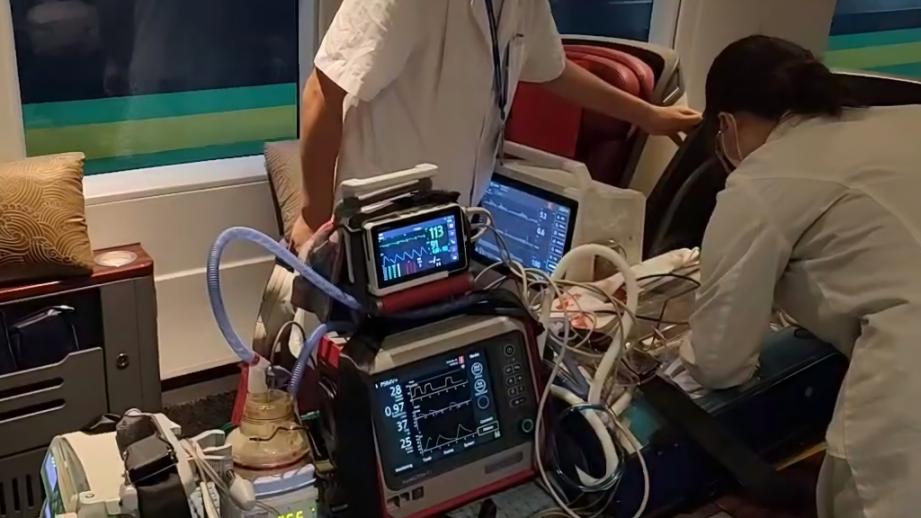
On July 3, 2024, TKP Medical Assistance coordinated a transfer from Guiyang to Guangzhou South Station using a high-speed rail stretcher (CRH stretcher). The patient was a 2-month-old baby boy with severe pneumonia, respiratory failure, and pulmonary arterial hypertension. Given his condition, the medical director selected rail over a long road journey to balance speed with clinical stability.
We started with a focused pre-assessment. The pediatric nurse and physician set ventilator parameters, oxygen targets, and nitric oxide therapy requirements. A portable incubator and critical medications were prepared. We arranged a green channel at the departure platform for efficient boarding and secured a quiet medical compartment on the train.
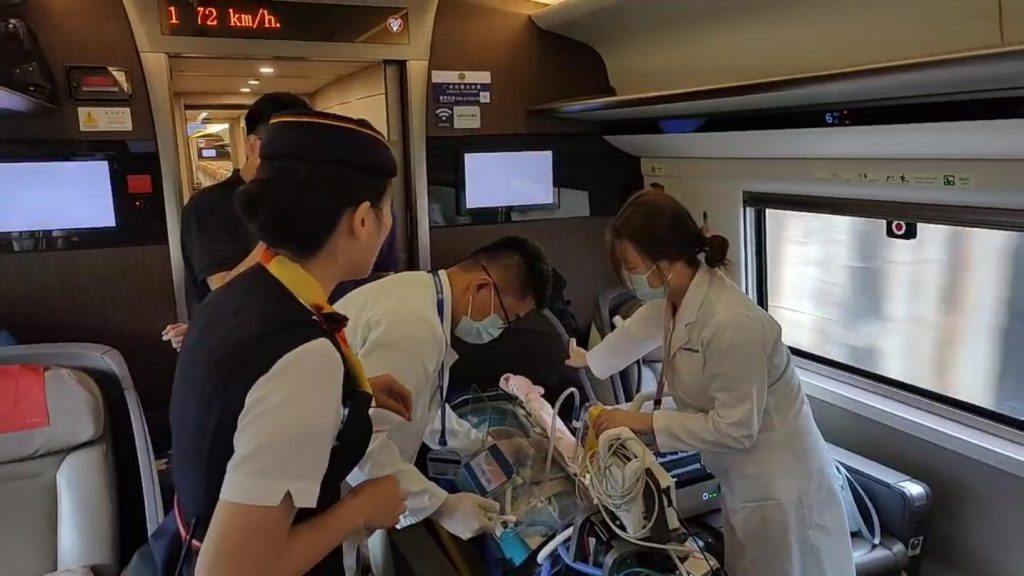
During the rail segment, our pediatric nurse provided continuous monitoring and charted vital signs, ensuring the infant remained stable. The train crew supported the mission throughout, keeping the compartment protected and accelerating procedures when needed. On arrival in Guangzhou, an ambulance team met the train at the platform and moved the infant directly to the receiving hospital. Because the mission was designed as a NICU-to-NICU transfer, admission was immediate and clinical continuity was maintained. Our coordinator closed the loop with both hospitals and the family, confirming documentation and handover notes were complete.
This case shows the core strengths of high-speed rail emergency patient transfer: predictable timelines, calmer cabin conditions, and a tightly choreographed chain of custody. For neonates and infants, fewer shocks and smoother motion can make a meaningful difference during long-distance transport.
Pediatric Focus: Stability, Speed, And Silence
Infant physiology is sensitive to noise, vibration, and sudden changes. Rail minimizes these stressors while giving the escort team the space and stability needed for delicate ventilation strategies. That pairing – stability plus speed – helps protect fragile lungs and hearts while keeping the clinical team close to the patient at every stage.
Partner With TKP Medical Assistance
Hospitals and families choose TKP because we remove the friction that often undermines time-critical transfers. Common pain points include traffic delays, last-minute equipment substitutions, unclear responsibilities between agencies, language gaps, and admissions that stall at the ICU door. Our model is designed to solve those problems before they happen.
We assign a single coordinator who owns the case from pre-assessment to arrival. The coordinator synchronizes hospital readiness, platform access, rail operations, and ambulance docking at both ends. Each escort team includes ICU-trained clinicians who bring the right equipment and medications for the specific diagnosis, not a generic kit. Communication with families is clear and compassionate, with updates as the mission progresses.
When should you consider rail? Choose high-speed rail emergency patient transfer when you need predictable timelines, a quieter environment, and rapid platform-to-bed movement without the staging delays of other modes.
✅ Signs Rail May Be The Right Choice
• The patient needs ventilation or inhaled nitric oxide and would benefit from low vibration
• Platform green-channel loading and direct ICU admission are feasible at both ends
• Weather or runway constraints make air transfer impractical, and road transit is long
• A pediatric or neonatal case requires a protected, quiet compartment and NICU-to-NICU continuity
✅ How We Prepare Your Mission
Our team builds a personalized plan around diagnosis and risk. We verify power and oxygen redundancy, layout the stretcher and incubator footprint, and stage backup medications. We pre-alert the receiving ICU, align documentation, and confirm that the ambulance meets the train at the platform. Throughout the journey, the escort team monitors, treats, and documents, so the receiving clinicians get a complete, actionable record at handover.
Call To Action
If you are facing a time-critical transfer, talk to TKP Medical Assistance today. Share the diagnosis, origin, and destination, and we will design a safe, efficient high-speed rail emergency patient transfer – from first assessment to direct ICU admission. We’ll handle the logistics and the clinical details so your team can stay focused on care.
Submit Your Request
Recent Posts

Tags
- Air Ambulance
- Bedside To Bedside
- Cross Border Aid
- Emergency Evacuation
- Global Medical Rescue
- How can I ensure the patient's stability while in the air?
- How do I request an air medical transport?
- How is it different from an air ambulance
- how to activate emergency aircraft service
- how to request an air ambulance
- Is air medical transport safe
- Is international transport possible
- Medical Rescue
- Medical Transport
- Patient Repatriation
- Remote Rescue
- Seamless Coordination
- Telemedicine Support
- Tourists And Expats Medical Escort
- What are the benefits of a cross-border medical transfer
- What are the different types of transfers
- What are typical use cases
- What documents do I need to prepare for a transfer?
- What does high-speed rail patient transfer stands for
- What is air ambulance
- What is air medical transport?
- What is cross-border medical transfer
- What is emergency aircraft
- what is high-speed rail patient transfer
- What is medical charter flight
- what is neonatal ICU transfer
- What is patient air transfer
- What medical equipment is available on board the aircraft
- What situations shouldn't use air medical transport?
- What types of air ambulance are there?
- What types of air ambulance exist
- What's the difference between international and domestic transfers?
- what’s the difference between air medical transport and regular ambulance?
- When is emergency air transport necessary
- Which patients require air medical transport?
- who is included in the medical team
- who needs an air ambulance