


Why Hospitals Need High-Speed Rail Emergency Patient Transfer Solutions


High-Speed Rail Emergency Patient Transfer is changing how hospitals move fragile patients between cities. It is fast. It is predictable. And it keeps life-support running from bed to bed. Yet many teams still hesitate. Can rail match the safety of an ICU? What happens when minutes matter and air is not an option? In one recent case, a newborn needed a quiet cabin, steady power, and continuous ventilation – on a tight clock. The route we chose surprised everyone. The result did, too. Here’s why hospitals need rail-ready protocols now – and what most providers overlook.
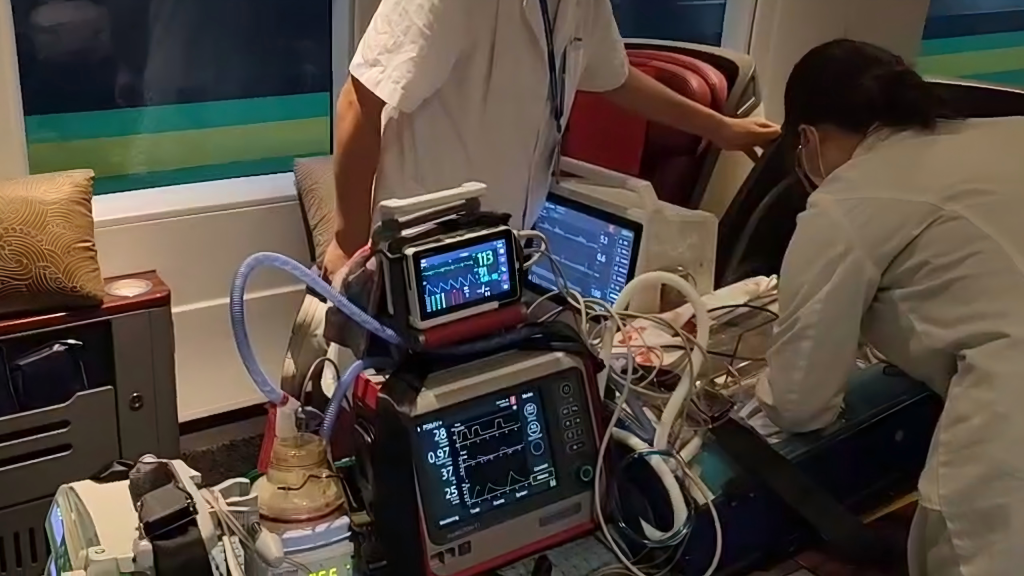
Why Hospitals Turn To Rail
Hospitals often face a hard trade-off. The right specialist or the last open NICU bed is available – but it sits in another city. Air ambulances can be grounded by weather, cost, or airspace limits. Road convoys are slower and expose fragile patients to vibration, traffic, and long handovers. High-speed rail offers a third way: fast, predictable intercity movement with clinical continuity from bedside to bedside.
At TKP Medical Assistance – a trusted provider of cross-border medical evacuation and patient transfer services – we design rail transfers that protect the “golden hour” and reduce risk during non-flight segments. The advantages are clear:
- Speed You Can Plan Around: Frequent, punctual departures limit idle time and simplify bed and staffing coordination.
- Clinical Stability: Smooth acceleration, level cabins, and steady power support ventilators, incubators, and monitoring devices.
- Operational Integration: Rail hubs connect mature hospital networks, enabling NICU-to-NICU rail transfer protocol plans and rapid admissions on arrival.
A medical-grade rail transfer is never “just a ticket.” It is a closed loop of bedside stabilization, escorted platform access, configured onboard care, and direct ICU handover – managed by one accountable team. TKP aligns schedules, prepares equipment, briefs both ends, and assigns pediatric or ICU-trained clinicians so care never pauses in transit. This is how High-Speed Rail Emergency Patient Transfer becomes a repeatable hospital capability rather than a one-off gamble.
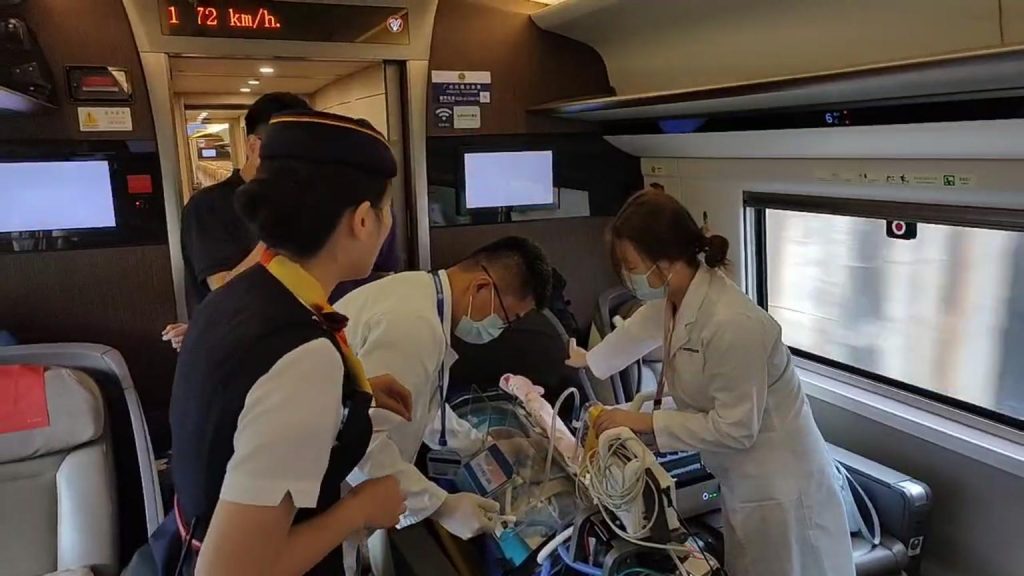
Field Report: Neonatal Transfer, Guiyang → Guangzhou South
On July 3, 2024, TKP Medical Assistance coordinated a high-acuity neonatal rail transfer from Guiyang to Guangzhou South Station using a high-speed rail stretcher configuration. The patient was a 2-month-old baby boy with severe pneumonia, respiratory failure, and pulmonary arterial hypertension – a profile where delays, cabin pressure changes, and vibration can destabilize cardiopulmonary balance.
1.Patient Profile And Risks
The infant required precise ventilation, strict thermoregulation, and careful control of pulmonary pressures. Any interruption in support – between ambulance, platform, rail compartment, and receiving ICU – could have forced emergency escalation. Rail, with its stable environment and predictable timing, offered the safest non-air option.
2.What Made It Work
- Portable Incubator And Ventilator supported continuous temperature and respiratory management from NICU exit to ICU admission.
- Nitric Oxide Inhalation Therapy Device enabled targeted pulmonary vasodilation to stabilize oxygenation and right-heart load.
- Green-Channel Platform Access ensured efficient loading and unloading with no crowd interference or bottlenecks.
- Seamless NICU-to-NICU Handover meant the receiving team was pre-alerted, documentation was pre-shared, and admission was immediate.
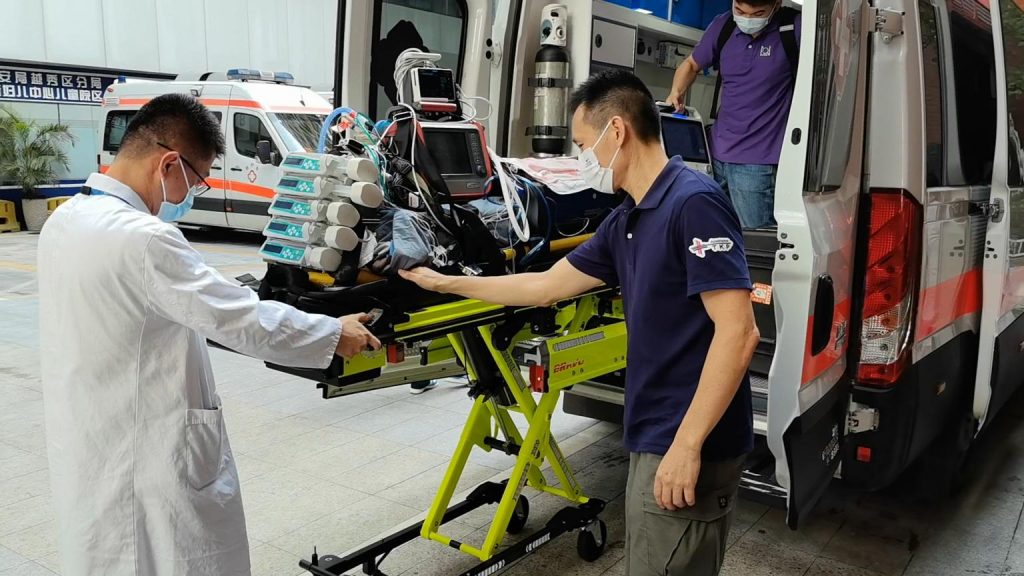
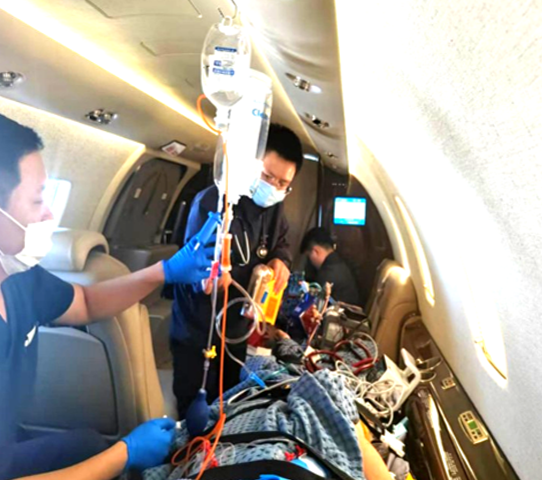
Onboard, a pediatric nurse maintained uninterrupted monitoring, adjusted ventilator and NO settings as needed, and recorded trends for the receiving team. Train crew members handled logistics, preserving a quiet, secure medical compartment. On arrival in Guangzhou, a pre-positioned ambulance met the team at the platform for direct transfer to intensive care. The outcome: a smooth, clinically stable journey with no lapse in therapy.
❓ Why Rail Was The Right Modality
For neonates, altitude and cabin pressure shifts can undermine ventilation strategies. High-speed rail provides a level, power-reliable setting with space for equipment and staff. It shortens intercity travel compared with road-only options while avoiding the physiologic stresses sometimes seen in flight. In this case, the continuous triad – incubator + ventilator + nitric oxide therapy – was maintained end-to-end, which was decisive for safety.
Making Rail Work For Your Hospital With TKP
Hospitals need partners who convert High-Speed Rail Emergency Patient Transfer from a risky idea into a reliable service line. TKP builds that reliability with standards, not improvisation.
✅ When Rail Fits Best
- Neonatal and Pediatric Critical Care needing incubators, ventilation, or NO therapy across short-to-mid intercity corridors.
- Post-Surgical Patients for whom vibration, cabin pressure changes, or long road journeys are contraindicated.
- Intercity Or Cross-Border Transfers where ambulances bookend a fast rail segment to minimize total time outside ICU.
Rail is not for every scenario. TKP evaluates diagnosis, distance, equipment needs, and receiving-bed readiness before recommending a mode. When rail is selected, we integrate it seamlessly into hospital workflows rather than bolting it on.
✅ Implementation Steps Hospitals Can Trust
- Route Engineering: We align train timetables with ambulance windows to avoid idle time on platforms or at hospital gates.
- Equipment Assurance: Redundant power options, backup cylinders, mounting safety, and carriage compatibility are pre-verified.
- Crew Composition: Pediatric/ICU nurses and, when indicated, physicians are matched to the patient’s acuity and therapy plan.
- Receiving-Side Readiness: Ventilator settings, labs, and notes are shared in advance; ICU bays are reserved; escalation paths are defined.
Most institutions already run tight ambulance-to-ICU handovers. TKP extends that muscle memory onto the rail network, preserving chain-of-care and documentation. The benefits compound quickly:
- Predictable Timelines support staffing rosters, bed planning, and family communication.
- Cost Efficiency reduces reliance on aircraft for cases where rail offers equal or better clinical conditions.
- Patient-Centered Stability improves comfort, reduces noise and vibration exposure, and keeps therapy uninterrupted.
High-Speed Rail Emergency Patient Transfer is not a niche tactic – it is a scalable method for moving fragile patients with the speed of rail and the discipline of critical care. For health systems serving wide geographies, rail becomes the connective tissue between specialized hubs and local hospitals, letting patients access the right bed at the right time without sacrificing safety.
Closing Words
Exploring a rail-first pathway for NICU, PICU, or post-operative cases? Contact TKP Medical Assistance to assess your routes, define a High-Speed Rail Emergency Patient Transfer protocol, and pilot a mission with full clinical and logistical support. We’ll help your team move faster – with continuity, safety, and confidence – so the next patient reaches definitive care without delay.
Submit Your Request
Recent Posts

Tags
- Air Ambulance
- Bedside To Bedside
- Cross Border Aid
- Emergency Evacuation
- Global Medical Rescue
- How can I ensure the patient's stability while in the air?
- How do I request an air medical transport?
- How is it different from an air ambulance
- how to activate emergency aircraft service
- how to request an air ambulance
- Is air medical transport safe
- Is international transport possible
- Medical Rescue
- Medical Transport
- Patient Repatriation
- Remote Rescue
- Seamless Coordination
- Telemedicine Support
- Tourists And Expats Medical Escort
- What are the benefits of a cross-border medical transfer
- What are the different types of transfers
- What are typical use cases
- What documents do I need to prepare for a transfer?
- What does high-speed rail patient transfer stands for
- What is air ambulance
- What is air medical transport?
- What is cross-border medical transfer
- What is emergency aircraft
- what is high-speed rail patient transfer
- What is medical charter flight
- what is neonatal ICU transfer
- What is patient air transfer
- What medical equipment is available on board the aircraft
- What situations shouldn't use air medical transport?
- What types of air ambulance are there?
- What types of air ambulance exist
- What's the difference between international and domestic transfers?
- what’s the difference between air medical transport and regular ambulance?
- When is emergency air transport necessary
- Which patients require air medical transport?
- who is included in the medical team
- who needs an air ambulance