


How Do I Request an Air Medical Transport? Step-by-Step Guide


What is Air Medical Transport?
Air medical transport is commonly referred to as air ambulance service, which is defined as a specialized flight service offered to patients who require medical assistance during travel. There are two main types:
- Medevac Flights Emergency – urgent transfers following accidents or some acute illness.
- Non-Emergency Transfers – scheduled flights of stabilized yet monitored patients.
Air medical flights may use:
- Long-distance fixed-wing aircraft (jets or turboprops).
- Short, emergency evacuations – helicopters.
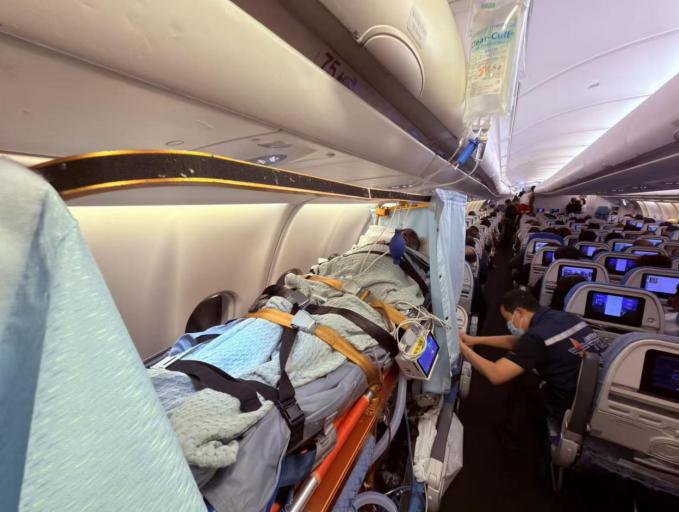
- Professional stretcher services on normal airlines with medical accompaniment.
On our medical transport services page, learn more about the ways TKP Assistance is used in support of emergency and non-emergency cases.
What Do I Do to Seek an Air Medical Transport? A Complete Guide
How do I request an air medical transport? Air medical transport comes as a lifesaver when patients require intensive or extensive medical assistance. It could be an emergency evacuation or a non-emergency transfer that is planned, but when it comes to many families and hospitals, the question remains the same: How can I request an air medical transport?
Who Would Require an Air Medical Transport?
Any air ambulance can be requested by anybody. Common requesters include:
- Caregivers or family members who have to transfer an individual.
- Doctors or hospitals that organize transfers of a patient to specialized facilities.
- Coverage-related medical evacuations are done through insurance companies or employers.
- Government or support organizations in case of a disaster or accidents in a foreign country.
It is typically a procedure with the approval of the doctor, since the medical stability of the patient has to be evaluated before boarding an aircraft.
How to Request an Air Medical Transport Step-by-Step?
Contact a Trusted Provider
They should start by calling or emailing a good provider such as TKP Assistance. In case of an emergency, there is a 24/7 hotline that allows for quick.
Give Patient Information. You’ll Need:
- Age and medical history of the patient.
- Hospital records (discharge report, laboratory results)
- Recommendation of transfer by the doctor.
- Favorite destination hospital.
Medical Assessment
The medical team of the provider examines the case. They check:
- In case the patient is fit to fly.
- What outfit and retinue does it need?
- What is the best mode (air ambulance, stretcher, or helicopter)?

Approval and Documentation
- Doctor’s clearance form
- Permission to insure (where necessary)
- Familial or guardian consent.
- Travel documents (passport, visa when crossing the border)
Quotation and Booking
Upon confirmation, you are provided with a cost breakdown. This covers:
- Aircraft fees
- Medical staff charges
- Ground ambulance, at both ends.
- Airport and permit costs
Ground-Air-Ground Coordination
A smooth transfer includes:
- Hospital pickup by ambulance.
- Medical Emergency Air Transfer.
- Trip to the hospital of arrival.
This continuity makes sure that patients do not go without attention.
Some Air Medical Transport You Can Order
- Air Ambulance (Charter Flight) – Properly equipped with ICU-level care.
- Commercial Airline Stretcher Service – Less expensive when it is not an emergency.
- Medical Escort on Commercial Flight – To maintain stable patients.
- Helicopter Medevac – To be used when rescuing over a short distance and in an emergency.
- Integrated Rail + Air + Ground Transfers – Multimodal solution where long or complicated routes are involved.
Safety Procedures in Requested Air Medical Transport
In the case of air medical transport, patient safety is paramount when you request air medical transport. Standards are met by the providers:
- Pre-flight medical checkup.
- Constant airplane observation.
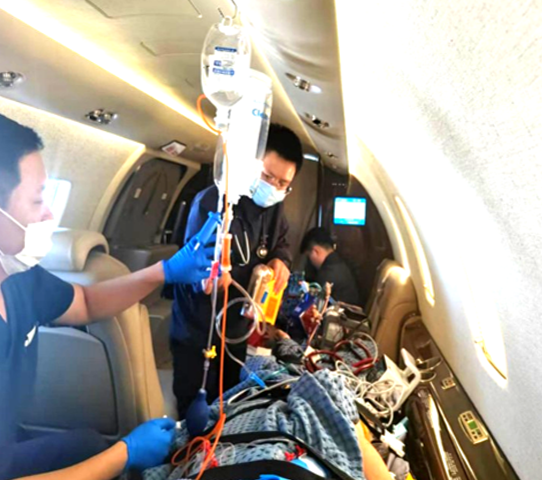
- On-board advanced equipment (ventilators, defibrillators, infusion pumps)
- Specialist escorts (doctors, nurses, paramedics) in the ICU.
- Infection control procedures.
- Adherence to FAA/EASA aviation regulations.
The AAMS (Association of Air Medical Services) argues that there is a more favorable safety and survival rate in accredited providers.
Expense of Air Medical Transportation
Organizations incur costs when they request an air medical transport.
Costs depend on:
- Distance (domestic vs. international)
- Type of aircraft (jet, turboprop, or helicopter)
- Medical staff needed
- Urgency (emergency vs planned)
You must always enquire with your provider regarding the insurance coverage and payments. Part or full air medical services are covered in some insurance plans.
International and Domestic Requests
Domestic Requests
- Easier approvals
- Shorter flight times
- Lower costs
International Requests
- Need visa/ travel clearance.
- Longer logistics planning
- Higher priced but necessary to the patients overseas.
Documents to Be Able to Request an Air Medical Transport
- Patient’s medical summary
- Passport/ID copies
- Insurance card (when covered)
- Clearance certificate from the doctor.
- Consent form from next of kin
- Transfers might be postponed without the full paperwork.
Why Should I Use TKP Assistance to Request Air Medical Transport?
We at TKP Assistance are:
- Emergency Medevac Flights – 24/7 on call.
- Non-Emergency Transfers – Comprising commercial stretcher arrangements.
- Critical Care In-Flight – ICU nurses, paramedics, and ICU doctors onboard.
- Cross-Border Transfers – Smooth collaboration with airports, embassies, and hospitals.
- Our Guarantee: Safe, efficient, and compassionate transfers all the time.
Best Practices in Requiring Air Medical Transport
- Make the request early on, even in non-emergency cases.
- Always make use of certified providers.
- Make certain that there is insurance.
- Have copies of all documents on hand.
- Request a cost estimate in writing.
- Make sure the continuity of care is grounded in air-ground support.
- Assure infection prevention and safety levels.
Conclusion
Ordering an air medical transportation is not as complex as it may seem, and with a competent provider on board, the procedure will be effortless. Every action is meant to ensure the safety of the patient and offers families peace of mind since the first call to final hospital handover. When the time comes to ask yourself how I request an air medical transport, keep the important points in mind: find a provider you can rely on, prepare medical information, get permits, and make sure the safety standards are followed. To urgently contact us, call TKP Assistance – your secure medical transfer partner to all parts of the world.
Submit Your Request
Recent Posts

Tags
- Air Ambulance
- Bedside To Bedside
- Cross Border Aid
- Emergency Evacuation
- Global Medical Rescue
- How can I ensure the patient's stability while in the air?
- How do I request an air medical transport?
- How is it different from an air ambulance
- how to activate emergency aircraft service
- how to request an air ambulance
- Is air medical transport safe
- Is international transport possible
- Medical Rescue
- Medical Transport
- Patient Repatriation
- Remote Rescue
- Seamless Coordination
- Telemedicine Support
- Tourists And Expats Medical Escort
- What are the benefits of a cross-border medical transfer
- What are the different types of transfers
- What are typical use cases
- What documents do I need to prepare for a transfer?
- What does high-speed rail patient transfer stands for
- What is air ambulance
- What is air medical transport?
- What is cross-border medical transfer
- What is emergency aircraft
- what is high-speed rail patient transfer
- What is medical charter flight
- what is neonatal ICU transfer
- What is patient air transfer
- What medical equipment is available on board the aircraft
- What situations shouldn't use air medical transport?
- What types of air ambulance are there?
- What types of air ambulance exist
- What's the difference between international and domestic transfers?
- what’s the difference between air medical transport and regular ambulance?
- When is emergency air transport necessary
- Which patients require air medical transport?
- who is included in the medical team
- who needs an air ambulance