


How to Activate Emergency Aircraft Service | Complete Guide


How to Call the Aircraft Emergency Service?
- Each moment matters during the crisis. An emergency aircraft service is a savior when the patient is in a critical state and cannot be accessed via the air anymore. However, what do you do to request an emergency aircraft service? What do you do to deploy a medical evacuation by helicopter, and with whom do you communicate?
- This is an overall outline of how to don emergency aircraft service and also a preview of air ambulance activation, aviation protocols, and the technical process of all life-saving flights. In this process, it is the difference between life and death as a healthcare provider, as an emergency coordinator, or as a family member who needs immediate help.
Experience of Emergency Aircraft Service
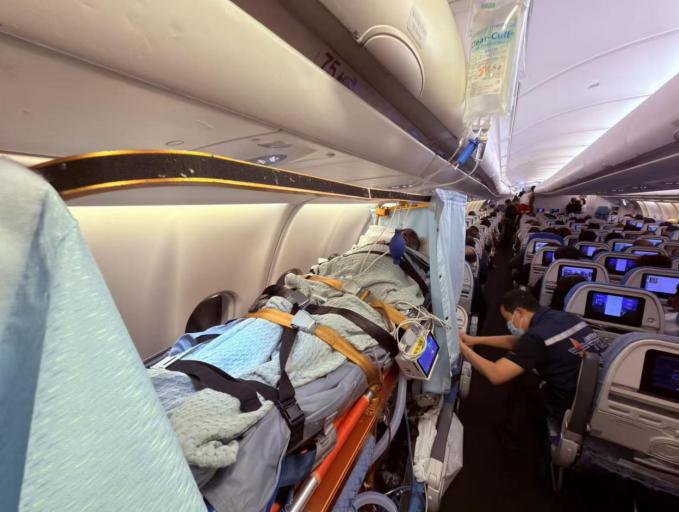
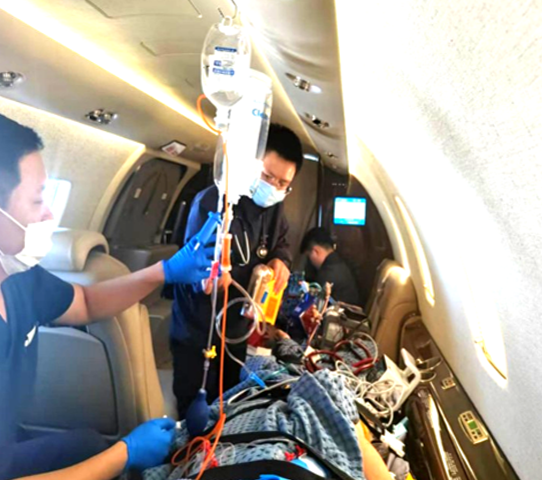
An emergency aircraft service, sometimes known as an air ambulance, consists of a dedicated purpose medical aircraft, with ICU-quality medical facilities, life-support, and trained paramedics. These aircraft are designed to perform critical care air transport, implying that patients are provided with constant medical care throughout takeoff.
TKP Assistance is an international company, and it is the one that can be approached at any time of the day or night, and we are involved in rapid response aircraft to medical evacuation, air rescue missions, and inter-border transfers. The significant features of emergency aircraft are:
- Planes that have cabins with ventilators, defibrillators, and monitoring systems in the ICUs.
- Health care staff, including physicians and flight nurses.
- Quick mobilization processes that ensure prompt delivery in minutes.
- Flight preparation check and control tower clearance.
- ICAA/ICAO international air medical coordination, based on emergency requirements.
When an Emergency Aircraft Was Required
How to activate emergency aircraft service? Serious trauma is not the only reason to activate an emergency aircraft. It is required in the event where evacuation is needed in time-sensitive conditions. Common scenarios include:
- Severe traumatic conditions or road accidents are far outside the hospitals.
- Heart attack or cardiac services.
- Emergency organ transplantation.
- The evacuation of isolated districts in the event of natural disasters.
- ICU patients hospital to hospital-to-hospital/ inter-country transfer.
An activation center of an air ambulance should be called when the survival of a patient requires immediate access to high-level care.

How to Activate Emergency Aircraft Service?
The emergency aircraft activation process, both aviation and medical coordination processes, is described in the following step-by-step.
Step One: Original Emergency Call/Request
This is initiated by an emergency call to a rescue coordination center or air ambulance hotline. You can always use the services of a reputable provider like TKP Assistance in their 24/7 activation hotline. Provide key details such as:
- The current condition and diagnosis of the patient.
- Place (GPS or nearest hospital)
- Being admitted to the hospital, the desired destination.
- Contact numbers of the doctor or Family.
- Have any special medical needs (e.g., ventilator support, ECMO, or neonatal support)?
Step Two: Tele Consultation and Medical Evaluation
There is an onboard medical assessment of telemedicine. This determines the fitness of the patient to fly and the need for the medical escort flight service. The medical director reviews vital parameters, existing reports, and treatment needs. If this is granted, the aircraft will be emergency prepared.
Step Three: Flight Clearance/Dispatch Protocol
The aviation operations center initiates flight planning for emergency evacuation when a medical approval has been received. The dispatch protocol is:
- Converting flight clearance operations to air traffic control (ATC).
- Anaesthetizing the emergency routes of air traffic.
- Check the clearance of authorization of the control towers.
- Guaranteeing activation of the emergency preparedness system.
The processes provide safe and compliant medevac aircraft service in accordance with the aviation emergency standards and international rescue network standards.
Step Four: Ground-Level Coordination and Patient Handover
The ground ambulance personnel plan to transport the patient to the airport as the members of the flight crew are getting ready. It is an air-ground connection of ambulances, which ensures a seamless transfer of an ambulance to an airplane. Flight logistics management is provided to guarantee the flight onboard critical care teams, and flight readiness is provided before the flight.
Step Five: In-Flight Medical Evacuation
Ironically, there is paramedic air support during the flight. The on-board ICU system also provides the facility of intensive care in the flight, like real-time monitoring, oxygen therapy, and emergency treatment. The onboard medical team updates doctors at the receiving hospital on the condition of the patient in case of need.
Step Six: Co-ordination of Hospital and Arrival
At the landing point, the remainder of the hospital staff relieves them by communicating with the aircraft. Patient flow is also carried out well, and continuity is maintained.
International and International Cross-Border Medevac
Cross-border air evacuation in the case of international missions is subject to CAA and customs clearance. TKP Assistance is a global patient transfer firm; all the arrangements, visa, medical report translation, and hospital coordination are handled by it. Each international medevac service is supported by a global air medical coordination network, which will enable it to be deployed to any continent within a short period of time.
Technical and Safety Standards
It is comprised of all emergency flight dispatch procedures:
- ICAO Emergency Procedure (Annex 12)
- CAA flight operations regulation.
- Crew compliance training.
- Flight simulation activities in an emergency.
- Loss of in-flight oxygen.
One aspect of the safety of any emergency air medical service is a trade-off.
Why Choose TKP Assistance?
TKP Assistance, with a successful mission history of 10,000+ successful missions in 20 years, is a well-known leader in air medical evacuation and emergency aircraft activation. We provide:
- 24/7 rapid response aircraft.
- ICU and certified onboard life-support.
- Physically qualified flight crews.
- Foreign organization and bureaucracy.
- Liquid contact between the land and the air particles.
Our mission is to provide humane services to every emergency, and distance should not be a factor in deciding whose survival.
Conclusion
How to activate emergency aircraft service? There is precise medical analysis, aviation coordination, and instant response in the mobilization of an emergency aircraft service. By understanding each phase of the medical evacuation process, beginning with request initiation, through in-flight care, hospitals, families, and emergency agencies can become more efficient in their medical evacuations. Confide in a trusted parent to offer professional care, and that too when time is of the essence. The partner to be counted on is TKP Assistance.
Submit Your Request
Recent Posts

Tags
- Air Ambulance
- Bedside To Bedside
- Cross Border Aid
- Emergency Evacuation
- Global Medical Rescue
- How can I ensure the patient's stability while in the air?
- How do I request an air medical transport?
- How is it different from an air ambulance
- how to activate emergency aircraft service
- how to request an air ambulance
- Is air medical transport safe
- Is international transport possible
- Medical Rescue
- Medical Transport
- Patient Repatriation
- Remote Rescue
- Seamless Coordination
- Telemedicine Support
- Tourists And Expats Medical Escort
- What are the benefits of a cross-border medical transfer
- What are the different types of transfers
- What are typical use cases
- What documents do I need to prepare for a transfer?
- What does high-speed rail patient transfer stands for
- What is air ambulance
- What is air medical transport?
- What is cross-border medical transfer
- What is emergency aircraft
- what is high-speed rail patient transfer
- What is medical charter flight
- what is neonatal ICU transfer
- What is patient air transfer
- What medical equipment is available on board the aircraft
- What situations shouldn't use air medical transport?
- What types of air ambulance are there?
- What types of air ambulance exist
- What's the difference between international and domestic transfers?
- what’s the difference between air medical transport and regular ambulance?
- When is emergency air transport necessary
- Which patients require air medical transport?
- who is included in the medical team
- who needs an air ambulance