


How to Request an Air Ambulance in Emergency | Safe Transport


What is an Air Ambulance?
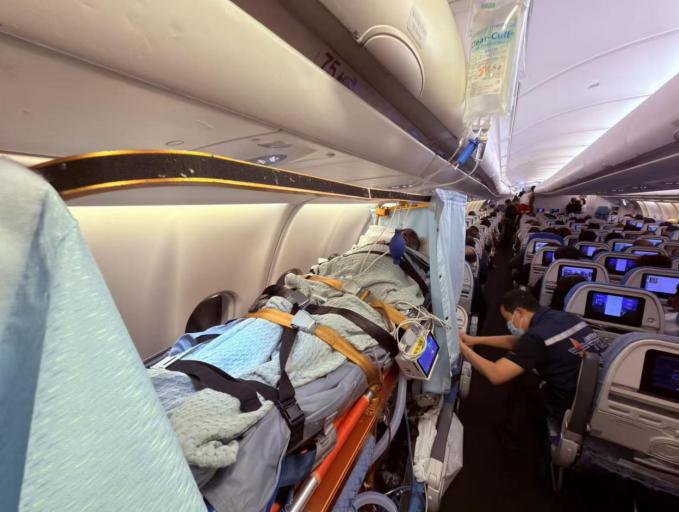
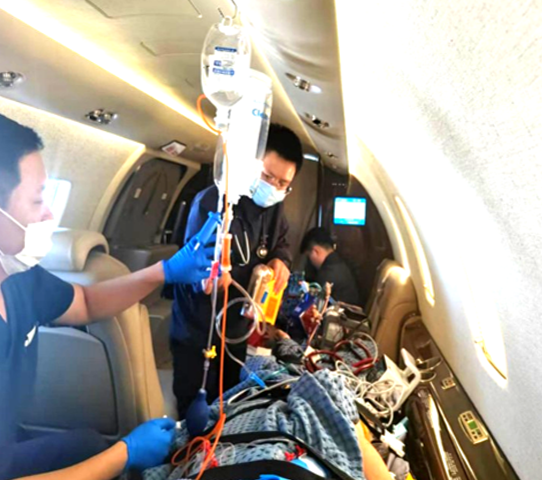
An air ambulance is a specialized aircraft that is used to carry patients in need of emergency treatment in the air. It is no ordinary airplane; it is instead a flying ICU, with sophisticated life support systems as well as onboard oxygen, medical monitors, and trained medical staff. The use of air ambulances is usually in cases of:
- Critical care transfers
- Post-accident evacuations
- Sending them back home.
- Hospital-to-hospital transfers
- Organ transport, donor flight.
They are normally long-distance transfer flights on a fixed-wing aircraft or a short-range emergency flight on a helicopter.
Why You May Require an Air Ambulance?
How to request an air ambulance? Some of the reasons that require emergency air transport include:
- The patient is in serious condition and is unable to stand long ground travel.
- The hospital does not have the required medical amenities.
- A patient will need to be taken abroad to receive more sophisticated treatment.
- Access by road is impossible due to natural disasters, accidents, or distance.
In every one of them, an air ambulance will be requested, which means faster, safer, and medically controlled transportation.
How to Order an Air Ambulance?
We shall take the air ambulance request procedure and divide it into easy steps.
Contact the Air Ambulance Provider
The initial one is to contact one of the trusted companies. You may dial an emergency hotline, an air ambulance, or go to the sites of the provider.
In TKP Medical Assistance, our 24/7 medical coordination team is at hand to walk you through all the steps of the process. You’ll need to provide:
- Name, age, and medical condition of the patient
- Current hospital location
- Destination hospital
- Contact information of the doctor or family attending them
This first call triggers the air ambulance coordination center, which initiates ground-to-air interaction and logistical planning.
Turn in Documents and Consent Forms
You will need to send:
- Patient identification forms.
- Doctor’s certificate and medical reports.
- Consent form for transport
- Policy of insurance (where applicable)
These are to make sure that international health standards and cross-border travel standards are adhered to. Flight clearance with aviation authorities and customs paperwork can also be necessary in the case of an international transfer. These formalities are dealt with by the case management support team of your provider.

Authenticate the Cost and Insurance Cover
The air ambulance price varies depending on:
- Pickup and destination distance.
- Airplane type (fixed-wing or helicopter)
- Medical staff onboard.
- Equipment requirements (ICU, ventilator, oxygen cylinders)
A detailed quotation should always be asked for. The majority of companies provide an air ambulance cost calculator to estimate the costs. In case you are insured, look to see whether it has a medical evacuation. Other insurance programs include repatriation expenses, ground ambulance, and hospitalization outside the country.
Complete Flight and Coordination
After having checked all the papers and received the money, the provider makes:
- Pick-up of the hospital by ground ambulance.
- Transfer to the airport
- Aviation flight clearance.
- Onboard medical staff preparedness.
At this level, ground-to-air coordination is used to maintain smooth communication between the hospitals, pilots, and paramedics. The dispatch crew keeps the family informed on the flight status and time of arrival.
Onboard and on-Flight Care
The onboard medical team monitors the patient when he or she is boarding the aircraft. In current ICU air ambulances, there is:
- Cardiac monitors
- Defibrillators
- Oxygen supply
- Infusion pumps
- Emergency medicines
The medical escort maintains the stability of the patient and takes care of emergency cases in case they occur. Depending on the condition of the patient and airplane capacity, family members can accompany the patient.
Hospital Handover and After-Flight Care
It is pre-warned of the arrival of the receiving hospital. An ambulance on the ground is prepared to carry out last-mile transfers. The air ambulance team gives a handover report, which guarantees easy admission of the patient. Our work at TKP Medical Assistance does not stop as soon as the aircraft lands; we keep working on the hospital coordination, language translation, and insurance follow-up.
Technical Insights: Working of Air Ambulance Systems
State-of-the-art air ambulances employ real-time telemedicine, satellite tracking, and flight telemetry to provide safe monitoring of patients.
Components:
- Flight Deck: Piloted by certified pilots who have been trained in Medevac.
- Medical Cabin: Made as a mobile ICU.
- Communication Systems: Provide communication between the ground hospitals and the air ambulance coordination center.
- Ground Support Teams: Process control, patient logistics, permits, and airport clearance.
All transfers are risk assessed, evaluated on weather, and the weight to ensure safety in flight.
Emotional Aspect of Medical Air Transport
To order an air ambulance is not only a technical procedure, but also an act of kindness. Families experience emotional pressure, economic pressure, and time pressure. This is why professional companies are interested in:
- Compassionate care
- Clear communication
- 24/7 assistance
- Stress-free coordination
All of the successful transfers indicate cooperation among pilots, paramedics, doctors, and family members.
Why TKP Medical Assistance?
TKP Medical Assistance is a company that has been in operation since 2001 and has accomplished more than 10000 successful missions in China, the Greater Bay Area, and the Asia-Pacific. Our strengths include:
- 24/7 emergency hotline
- ICU to ECMO patient transfer.
- Business stretcher/charter flights.
- International organization and repatriation.
Our mission is to offer speed, safety, and compassion, as well as take the best care of your loved one in the air.
Conclusion
The knowledge on how to request an air ambulance can save lives. It might appear a complicated process; however, when it is properly guided, it is not a problem. The first step is to select a reputable provider, collect medical data, verify that you have insurance, and leave the rest of the work to experts. That is why such experienced professionals as TKP Medical Assistance are available to provide fast, dependable, and caring air evacuation wherever and whenever it is needed.
Submit Your Request
Recent Posts

Tags
- Air Ambulance
- Bedside To Bedside
- Cross Border Aid
- Emergency Evacuation
- Global Medical Rescue
- How can I ensure the patient's stability while in the air?
- How do I request an air medical transport?
- How is it different from an air ambulance
- how to activate emergency aircraft service
- how to request an air ambulance
- Is air medical transport safe
- Is international transport possible
- Medical Rescue
- Medical Transport
- Patient Repatriation
- Remote Rescue
- Seamless Coordination
- Telemedicine Support
- Tourists And Expats Medical Escort
- What are the benefits of a cross-border medical transfer
- What are the different types of transfers
- What are typical use cases
- What documents do I need to prepare for a transfer?
- What does high-speed rail patient transfer stands for
- What is air ambulance
- What is air medical transport?
- What is cross-border medical transfer
- What is emergency aircraft
- what is high-speed rail patient transfer
- What is medical charter flight
- what is neonatal ICU transfer
- What is patient air transfer
- What medical equipment is available on board the aircraft
- What situations shouldn't use air medical transport?
- What types of air ambulance are there?
- What types of air ambulance exist
- What's the difference between international and domestic transfers?
- what’s the difference between air medical transport and regular ambulance?
- When is emergency air transport necessary
- Which patients require air medical transport?
- who is included in the medical team
- who needs an air ambulance