


Critically Ill HK Tourist Stranded in Altay with Severe Pneumonia Safely Returned to Hong Kong Via TKP Air Ambulance Coordination


During a family trip to the breathtaking Altay region of Xinjiang, a Hong Kong tourist suffered a severe pneumonia episode requiring high-flow oxygen support. With local medical limitations and rising concern from his family, TKP was contacted through his insurer. After careful remote evaluation and cross-team coordination, TKP organized a customized medical air ambulance transfer from Altay back to Hong Kong, ensuring continuous oxygen support and clinical monitoring throughout the journey.
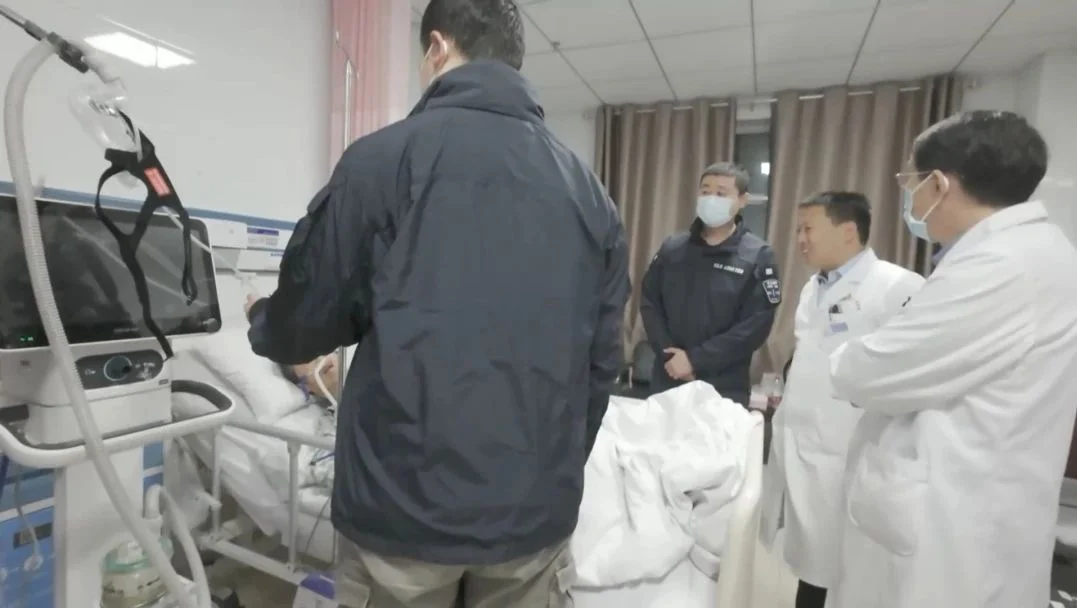
TKP medical team conducts bedside evaluation in Altay to assess the patient’s condition and oxygen requirements before transport
Sudden Illness Amid Stunning Altay Autumn
While visiting the famed fall landscapes of Altay, Mr. Lee developed respiratory symptoms that progressed into serious breathing difficulty. He was first treated at Burqin County Hospital, then transferred to Altay Regional Hospital, where he required high-flow nasal oxygen (HFNC) at 40L/min to maintain blood oxygen saturation.
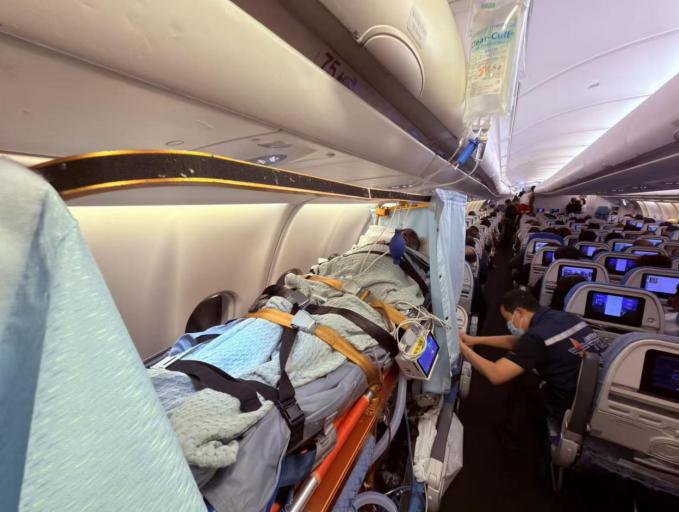
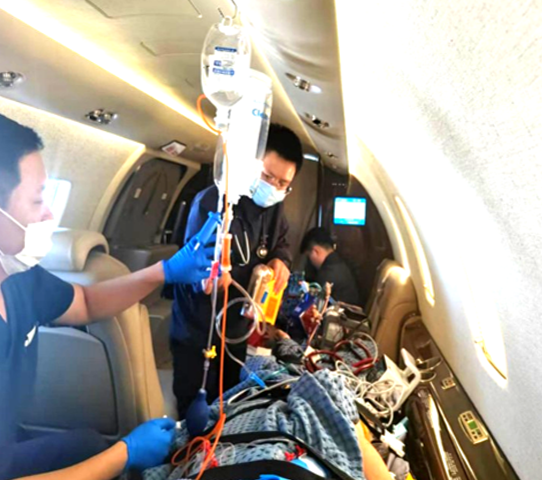
Patient receives non-invasive ventilation aboard the medical air ambulance en route to Hong Kong, monitored by TKP team
Complex Case Requires Careful Planning
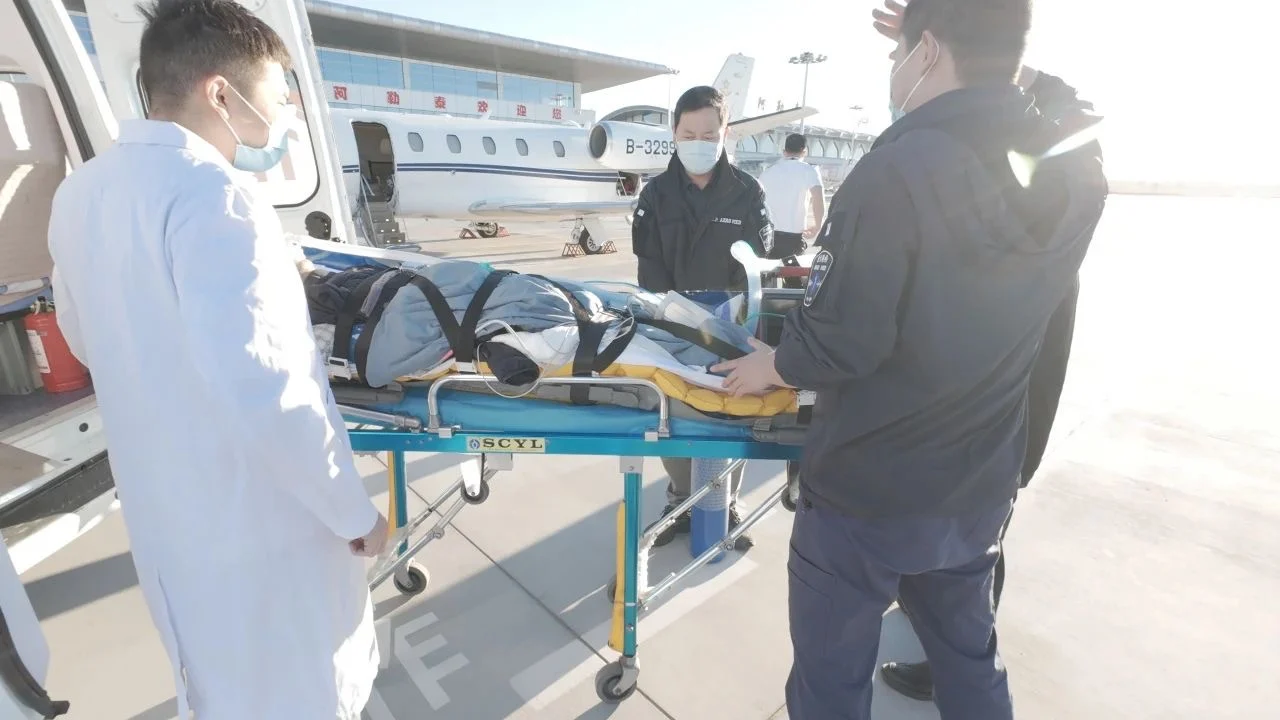
After a full assessment, TKP medical experts determined that high-flow oxygen during transfer posed risks due to equipment limitations. The team advised switching to non-invasive ventilation (NIV), which Mr. Lee tolerated well. With stabilized oxygen needs and FiO2 reduced to 60%, TKP initiated an emergency air ambulance plan from Altay to Hong Kong via a technical stop in Lanzhou.
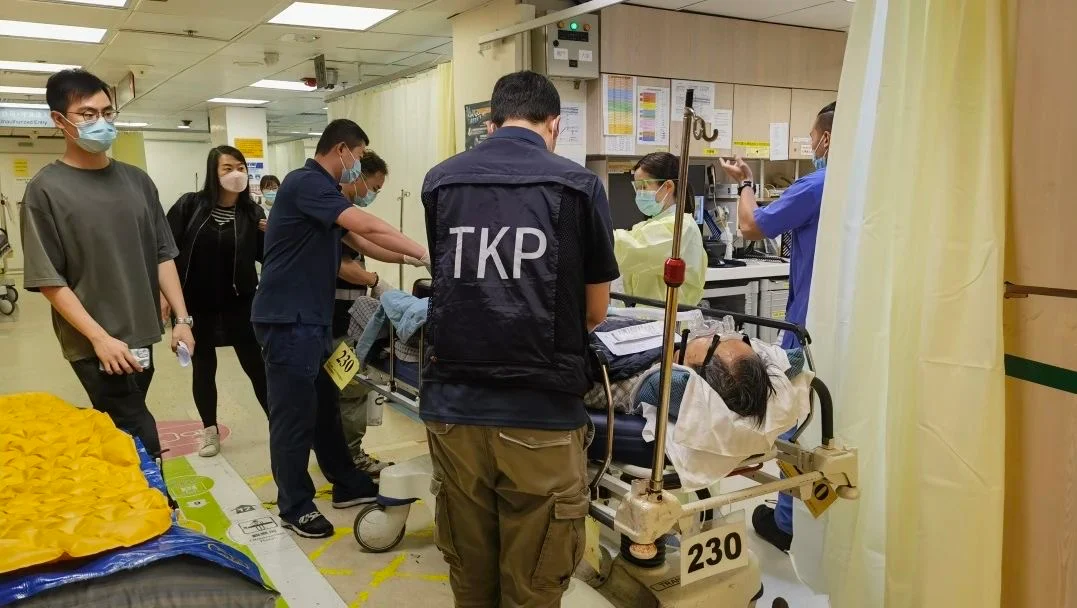
Upon landing in Hong Kong, the patient is quickly transferred to a waiting ambulance for direct transport to Queen Elizabeth Hospital
Midnight Departure, Cross-Regional Success
The TKP team departed from Shenzhen to Altay via Lanzhou, arriving late at night and immediately assessing the patient bedside. After verifying stability, the team completed a 6-hour flight back to Hong Kong, carrying 3000L of medical oxygen. Upon arrival, Mr. Lee was swiftly transferred by ambulance to Queen Elizabeth Hospital’s emergency department, safely under continuous medical supervision.
Frequently Asked Questions – Cross-Border Medical Rescue
Need help understanding how international medical rescue works? Browse our most common questions to learn about service coverage, response times, documentation requirements, and more. We’re here to support you every step of the way.
Q: Which countries are covered by the cross-border medical rescue service?
A: We cover major countries and regions worldwide to ensure timely rescue
Q: How can I request cross-border medical rescue?
A: Please submit an emergency rescue request through our official website or customer service.
Q:What documents are needed for medical rescue?
A: Patient ID, medical diagnosis report, and emergency contact information are required.
Q: How is the rescue service fee settled?
A: Fees can be paid via insurance claims or direct payment for the service.
Q: How quickly does the rescue response start?
A: In emergencies, rescue operations typically begin within a few hours.
Submit Your Request
Recent Posts
Tags
- Air Ambulance
- Bedside To Bedside
- Cross Border Aid
- Emergency Evacuation
- Global Medical Rescue
- How can I ensure the patient's stability while in the air?
- How do I request an air medical transport?
- How is it different from an air ambulance
- how to activate emergency aircraft service
- how to request an air ambulance
- Is air medical transport safe
- Is international transport possible
- Medical Rescue
- Medical Transport
- Patient Repatriation
- Remote Rescue
- Seamless Coordination
- Telemedicine Support
- Tourists And Expats Medical Escort
- What are the benefits of a cross-border medical transfer
- What are the different types of transfers
- What are typical use cases
- What documents do I need to prepare for a transfer?
- What does high-speed rail patient transfer stands for
- What is air ambulance
- What is air medical transport?
- What is cross-border medical transfer
- What is emergency aircraft
- what is high-speed rail patient transfer
- What is medical charter flight
- what is neonatal ICU transfer
- What is patient air transfer
- What medical equipment is available on board the aircraft
- What situations shouldn't use air medical transport?
- What types of air ambulance are there?
- What types of air ambulance exist
- What's the difference between international and domestic transfers?
- what’s the difference between air medical transport and regular ambulance?
- When is emergency air transport necessary
- Which patients require air medical transport?
- who is included in the medical team
- who needs an air ambulance