


Is Air Medical Transport Safe? Everything You Need to Know


What is Air Medical Transport?
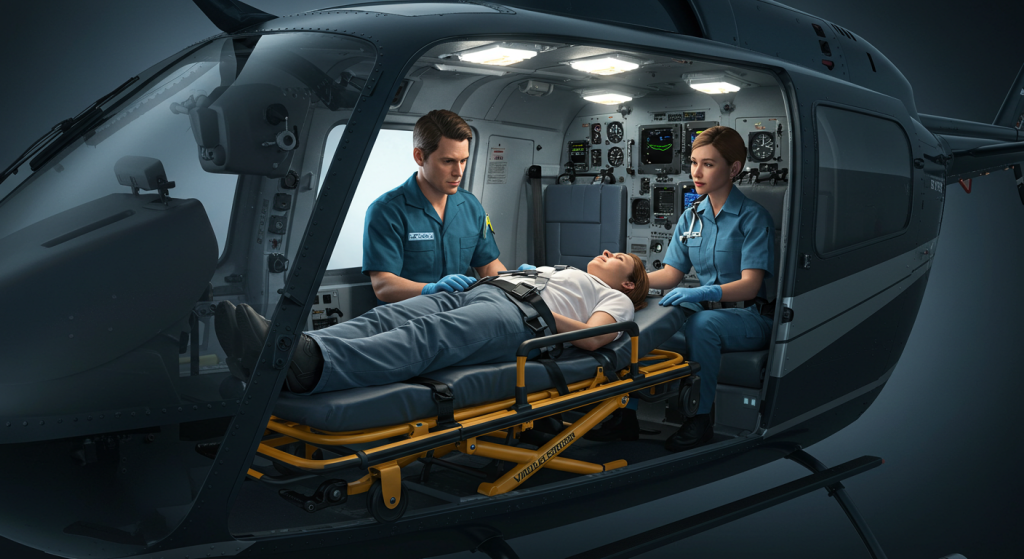
Air medical transport- more commonly known as air ambulance services- is the practice of using helicopters or fixed-wing aircraft to move patients. These aircraft have healthcare experts who are flown under stringent aviation and medical protocols, and they carry equipment of ICU standard. There are two main types:
- Helicopter Emergency Medical Services (HEMS) – typically short-range and emergency.
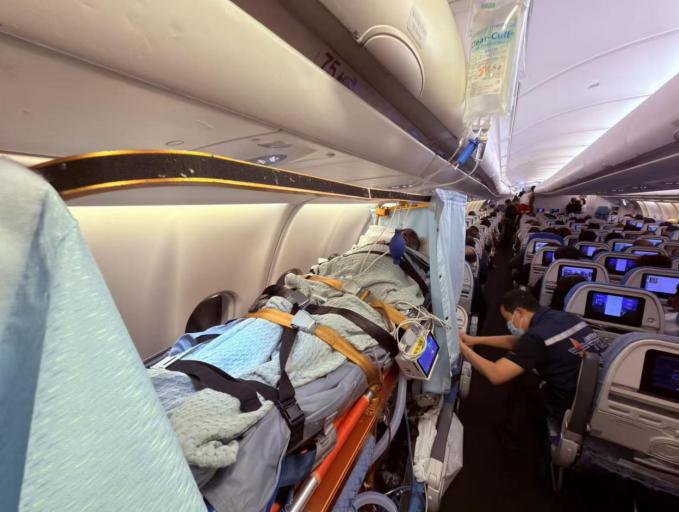
- Fixed-Wing Air Ambulances – made to travel not less than long distances or even to different countries.
Both resemble international aviation standards and patient safety standards.
Is Air Medical Transport Safe or Not? An Ultimate Patient and Family Guide
Air medical transport has been a lifesaver for patients who require immediate treatment or transportation over long distances. Yet there is one question that comes around and around: Is air medical transport safe? The brief answer is yes–when in the hands of qualified providers, air ambulance flights have been created with heavy safety protocols, sophisticated equipment, and highly skilled crews.
How Safe is the Flight of an Air Ambulance?
A lot of families are concerned: can the flights of air ambulance be considered as safer than the flights of ground ambulance? The reality is that the levels of air medical transport safety are very high. Key Safety Factors:
- Professional Medical Teams – Nurses, paramedics, and doctors with critical care training.
- Modernized Equipment – Ventilators, cardiac monitors, infusion pumps, and defibrillators.
- Aviation Standards – The aircraft should comply with the FAA or EASA regulations.
- Accreditation – Providers are usually EURAMI or CAMTS certified.
- Constant Surveillance – Patients are observed all the way through, as in an ICU of the hospital.
Air transport could decrease the risks of traffic delays, increased travel duration, and inaccessibility of medical equipment as compared to ground ambulances.
TKP – Air Medical Transport: The Safest Choice
Families pose this question when they inquire, Is air medical transport safe? Yes, with TKP the safety is our priority, is our answer. We offer safe, dependable, and effective cross-border emergency and non-emergency transfer, so patients can travel with their hopes and comfort.
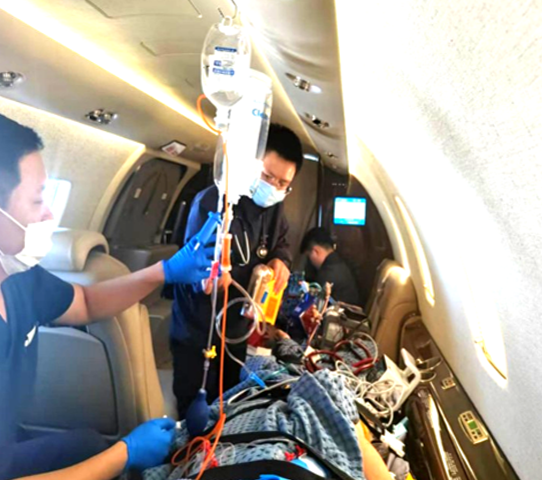
- All of our air ambulances have ICU-level medical systems, and each flight has highly qualified doctors, nurses, and paramedics. This ensures that there is constant monitoring and hospital-level care between the departure and arrival.
- We realize that equipment is not the only aspect of patient safety. This is what makes us adhere to the rigorous international aviation and medical criteria (FAA/EASA, CAMTS, EURAMI) and implement the thorough pre-flight examinations. All missions are well planned, and they have weather, altitude, and patient condition contingency plans.
Why Choose TKP?
- Complete on-board medical care for critical patients.
- Airline-approved commercial stretcher transport.
- Combined high-speed rail and ground ambulance service.
- 24/7 emergency reaction unit.
We feel that safe medical transportation is not an option at TKP, but it is an obligation. We provide you with trust, care, and safety in the air, whether on a short-haul transfer or international evacuation.
Price Vs Safety in Air Medical Transport
Safety comes at a cost. Air ambulance can cost a lot, some examples cost between 10,000 and 100, 000 depending on the distance and medical requirements. But costs include:
- Aviation fuel and crew
- Medical staff
- ICU-level onboard care
- Insurance and compliance
Part of the expenses is covered by some insurance companies. (See our services page to learn more about insurance coverage.)
Air Medical Services Safety Measures
Medevac flights are performed with a high level of safety by the providers:
- Pre-Flight Risk Assessment: The condition of the patient, flight route, and weather are assessed.
- Altitude Factors: Cabin pressure is adjusted to support the patient with respiratory or cardiac issues.
- Medical Escort Services: Nurses or doctors are with paramedics with critical patients.
- Emergency Readiness: Crews have in-flight emergency and diversion training.
- External Authority: CAMTS Safety Standards outline the requirements of the air ambulance companies to be accredited.
International and Domestic Air Medical Transport Safety
In the case of domestic flights, the national aviation authorities normally handle the regulations. In the case of international flights, things are even more complicated:
- Customs Immigration Serialization.
- The International Airspace Rules.
- Medical Reporting and Lingo Busters.
- Currency & Insurance Issues
In spite of these, international transfer is smooth and safe through providers who have global networks. Find out more about the way we manage global patient transfers.
Air Ambulance Transfers in Patients- Safety
Air ambulance planes are flying with ICUs. Patients receive:
- Permanent vital signs.
- Ventilator support should be available if required.
- Cardiac surveillance and infusion treatment.
- Preparedness of emergency procedures.
Speed, specialized care, and reduced delays are the advantages compared to ground transport.
International Safety Standard
The safety of air ambulances is regulated by several international organizations:
- FAA (Federal Aviation Authority)– Aviation standards in the US.
- EASA (European Union Aviation Safety Agency)– EU safety regulation.
- ICAO (International Civil Aviation Organization) – International air safety regulations.
By adhering to them, patients are also delivered in the best safety standards.
Who Makes Air Medical Transport Safe?
- Pilots – Medically aviation-trained, and with a large number of flight hours.
- Medical Crew – Paramedics, nurses, and doctors who are trained in critical care aviation.
- Ground Support – The logistics teams are aligned to flight clearance, ambulances, and hospital transfer.
- Air Operators – Take care of aircraft maintenance, fuel safety, and compliance.
Conclusion
Is air medical transport safe? Therefore, is air medical transportation safe? Yes–when offered through certified, well-equipped, and highly trained services. Hospital-quality care is provided to their patients in the air, and families can sleep knowing that a loved one is under observation at least every second. In case you require reliable air medical services, then log into our site at TKP Assistance to see how we ensure safety, comfort, and reliability in all our flights.
Submit Your Request
Recent Posts
Tags
- Air Ambulance
- Bedside To Bedside
- Cross Border Aid
- Emergency Evacuation
- Global Medical Rescue
- How can I ensure the patient's stability while in the air?
- How do I request an air medical transport?
- How is it different from an air ambulance
- how to activate emergency aircraft service
- how to request an air ambulance
- Is air medical transport safe
- Is international transport possible
- Medical Rescue
- Medical Transport
- Patient Repatriation
- Remote Rescue
- Seamless Coordination
- Telemedicine Support
- Tourists And Expats Medical Escort
- What are the benefits of a cross-border medical transfer
- What are the different types of transfers
- What are typical use cases
- What documents do I need to prepare for a transfer?
- What does high-speed rail patient transfer stands for
- What is air ambulance
- What is air medical transport?
- What is cross-border medical transfer
- What is emergency aircraft
- what is high-speed rail patient transfer
- What is medical charter flight
- what is neonatal ICU transfer
- What is patient air transfer
- What medical equipment is available on board the aircraft
- What situations shouldn't use air medical transport?
- What types of air ambulance are there?
- What types of air ambulance exist
- What's the difference between international and domestic transfers?
- what’s the difference between air medical transport and regular ambulance?
- When is emergency air transport necessary
- Which patients require air medical transport?
- who is included in the medical team
- who needs an air ambulance