


Is International Transport Possible? Safe and 24/7 Support


What is an Air Ambulance?
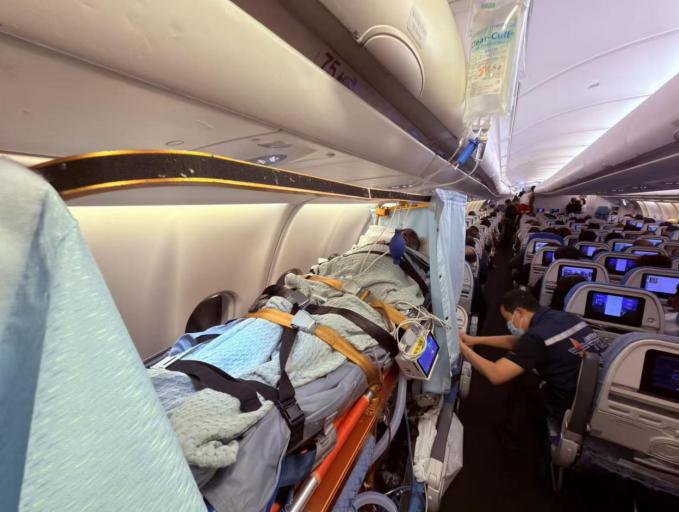
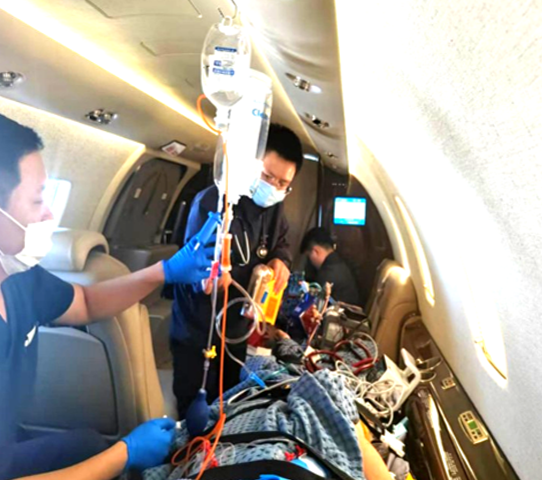
An air ambulance is a specifically designed aircraft, either a helicopter aircraft or a fixed-wing aircraft, which is designed to ferry patients requiring urgent care into the air. It is an airborne intensive care unit (ICU), fitted with life support machines, oxygen, ventilators, heart monitors, and defibrillators. These aircraft have trained flight medics, paramedics, and critical care nurses who assure patients that they will receive follow-up care during the trip.
Who Needs an Air Ambulance?
Is international transport possible? Travelling at the medical level is never routine. Where time is money, the life and safe care gap can be addressed using air ambulances. The question that most people therefore ask is, Who needs an air ambulance? Air ambulances do not feature among everyday travel media; they are employed when patients require emergency evacuation of the patients or special in-flight services. People who may need one include the following:
Patients Who are Critically Ill and Require an ICU Level of Care are to Be Transferred
The accident victims who need emergency transportation of this nature to trauma units.
- Current patients who live long distances and ground ambulances cannot manage to reach in time.
- The elderly or disabled who need long-distance medical services.
- Patients needing oxygen 24 hrs./day monitoring in surgical patients.
- Foreigners: Foreigners who need medical repatriation services.
- Pediatrics, Children, or neonatal patients with special needs of air care.
The cases are determined on a case-by-case basis, based on the air ambulance eligibility requirements and the flight requirements to determine medical necessity.
Medical Repatriation: Home is a Long Way Away
Whenever illness or injury befalls a foreign country, medical repatriation saves the day. The patients are either taken back to their home country or taken to a special facility to care for them.
- The continuity of care is given through air ambulances, which deliver the bed-to-bed support to the patient between the hospital where the patient began treatment and where the patient ends treatment.
- A case in point is the TKP Assistance, which provides international medical evacuation services out of both China and Southeast Asia to hospitals worldwide, so recovery will be more near family and familiar doctors.
Repatriation Visit TKP Medical Assistance to understand repatriation.
Air Ambulance Patients Can Be of Various Kinds
Different patients require different levels of medical support. Common categories include:
- ICU Patients: Ventilators, cardiac monitors, or ECMO are required.
- Patient of Stroke or Heart Attack: We are in urgent need of transportation.
- Burn or Trauma Patients: These patients may need isolation and pain treatment.
- Postoperative Patients: Stable, commercially unable to fly.
- Pediatric Patients, or Neonatal: These patients are admitted into incubators under the care of pediatric specialists.
Each patient undergoes a pre-flight medical examination to make a determination about equipment requirements, crewing, and appropriateness of flight distance.

When Seconds are Lost: Emergency Medical Evacuation
Time-critical medical flights save lives during cases of heart attacks, stroke, and major trauma. Air ambulances also save up to 70% of the transport time compared to the ground routes.
- A patient on a remote island will be able to reach an ICU within a large city within 90 minutes.
- Hospital-to-hospital transfers across national borders in China and Hong Kong can be completed in hours rather than days by air.
These flight patient emergency services are 24/7 services, and are typically coordinated with national emergency networks and privately operated rescue forces.
Medical Necessity/Eligibility
Air transportation is unsuitable for every patient. Based on:
- Stability: Is the patient altitude or cabin-pressure-intolerant?
- Supplies: Is the case in need of ventilators or hi-tech monitors?
- Urgency: Does the patient have to be taken to a hospital immediately to survive?
- Distance: Does air transportation outperform ground transportation?
- Accessibility: Can it be loaded in the airports of hospitals?
These factors include the air ambulance eligibility criteria, which ensure the employment of this resource is secure and well-grounded.
The Cross-Border Co-Ordination: How it Works
There is the matter of cross-border medical evacuation, which presupposes great intricacy of the logistics, especially the international evacuation. The process includes:
- Primary medical briefing of the concerned hospital.
- Visa and crew, and patient flight clearance.
- Organization of ground ambulances at both the departure and landing points of the airports.
- Reservation of a bed in an acute hospital.
- Health care on the trip all the time.
The providers, like the TKP Assistance, handle all the documentation, the customs, the aviation permissions, everything, such that families do not need to worry about red tape; they can focus on recovery instead.
Why Choose TKP Assistance?
TKP Medical Assistance is a company that can be relied upon with regard to critical care in the skies. TKP, with over 20 years of experience in terms of experience in air ambulance service both in China and the Greater Bay Area, is a known and reliable, professional, and compassionate company.
- TKP has been capable of carrying out 10,000+ missions in 2001, which comprise ICU-level patient transfers, ECMO-flights, and VIP medical evacuations. All the operations are medically accurate, that is, patients receive hospital-quality treatment at cruising level.
- The main distinction with TKP is that it possesses an extensive international network and a 24/7 mission control in Shenzhen, which effectively organizes cross-border evacuation of medical staff in Hong Kong, Southeast Asia, and Europe. The entire process involved documentation and customs clearance, which were smoothly performed.
- TKP certified medical teams are trained to the international standard of aeromedical services and are experts in resuscitation, transport of children, and long-distance repatriation.
Time can also be an issue, but TKP Assistance has time, safety, and caring, so families can entrust their loved ones to the professionals.
Conclusion
Is international transport possible? That last resort is air ambulance in the event of time, distance, or location. They serve patients in critical conditions, passengers who are miles apart, and families that wish to transfer their patients to the hospital. It not only extends to cross-border emergencies, idling of an ICU, or international repatriation, but air ambulances also make sure that care is not interrupted even when at cruising altitudes. Visit to receive professional, caring, and fast air medical services from TKP Assistance.
Submit Your Request
Recent Posts

Tags
- Air Ambulance
- Bedside To Bedside
- Cross Border Aid
- Emergency Evacuation
- Global Medical Rescue
- How can I ensure the patient's stability while in the air?
- How do I request an air medical transport?
- How is it different from an air ambulance
- how to activate emergency aircraft service
- how to request an air ambulance
- Is air medical transport safe
- Is international transport possible
- Medical Rescue
- Medical Transport
- Patient Repatriation
- Remote Rescue
- Seamless Coordination
- Telemedicine Support
- Tourists And Expats Medical Escort
- What are the benefits of a cross-border medical transfer
- What are the different types of transfers
- What are typical use cases
- What documents do I need to prepare for a transfer?
- What does high-speed rail patient transfer stands for
- What is air ambulance
- What is air medical transport?
- What is cross-border medical transfer
- What is emergency aircraft
- what is high-speed rail patient transfer
- What is medical charter flight
- what is neonatal ICU transfer
- What is patient air transfer
- What medical equipment is available on board the aircraft
- What situations shouldn't use air medical transport?
- What types of air ambulance are there?
- What types of air ambulance exist
- What's the difference between international and domestic transfers?
- what’s the difference between air medical transport and regular ambulance?
- When is emergency air transport necessary
- Which patients require air medical transport?
- who is included in the medical team
- who needs an air ambulance