


Comparing Medical Aircraft Types for Long Distance Evacuations


Choosing the Medical Aircraft Types can decide how fast a patient reaches definitive care, how safe the journey is, and how much the family or insurer needs to pay. At TKP Medical Assistance, we see this choice play out when we move patients across borders and continents.
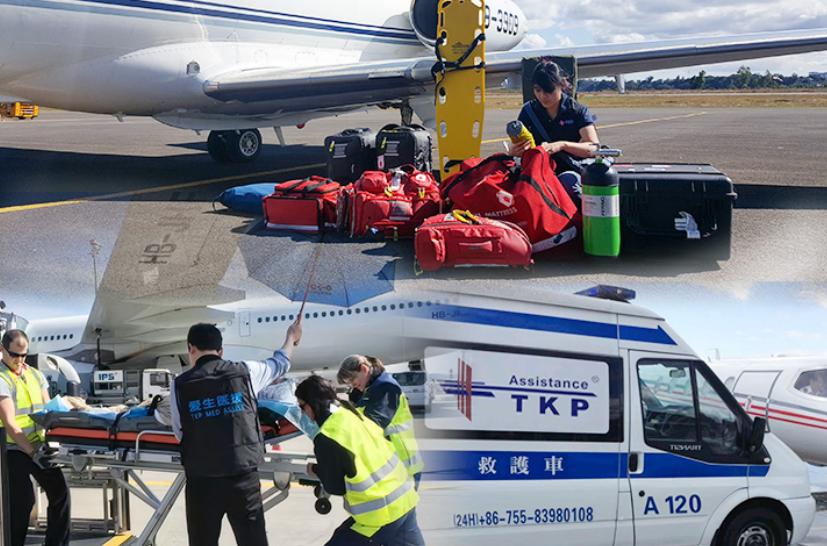
For families, hospitals and assistance companies, the challenge is simple: you need to move someone far away, often urgently, and you are suddenly faced with aviation terms, route options and cost differences that are hard to understand. This article breaks down the main Medical Aircraft Types used for long-distance evacuations and explains how TKP Medical Assistance turns a complex decision into a clear, guided process.
What Do We Mean by Medical Aircraft Types?
When people hear “air ambulance,” they often imagine one single kind of aircraft. In reality, Medical Aircraft Types sit on a spectrum. Each type has its own strengths and limits, and not every aircraft is right for every case.
Broadly, long-distance medical evacuations usually rely on three approaches:
•Dedicated air ambulance aircraft with full medical equipment on board
•Commercial flights with a medical escort (nurse or doctor)
•Hybrid solutions that combine both, sometimes using different aircraft for different segments of the journey
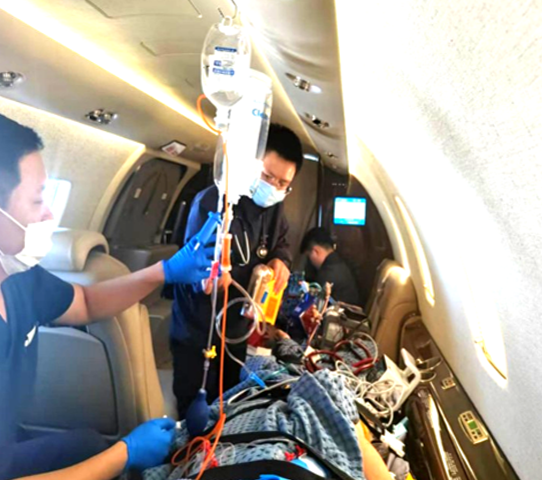
For critical, unstable patients, a fully equipped air ambulance is usually the safest option. For stable but fragile patients, a commercial flight with escort can offer an excellent balance between safety, speed and cost – especially for very long routes where chartering a jet would be extremely expensive.
The key point is simple: the “best“ Medical Aircraft Type is the one that matches the patient’s condition, the distance, and the real-world airport options – not just the budget line on a spreadsheet.
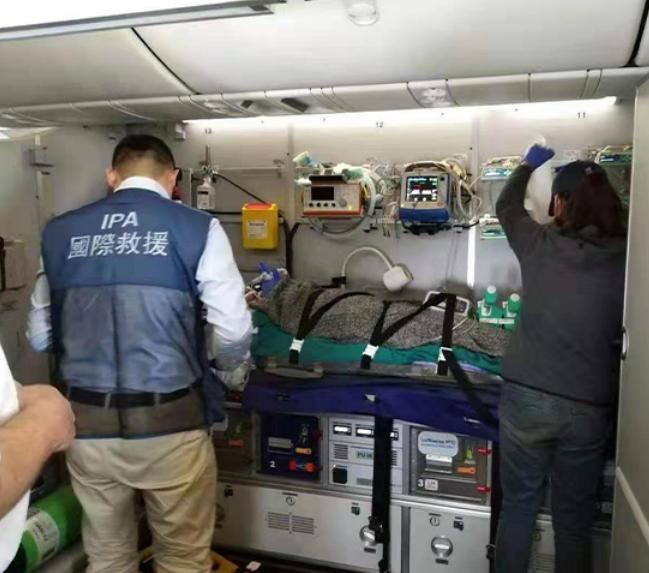
Commercial Flight with Escort: a Smart Option for Stable Patients
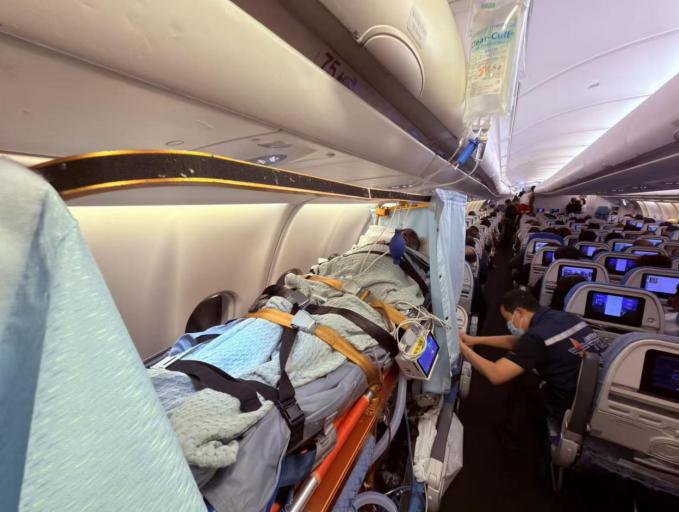
One of the most frequently misunderstood Medical Aircraft Types is the commercial flight with medical escort. From the outside, it looks like a standard airline journey. Behind the scenes, it is a carefully planned medical operation.
On this type of mission, the patient travels on a regular airline, seated or on a stretcher depending on airline policy, accompanied by a TKP nurse or doctor. The escort team brings portable medical equipment, monitors vital signs, manages medication and responds to any changes in the patient’s condition.
Why is this option so widely used for long-distance evacuations?
•It offers true long-range capacity. If scheduled flights exist, we can move a patient between continents using one or more connecting segments.
•It provides a moderate cost level compared with chartering an air ambulance over tens of thousands of kilometers.
•It is suitable for non-critical but vulnerable patients – for example, someone recovering from major surgery, a stroke survivor needing assistance, or a patient with limited mobility who cannot travel alone.
However, a commercial flight with escort is not a “mobile ICU.” The cabin space is limited, oxygen supply on board is controlled by airline rules, and the crew must follow aviation regulations. For ventilated patients, those on multiple infusions, or patients whose condition is changing hour by hour, a dedicated air ambulance is usually safer.
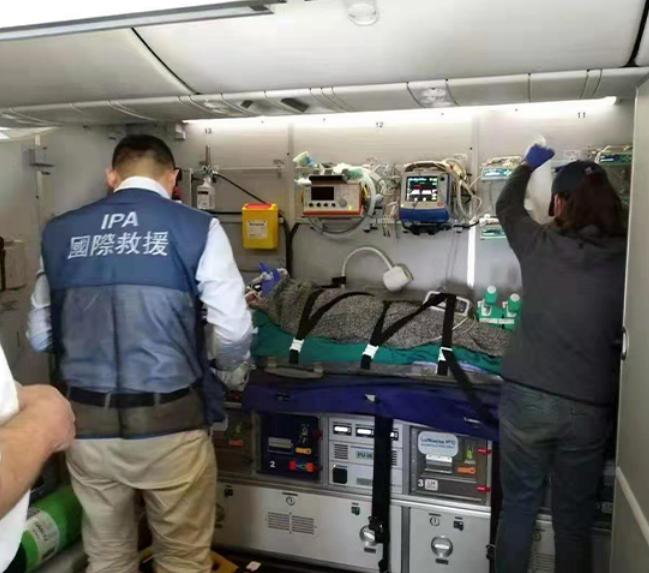
This is why TKP Medical Assistance never frames Medical Aircraft Types as a simple “cheap vs expensive” comparison. Before we recommend a commercial flight, our medical team reviews the full clinical picture: diagnosis, recent test results, medication list, risk factors, and the expected stability of the patient during the journey.
If we believe a commercial flight is safe, we will say so and explain why. If we think an air ambulance is required, we will be equally clear – even if it is not the cheapest option.
Route Planning: the Invisible Half of Medical Aircraft Types
Even the best aircraft choice fails without smart routing. Long-distance evacuations are rarely a clean line from Point A to Point B. Weather, airport infrastructure, landing permissions, time zones and political realities all shape the final plan.
TKP Medical Assistance has built a route network that is deliberately flexible and wide-reaching. Our goal is simple: move patients from remote, medically under-resourced or crisis-hit areas to leading hospitals around the world with as little delay and as little stress as possible.
In practice, this means:
• Dynamic route design based on urgency
For time-sensitive cases, we prioritize speed: the fastest combination of aircraft, airports and ground ambulances. For stable patients, we can use a mix of Medical Aircraft Types – such as an air ambulance for the first short leg and a commercial flight with escort for the long-haul segment – to balance cost and safety.
• Global coverage, from local airports to major hubs
Our network links smaller regional airports to large international gateways. This is crucial when a patient starts in a city with limited medical facilities and must be transferred to a specialized center overseas.
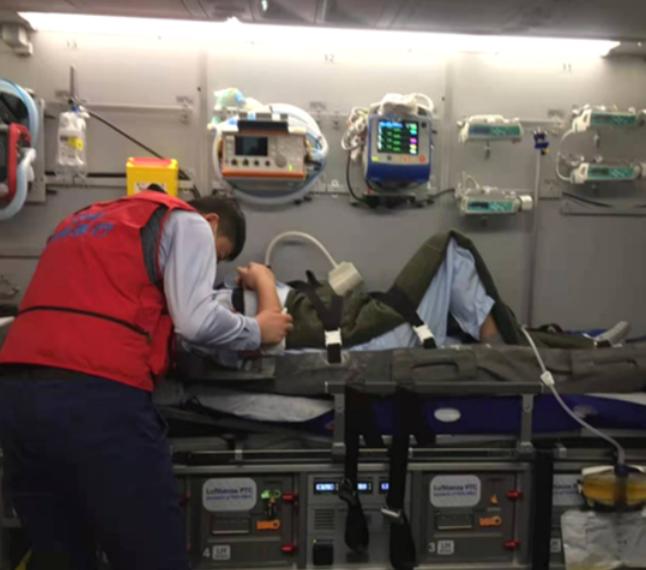
• Access to low-infrastructure airports
Some of the airports we use have simple facilities and short runways. By working with aircraft and crews able to operate under these conditions, we can reach patients in locations that might otherwise be considered “too difficult” or “out of reach.”
• Optimized total journey time, not just flight hours
A shorter flight that leads to long waiting times on the ground is not always better. We look at the entire door-to-door journey and try to reduce transfers, minimize layovers and coordinate ground ambulances so the patient spends less time in transit overall.
At the same time, our operations center monitors every mission in real time. If a flight is delayed, a connection is changed, or the patient’s condition evolves, we can quickly reassess the plan and, where possible, switch to a different route or a different aircraft type.
In other words, Medical Aircraft Types are only half the story; the routing strategy built around them is what makes the evacuation safe, efficient and predictable.
Why Work With TKP Medical Assistance?
TKP Medical Assistance was founded in 2001 and is headquartered in Shenzhen, China. Over more than two decades, we have focused on one thing: cross-border medical evacuation and patient transport. Today, with six branch offices across South, East, Central and Southwest China, we can respond locally while coordinating globally.
Our philosophy is simple: clinical decision first, aircraft second. We see Medical Aircraft Types as tools in a toolkit, not products to push. Every case begins with a structured assessment:
•How sick is the patient today – and how stable are they likely to be tomorrow?
•What are the realistic origin and destination airports?
•How long can the patient safely remain in transit?
•What level of medical support is required: basic monitoring, advanced life support, or full intensive care?
Based on these answers, our medical and operations teams design a custom transport plan, which might include:
•An air ambulance from a remote or low-infrastructure airport to a regional hub
•A commercial flight with a TKP medical escort for the long-haul sector
•Ground ambulances at both ends to connect “bedside to bedside”
This individualized approach reduces clinical risk, avoids unnecessary spending and gives families, insurers and hospitals a transparent view of why a certain option has been recommended.
Your Next Step: Talk to Us Before You Need Us
You do not have to become an expert in Medical Aircraft Types to make the right decision in an emergency – that is our responsibility. What you can do is choose a partner that understands both aviation and medicine, and that already has a global network and proven processes in place.
If you are currently handling a complex case, or if you simply want to prepare for future cross-border medical needs, we invite you to contact TKP Medical Assistance for a no-obligation discussion. Share the patient’s condition, starting point and desired destination, and our team will outline a safe, realistic and cost-conscious evacuation plan.
Long-distance medical transport will never be completely stress-free. But with the right combination of Medical Aircraft Types, intelligent routing and an experienced team at your side, a potential crisis can be transformed into a well-managed journey toward better care.
Submit Your Request
Recent Posts
Tags
- Air Ambulance
- Bedside To Bedside
- Cross Border Aid
- Emergency Evacuation
- Global Medical Rescue
- How can I ensure the patient's stability while in the air?
- How do I request an air medical transport?
- How is it different from an air ambulance
- how to activate emergency aircraft service
- how to request an air ambulance
- Is air medical transport safe
- Is international transport possible
- Medical Rescue
- Medical Transport
- Patient Repatriation
- Remote Rescue
- Seamless Coordination
- Telemedicine Support
- Tourists And Expats Medical Escort
- What are the benefits of a cross-border medical transfer
- What are the different types of transfers
- What are typical use cases
- What documents do I need to prepare for a transfer?
- What does high-speed rail patient transfer stands for
- What is air ambulance
- What is air medical transport?
- What is cross-border medical transfer
- What is emergency aircraft
- what is high-speed rail patient transfer
- What is medical charter flight
- what is neonatal ICU transfer
- What is patient air transfer
- What medical equipment is available on board the aircraft
- What situations shouldn't use air medical transport?
- What types of air ambulance are there?
- What types of air ambulance exist
- What's the difference between international and domestic transfers?
- what’s the difference between air medical transport and regular ambulance?
- When is emergency air transport necessary
- Which patients require air medical transport?
- who is included in the medical team
- who needs an air ambulance