


TKP Enables Seamless Transfer of Critically Ill Patients on ECMO + IABP Support


In a complex and high-risk field where pre-hospital teams are often ill-equipped for extracorporeal life support (ECLS), TKP Medical Assistance provides turnkey "bed-to-bed" transport for ECMO + IABP patients, combining elite teams with robust logistical capabilities to ensure safe, timely transfers to specialized centers.
Meeting the Needs Beyond Traditional Emergency Systems
Across many regions, hospitals still lack the infrastructure for comprehensive cardiopulmonary support. Critically ill patients with cardiac or respiratory failure often require urgent stabilization using IABP or ECMO devices before being referred to major cardiac, transplant, or ECLS centers. These transfers demand more than a typical ambulance or prehospital team can offer. TKP has built a specialized transfer model by deploying ICU-level clinicians, perfusionists, onboard power systems, and real-time monitoring — ensuring safety from origin to destination.
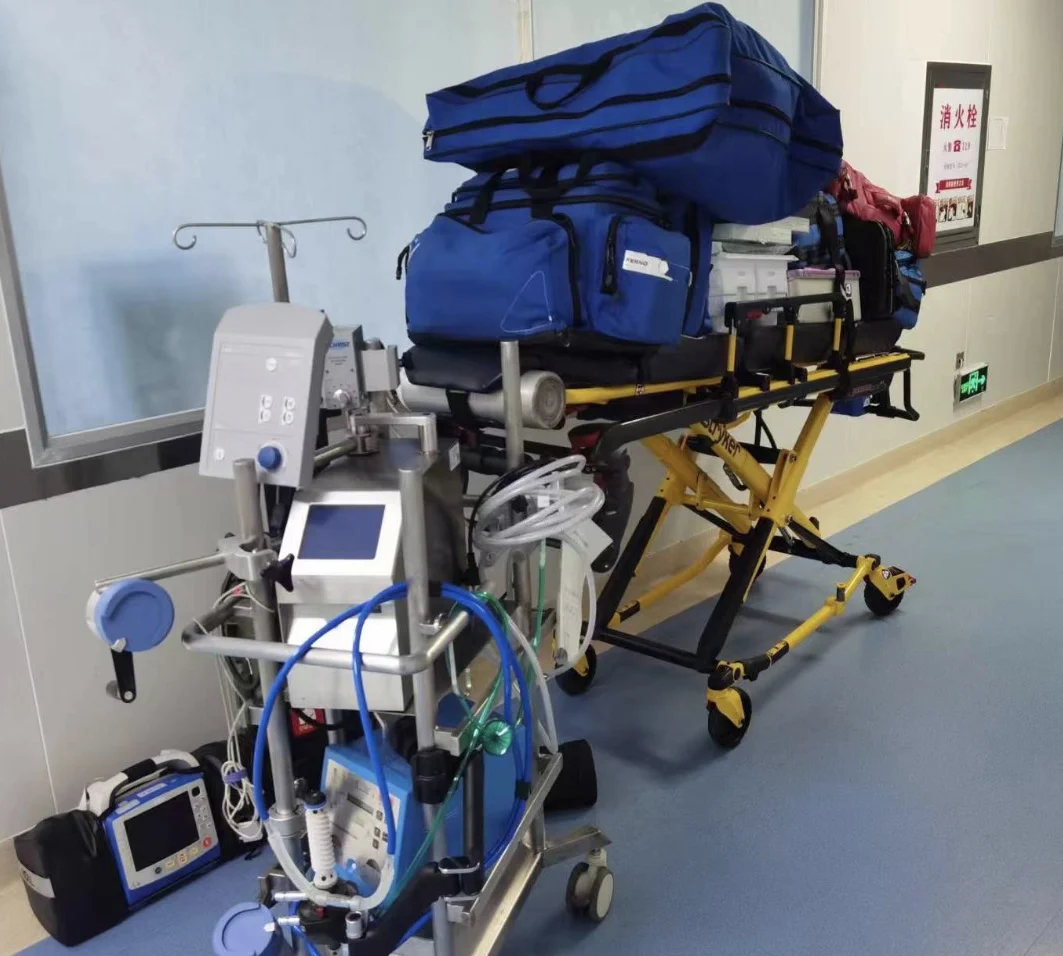
Specialized ECMO and IABP systems fully configured and tested before departure, ensuring continuous cardiopulmonary support throughout the journey
From Challenge to Routine: Over 40 ECMO Transfers Executed
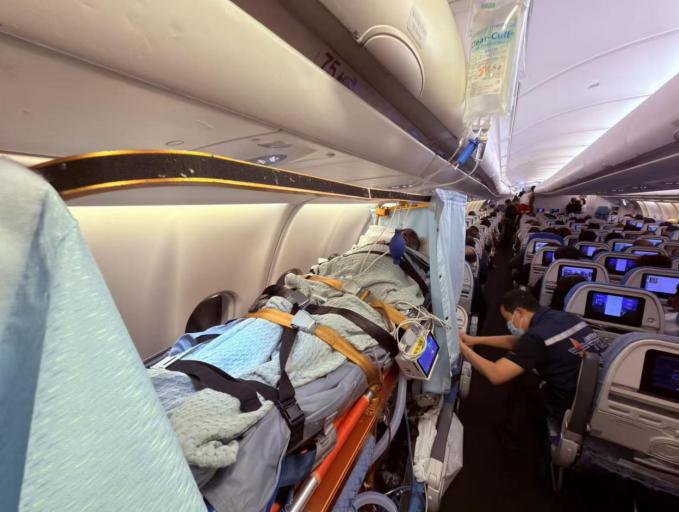
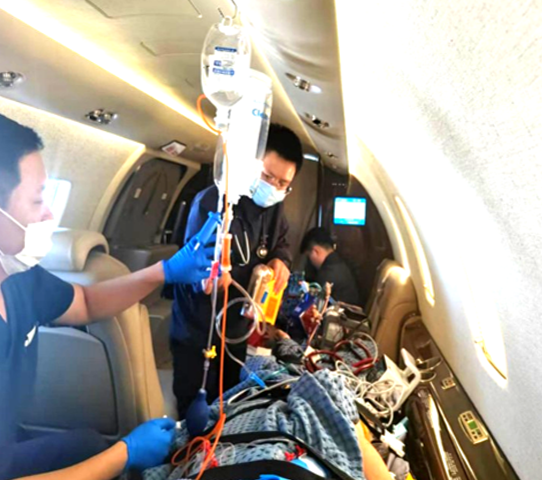
Due to airspace, railway regulations, and technical constraints (e.g., oxygen supply, in-transit stabilization, onboard power), transporting ECMO + IABP patients via high-speed rail or scheduled commercial flights remains rare in mainland China. Yet, TKP has successfully completed over 40 ECMO missions using ground ambulances, medical helicopters, and international air ambulances. Each case involved personalized protocols, with receiving hospitals commending TKP for clinical precision and stability upon arrival.
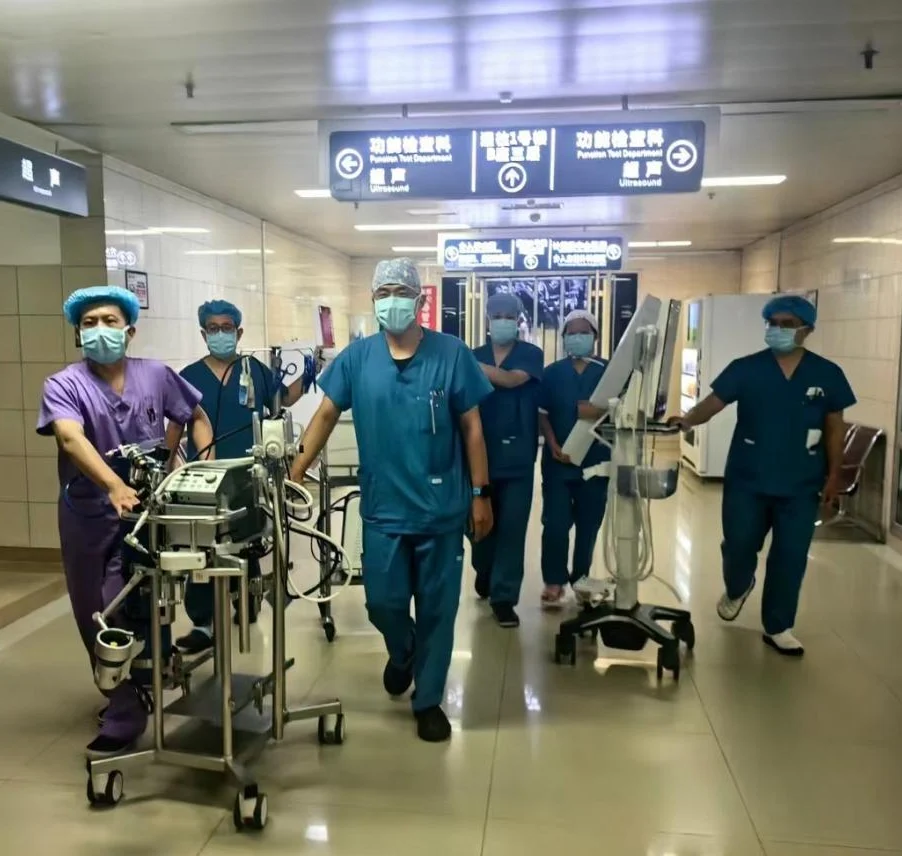
TKP’s multidisciplinary team—including ICU physician, critical care nurse, and perfusionist—conducts a final pre-transfer briefing to align on patient-specific protocols
A Future of Faster, Funded, and Fairer Critical Care Access
With the gradual inclusion of air ambulance services in national health insurance, private insurance, and public subsidies, more patients may soon access these life-saving transfers affordably and efficiently. TKP stands ready with world-class capabilities and proven experience to lead the transformation of long-distance critical care transfer in China and beyond.
Frequently Asked Questions
Need help understanding how international medical rescue works? Browse our most common questions to learn about service coverage, response times, documentation requirements, and more. We’re here to support you every step of the way.
Q: Which countries are covered by the cross-border medical rescue service?
A: We cover major countries and regions worldwide to ensure timely rescue
Q: How can I request cross-border medical rescue?
A: Please submit an emergency rescue request through our official website or customer service.
Q: What documents are needed for medical rescue?
A: Patient ID, medical diagnosis report, and emergency contact information are required.
Q: How is the rescue service fee settled?
A: Fees can be paid via insurance claims or direct payment for the service.
Q: How quickly does the rescue response start?
A: In emergencies, rescue operations typically begin within a few hours.
Submit Your Request
Recent Posts

Tags
- Air Ambulance
- Bedside To Bedside
- Cross Border Aid
- Emergency Evacuation
- Global Medical Rescue
- How can I ensure the patient's stability while in the air?
- How do I request an air medical transport?
- How is it different from an air ambulance
- how to activate emergency aircraft service
- how to request an air ambulance
- Is air medical transport safe
- Is international transport possible
- Medical Rescue
- Medical Transport
- Patient Repatriation
- Remote Rescue
- Seamless Coordination
- Telemedicine Support
- Tourists And Expats Medical Escort
- What are the benefits of a cross-border medical transfer
- What are the different types of transfers
- What are typical use cases
- What documents do I need to prepare for a transfer?
- What does high-speed rail patient transfer stands for
- What is air ambulance
- What is air medical transport?
- What is cross-border medical transfer
- What is emergency aircraft
- what is high-speed rail patient transfer
- What is medical charter flight
- what is neonatal ICU transfer
- What is patient air transfer
- What medical equipment is available on board the aircraft
- What situations shouldn't use air medical transport?
- What types of air ambulance are there?
- What types of air ambulance exist
- What's the difference between international and domestic transfers?
- what’s the difference between air medical transport and regular ambulance?
- When is emergency air transport necessary
- Which patients require air medical transport?
- who is included in the medical team
- who needs an air ambulance