


How Medical Transportation Ensures Seamless Cross-Border Critical Care?


Real Case: Seamless STCR from Chengdu to Eastbourne
When every minute counts and stability is fragile, Medical Transportation aligns logistics with care.
On February 12, 2025, TKP Medical Assistance executed an STCR stretcher transport from Chengdu to Eastbourne, UK, via Hong Kong-prioritizing safety, schedule control, and persistent clinical oversight.
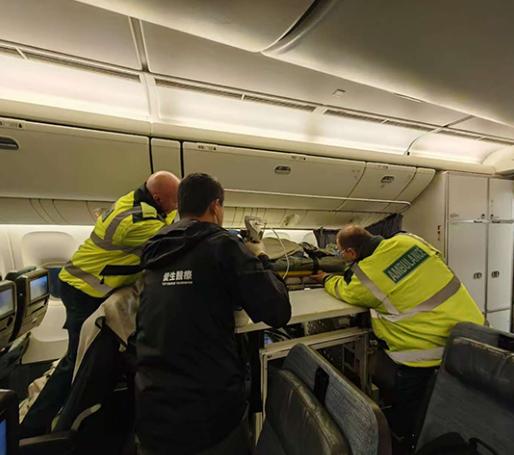
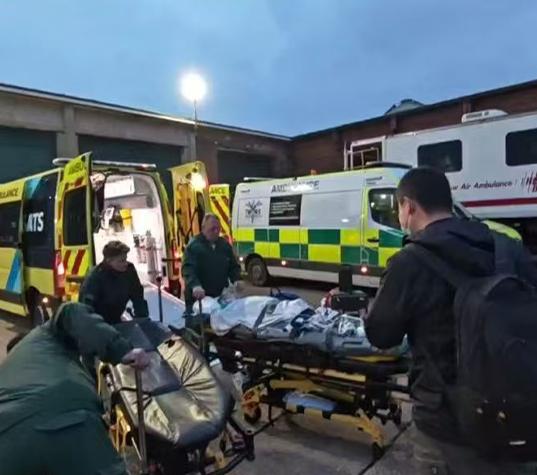
A spinal cord injury recovery case requiring tracheostomy and ventilator support, the patient flew on a commercial stretcher. We coordinated ambulances at both ends to provide a complete bedside-to-bedside pathway.
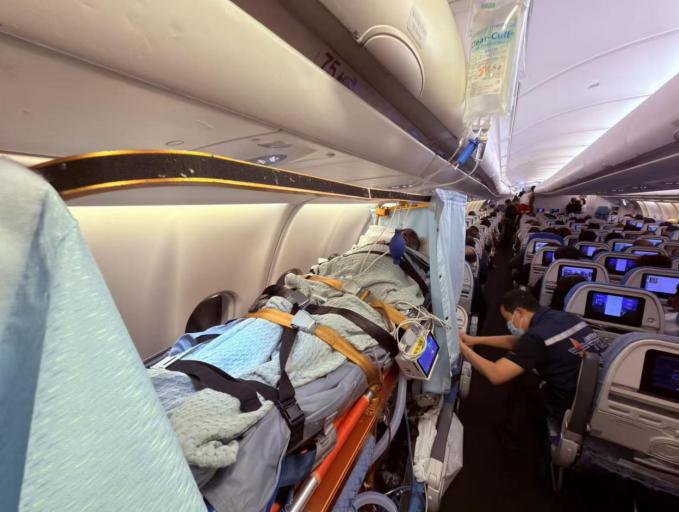
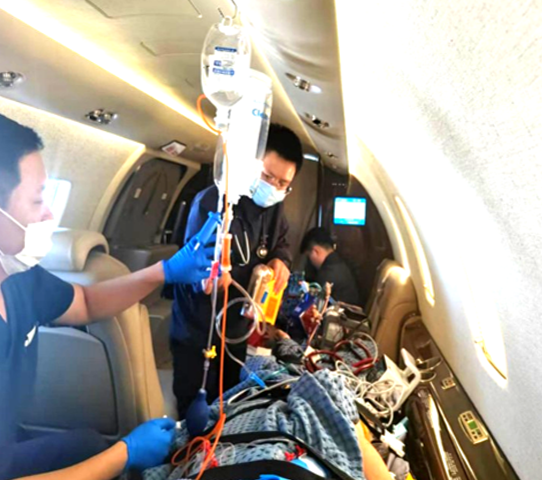
In transit, we managed airway humidification, guarded against pressure injuries, and tracked trends rather than isolated readings. Nurses kept IV infusions and sedation balanced across time zones, documented every intervention, and kept communication clear so the receiving team knew precisely what to expect.
On arrival, pre-arranged customs facilitation and a medical corridor allowed an immediate handover to the local ambulance, with the stretcher lifted smoothly in and out of the aircraft through practiced, cross-team coordination. This is Medical Transportation as it should be: each link prepared, every handover predictable.
Inside a Bedside-to-Bedside Journey
Any cross-border move is a chain; the strength is in the details.
✅For the Chengdu-Hong Kong-Eastbourne route, TKP secured airline approval for an STCR configuration, including seat removal, stretcher mounting, oxygen provisioning, and power access for life-sustaining equipment.
✅We aligned the departure with the patient’s stability window and the escort team’s duty limits, then locked in ambulance pickup times to absorb realistic delays.
✅In the cabin-pressurized to the equivalent of roughly 6,000-8,000 feet-clinical staff tuned ventilator settings, humidified the airway to prevent plugs, and ran regular risk checks for hypotension and desaturation.
✅Vital signs were recorded in rotation for full traceability. Documentation wasn’t an afterthought; it was the backbone that allowed a flawless handover in the UK.
✅Because customs and immigration were pre-coordinated, the aircraft’s arrival flowed straight into the medical corridor, with no last-minute surprises. It felt like one continuous ward, moving across continents.
How Cross-Border Medical Transportation Works
Airlines have a clear process for transporting medically dependent passengers on stretchers.
- A MEDIF (Medical Information Form) and the IATA SSR code for STCR are submitted, with approvals typically returned within 24-72 hours depending on aircraft configuration and airline policy. In that interval, TKP plans the cabin environment, confirms anchor points, and integrates oxygen delivery and power supply with the treatment plan.
- We secure escort/equipment permits, review airline constraints, and ready contingency plans for diversions or aircraft swaps. At the same time, customs and immigration procedures are coordinated to keep departure and arrival clear of bottlenecks.
- When humanitarian or medical priority lanes exist, we use them to shorten handovers. Throughout, our operations center provides live flight oversight and proactively stages ground ambulances based on updated ETAs.
- In flight, clinical staff keep a steady cadence-ventilator settings adjusted for altitude, airway humidity maintained, sedation and analgesia titrated, and every intervention documented-so the chain of care remains unbroken from hospital to hospital.
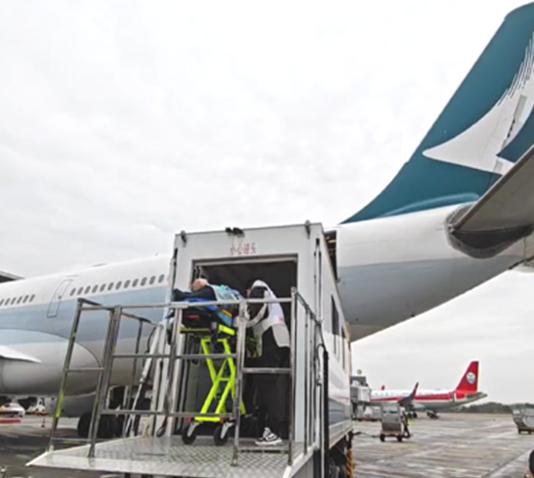
From Bedside to Bedside: Multi-Mode Medical Transport
Every case is different. TKP Medical Assistance aligns transport to clinical status, distance, urgency, and budget so decisions are made with confidence:
•Commercial Stretcher (STCR) With Airline Approval: For stable patients who still require continuous monitoring, oxygen, or ventilator support. A cost-savvy long-distance choice under ICU-trained escorts with complete documentation and oversight.
•Air Ambulance With Full Medical Crew: A dedicated solution when time is critical or airline stretcher approval cannot be obtained. Brings ICU-level equipment, rapid mobilization, and direct routing to reduce total time and touchpoints.
•High-Speed Rail Plus Ambulance: Optimal where rail delivers faster or more direct connections than air, uniting station-side ambulance handovers with a calm, low-vibration ride. Solid for patients who tolerate cabin pressure poorly or benefit from smoother travel dynamics without requiring an aircraft.
•Ground Ambulance Integration: The cornerstone of bedside pickup and destination handover. We coordinate vehicles on both sides, including critical-care ambulances for advanced airway management and hemodynamic support.
Across all modes, our teams carry ventilators, portable suction, infusion pumps, monitors, and emergency medications tailored to the clinical review. The goal is consistent: the right vehicle, the right clinicians, and the right equipment aligned to what the patient truly needs.
Route Planning That Puts Patient Safety First
Distance is only one variable. Safe Medical Transportation aligns physiology, permissions, and timing across the journey:
•Global Coverage And Remote Access: We combine international hubs with remote strips when needed, ensuring timely access from hard-to-reach locations.
•Dynamic Flight Scheduling: Wheels-up is scheduled around patient stability, crew duty cycles, and carrier availability, with allowances for weather and ATC.
•Optimized Segments: We cut total travel time via shorter legs or point-to-point routes, while managing cabin altitude for respiratory-sensitive cases.
•Real-Time Operations Control: Live flight tracking allows immediate action on diversions-ambulances are re-tasked and receiving centers updated without delay.
•Institutional And Embassy Coordination: Clinical summaries go ahead of the patient, invitation letters are supported, and consular teams are engaged when humanitarian facilitation is needed.
Behind the scenes, oxygen reserves, battery capacity, and spares are calculated with safety margins. Ramp and cabin teams are pre-briefed on STCR configuration so stretcher ingress and egress stay controlled and calm.
Activation Process and Family Readiness Guide
Urgency is easier to manage when the next step is defined. TKP’s nine-step activation maintains clarity:
Step1:Inquiry Captured: 24/7 operations collect clinical data, timelines, and insurance information.
Step2:Health Check: A nurse or doctor makes sure you’re stable and decides the right escort level.
Step3:Trip Planning: We review flying, driving, and train options to choose the safest way.
Step4:Quotation and Consent; Pricing & Authorization; Financials and Consent; Costing & Approval; Quote and Pre-Auth.
Step5: Resource Activation; Mobilization; Crew & Equipment Readiness; Operational Launch; Asset Deployment.
Step6:On-Site Pickup; Bedside Transfer; Origin Handover; Patient Collection; Assumption of Care.
Step7:Care on the Way; In-Transit Care; En-Route Care; Transport Medicine; Journey Care.
Step8:Destination Handover: Structured handover and inventory reconciliation with the receiving facility.
Step9:Follow-Up: Aftercare and claims help.
Families can accelerate approvals with a simple checklist:
•Medical files and a current medication list (ideally with an English synopsis)
•Passports/IDs, necessary visas, and permits for minors
•Insurance policy information or a financial sponsor
•An authorized signer if the patient cannot consent
•Early disclosure of special needs (oxygen flow, language, mobility, dietary)
Tip: Many medical or humanitarian visas can be processed in 24-72 hours. Early initiation helps escorts and families avoid delays.
Why TKP Medical Assistance?
Turning complex Medical Transportation into predictable outcomes takes relationships and discipline.
TKP’s airline partnerships help accelerate STCR approvals; our clinical teams deliver ICU-level care with calm, repeatable processes; and our coordinators keep every stakeholder aligned-from ward nurses to ramp agents to immigration officers.
The result is fewer surprises, shorter waits, and safer journeys. You receive continuous, bedside-to-bedside care throughout the entire process, not just a simple flight. Your vital signs and treatment measures are meticulously documented so that the receiving hospital can have complete confidence in the information. Our transfer routes are designed to consider both physiological factors and time constraints. And you get one accountable partner until handover is complete.
Call to Action
If you need cross-border Medical Transportation now-or want a standby plan-contact TKP Medical Assistance’s 24/7 Coordination Center. We can begin a clinical assessment within minutes, outline viable modes and routes, and advise on documents and visas. One call sets your patient on a safe path home or onward to definitive care.
Submit Your Request
Recent Posts
Tags
- Air Ambulance
- Bedside To Bedside
- Cross Border Aid
- Emergency Evacuation
- Global Medical Rescue
- How can I ensure the patient's stability while in the air?
- How do I request an air medical transport?
- How is it different from an air ambulance
- how to activate emergency aircraft service
- how to request an air ambulance
- Is air medical transport safe
- Is international transport possible
- Medical Rescue
- Medical Transport
- Patient Repatriation
- Remote Rescue
- Seamless Coordination
- Telemedicine Support
- Tourists And Expats Medical Escort
- What are the benefits of a cross-border medical transfer
- What are the different types of transfers
- What are typical use cases
- What documents do I need to prepare for a transfer?
- What does high-speed rail patient transfer stands for
- What is air ambulance
- What is air medical transport?
- What is cross-border medical transfer
- What is emergency aircraft
- what is high-speed rail patient transfer
- What is medical charter flight
- what is neonatal ICU transfer
- What is patient air transfer
- What medical equipment is available on board the aircraft
- What situations shouldn't use air medical transport?
- What types of air ambulance are there?
- What types of air ambulance exist
- What's the difference between international and domestic transfers?
- what’s the difference between air medical transport and regular ambulance?
- When is emergency air transport necessary
- Which patients require air medical transport?
- who is included in the medical team
- who needs an air ambulance