


Non-emergency Medical Transport by Air Services You Can Trust


Non-emergency medical transport by air is not just a flight – it is assurance when distance is long and time still matters. We plan every mile. We brief every handoff. We protect comfort and dignity at altitude. Families stay informed. Choices stay clear. Yet one question remains: what truly makes an air transfer safe – and which option fits your case best: commercial stretcher, air ambulance, or a hybrid route? The difference can be decisive. Keep reading as we lift the curtain on the details most providers never share.
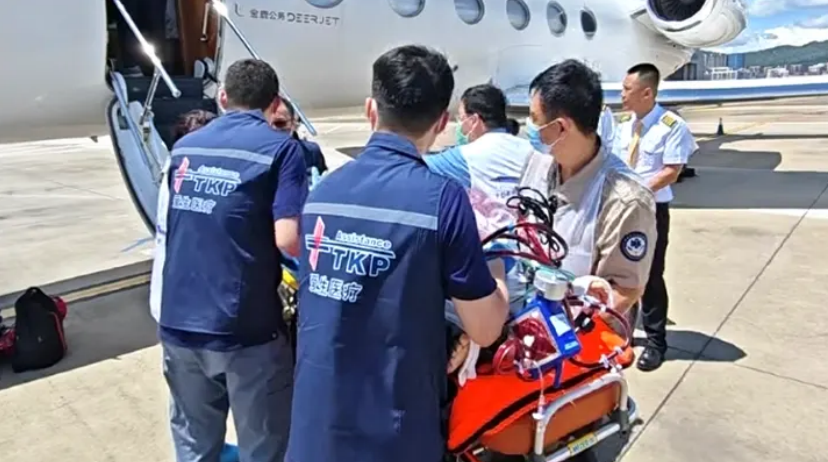
Why Families Choose TKP for Non-emergency Medical Transport by Air
From the first call, you speak with one team that manages everything. We specialize in post-stabilization transfers and time-sensitive evacuations where continuity of care matters most. Our clinicians handle bedside assessments, route design, and in-transit care while your family receives clear updates. Since 2001, TKP Medical Assistance has completed 10,000+ missions across China and the Greater Bay Area. We operate 24/7 from our Shenzhen headquarters with six branch offices in China and reliable partners in Hong Kong, Southeast Asia, and Europe. That scale lets us move fast while staying personal.
Families often hesitate because air medical travel can feel opaque. Clearances take time. Logistics span multiple agencies. In-flight care is hard to judge. We remove that uncertainty with a single point of coordination and evidence-based protocols. Each case plan explains the medical rationale, the route, and who is on board. The result is non-emergency medical transport by air that feels predictable, professional, and humane.
• Commercial stretcher transport with airline approval
• Air ambulance services with full onboard medical escort
• Integrated transfers via high-speed rail and ground ambulance
✅ Pain Points We Solve
Delays, handoff risks, and fragmented vendors can turn a simple transfer into a stressful ordeal. Our answer is a unified command model. Doctors review the record, operations secure the assets, and coordinators keep you informed. Documentation flows to the receiving facility before wheels-up, which reduces repeat testing and speeds handover on arrival.
Solutions Matched to the Patient, Not the Route
Every case is different. We recommend the mode that fits the patient’s condition, the distance, and time pressures – not the other way around. Two related long-tail phrases many families search for are commercial stretcher flights with airline approval and cross-border patient transfer services. Both describe what we do every day within a clear clinical framework.
- Commercial Stretcher Transfers
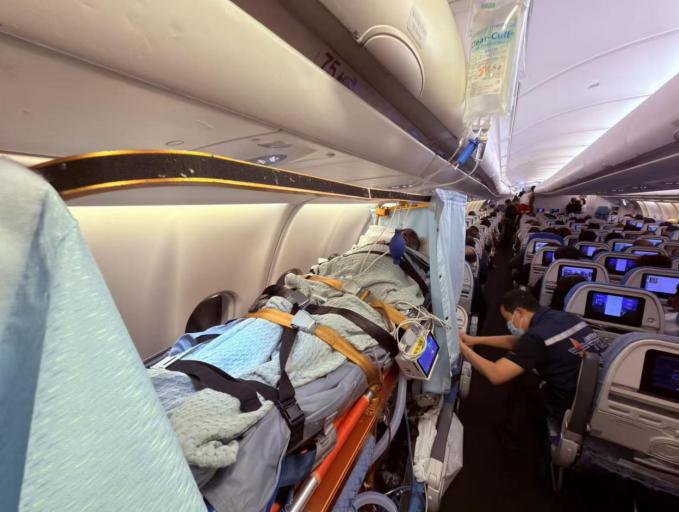
For stable but bedridden patients, we arrange airline-approved stretcher compartments on international or domestic flights. A medical escort remains at the patient’s side throughout. This option keeps costs proportionate while maintaining continuous monitoring, medication administration, and oxygen support as indicated. It suits post-surgery recoveries and long-distance discharges when the clinical picture is stable but mobility is limited. Our coordinators align special assistance at departure and arrival so the patient moves smoothly from ward to aircraft and back to ward with no gaps.
- Air Ambulance & ICU Missions
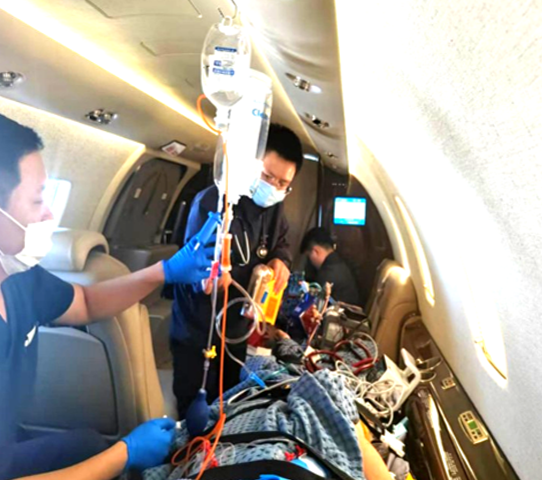
When the clinical picture is fragile, speed and ICU-grade equipment take precedence. Our air ambulances carry advanced monitors, ventilators, and life support. Intensive care doctors and flight-trained nurses manage high-altitude physiology and adjust therapy in real time. This is appropriate for critically ill patients who need controlled environments from door to door. We keep the team small and highly specialized to accelerate response while preserving bedside focus. If weather or runway constraints arise, our operations center adapts with alternative fields or timing to protect clinical stability.
- Rail-Integrated Medical Transfers
Sometimes the best route is not a straight line. High-speed rail combined with ground ambulances can be ideal for intercity or cross-border needs, especially for neonatal or post-surgery patients who benefit from smoother pressure profiles during non-flight segments. Our rail-based missions deliver continuous monitoring and escort care, then connect to air legs when the schedule or geography demands. This multi-modal approach widens options without compromising standards.
A Clear, Eight-Step Pathway
Clarity lowers stress. Our pathway explains exactly what will happen and who is responsible at each stage. Most missions can be organized within practical timeframes based on distance and medical complexity.
- Request Received – a dedicated coordinator is assigned
- Medical Assessment – doctors review records and stability
- Transfer Planning – mode, route, and escort level defined
- Activate Resources – aircraft, rail, and ambulances secured
- Ground Pickup – bedside transfer to airport or rail terminal
- In-Transit Care – continuous monitoring and treatment
- Arrival Coordination – customs, clearances, and receiving prep
- Handover Complete – patient delivered to the clinical team

1) Route Planning That Works in the Real World
Our network reaches remote, underserved, and emergency locations, then links them to leading medical centers worldwide. We select strategic airports – including those with limited infrastructure – when they bring the patient closer to timely care. The focus stays on clinical stability first, followed by speed and cost. Operations tracks each mission in real time and can adjust routing if conditions change.
• Dynamic scheduling aligned to condition and urgency
• Domestic and international coverage through strategic airports
• Access to fields with minimal infrastructure when appropriate
• Optimized routes to shorten flight time and reduce risk
• Close coordination with hospitals and embassies for smooth transfers
2) FAQs, Brief and Practical
❓ How long does the transfer take?
Time depends on distance and medical complexity. Many missions are arranged within 24–48 hours once planning is complete.
❓ How do I arrange an international transfer?
Contact our 24/7 coordination team. We will assess the case, confirm the safest mode, and schedule the flight and escorts.
3) What Sets TKP Apart
Experience shapes judgment. Since 2001, we have supported ICU transports, ECMO moves, pediatric care, and VIP medical evacuations. Our footprint – Shenzhen headquarters, six branch offices, and a trusted partner network – enables fast activation and careful handovers. More important is how we work: one accountable team that carries the plan from bedside to bedside. That is the promise behind our non-emergency medical transport by air.
CTA – Start Your Plan Today
If you’re preparing a cross-border transfer, speak with TKP Medical Assistance now. We will map the safest route, assign the right clinical team, and coordinate every handoff. For non-emergency medical transport by air – or for integrated rail and ground solutions – our 24/7 desk is ready to help your patient travel safely, on time, and with dignity.
Submit Your Request
Recent Posts

Tags
- Air Ambulance
- Bedside To Bedside
- Cross Border Aid
- Emergency Evacuation
- Global Medical Rescue
- How can I ensure the patient's stability while in the air?
- How do I request an air medical transport?
- How is it different from an air ambulance
- how to activate emergency aircraft service
- how to request an air ambulance
- Is air medical transport safe
- Is international transport possible
- Medical Rescue
- Medical Transport
- Patient Repatriation
- Remote Rescue
- Seamless Coordination
- Telemedicine Support
- Tourists And Expats Medical Escort
- What are the benefits of a cross-border medical transfer
- What are the different types of transfers
- What are typical use cases
- What documents do I need to prepare for a transfer?
- What does high-speed rail patient transfer stands for
- What is air ambulance
- What is air medical transport?
- What is cross-border medical transfer
- What is emergency aircraft
- what is high-speed rail patient transfer
- What is medical charter flight
- what is neonatal ICU transfer
- What is patient air transfer
- What medical equipment is available on board the aircraft
- What situations shouldn't use air medical transport?
- What types of air ambulance are there?
- What types of air ambulance exist
- What's the difference between international and domestic transfers?
- what’s the difference between air medical transport and regular ambulance?
- When is emergency air transport necessary
- Which patients require air medical transport?
- who is included in the medical team
- who needs an air ambulance