


“Jump Cloud” Pediatric Assistance Program Turns 10


Since its launch in 2014, the "Jump Cloud" Pediatric Assistance Program has provided life-saving medical transport for nearly 500 critically ill children across China. Named after the legendary flying cloud of Sun Wukong, the initiative symbolizes rapid, safe, and efficient long-distance transfer of pediatric patients—particularly newborns—in need of specialized care.
A Decade of Dedicated Critical Care Transfers for Children Across China
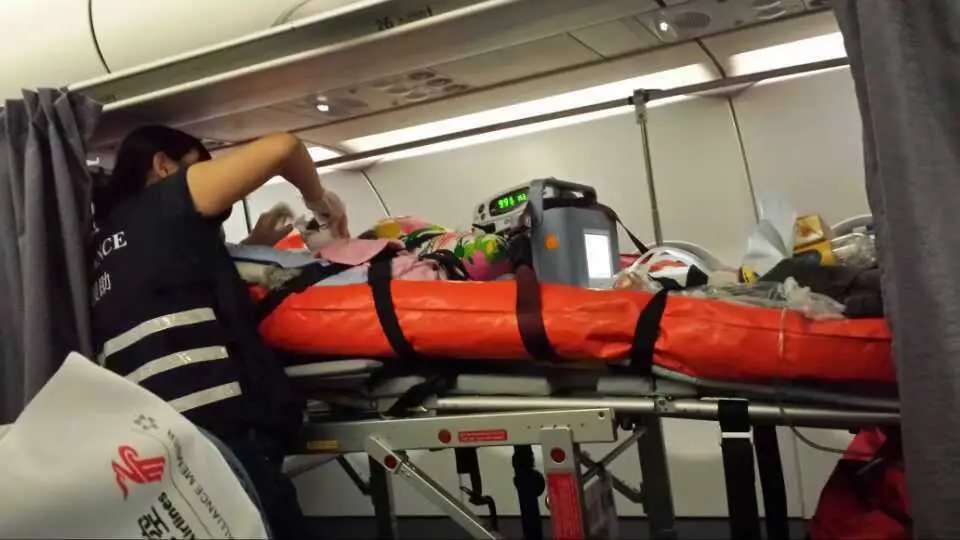
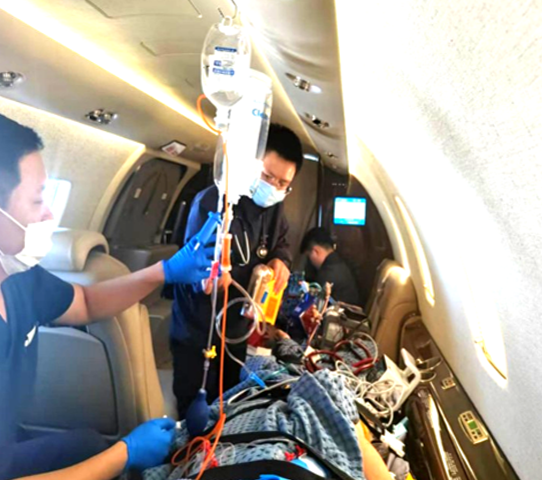
In 2014, the first critical pediatric air transfer was completed from Fuzhou to Guangzhou for a 100-day-old, 2.7 kg preterm infant with bronchopulmonary dysplasia.
I. Addressing a Critical Gap in Pediatric Transfer Safety
In 2014, during a pediatric medical conference, experts raised concerns about the lack of safe and standardized inter-facility transport for critically ill children in China. At the time, most long-distance transfers relied solely on ground ambulances with limited neonatal care capacity. Many ambulance providers lacked qualifications, trained personnel, and equipment—leading to preventable deterioration or even death during transfer.
Recognizing this gap, TKP Medical Assistance, which had over 20 years of experience in adult cross-border ICU transfers, partnered with children’s health foundations to launch a specialized pediatric program. Thus, the “Jump Cloud” Pediatric Assistance Program was born—aimed at providing structured support including safe medical transport, referral navigation, and financial aid for treatment.
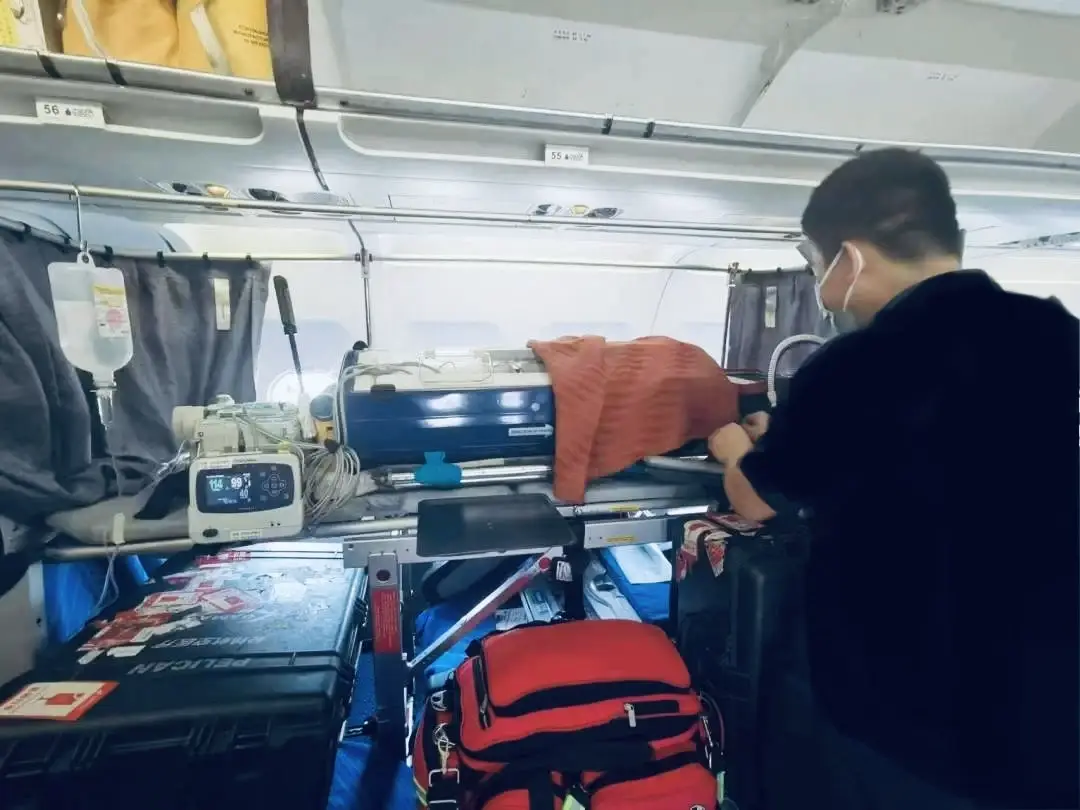
In 2024, TKP completed China’s first international neonatal air transfer from Phnom Penh to Guangzhou for a critically ill newborn.
II. Inspired by Myth, Driven by Urgency
The name “Jump Cloud” is inspired by the magical flying cloud in Journey to the West, which carried Sun Wukong across vast distances in an instant. The program’s name reflects its mission: to move critically ill children swiftly, safely, and efficiently—across provinces, and even across borders.
In July 2014, the program completed its first long-distance pediatric air transfer from Fuzhou to Guangzhou using a commercial air stretcher—a cost-effective solution that allows stable patients to travel with portable medical devices onboard scheduled commercial flights.
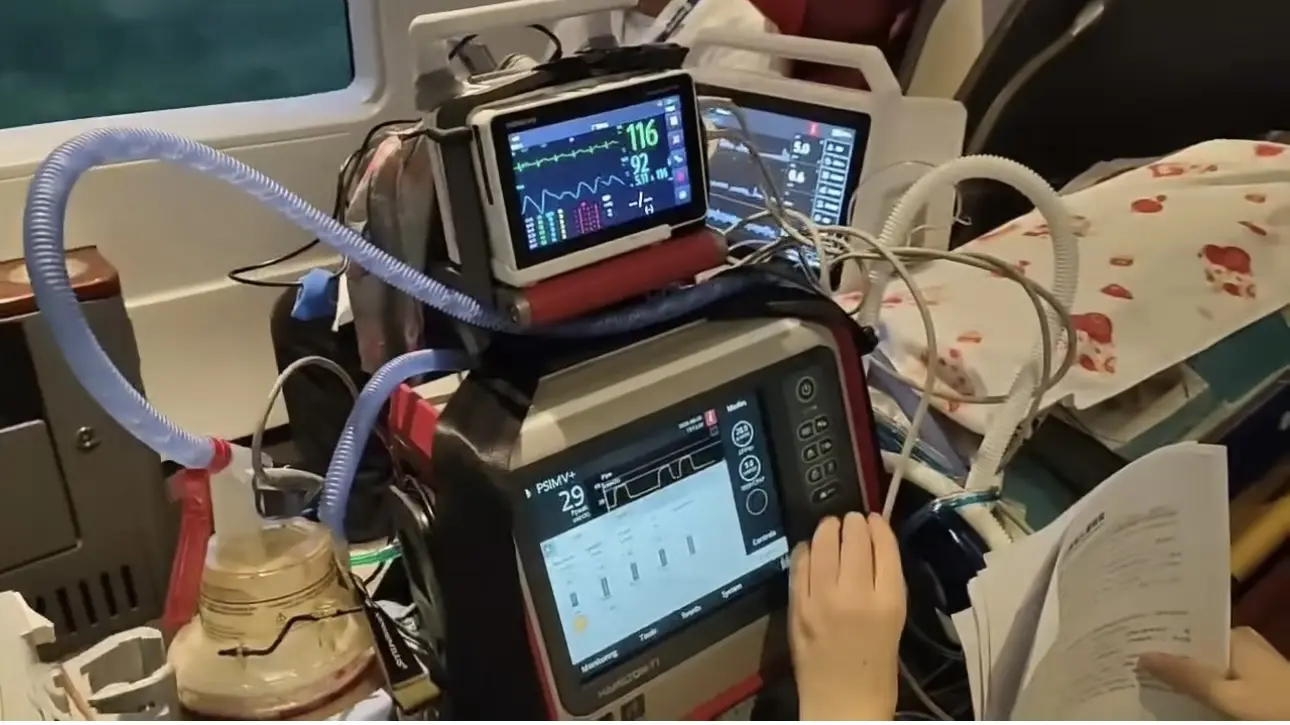
A 24+1 week, 500g infant with severe pulmonary hypertension and bronchopulmonary dysplasia was transported with full NICU-level support, including eNOair nitric oxide therapy.
III. Multi-Modal Transport: From Skies to High-Speed Rails
In addition to air stretcher services, China’s expanding high-speed rail network has become a key resource for pediatric transfers. Equipped with stretcher-compatible space in business-class cabins, high-speed trains offer a stable, comfortable, and weather-resistant alternative for journeys over 400 km. Since 2014, China’s high-speed rail has undergone six rounds of upgrades, and with the expansion of the“Eight Vertical and Eight Horizontal”railway network, the efficiency and reliability of rail-based transfers have grown significantly.
IV. Ongoing Need for Specialized Pediatric Transport
Despite significant investment in pediatric ICU capacity at the local level, high-risk newborns and complex pediatric cases still require referral to major national centers. Demand for qualified, multidisciplinary transfer teams remains high. As of 2024, the Jump Cloud program has completed nearly 500 critical pediatric transfers, including approximately 180 neonatal cases.
Though pediatric transport remains a niche market, TKP Medical Assistance remains committed to its founding mission: to provide safe, timely, and professional bedside-to-bedside transfers for children in urgent need.
Frequently Asked Questions – Cross-Border Medical Rescue
Need help understanding how international medical rescue works? Browse our most common questions to learn about service coverage, response times, documentation requirements, and more. We’re here to support you every step of the way.
Q: Which countries are covered by the cross-border medical rescue service?
A: We cover major countries and regions worldwide to ensure timely rescue
Q: How can I request cross-border medical rescue?
A: Please submit an emergency rescue request through our official website or customer service.
Q:What documents are needed for medical rescue?
A: Patient ID, medical diagnosis report, and emergency contact information are required.
Q: How is the rescue service fee settled?
A: Fees can be paid via insurance claims or direct payment for the service.
Q: How quickly does the rescue response start?
A: In emergencies, rescue operations typically begin within a few hours.
Submit Your Request
Recent Posts

Tags
- Air Ambulance
- Bedside To Bedside
- Cross Border Aid
- Emergency Evacuation
- Global Medical Rescue
- How can I ensure the patient's stability while in the air?
- How do I request an air medical transport?
- How is it different from an air ambulance
- how to activate emergency aircraft service
- how to request an air ambulance
- Is air medical transport safe
- Is international transport possible
- Medical Rescue
- Medical Transport
- Patient Repatriation
- Remote Rescue
- Seamless Coordination
- Telemedicine Support
- Tourists And Expats Medical Escort
- What are the benefits of a cross-border medical transfer
- What are the different types of transfers
- What are typical use cases
- What documents do I need to prepare for a transfer?
- What does high-speed rail patient transfer stands for
- What is air ambulance
- What is air medical transport?
- What is cross-border medical transfer
- What is emergency aircraft
- what is high-speed rail patient transfer
- What is medical charter flight
- what is neonatal ICU transfer
- What is patient air transfer
- What medical equipment is available on board the aircraft
- What situations shouldn't use air medical transport?
- What types of air ambulance are there?
- What types of air ambulance exist
- What's the difference between international and domestic transfers?
- what’s the difference between air medical transport and regular ambulance?
- When is emergency air transport necessary
- Which patients require air medical transport?
- who is included in the medical team
- who needs an air ambulance