


Premature Infant with Severe Lung Disease Transferred from Jiangxi to Guangzhou


Born at 26 weeks and weighing just over 800 grams, baby Mi battled for six months in the NICU with severe bronchopulmonary dysplasia and pulmonary hypertension. After her condition failed to improve, a cross-provincial high-speed rail transfer was successfully completed by TKP and Guangzhou Women and Children’s Medical Center, under the compassionate support of the “Jump Cloud” Pediatric Assistance Program.
Born Extremely Premature, Struggling for Breath
Mi was born at 26 weeks gestation in Jiujiang, Jiangxi, and immediately intubated for respiratory distress. After 46 days of NICU care, she was transferred to Jiangxi Provincial Children’s Hospital where she remained ventilator-dependent for over four months, with progressive pulmonary hypertension and oxygen demands >30%. Despite continuous treatment, her condition remained critical.
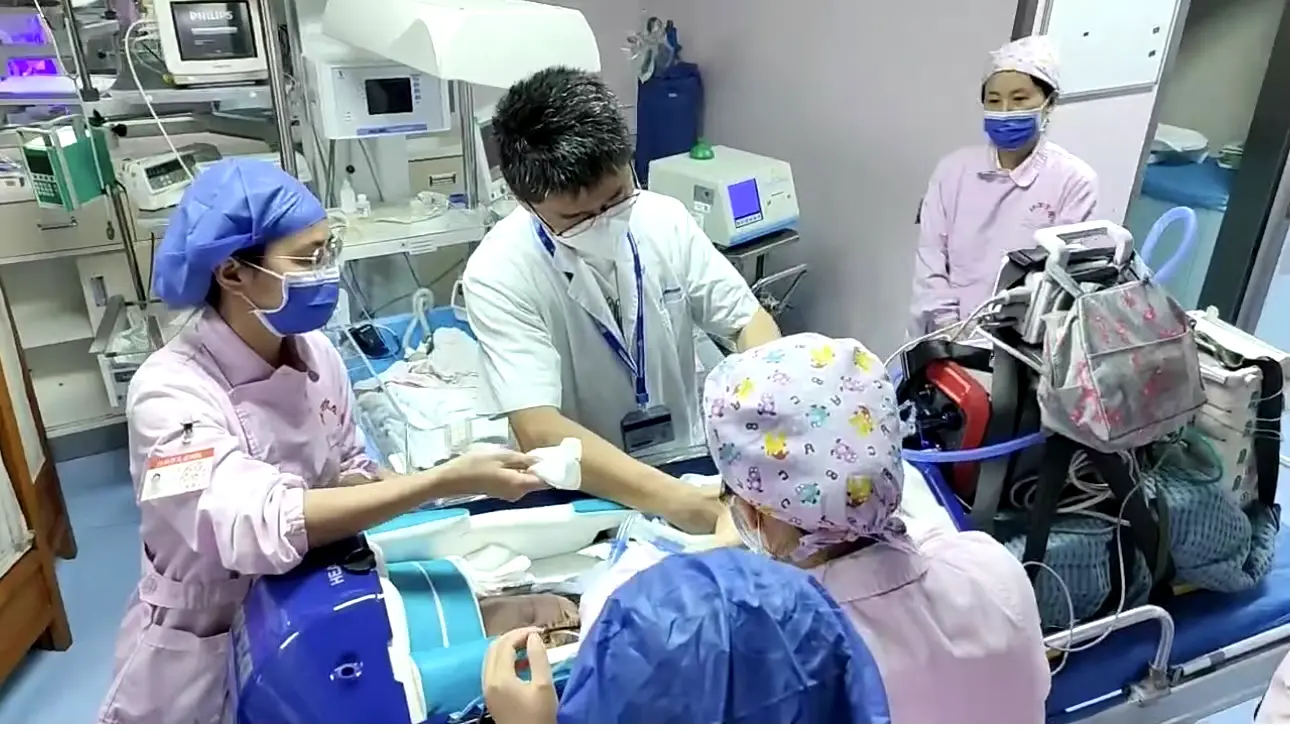
Comprehensive bedside assessment before transfer.
Specialist Referral and Complex Transfer Planning
Desperate for better treatment options, her parents contacted Guangzhou’s renowned neonatal pulmonologist Dr. Zhang Huayan. With TKP Medical Assistance coordinating the operation and NICU specialists from Guangzhou Women and Children’s Medical Center providing clinical escort, the team selected high-speed rail transport as the safest and most economical option.
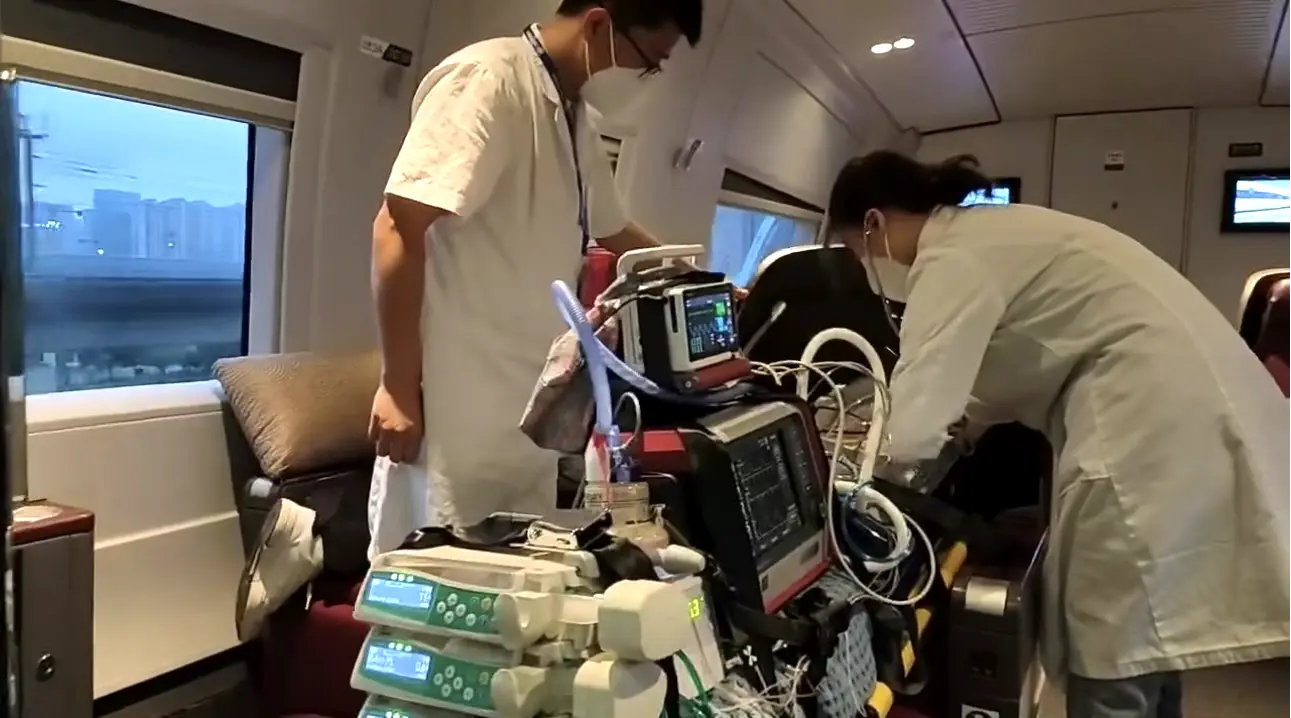
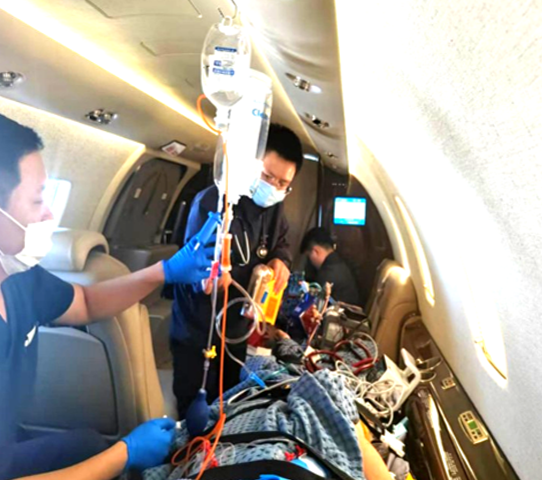
Continuous monitoring onboard the high-speed rail.
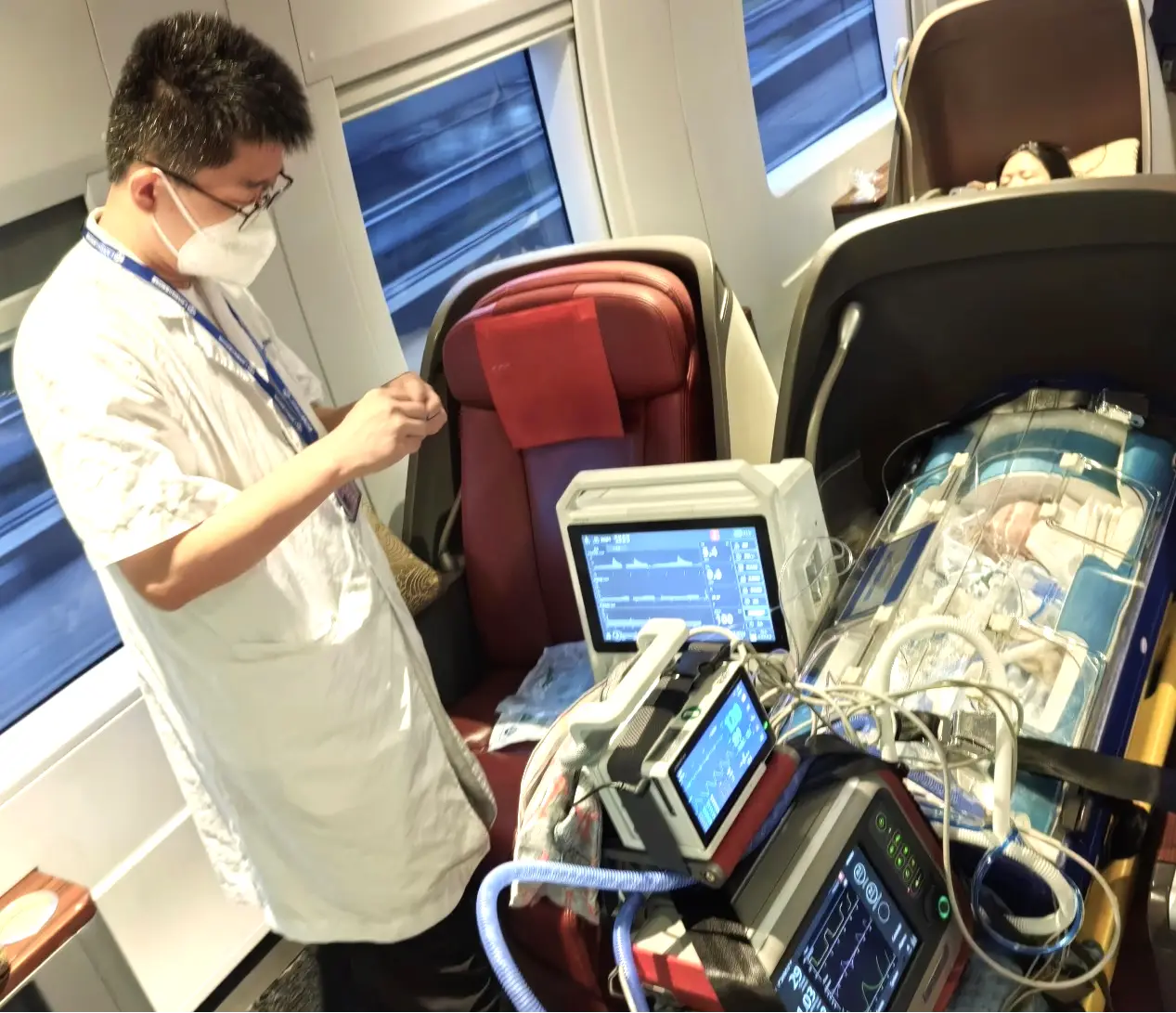
Close observation throughout the journey to ensure stability.
One Breath at a Time: Safe Transfer Enabled by Advanced Therapy
During the journey, Mi received continuous inhaled nitric oxide via a lightweight, battery-powered eNOair system to manage pulmonary hypertension and maintain oxygenation. The TKP team, moved by the family’s struggles, activated its “Jump Cloud” Pediatric Relief Fund to cover part of the costs.
At 11:40 p.m., Mi was successfully admitted to the NICU in Guangzhou. Her journey continues, fueled by hope and a mother’s unwavering love.
Frequently Asked Questions – Cross-Border Medical Rescue
Need help understanding how international medical rescue works? Browse our most common questions to learn about service coverage, response times, documentation requirements, and more. We’re here to support you every step of the way.
Q: Which countries are covered by the cross-border medical rescue service?
A: We cover major countries and regions worldwide to ensure timely rescue
Q: How can I request cross-border medical rescue?
A: Please submit an emergency rescue request through our official website or customer service.
Q:What documents are needed for medical rescue?
A: Patient ID, medical diagnosis report, and emergency contact information are required.
Q: How is the rescue service fee settled?
A: Fees can be paid via insurance claims or direct payment for the service.
Q: How quickly does the rescue response start?
A: In emergencies, rescue operations typically begin within a few hours.
Submit Your Request
Recent Posts

Tags
- Air Ambulance
- Bedside To Bedside
- Cross Border Aid
- Emergency Evacuation
- Global Medical Rescue
- How can I ensure the patient's stability while in the air?
- How do I request an air medical transport?
- How is it different from an air ambulance
- how to activate emergency aircraft service
- how to request an air ambulance
- Is air medical transport safe
- Is international transport possible
- Medical Rescue
- Medical Transport
- Patient Repatriation
- Remote Rescue
- Seamless Coordination
- Telemedicine Support
- Tourists And Expats Medical Escort
- What are the benefits of a cross-border medical transfer
- What are the different types of transfers
- What are typical use cases
- What documents do I need to prepare for a transfer?
- What does high-speed rail patient transfer stands for
- What is air ambulance
- What is air medical transport?
- What is cross-border medical transfer
- What is emergency aircraft
- what is high-speed rail patient transfer
- What is medical charter flight
- what is neonatal ICU transfer
- What is patient air transfer
- What medical equipment is available on board the aircraft
- What situations shouldn't use air medical transport?
- What types of air ambulance are there?
- What types of air ambulance exist
- What's the difference between international and domestic transfers?
- what’s the difference between air medical transport and regular ambulance?
- When is emergency air transport necessary
- Which patients require air medical transport?
- who is included in the medical team
- who needs an air ambulance