


Preterm Infant with Rare Brain Malformation Successfully Transferred to Guangzhou for Lifesaving Treatment


A 29-week preterm baby girl weighing only 2 kg was diagnosed with a rare vascular brain malformation—Vein of Galen Aneurysmal Malformation (VGAM). Facing heart failure risk and in urgent need of specialized care, she was successfully transferred over 500 kilometers from Chenzhou to Guangzhou via high-speed rail. The joint efforts of TKP and Guangzhou's NICU team ensured a safe, efficient, and timely neonatal transport.
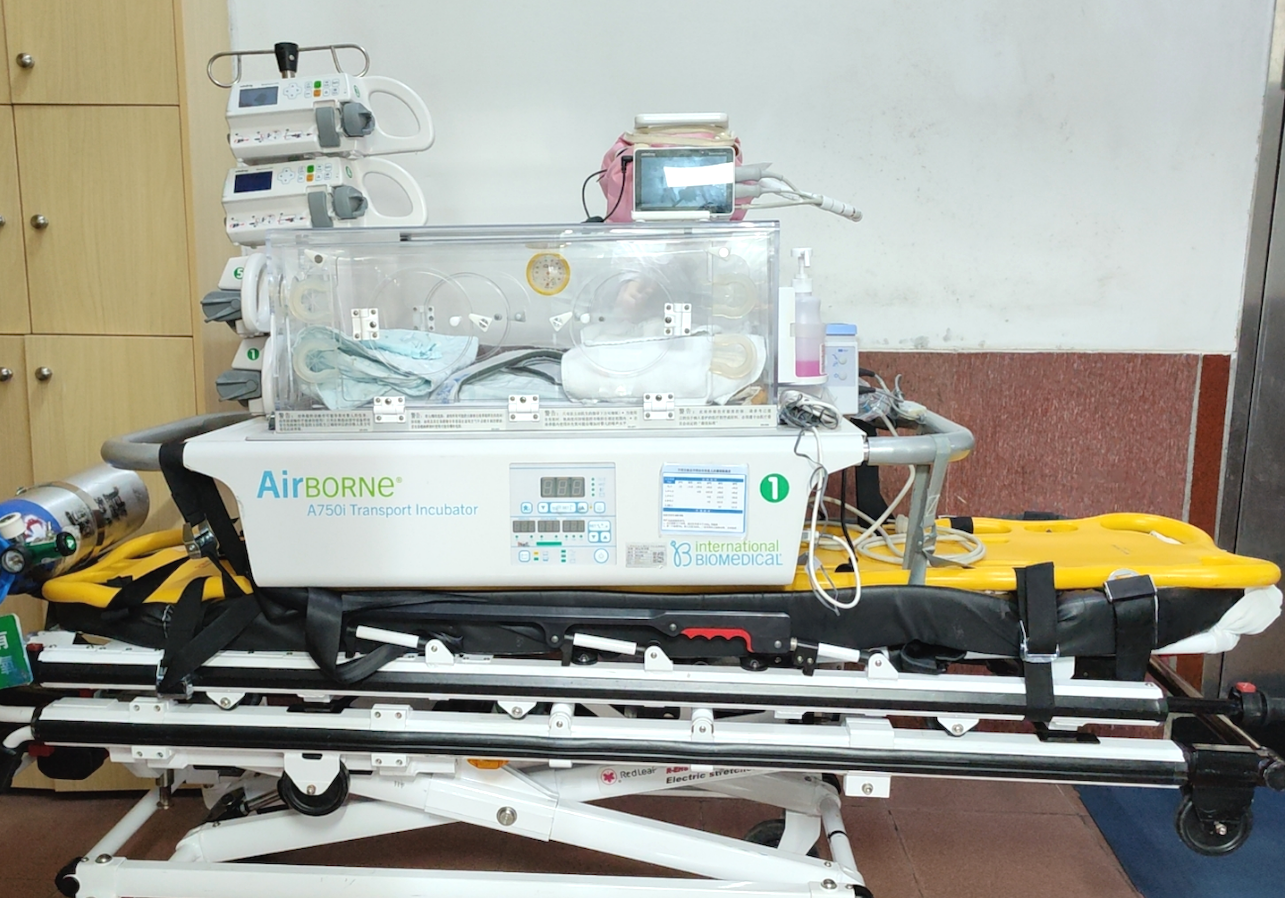
TKP neonatal team arrives at Chenzhou hospital with specialized equipment for the critical transfer
Critical Diagnosis & Immediate Risk
VGAM is a rare and complex congenital brain malformation, making up about 1% of intracranial vascular anomalies. The baby, born at 29 weeks and only 2 kg, presented with severe cyanosis and was quickly diagnosed with VGAM. The condition caused abnormal blood flow to the heart and lungs, leading to pulmonary hypertension and the risk of right-sided heart failure. The local NICU lacked the necessary resources for staged interventional embolization, making urgent transfer essential.
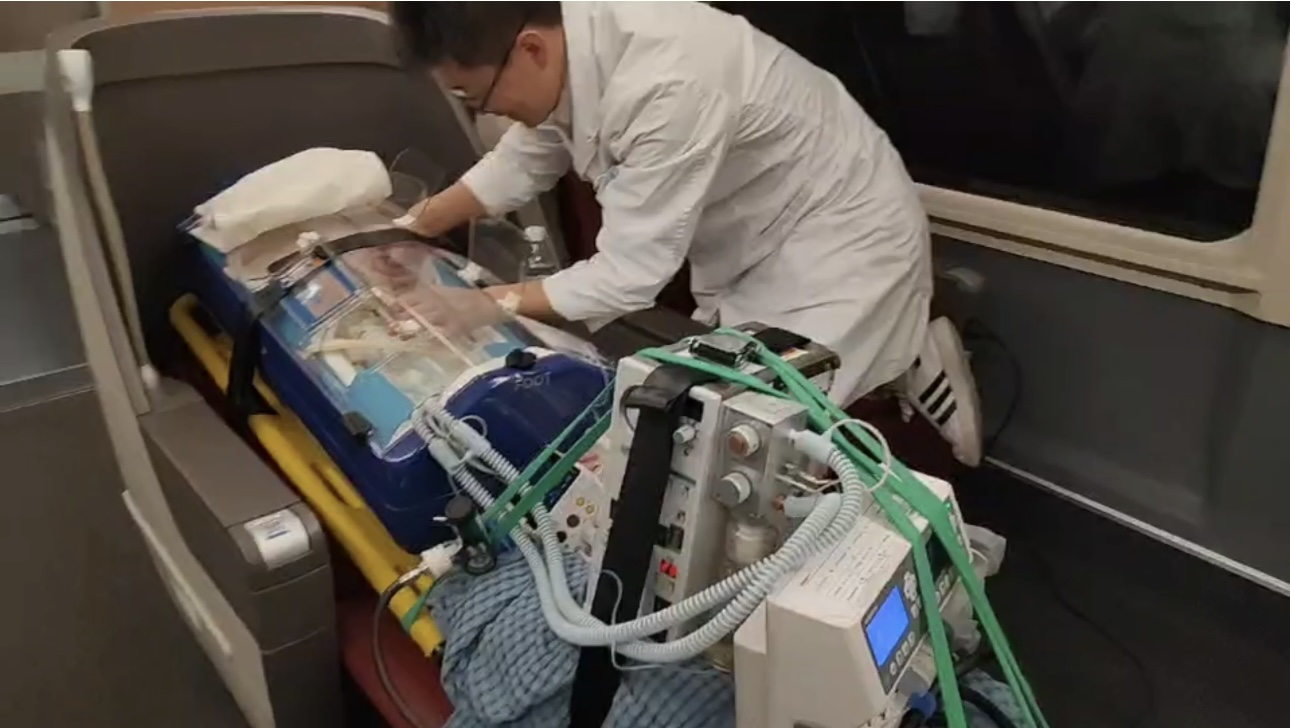
Stretcher and incubator installed in the business-class cabin of the high-speed train to Guangzhou
Specialized Planning for Neonatal Transfer
Transporting a critically ill preterm infant poses significant medical challenges. In this case, TKP activated its “Jump Cloud” program for neonatal transport, assembling a team with extensive NICU transfer experience. The medical team collaborated closely with specialists in Guangzhou to assess the required equipment, medications, and protocols for safe transfer. A customized portable incubator, oxygen support, and monitoring systems were prepared overnight.
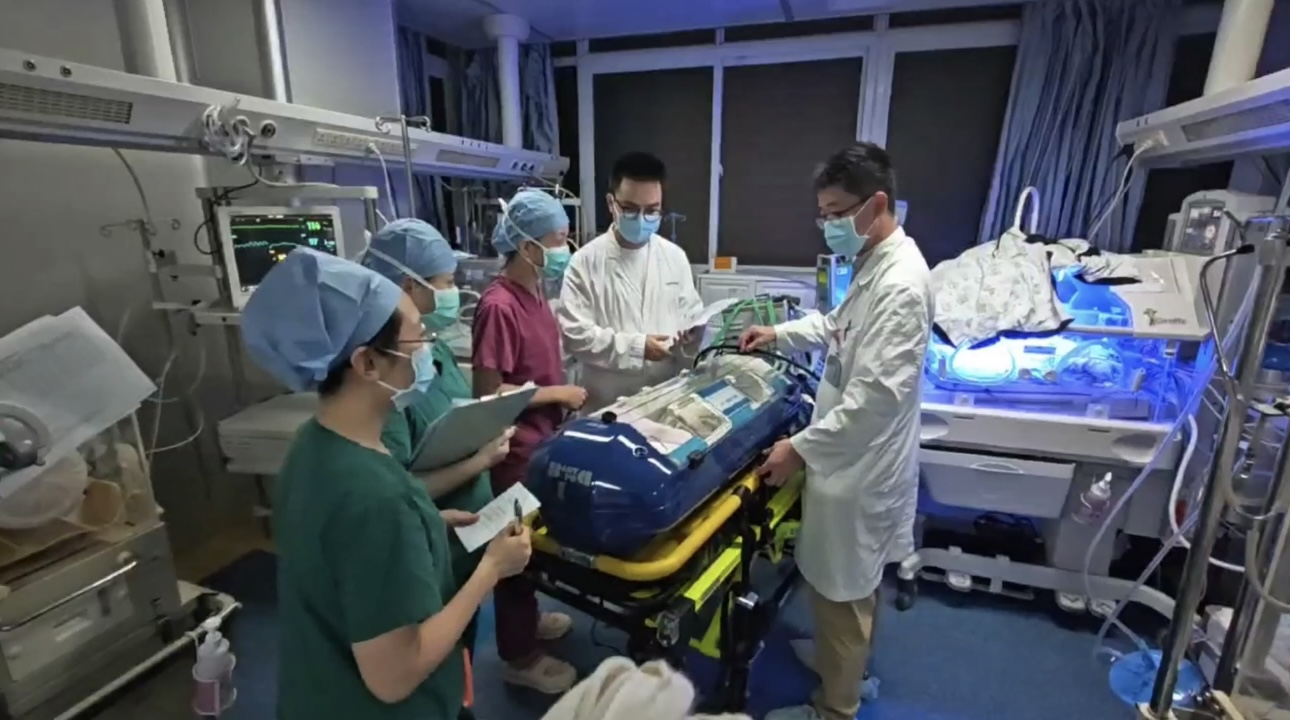
Baby safely admitted to Guangzhou NICU, greeted by a team ready for immediate treatment
High-Speed Coordination & Hopeful Arrival
Given the 500+ km distance and the urgency of care, the teams agreed on high-speed rail as the optimal transfer method. The stretcher was securely installed in the business class compartment, ensuring a stable and comfortable environment for the infant. That night, the baby was successfully admitted to the NICU of a leading hospital in Guangzhou, where a new chapter of treatment and hope begins. This marks the fifth successful case under the neonatal transport MOU between TKP and Guangzhou Children’s Hospital.
Frequently Asked Questions – Cross-Border Medical Rescue
Need help understanding how international medical rescue works? Browse our most common questions to learn about service coverage, response times, documentation requirements, and more. We’re here to support you every step of the way.
Q: Which countries are covered by the cross-border medical rescue service?
A: We cover major countries and regions worldwide to ensure timely rescue
Q: How can I request cross-border medical rescue?
A: Please submit an emergency rescue request through our official website or customer service.
Q:What documents are needed for medical rescue?
A: Patient ID, medical diagnosis report, and emergency contact information are required.
Q: How is the rescue service fee settled?
A: Fees can be paid via insurance claims or direct payment for the service.
Q: How quickly does the rescue response start?
A: In emergencies, rescue operations typically begin within a few hours.
Submit Your Request
Recent Posts

Tags
- Air Ambulance
- Bedside To Bedside
- Cross Border Aid
- Emergency Evacuation
- Global Medical Rescue
- How can I ensure the patient's stability while in the air?
- How do I request an air medical transport?
- How is it different from an air ambulance
- how to activate emergency aircraft service
- how to request an air ambulance
- Is air medical transport safe
- Is international transport possible
- Medical Rescue
- Medical Transport
- Patient Repatriation
- Remote Rescue
- Seamless Coordination
- Telemedicine Support
- Tourists And Expats Medical Escort
- What are the benefits of a cross-border medical transfer
- What are the different types of transfers
- What are typical use cases
- What documents do I need to prepare for a transfer?
- What does high-speed rail patient transfer stands for
- What is air ambulance
- What is air medical transport?
- What is cross-border medical transfer
- What is emergency aircraft
- what is high-speed rail patient transfer
- What is medical charter flight
- what is neonatal ICU transfer
- What is patient air transfer
- What medical equipment is available on board the aircraft
- What situations shouldn't use air medical transport?
- What types of air ambulance are there?
- What types of air ambulance exist
- What's the difference between international and domestic transfers?
- what’s the difference between air medical transport and regular ambulance?
- When is emergency air transport necessary
- Which patients require air medical transport?
- who is included in the medical team
- who needs an air ambulance