


How Private Air Ambulance Charter Solves Time-Critical Transport Delays


Private Air Ambulance Charter is often the better realistic way to move a critical patient safely when every minute matters, especially across borders or from remote locations.
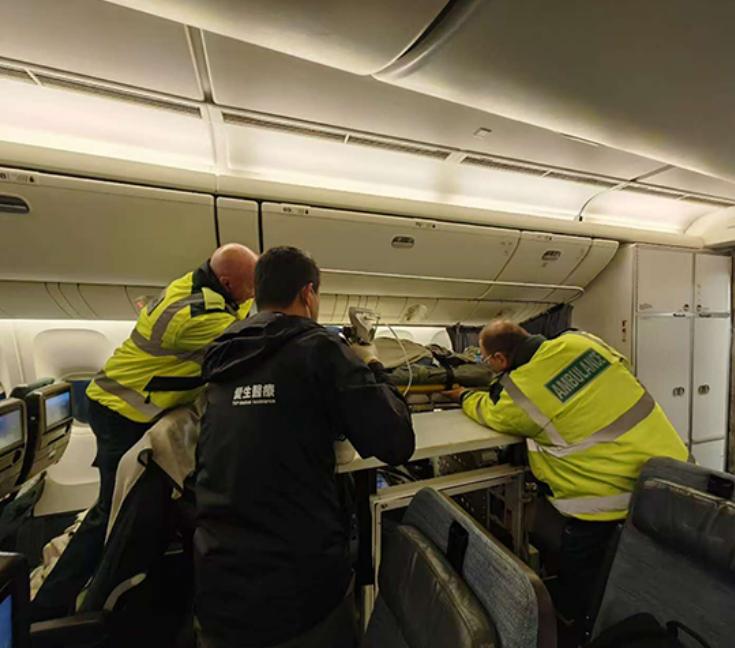
Why Time Delays Turn into Medical Risks
When a patient is unstable, time is not an abstract idea. It is blood pressure, oxygen levels, brain cells. At TKP Medical Assistance, we see how quickly a “small delay” can become a serious complication.
Many families start with what seems like the logical option: a commercial flight or a long-distance ground ambulance. On paper, these choices look cheaper and more familiar. In practice, they are full of hidden waiting time and risk. Flights may be rescheduled. Airline medical approvals can take hours. Airports are crowded. Road transfers before and after the flight are slow. And on board, the medical team has very little control.
On a commercial flight, even a stretcher case must follow airline rules, boarding procedures, and cabin layout. Medical staff cannot freely place monitors, ventilators, or infusion pumps. They share space with hundreds of passengers. Cabin noise is high, and infection risk in a confined, busy cabin is much higher than in a dedicated, disinfected medical area. For immunocompromised patients or those on life support, this is a real threat, not just an inconvenience.
From our medical teams’ perspective, the pain points are clear:
- Families finally receive a discharge letter, but they cannot find a safe way to move the patient in time.
- ICU doctors worry the patient will deteriorate during long layovers, bus transfers on the tarmac, or hours in traffic.
- Cross-border transfers get stuck between hospital paperwork, airline procedures, and immigration rules, while the “golden hour” or “golden 6 hours” quietly disappears.

The result? A higher rate of complications such as pressure sores, delirium, and respiratory failure. Based on our case data, using a Private Air Ambulance Charter can cut major transport-related complications in high-risk patients by more than 30%, and reduce transport injuries such as pressure ulcers and delirium by over 40%. For critical cases, delay is not just expensive. It is dangerous.
How Private Air Ambulance Charter Protects the Golden Hour
- An ICU That Flies with the Patient
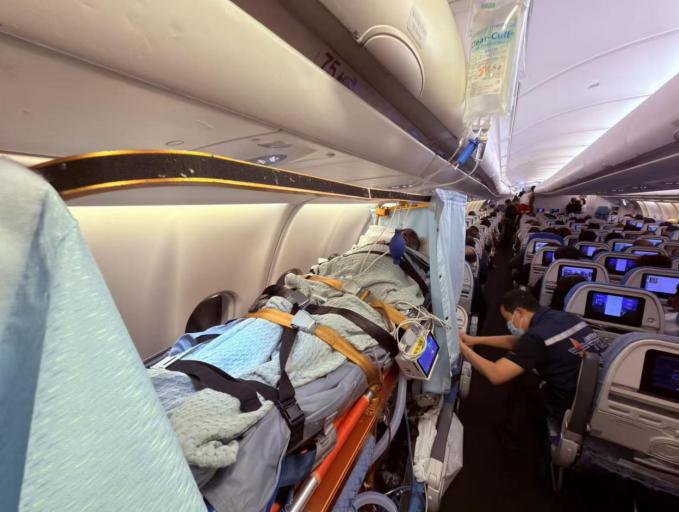
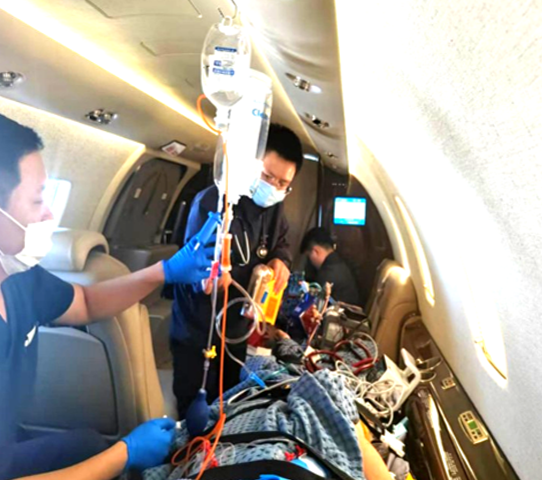
At TKP Medical Assistance, a Private Air Ambulance Charter is not simply a fast jet. It is a mobile intensive care unit built around one patient. Inside the medical cabin, we create a controlled, hospital-level environment that can support the sickest cases.
Our typical configuration includes:
- Full ICU setup with transfer ventilators, including advanced modes such as high-frequency oscillation
- ECMO and blood purification systems for patients with severe respiratory or multi-organ failure
- Support for IABP and other advanced life-support devices, even on long international legs
- A three-person critical care team: ICU physician, anesthesiologist, and intensive care nurse, all ACLS/ATLS certified
All essential equipment is fixed and tested to withstand up to 9G of impact, so it stays stable in turbulence or sudden maneuvers. The team is trained to start resuscitation or other life-saving steps in under one minute if the patient crashes. Compared with standard transfer options, their ability to handle cardiac arrest or acute deterioration is several times higher.
The cabin itself is designed to calm, not stress, the patient. The bed is a full-size ICU bed, roughly 210 x 90 cm with guardrails, so even heavily sedated or intubated patients can be positioned safely. Sound levels in the medical area are kept under about 60 dB, which helps reduce confusion, agitation, and delirium. Wherever possible, we allow two to three family members to accompany the patient. Their presence often stabilizes the patient emotionally and reassures relatives during long flights.
- Speed Is a Whole System, Not Just a Fast Aircraft
A common misconception is that speed is only about the type of aircraft. In reality, speed comes from the entire chain of decisions and logistics around the flight.
With TKP Medical Assistance, a Private Air Ambulance Charter can usually be ready for takeoff within roughly two hours after final go-ahead. We do not wait for airline seat availability or complex internal approvals. Our operations team works in parallel: arranging crew, preparing the aircraft, coordinating ground ambulances, and handling permits.
Some of the advantages of this approach:
- Direct, point-to-point flights that can save more than 12 hours compared with multi-leg commercial routes
- Use of airports with minimal infrastructure, which means we can reach remote, military, or restricted airfields
- Dynamic scheduling based on the patient’s condition, not on airline timetables
- Real-time flight monitoring and route adjustments from our operations center
For patients with severe head trauma requiring ICP monitoring, ventilated ICU cases on ECMO, or stroke patients within the first six hours, those saved hours are often the difference between returning home and living with permanent disability. A well-planned Private Air Ambulance Charter keeps that golden window open by removing every avoidable delay along the route.
TKP Medical Assistance: Turning a Crisis into a Controlled Transfer
- Bedside-to-Bedside, Across Borders
TKP Medical Assistance was founded in 2001 in Shenzhen and has grown into a trusted partner for global medical evacuation. With more than 24 years in the field and six regional offices covering South, East, Central, and Southwest China, we combine local speed with international reach.
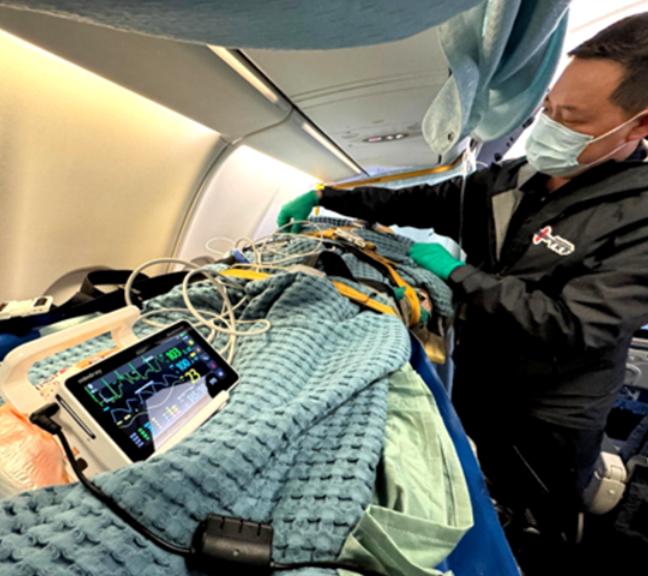
When a Private Air Ambulance Charter is activated, our work starts at the patient’s bedside, not at the airport. Our team:
- Conducts a detailed medical assessment and designs the safest route and aircraft configuration
- Arranges ground ambulances on both departure and arrival sides, ensuring seamless handover at each hospital
- Coordinates closely with embassies, immigration, airport authorities, and the receiving medical team
- Monitors the patient’s condition and the flight in real time until the final hospital transfer is complete
We handle adult critical care, neonatal and premature infant transport, multi-organ failure, and complex brain injuries. For unstable patients, a dedicated air ambulance is not a luxury service. It is the only option that matches the level of risk.
- When Private Air Ambulance Charter Is the Right Choice
Not every patient needs a Private Air Ambulance Charter. But for certain situations, anything less is unsafe. You should consider this option with TKP Medical Assistance when:
- The patient is unstable, ventilated, or supported by ECMO or other advanced systems
- The condition is time-sensitive, such as stroke within six hours, major trauma, or ongoing internal bleeding
- The journey on commercial flights or ground would be long, complicated, or involve multiple transfers
- The origin or destination is a remote or infrastructure-limited area where regular flights are rare
In these scenarios, the financial cost of a chartered flight is often outweighed by the medical and human cost of deterioration: longer ICU stays, more complications, and a higher risk of long-term disability. By reducing complications by more than 30% and transport-related injuries by over 40% in high-risk cases, air ambulance solutions can also lower overall treatment costs in the long run.
Talk to TKP Medical Assistance Before Time Runs Out
If you, your patient, or your insured member needs urgent cross-border transfer, the next scheduled commercial flight may simply be too late. Let TKP Medical Assistance review the case and advise whether a Private Air Ambulance Charter is appropriate.
��� Contact us with the patient‘s details for a rapid medical assessment and customized flight plan.
When you fly with TKP Medical Assistance, you are not just booking a plane. You are engaging a global ICU team whose single focus is to move a critical patient safely, efficiently, and without wasting a single precious minute.
Submit Your Request
Recent Posts

Tags
- Air Ambulance
- Bedside To Bedside
- Cross Border Aid
- Emergency Evacuation
- Global Medical Rescue
- How can I ensure the patient's stability while in the air?
- How do I request an air medical transport?
- How is it different from an air ambulance
- how to activate emergency aircraft service
- how to request an air ambulance
- Is air medical transport safe
- Is international transport possible
- Medical Rescue
- Medical Transport
- Patient Repatriation
- Remote Rescue
- Seamless Coordination
- Telemedicine Support
- Tourists And Expats Medical Escort
- What are the benefits of a cross-border medical transfer
- What are the different types of transfers
- What are typical use cases
- What documents do I need to prepare for a transfer?
- What does high-speed rail patient transfer stands for
- What is air ambulance
- What is air medical transport?
- What is cross-border medical transfer
- What is emergency aircraft
- what is high-speed rail patient transfer
- What is medical charter flight
- what is neonatal ICU transfer
- What is patient air transfer
- What medical equipment is available on board the aircraft
- What situations shouldn't use air medical transport?
- What types of air ambulance are there?
- What types of air ambulance exist
- What's the difference between international and domestic transfers?
- what’s the difference between air medical transport and regular ambulance?
- When is emergency air transport necessary
- Which patients require air medical transport?
- who is included in the medical team
- who needs an air ambulance