


How Private Medical Charter Flights Work: A 2026 Patient Guide


If you’re weighing options for a time–critical medical transfer, clarity matters. From TKP Medical Assistance’s vantage point on the runway and at the bedside, Private Medical Charter Flights are not simply a faster way to travel; they are a controlled clinical environment that moves definitive care closer, safely and without delays. Below is a practical, plain-spoken guide to help you decide if this pathway is right for your situation, what happens step-by-step, how safety is managed, what drives timelines and costs, and how cross-border logistics and insurance fit in.
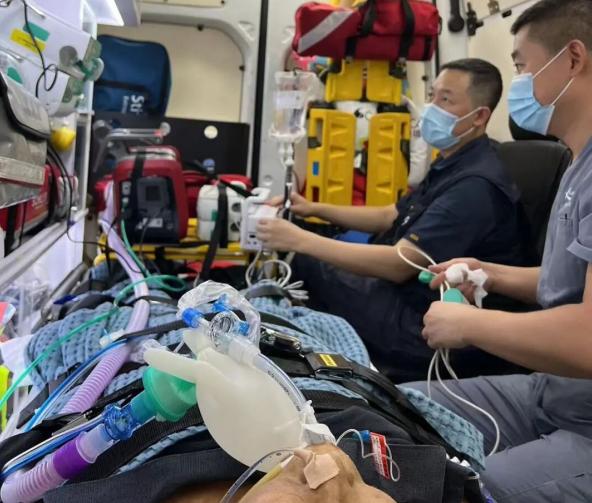
What Private Medical Charter Flights Actually Deliver
Private Medical Charter Flights provide true bed-to-bed medical transport. The aircraft is set up like a mobile critical care unit, and the team that boards with the patient – typically a mix of critical care nurses and physicians – remains responsible for treatment from the hospital bed to the aircraft and onward to the receiving facility. Ground ambulances are coordinated at each end, and the handover is clinical, not administrative.
This approach differs from a commercial airline medical escort. Escorts are appropriate for stable patients who can tolerate a scheduled flight with limited equipment and more exposure to crowds, altitude, and delays. Private Medical Charter Flights are built for patients who cannot safely tolerate a commercial cabin, who need rapid transfer, or who require continuous monitoring and interventions en route.
When It‘s the Right Choice
Families and clinicians usually consider a charter when minutes and clinical control matter. Frequent indications include:
•ICU interfacility transfers for subspecialty services (e.g., cardiothoracic surgery, cardiac cath, neurointervention)
•Post-op patients with airway risk or vasopressor/invasive monitoring needs
•Severe trauma requiring damage-control resuscitation and definitive surgery
•Time-critical stroke or STEMI needing thrombolysis, thrombectomy, or PCI
•Neonatal/pediatric cases requiring incubators, ventilators, and pediatric-trained teams
•International repatriation to home systems or high-volume specialty centers
Selection depends on clinical stability, distance and terrain, and the ability to maintain continuous monitoring and interventions. Ground transport can mean prolonged transit and limited capability in rural or austere settings. Commercial flights introduce variables – slot changes, altitude, cabin pressure, and crowding – that are poorly tolerated by patients with pulmonary or neurological risks. Private Medical Charter Flights remove those variables.
The TKP Medical Assistance Process: Step–By–Step
The goal is simple: reduce uncertainty. TKP keeps the process transparent and predictable.
•Case intake and clinical triage: Our 24/7 team reviews the medical summary, vitals, airway status, oxygen requirements, current therapies, and the intended destination. A lead physician verifies that transfer is appropriate and safe.
•Aircraft and crew selection: We match aircraft type – turboprop or jet – to distance, runway conditions, and medical complexity. Crew assignments reflect subspecialty needs (for example, neonatal, cardiac, or trauma experience).
•Permits, routing, and bed confirmation: Operations secure landing permits, airport slots, and customs clearance. Case managers lock the receiving bed and attending physician, preventing “no bed on arrival” missteps that delay care.
•Bedside handover and packaging: The TKP team coordinates with the sending hospital, stabilizes the patient for flight, and packages ventilators, monitors, infusion pumps, and necessary medications for secure air transport.
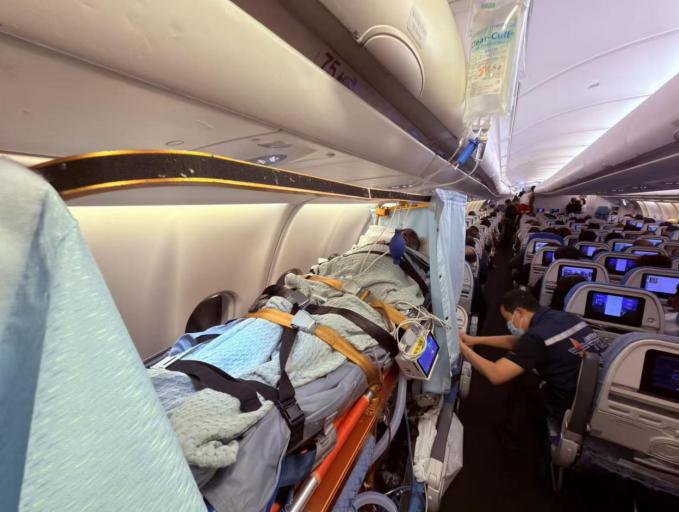
•Flight execution and en-route care: The cabin layout prioritizes line-of-sight monitoring and access to airway equipment, pumps, and power. Sedation, pain control, ventilation targets, and hemodynamics are managed continuously.
•Arrival and continuity of care: A pre-positioned ground ambulance meets the aircraft. TKP performs a structured clinical handover with documentation, medication lists, and next-step orders so treatment continues without gaps.
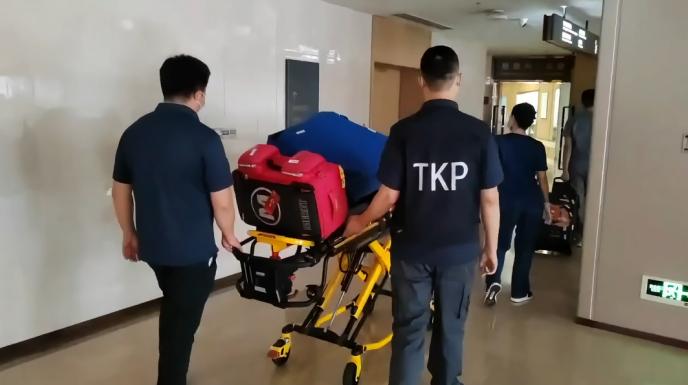
Safety and Clinical Standards You Can Expect
In transport medicine, the safest plan is the one with the least surprises. For Private Medical Charter Flights, TKP applies standardized checklists for pre-flight preparation, fatigue management, and infection control. Cabins can be kept close to sea-level equivalent when indicated to reduce hypoxia risk, and flight planning avoids routes or altitude profiles that exacerbate pulmonary or neurological conditions. We do not chase speed at the expense of stability; we choose the aircraft and routing that best match the patient’s physiology.
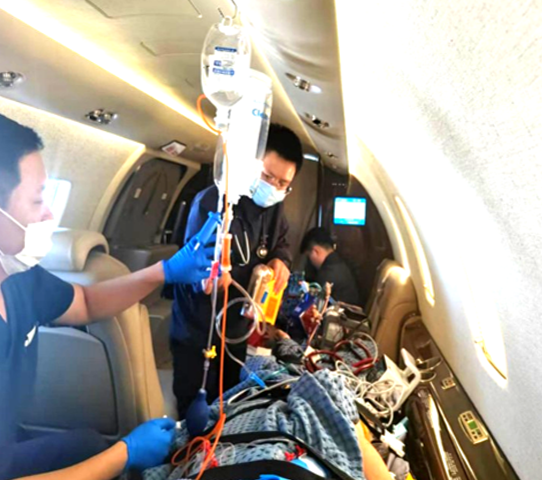
On board, the clinical team has the equipment you would expect in a high-acuity setting: advanced cardiac monitors with invasive blood pressure when required, transport ventilators with appropriate modes, syringe pumps for vasoactive agents, suction, oxygen, and emergency airway kits. Blood products or specialized medications can be arranged case-by-case. The point is to provide continuous care during movement, not just movement itself. That is the core advantage of Private Medical Charter Flights for unstable patients.
Timelines and Costs – What Drives Them in the Real World
Activation speed depends on a few practical realities: where the aircraft and crew are based, how quickly permits can be obtained, whether the destination has curfews, and how fast a receiving bed can be confirmed. In major hubs with aircraft on standby, dispatch often occurs within 2 – 6 hours once clearances and bed confirmation are in place. In regions with night restrictions or complex overflight approvals, activation can extend to 12 – 24 hours.
Costs vary by mission profile. A short domestic transfer may start in the tens of thousands of dollars. A multi-leg international repatriation with specialized staffing can exceed six figures. Key drivers include:
•Distance, cruise speed, and fuel burn
•Aircraft category and cabin configuration for medical equipment and power
•Airport fees, slots, handling, and potential night surcharges
•Ground ambulances and airside access at both ends
•Permits, overflight, customs, and immigration formalities
•Medical complexity, special equipment, and additional clinicians
TKP Medical Assistance provides line-item quotes so families and insurers understand each component. When insurance applies, we support pre-authorization to align benefits with the chosen clinical pathway and reduce out-of-pocket exposure for urgent cases.
Cross–Border Logistics and Insurance Coordination
International Private Medical Charter Flights require exact paperwork and early calendar awareness. TKP handles fit-to-fly medical clearance, landing permits, customs and immigration procedures, and any authorizations for controlled medications or biomedical devices. National holidays, language barriers, and slot constraints can slow a case; anticipating those variables is part of the plan.
Insurance processes can feel opaque under pressure. Our case managers work with insurers and assistance companies on medical necessity reviews, guarantees of payment, and benefits confirmation. Patient data is handled under strict privacy practices aligned with common regulatory standards. Families receive structured updates so everyone stays aligned on timing, approvals, and care goals. The outcome we aim for is simple: less administrative friction, more clinical focus.
Answers to Common Questions
•Who is a candidate? Patients who cannot safely use commercial flights or who require continuous monitoring, advanced airway support, or expedited transfer to higher-level care.
•Can a family member travel? Often yes, when clinically appropriate and cabin capacity allows. The medical team’s workspace and safety come first; TKP advises on safe accompaniment.
•What about luggage? Essential personal items and medical records are welcome. Bulky non-medical baggage is limited to preserve clinical space and weight margins.
•What if weather or airport slots cause delays? TKP plans contingencies, selects alternates when possible, and keeps families and hospitals informed in real time.
•How is care continued after landing? Bed-to-bed service means clinical handover at arrival with documentation and orders, so the receiving team resumes treatment immediately.
•How do payments work? We provide a detailed estimate and manage insurer engagement. For self-pay, staged options are available on urgent missions.
- Preparing for a smooth transfer
A few small steps make a big difference: consolidate the medical summary and current medication list, identify the preferred receiving facility (and any physician contacts), assign a family decision-maker, and provide passport copies where international borders are involved. Share any cultural or language considerations that might affect communication or consent. Early coordination helps us reserve aircraft, secure permits, and confirm beds faster – core advantages of Private Medical Charter Flights when time is tight.
Call TKP Medical Assistance First
If you’re facing a time-critical transfer or planning an international repatriation, contact TKP Medical Assistance for a 24/7 pre-flight readiness assessment. We will review the medical summary, confirm bed availability, outline the fastest safe routing, and issue a transparent plan you can act on immediately. Private Medical Charter Flights work best when coordination starts early – reach out now to secure capacity and streamline care.
Submit Your Request
Recent Posts

Tags
- Air Ambulance
- Bedside To Bedside
- Cross Border Aid
- Emergency Evacuation
- Global Medical Rescue
- How can I ensure the patient's stability while in the air?
- How do I request an air medical transport?
- How is it different from an air ambulance
- how to activate emergency aircraft service
- how to request an air ambulance
- Is air medical transport safe
- Is international transport possible
- Medical Rescue
- Medical Transport
- Patient Repatriation
- Remote Rescue
- Seamless Coordination
- Telemedicine Support
- Tourists And Expats Medical Escort
- What are the benefits of a cross-border medical transfer
- What are the different types of transfers
- What are typical use cases
- What documents do I need to prepare for a transfer?
- What does high-speed rail patient transfer stands for
- What is air ambulance
- What is air medical transport?
- What is cross-border medical transfer
- What is emergency aircraft
- what is high-speed rail patient transfer
- What is medical charter flight
- what is neonatal ICU transfer
- What is patient air transfer
- What medical equipment is available on board the aircraft
- What situations shouldn't use air medical transport?
- What types of air ambulance are there?
- What types of air ambulance exist
- What's the difference between international and domestic transfers?
- what’s the difference between air medical transport and regular ambulance?
- When is emergency air transport necessary
- Which patients require air medical transport?
- who is included in the medical team
- who needs an air ambulance