


Why Choose Private Medical Flights for Critical Care Travel


Private Medical Flights give patients rapid, reliable access to critical care when every minute counts – and at TKP Medical Assistance, we orchestrate that journey smoothly, from the outgoing bedside to the receiving ICU, without breaking the chain of care.
Why Choose Private Medical Flights for Critical Care Travel
When a patient is stable but still fragile, distance becomes clinical risk. Commercial timetables rarely mirror medical windows. Border checks and ground congestion add uncertainty. Families need assurance that airway management, monitoring, and medications continue without interruption. Hospitals need a partner that moves fast but never rushes clinical judgment. That is why we center our work on post-stabilization critical care transfers and time-sensitive evacuations. We build a plan around the patient, not the timetable.
At TKP Medical Assistance, our clinicians remain with the patient for the entire itinerary. We manage handovers between vehicles, keep documentation current, and brief receiving teams so treatment resumes instantly. Compared with fragmented travel, Private Medical Flights reduce multiple boardings, shorten exposure to crowded terminals, and make long distances predictable for complex cases. The result is bedside-to-bedside medical transport that lowers stress for families and supports better outcomes for care teams.
✅ What families and hospitals value most
• Reliable transport windows that reflect clinical urgency
• Continuous monitoring and medication management in transit
• One accountable contact coordinating across borders
How TKP Medical Assistance Delivers Seamless, Safe Transfers
Private Medical Flights are most effective when they sit inside a full care pathway. We design that pathway end to end – selecting the mode, aligning equipment, and sequencing each leg to minimize risk. Because our medical and operations teams plan together, clinical needs drive logistics rather than the other way around.
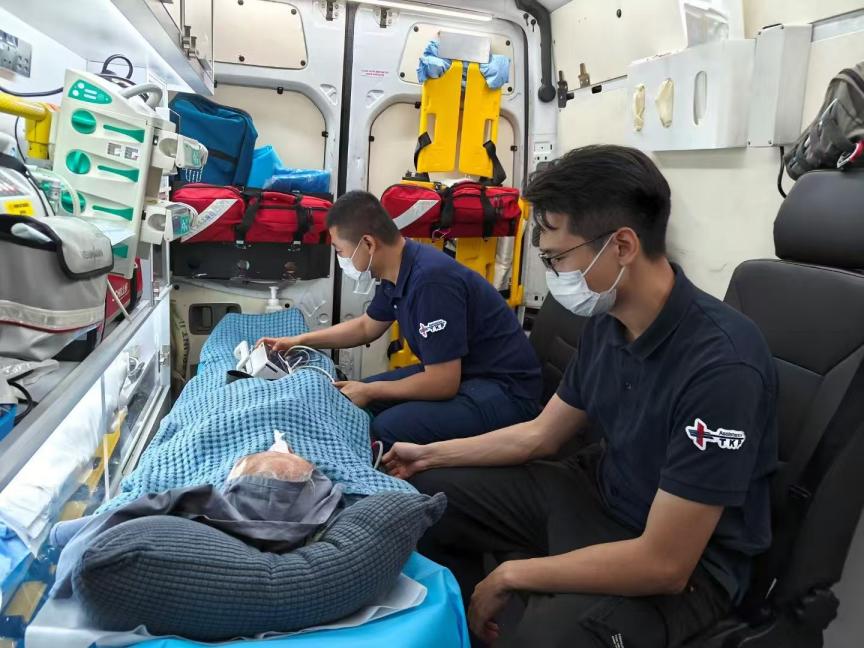
Our clinicians handle oxygen therapy, analgesia, ventilator settings, and in-transit assessments so care never pauses between segments. We also standardize equipment across vehicles where possible, preventing delays caused by incompatible connectors or power supplies. With a single medical operations plan guiding every move, handovers are brief, consistent, and safe.
✅ Care-Led Modes of Transport
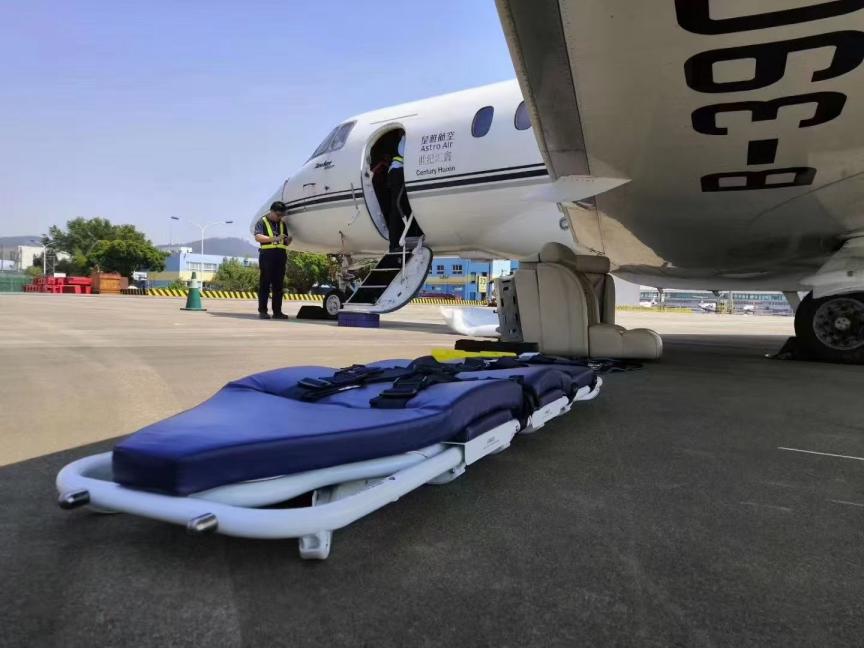
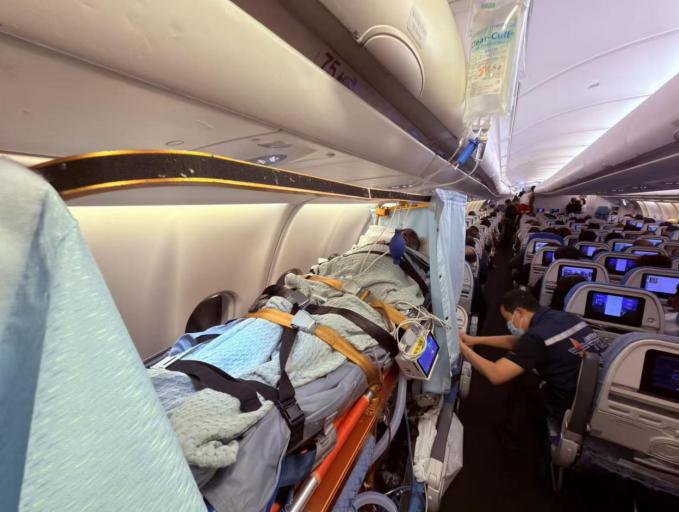
• Commercial stretcher transfers (with airline approval). For stable, bedridden patients, we arrange dedicated stretcher compartments on domestic or international flights. A medical escort manages monitoring, medication, and comfort – often a cost-effective choice for cross-border travel.
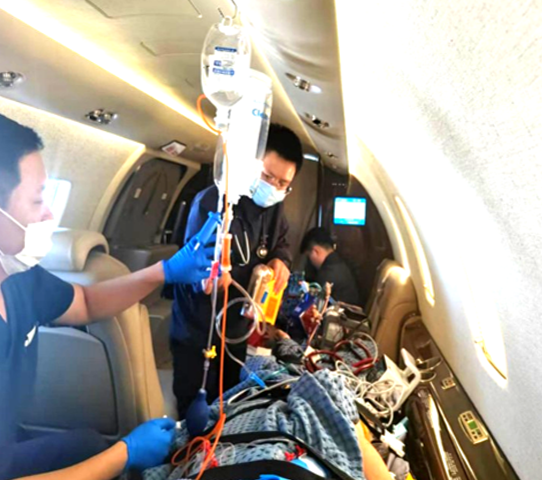
• Air ambulance & ICU-level transfers. Our aircraft carry ICU-grade monitoring, ventilators, and life-support systems. Missions are led by intensive-care physicians with flight-trained nurses to keep patients clinically stable at altitude.
• Integrated rail-and-ambulance journeys. For intercity or cross-border needs, we combine high-speed rail with ground ambulances for precise pick-ups and drop-offs. This is ideal for neonatal or post-surgery cases requiring continuous observation during non-flight segments.
End-to-End Coordination Across Borders
Private Medical Flights demand precise administration as much as clinical skill. We liaise with hospitals and embassies to keep paperwork and clearances on track. Where commercial stretchers are appropriate, we secure airline approvals and arrange ramp access and ambulance docking to shorten time on the ground. Our operations center monitors every mission in real time, adjusting routing for weather or airfield changes while protecting the treatment plan. Communication stays clear and frequent so families and clinicians always know what comes next.
Need guidance on the right mode? Contact TKP Medical Assistance for a rapid case review and a transparent, clinically led transport plan.
Route Planning for Time-Critical Patients
Our transfer map connects remote, underserved, and emergency locations with leading medical facilities worldwide. By using strategically selected airports – including those with minimal infrastructure – we reach patients others may miss. We choose legs and alternates that compress total travel time, reduce risk, and keep the clinical picture stable. Private Medical Flights are synchronized with ambulances and high-speed rail so there are no gaps in care or communication.
✅ What defines our route design
• Dynamic scheduling aligned to patient condition and urgency
• Global coverage across domestic and international corridors
• Access to airports with minimal infrastructure for remote reach
• Optimized routing to cut flight time and enhance safety
• Close coordination with medical institutions and embassies
Because conditions change, resilience matters. Our team tracks each flight live and can pivot quickly – rerouting around weather, adjusting alternates, and coordinating ground teams so continuity holds. The patient’s clinical status stays at the center of every decision.
✅ When Private Medical Flights Are the Right Choice
Use a dedicated air ambulance when ventilation, invasive monitoring, or in-flight interventions are required. Choose a commercial stretcher with medical escort when the patient is stable yet bedbound and cost efficiency matters. Select integrated rail-and-ambulance when pressurization is unnecessary or when rapid city-to-city movement outperforms regional flights. Whatever the mode, we craft one coherent itinerary under a single medical command, combining the precision of international medical evacuation services with the consistency of everyday hospital care.
Why our perspective matters. As a medical assistance provider, we bridge the space between bedside realities and transport logistics. We speak the language of ICUs and the language of airports. That dual fluency helps prevent avoidable delays, protects medication schedules, and ensures the receiving team is fully briefed before the wheels stop. In other words, Private Medical Flights with TKP Medical Assistance are not merely transportation – they are mobile extensions of high-quality care.
Call to Action
Need urgent transfer support today? Our ICU team is on standby 24/7 to deliver fast, professional care across borders. Reach out to TKP Medical Assistance for a swift case assessment, a clear route plan, and immediate coordination of Private Medical Flights tailored to your patient’s needs.
Submit Your Request
Recent Posts

Tags
- Air Ambulance
- Bedside To Bedside
- Cross Border Aid
- Emergency Evacuation
- Global Medical Rescue
- How can I ensure the patient's stability while in the air?
- How do I request an air medical transport?
- How is it different from an air ambulance
- how to activate emergency aircraft service
- how to request an air ambulance
- Is air medical transport safe
- Is international transport possible
- Medical Rescue
- Medical Transport
- Patient Repatriation
- Remote Rescue
- Seamless Coordination
- Telemedicine Support
- Tourists And Expats Medical Escort
- What are the benefits of a cross-border medical transfer
- What are the different types of transfers
- What are typical use cases
- What documents do I need to prepare for a transfer?
- What does high-speed rail patient transfer stands for
- What is air ambulance
- What is air medical transport?
- What is cross-border medical transfer
- What is emergency aircraft
- what is high-speed rail patient transfer
- What is medical charter flight
- what is neonatal ICU transfer
- What is patient air transfer
- What medical equipment is available on board the aircraft
- What situations shouldn't use air medical transport?
- What types of air ambulance are there?
- What types of air ambulance exist
- What's the difference between international and domestic transfers?
- what’s the difference between air medical transport and regular ambulance?
- When is emergency air transport necessary
- Which patients require air medical transport?
- who is included in the medical team
- who needs an air ambulance