


What Do You Really Pay for Private Medical Flights?


Private Medical Flights may look like something reserved for VIPs, but in real medical emergencies they are often the line between a smooth recovery, lifelong disability, or even loss of life.
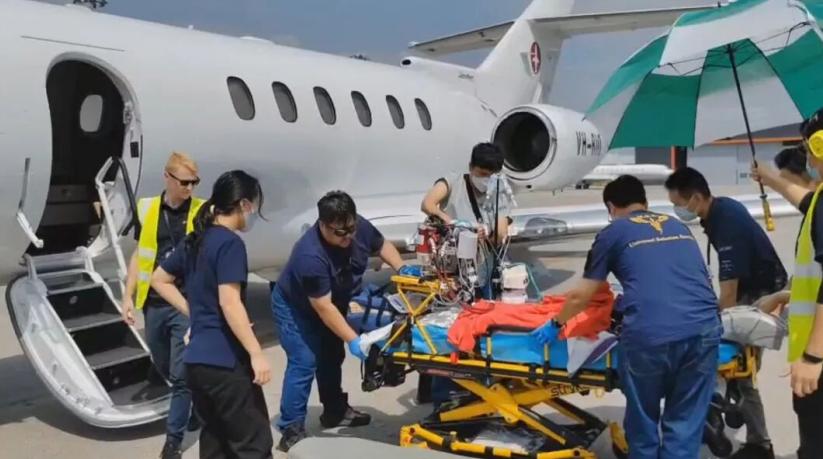
What Are You Really Paying For?
When a family or hospital first receives a quote for Private Medical Flights, the price can feel overwhelming. A long-distance evacuation can cost roughly 500,000 – 2,000,000 RMB, depending on the route, the aircraft, and the patient’s condition. At TKP Medical Assistance, we know that this is not just a financial decision. It is a decision about time, risk, and outcome.
You are not paying for a luxury jet experience. You are paying for a highly controlled medical environment that moves at the speed of an aircraft. In many critical cases, the more accurate question is not “Why does it cost so much?” but “What will it cost the patient if we don’t use Private Medical Flights?”
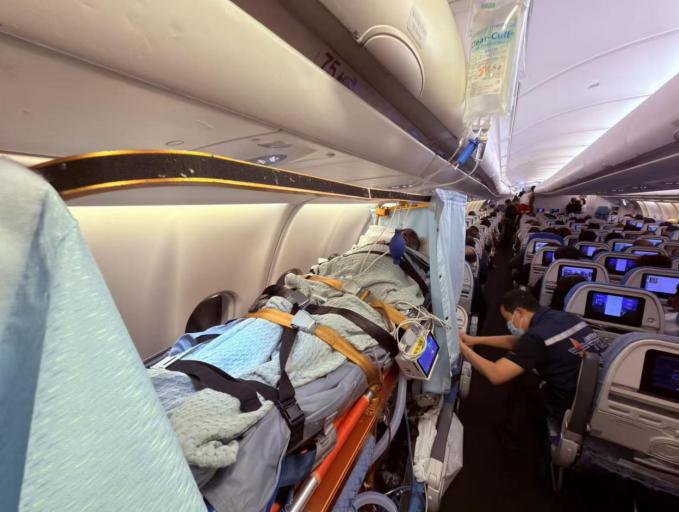
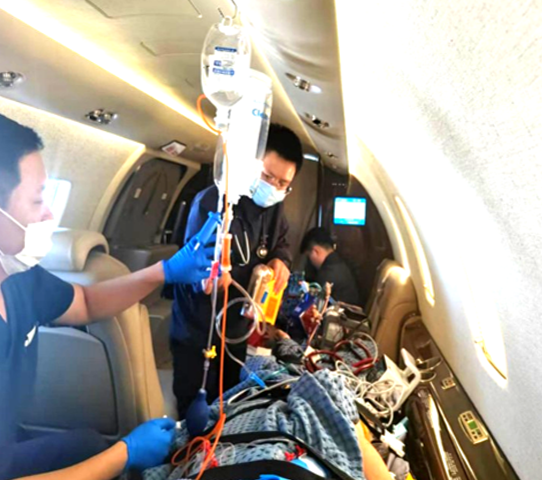
On our missions, the cabin is configured as a flying intensive care unit. The patient is placed on a full-size ICU bed, around 210 x 90 cm, with side rails for safety. The medical zone is separated and disinfected, which sharply reduces infection risk compared with a crowded commercial cabin. Noise levels in this area are kept under about 60 decibels so that the team can communicate clearly and the patient is not overwhelmed by constant engine noise.
Around the patient, you will not see business class amenities; you will see critical care technology. A typical TKP Medical Assistance configuration may include:
✅ Transport ventilators with advanced modes, including high-frequency ventilation
✅ ECMO for severe heart or lung failure
✅ Blood purification systems for multi-organ failure
✅ Full invasive monitoring for blood pressure, oxygenation, and other vital parameters
On some aircraft, additional therapies can be supported if the mission requires them. Taken together, this means the cabin functions like a compact ICU, with equipment secured to tolerate up to 9G of force in turbulence or during takeoff and landing.
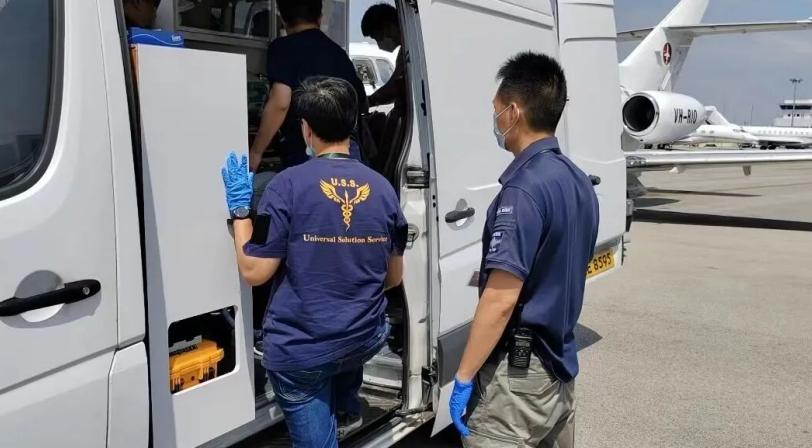
This level of preparation is not a “nice extra” for many patients. It is essential. Data from our missions show that properly configured Private Medical Flights can reduce transport-related complications by around 34%, especially for patients on ECMO or with fragile lungs. For time-sensitive emergencies – such as stroke within a 6-hour window – that difference can directly influence whether a patient returns to normal life or faces permanent deficits.
The Team Behind Each Flight
A second major part of the cost of Private Medical Flights is the people who travel with the patient. Every TKP Medical Assistance mission is staffed by a specialised crew, usually including:
✅ An ICU physician
✅ An anesthesiologist
✅ A critical care nurse
All members hold advanced life support certifications such as ACLS and ATLS. More importantly, they are trained to work in the tight, constantly moving space of an aircraft. They understand how altitude, cabin pressure, and limited space affect a fragile patient.
This team is not responsible for a full cabin. Their only focus is one patient. Because of that, they can respond to sudden changes very quickly. Our crews can start emergency treatment, including resuscitation, in under one minute. Their ability to handle critical events, such as sudden cardiac arrest, is up to three times higher than that of a non-specialised escort on a commercial flight.
So when you pay for Private Medical Flights, you are buying more than a transfer. You are securing a dedicated ICU team whose sole task is to keep one patient safe, stable, and inside the golden rescue window from bed to bed.
TKP Medical Assistance has been building this expertise since 2001. Based in Shenzhen, China, we focus on cross-border medical evacuation and complex transfers for patients who cannot travel safely on their own. With more than 24 years of experience, we have learned that good outcomes depend as much on planning as on technology.
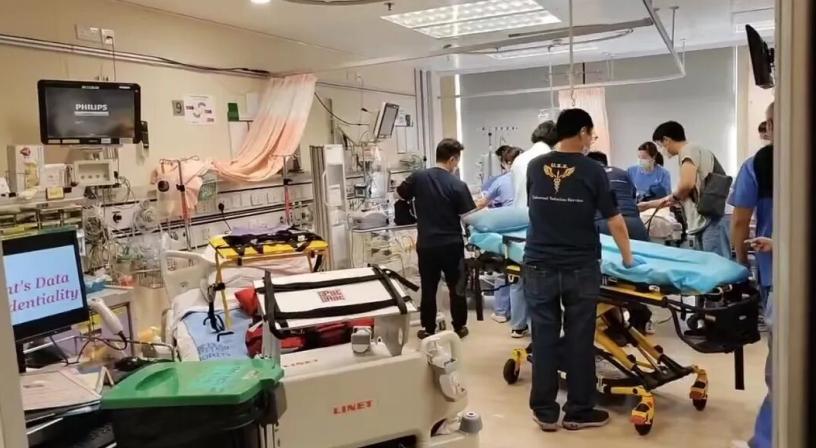
To shorten response time, we have created six regional branches across China, covering the South, East, Central, and Southwest. This network makes it possible to launch many missions within about two hours, without waiting for airline approvals or commercial schedules. Our planners design point-to-point routes that can save more than 12 hours compared with multi-stop commercial journeys – time that can be critical for brain, heart, or lung emergencies.
Behind every mission is a 24/7 operations team. They track the flight in real time, coordinate with departure and arrival hospitals, and stay in touch with embassies when needed. If weather, airspace restrictions, or the patient’s condition changes, we can adjust the route and care plan on the fly. From the moment we accept a case, our goal is simple: continuous, safe care from one hospital bed to the next.
Who Really Needs Private Medical Flights?
Not every patient needs a chartered aircraft. Some stable patients, with no invasive support and well-controlled conditions, can travel on commercial flights with a medical escort. At TKP Medical Assistance, we evaluate each case carefully and recommend the level of transport that matches the real risk.
However, Private Medical Flights are often the best option when any of the following apply:
- The patient is unstable, in intensive care, or at high risk of sudden deterioration
- Advanced life support (such as ECMO, IABP, or complex ventilation) must continue during transfer
- There is a narrow treatment window, for example acute stroke, severe trauma, or evolving heart disease
- The journey on commercial airlines would involve long layovers, multiple connections, or poor local medical infrastructure
- The infection risk in a public cabin is too high, especially for immunocompromised patients
We also care for highly vulnerable groups. Our teams regularly manage patients with multi-organ failure, severe brain injuries that require ICP monitoring, and newborns or premature infants needing specialised neonatal transport. These cases demand stable conditions, gentle handling, and constant monitoring – something difficult to guarantee on a standard passenger aircraft.
Another important factor for many families is emotional support. On a significant number of TKP missions, two to three family members can travel with the patient. Being able to stay close reduces anxiety, helps with communication in foreign hospitals, and ensures that crucial medical history is always at hand. In other words, you are not just buying technology and logistics; you are choosing a more humane way to move a fragile loved one across borders.
When you compare costs, it is important to consider more than the flight price. A “cheaper” option can lead to delays, new complications, longer ICU stays, or even loss of life. Well-planned Private Medical Flights can reduce transport-related problems such as pressure sores or delirium by around 41%. They keep the patient on a clear clinical path instead of leaving them exposed to gaps in care.
At TKP Medical Assistance, our job is to help you see this full picture. We work with hospitals, insurers, and families to weigh medical risk, time pressure, and financial impact together. Sometimes a commercial flight is enough. Sometimes it is not. Our role is to give you honest, clinically grounded advice so you can make the right choice.
If you are facing a difficult transfer decision and are unsure whether Private Medical Flights are really necessary, talk to us before you commit. TKP Medical Assistance offers round-the-clock clinical consultation, route design, and transparent cost explanations for global medical evacuation.
Reach out to TKP Medical Assistance today. Let us help you choose the safest, most appropriate way to move your patient from one bed to another – when every hour, and every decision, truly matters.
Submit Your Request
Recent Posts

Tags
- Air Ambulance
- Bedside To Bedside
- Cross Border Aid
- Emergency Evacuation
- Global Medical Rescue
- How can I ensure the patient's stability while in the air?
- How do I request an air medical transport?
- How is it different from an air ambulance
- how to activate emergency aircraft service
- how to request an air ambulance
- Is air medical transport safe
- Is international transport possible
- Medical Rescue
- Medical Transport
- Patient Repatriation
- Remote Rescue
- Seamless Coordination
- Telemedicine Support
- Tourists And Expats Medical Escort
- What are the benefits of a cross-border medical transfer
- What are the different types of transfers
- What are typical use cases
- What documents do I need to prepare for a transfer?
- What does high-speed rail patient transfer stands for
- What is air ambulance
- What is air medical transport?
- What is cross-border medical transfer
- What is emergency aircraft
- what is high-speed rail patient transfer
- What is medical charter flight
- what is neonatal ICU transfer
- What is patient air transfer
- What medical equipment is available on board the aircraft
- What situations shouldn't use air medical transport?
- What types of air ambulance are there?
- What types of air ambulance exist
- What's the difference between international and domestic transfers?
- what’s the difference between air medical transport and regular ambulance?
- When is emergency air transport necessary
- Which patients require air medical transport?
- who is included in the medical team
- who needs an air ambulance