


Critically Ill Korean Tourist Evacuated from Macau After Stroke: TKP Coordinates Emergency Repatriation


A South Korean tourist in Macau suffered a sudden ischemic stroke after discontinuing anticoagulants for atrial fibrillation. Despite emergency intervention, his condition remained critical. With brain edema likely to worsen, TKP Medical Assistance swiftly arranged an air ambulance transfer to Seoul National University Hospital, ensuring timely intervention during the neurological crisis window.
Sudden Neurological Collapse in Macau
Mr. Kim, a tourist from Seoul with a history of atrial fibrillation, neglected to refill his anticoagulant medication while traveling in Macau. When he failed to check out of his hotel on departure day, staff found him unresponsive in his room with classic signs of stroke. He was rushed to Conde S. Januário Hospital (Hilltop Hospital), where an angiographic thrombectomy was attempted. Unfortunately, the occluded vessel could not be reopened.

TKP medical team arrives at Conde S. Januário Hospital in Macau to assess the patient’s condition and coordinate repatriation
TKP Medical Assessment and Air Ambulance Activation
TKP’s medical team immediately reviewed Mr. Kim’s ICU condition. He was unconscious, intubated, and dependent on a ventilator, with signs of increased intracranial pressure. Given the imminent risk of cerebral edema within the next 72 hours, TKP recommended urgent repatriation by air ambulance. His family, in consultation with a Seoul-based neurologist, agreed on the transfer plan.

TKP ensures the safe ground transfer of Mr. Kim to Macau International Airport for emergency air evacuation to South Korea
Safe Return to South Korea for Neurosurgical Treatment
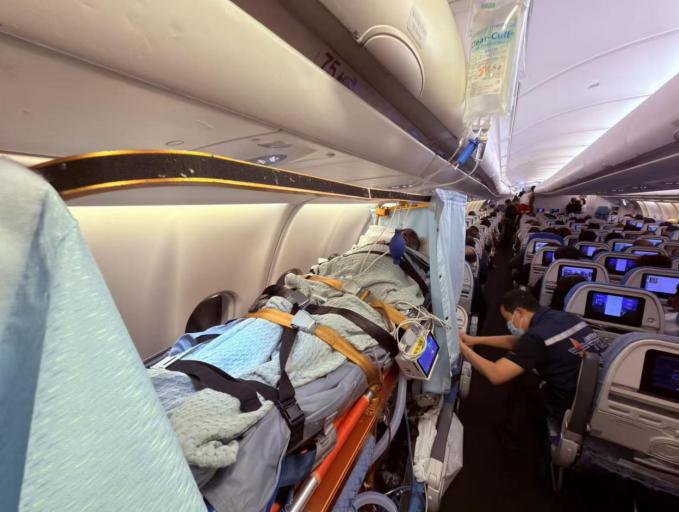
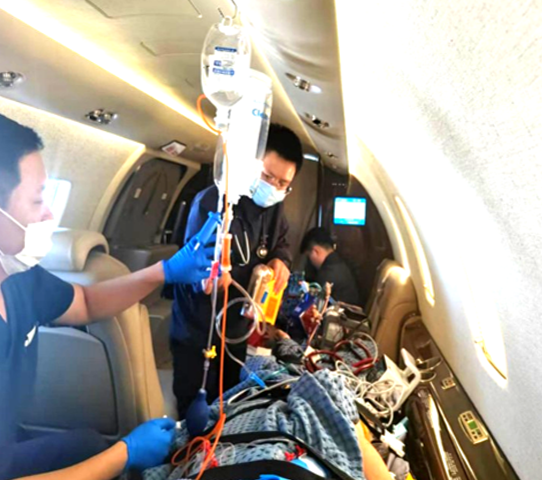
Within hours, TKP dispatched a fully equipped air ambulance. After a 3-hour medical flight, Mr. Kim arrived safely at Gimpo International Airport in Seoul. The team expedited customs clearance and ensured his smooth transfer to Seoul National University Hospital for advanced neurosurgical management.
Frequently Asked Questions – Cross-Border Medical Rescue
Need help understanding how international medical rescue works? Browse our most common questions to learn about service coverage, response times, documentation requirements, and more. We’re here to support you every step of the way.
Q: Which countries are covered by the cross-border medical rescue service?
A: We cover major countries and regions worldwide to ensure timely rescue
Q: How can I request cross-border medical rescue?
A: Please submit an emergency rescue request through our official website or customer service.
Q:What documents are needed for medical rescue?
A: Patient ID, medical diagnosis report, and emergency contact information are required.
Q: How is the rescue service fee settled?
A: Fees can be paid via insurance claims or direct payment for the service.
Q: How quickly does the rescue response start?
A: In emergencies, rescue operations typically begin within a few hours.
Submit Your Request
Recent Posts

Tags
- Air Ambulance
- Bedside To Bedside
- Cross Border Aid
- Emergency Evacuation
- Global Medical Rescue
- How can I ensure the patient's stability while in the air?
- How do I request an air medical transport?
- How is it different from an air ambulance
- how to activate emergency aircraft service
- how to request an air ambulance
- Is air medical transport safe
- Is international transport possible
- Medical Rescue
- Medical Transport
- Patient Repatriation
- Remote Rescue
- Seamless Coordination
- Telemedicine Support
- Tourists And Expats Medical Escort
- What are the benefits of a cross-border medical transfer
- What are the different types of transfers
- What are typical use cases
- What documents do I need to prepare for a transfer?
- What does high-speed rail patient transfer stands for
- What is air ambulance
- What is air medical transport?
- What is cross-border medical transfer
- What is emergency aircraft
- what is high-speed rail patient transfer
- What is medical charter flight
- what is neonatal ICU transfer
- What is patient air transfer
- What medical equipment is available on board the aircraft
- What situations shouldn't use air medical transport?
- What types of air ambulance are there?
- What types of air ambulance exist
- What's the difference between international and domestic transfers?
- what’s the difference between air medical transport and regular ambulance?
- When is emergency air transport necessary
- Which patients require air medical transport?
- who is included in the medical team
- who needs an air ambulance