


What are the Different Types of Transfers | Complete Overview


What are the Various Kinds of Transfers?
The idea of transfer in the modern globalized world goes much deeper than a mere movement. It is a form of strategic decision-making, either in Human Resource Management (HRM) or in the medical transport services. The awareness of the various kinds of transfers can allow organizations to control their resources properly, as healthcare providers such as TKP Assistance make sure that patient mobility across borders is life-saving.
- The transfer is the process of moving an individual in terms of position, department, or location within the same organization or network. The main purpose of transfers in HRM is to maximize human capital, increase efficiency, and provide career growth opportunities.
- In medical assistance, a transfer is the relocation of patients between facilities or countries, which may need special medical conveyance, air ambulance, or stretcher services. In other words, move skills and service requirements, people (employees or patients) should be where they are required most.
HRM Transfer: Definition and Purpose
A transfer in the context of Human Resource Management is a lateral movement of the employees in the organization, that is, he/she move between jobs, departments, or even places without a significant change in position or salary.
Purposes of Employee Transfer:
- To even out the workload among departments.
- To fill critical skill gaps
- To overcome interpersonal disputes.
- To increase employee satisfaction.
- To support employee improvements.
- To coordinate organizational restructuring.
Through employing a successful transfer process within HRM, companies reinforce the planning of the workforce, succession, and mobility.
Categorizing Employee Transfers
There are five broad categories of employee transfers, and each has its own objective for an organization. Let’s look at them one by one.
- Promotional Transfer
Promotional transfer is a transfer of an employee into a position with more work. Such a transfer is not only performance rewarding but also enhances morale and motivation.
- Lateral or Functional Transfer
A lateral transfer (or functional transfer) involves transferring an employee between positions at the same grade – sometimes to provide a better skill coverage, or to expose them to other functions.
- Remedial Transfer
A remedial transfer is used in cases such as conflict, poor performance, or incompatible skills of an employee to improve job performance. This is not punitive.
- Replacement Transfer
A replacement transfer happens when a specific employee replaces another employee who is either being promoted, reassigned, or relieved. This provides continuity in operation.
- Temporary or Shift Transfer
A temporary transfer is made temporarily for a project. It may be job rotation, project assignment, or seasonal modification. Temporary assignments will enhance resiliency and cross-functional experience among workers.
Other Types and Considerations of HR Transfers
Other forms of transfers in the contemporary HRM are:
- Transfer of Production – Relocation of personnel as a result of fluctuation of workloads.
- Disciplinary Transfer – Infrequently used to uphold discipline.
- Interdepartmental Transfer – The transfer between departments.
- Interlocation Transfer – The migration between branches or cities.
All types of transfers embody organizational responsiveness, which allows companies to be responsive in a rapidly changing economy.
Types and Uses of Medical Transport Transfers
What are the different types of transfers? Whereas HR transfers are workforce mobility, medical transport transfers are safe patient transfers. In medical terminology, the term transfer is used to mean the transportation of a patient between medical institutions, in many cases under specialized medical care.
At TKP Assistance, cross-border movements of patients are carefully designed to provide a smooth cross-border patient transportation, which is the collaboration of clinical care, logistic planning, and international coordination.
What are the Various Forms of Medical Transport Transfers?
In medical logistics, the transfers are categorized according to urgency, medical condition, and mode of transport.
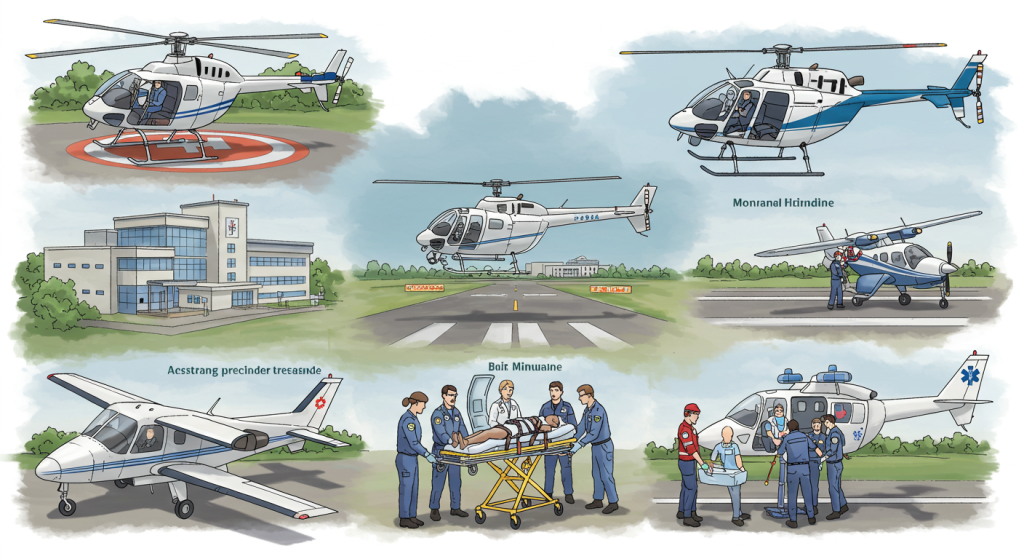
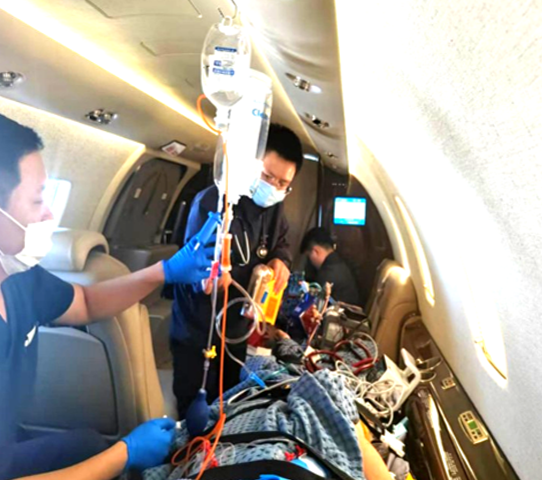
- Air Ambulance Transfer
Air ambulance transfers are best suited for critical care patients who will need ICU-type treatment during the flight. These are equipped with:
- Ventilators, monitors, defibrillators.
- Medical ambulance teams.
- Quick response to foreign evacuation.
Air ambulance transfers are frequently carried out on critical care after stabilization, organ transplantation, or emergencies over long distances.
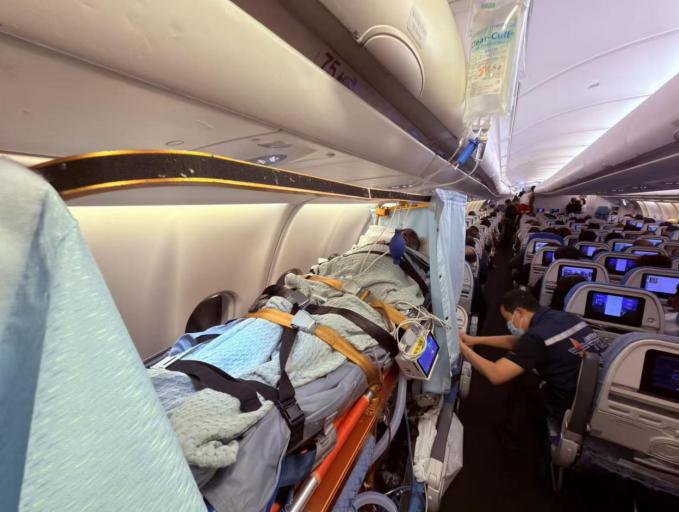
- Commercial Stretcher Transfer
A commercial stretcher transfer involves a regular airline that is adapted with a stretcher and a privacy curtain. It is cheaper than a chartered air ambulance, which is appropriate when the patient is stable yet immobile. TKP Assistance organizes the delivery of stretchers, medical escort, and airport clearance to facilitate international movement.
- High-Speed Rail Transfer
In such cases, for patients in areas such as the Greater Bay Area of China, high-speed rail transit is a stable and efficient substitute. These are perfect for short-distance non-critical transfers and are comfortable, fast, and accessible.
- Ground Ambulance Transfer
Ground ambulances are used to transport locally or intercity, and are used to transport between hospitals. They are equipped with:
- Paramedic support
- Basic/advanced life support units (BLS/ALS).
- Real-time communication systems.
Air or rail evacuation is usually supplemented by ground transfers, which constitute multimodal patient movement.
Intercurrence Medical Transfer
It includes international patient relocation – a complicated process that needs:
- Immigration coordination
- Medical documentation
- Constant clinical monitoring.
In TKP Assistance, all cross-border transfers are conducted in accordance with the guidelines of continuity in ICU, so that the quality of care is maintained throughout the path.
The Importance of Transfers in Medical Assistance
Transfers make sure that patients are provided with the necessary treatment on a timely basis. The causes of medical transfers may be:
- Lack of local facilities
- Need for specialized care
- Repatriation after injury
- Post-operative continuity of care.
Proximate and dyscalculic supports of the family. They need to be carefully triaged, clinically evaluated, and planned along air, rail, and road routes in case of each case.
Conclusion
What are the different types of transfers? Not only are they movements, but they are also strategic pathways linking people to opportunities and patients to healing. Transfers bring about expansion and organizational equilibrium in HR. Transfers provide care across boundaries in healthcare. The same applies in TKP Assistance, where we base our philosophy on the integration of medical proficiency, worldwide logistics, and heartfelt organization to make each journey safe, smooth, and life-saving.
Submit Your Request
Recent Posts

Tags
- Air Ambulance
- Bedside To Bedside
- Cross Border Aid
- Emergency Evacuation
- Global Medical Rescue
- How can I ensure the patient's stability while in the air?
- How do I request an air medical transport?
- How is it different from an air ambulance
- how to activate emergency aircraft service
- how to request an air ambulance
- Is air medical transport safe
- Is international transport possible
- Medical Rescue
- Medical Transport
- Patient Repatriation
- Remote Rescue
- Seamless Coordination
- Telemedicine Support
- Tourists And Expats Medical Escort
- What are the benefits of a cross-border medical transfer
- What are the different types of transfers
- What are typical use cases
- What documents do I need to prepare for a transfer?
- What does high-speed rail patient transfer stands for
- What is air ambulance
- What is air medical transport?
- What is cross-border medical transfer
- What is emergency aircraft
- what is high-speed rail patient transfer
- What is medical charter flight
- what is neonatal ICU transfer
- What is patient air transfer
- What medical equipment is available on board the aircraft
- What situations shouldn't use air medical transport?
- What types of air ambulance are there?
- What types of air ambulance exist
- What's the difference between international and domestic transfers?
- what’s the difference between air medical transport and regular ambulance?
- When is emergency air transport necessary
- Which patients require air medical transport?
- who is included in the medical team
- who needs an air ambulance