


What is Air Ambulance? Services and Benefits Explained


What is an Air Ambulance?
- Every second counts when a medical emergency strikes. In these instances, the conventional ground ambulances might not necessarily be quick enough or equipped to make long-range draws. It is in this case that an air ambulance is involved. However, what is an air ambulance, and what is its importance as a lifeline in critical care?
- An air ambulance is a specially modified aircraft, a helicopter, or fixed-wing aircraft that carries the patient to a destination fast and safely, and at the same time offers advanced medical treatment. It is not simply a flying car; it is a flying intensive care unit.
- The definition of air ambulance is very straightforward: it is an airship intended to deliver emergency medical services when transferring patients. The air ambulance is not only about transport, but also about providing paramedical services, doctors, and specialized equipment in the air, which guarantees the life-saving care provided.
Air Ambulances are Employed in Widespread Use in:
- In the case of accidents or disasters, medical evacuations (medevac) are required.
- Emergency taxi services for patients in need of the ICU.
- The flights of returning patients.
- Organ transfers during surgical cases of organ transplantation.
Air Ambulance: Brief History
Air ambulance is not a new concept since during World War I, aircraft were used to transport injured soldiers. During the 1920s, other countries such as France and Australia pioneered the introduction of aeromedical evacuation services. With time, improvements in technology changed these services to the current modern ICU-equipped air ambulances. As stated by the World Health Organization (WHO), air medical transport is a crucial part of emergency medical services (EMS), particularly in remote or disaster-stricken areas.
What is the Working of an Air Ambulance?
Knowing the functioning of an air ambulance is one way of emphasizing its importance.
Emergency Call or Request
An air ambulance service is contacted by a patient, hospital, or insurance provider.
Medical Assessment
The conditions of the patient are assessed by doctors and coordinators who use the condition of the patient to decide the kind of aircraft that is required- a helicopter ambulance aircraft in short routes or a fixed-wing ambulance aircraft in long routes.
Preparation
The crew also installs intensive life support (ALS) equipment on the aircraft, ventilators, cardiac monitors, and other ICU equipment.
Patient Transfer
Ground ambulances carry the patient to the airfield/helipad. The care is given continuously once onboard by paramedic air service teams.
Arrival at Destination
The patient is transported safely into the receiving hospital or facility.
Types of Air Ambulances
These are divided into two:
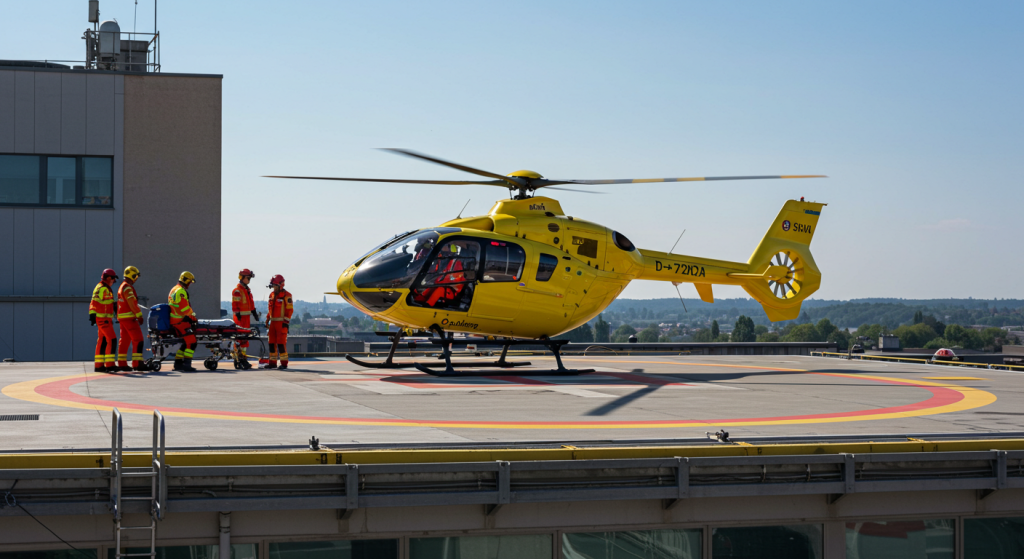
Helicopter Ambulance
- Ideal for short distances.
- Widespread in the urban and rural areas.
- Ideal in the case of trauma, air evacuation, or road accidents.
Fixed-Wing Air Ambulance
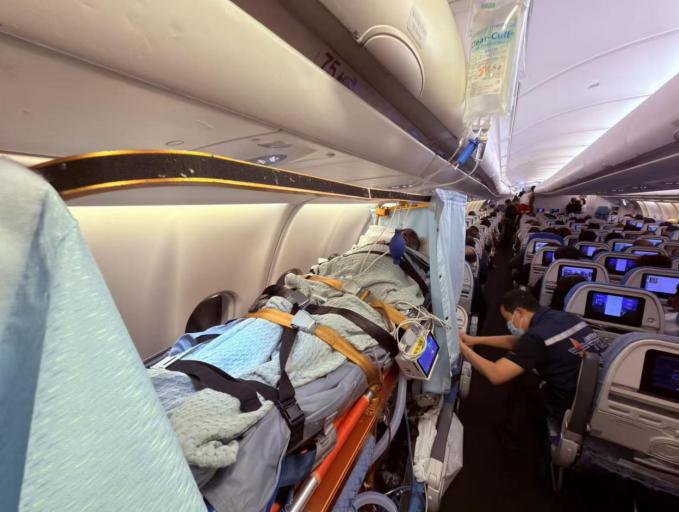
- Applied in the international and long-distance transfer of patients.
- Equipped like a flying ICU.
- Appropriate for medical tourism, repatriation, and organ transportation.
Who Needs an Air Ambulance?
Air ambulance services do not have to be used in extreme cases. They are often used for:
- Patients with critical care who are unable to travel on a commercial basis.
- Special Incubator neonatal and pediatric transfers.
- Older patients who need round-the-clock care.
- There are organ transplant cases, where time is time.
- Patients who are transferred to foreign countries to get treatment.
To the family that is organizing such services, agents such as TKP Assistance make it easier by providing full coordination.
Advantages of Air Ambulance Services
The benefits of air ambulance are enormous, particularly in such cases that involve the lives of time and health. Air ambulances are fast and, unlike ground ambulances, are frequently hindered by distance or traffic jams. This velocity can save or cost a life, especially during a traumatized or critical care case.
- The other important advantage is access. Air ambulances can access remote villages, mountainous regions, or areas affected by disasters because roads have been blocked or become unsafe. They serve as a savior to the individuals who would have been waiting hours to receive medical assistance.
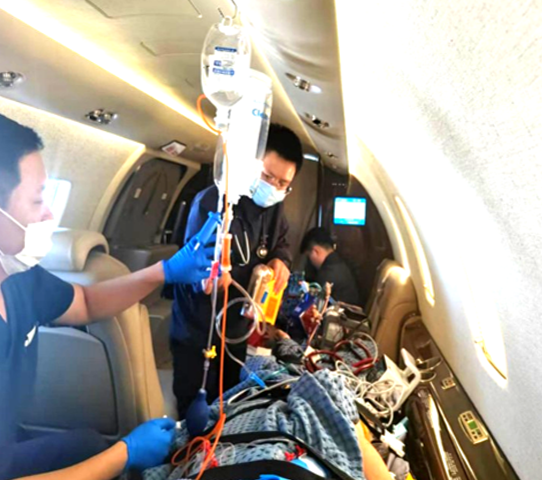
- In-flight patients are provided with a high level of care. These jets are stocked as flying ICUs, including ventilators, defibrillators, monitors, and emergency drugs. The journey has a team of doctors, paramedics, and flight nurses who provide continuous treatment.
- International reach is also available through the air ambulances. It is possible to transfer patients to other countries to conduct specialized surgeries, organ transplants, or other sophisticated medical procedures, so healthcare really is global.
- Lastly, these services are based on safety. Every transfer is safe and sound, given the stricter aviation standards and medical control. These advantages combined demonstrate why air ambulances can be regarded as a fundamental component of the modern emergency medical care on the global level.
International Medical Tourism and International Patient Transfers
These days, a large number of patients fly out of the country to seek superior surgeries or treatments. This is achieved through the services of air ambulances, which provide:
- Air ambulance repatriation.
- Medical tourism transfers.
- Delivery of organs to emergency cases of transplants.
Conclusion
So, what is air ambulance? It is not just a flying ship. It is a life-saving connection between emergency care and hospitals, allowing patients to receive the necessary treatment in time when each second counts. With helicopter ambulances working in urban/city rescues and international fixed-wing flights transporting patients across continents, air ambulances are a highly important healthcare pillar. In case you or someone close to you requires safe and reliable medical transportation, you can call on trusted providers such as TKP Assistance.
Submit Your Request
Recent Posts

Tags
- Air Ambulance
- Bedside To Bedside
- Cross Border Aid
- Emergency Evacuation
- Global Medical Rescue
- How can I ensure the patient's stability while in the air?
- How do I request an air medical transport?
- How is it different from an air ambulance
- how to activate emergency aircraft service
- how to request an air ambulance
- Is air medical transport safe
- Is international transport possible
- Medical Rescue
- Medical Transport
- Patient Repatriation
- Remote Rescue
- Seamless Coordination
- Telemedicine Support
- Tourists And Expats Medical Escort
- What are the benefits of a cross-border medical transfer
- What are the different types of transfers
- What are typical use cases
- What documents do I need to prepare for a transfer?
- What does high-speed rail patient transfer stands for
- What is air ambulance
- What is air medical transport?
- What is cross-border medical transfer
- What is emergency aircraft
- what is high-speed rail patient transfer
- What is medical charter flight
- what is neonatal ICU transfer
- What is patient air transfer
- What medical equipment is available on board the aircraft
- What situations shouldn't use air medical transport?
- What types of air ambulance are there?
- What types of air ambulance exist
- What's the difference between international and domestic transfers?
- what’s the difference between air medical transport and regular ambulance?
- When is emergency air transport necessary
- Which patients require air medical transport?
- who is included in the medical team
- who needs an air ambulance