


What is Cross-Border Medical Transfer | Global Patient Evacuation


Cross-Border Medical Transfer: Meaning, Process, and Global Benefits
- What is cross-border medical transfer? Health care has broken geographical borders in a world that is becoming globalized. In situations where an emergency arises long distance away the home, or the emergency requires specialized medical attention in a foreign country, cross-border medical transfer is the life-saving link. However, what is the cross-border medical transfer, and how does it work?
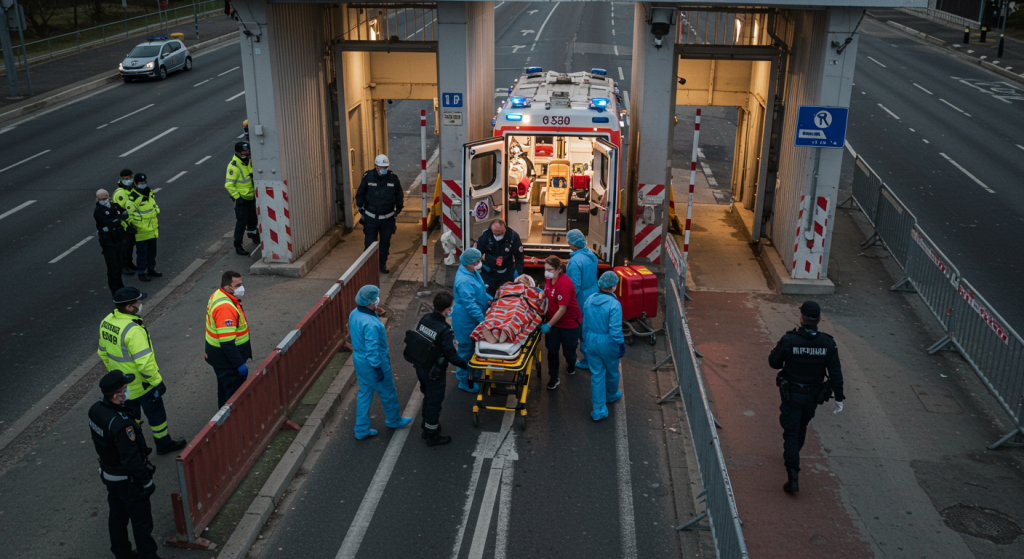
- Leave aside complex terminologies, cross-border medical transfer is a safe, regulated, and medically supervised transfer of a patient across international boundaries. This procedure guarantees that patients get round-the-clock medical attention at one hospital to the other – often utilizing air ambulances, ground ambulances, and medical escort teams.
Knowledge of the Concept of Cross-Border Medical Transfer
In its most basic form, a cross-border medical transfer is a subset of international healthcare mobility – the ability of patients to receive treatment outside their local centers. It covers inter-hospital transfers and emergency evacuations, as well as scheduled repatriations. Aviation medical clearance, border control documentation, and international healthcare compliance are the guiding processes. Every transfer entails a multidisciplinary network of coordination and consists of doctors, flight paramedics, and logistics experts, who must ensure that the patient is stable throughout the transfer. This system incorporates technically:
- Air and Ground Coordination: Co-ordination of the air ambulance flight with the ground ambulance at the point of departure and arrival.
- Medical Clearance Procedures: Authorizations of aviation and health authorities to confirm that the flight is designed in accordance with international standards of safety.
- Continuity of Care: Doctor-to-doctor communication between receiving and sending hospitals is real-time.
Such a degree of cooperation can serve to sustain continuity of medical care even beyond countries and time zones.
The Process of Cross-Border Medical Transfer
Medical evacuation in the world consists of several steps aimed at the safety of the patient and adherence to the regulations.
- Initial Medical Assessment
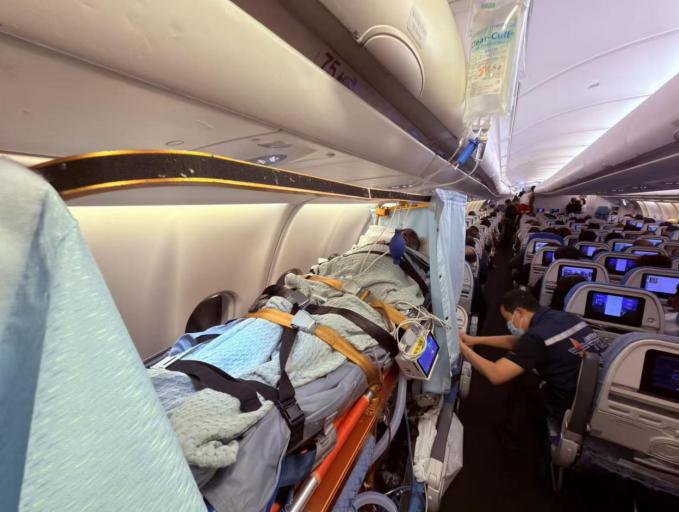
The medical liaison unit assesses the patient and identifies the mode of transportation that would be safest, which may be air ambulance, commercial stretcher, or medical escort on a normal flight.
- Hospital-to-Hospital Co-Ordination
International coordination of the hospital starts once the mode is approved. Clinical documentation, medical reports, and continuity plans of treatment are exchanged between the sending and receiving facilities.
- Aviation and Border Approvals
Then we have the specialists dealing with aviation medical clearance, customs paperwork, and international insurance arrangements. These measures will provide legal conformity to the WHO international health standards and international healthcare legislation.
- Onboard Medical Supervision
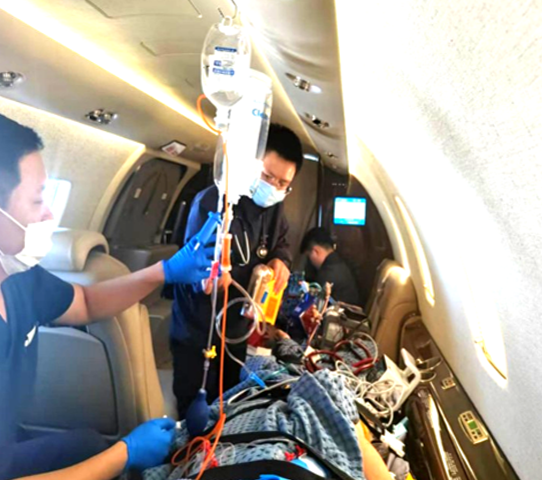
A special medical team, such as an ICU doctor, nurse, or paramedic, observes the patient during transit. Flights carry oxygen, ventilators, and real-time consultation telemedicine equipment.
- Safe Handover
On arrival, there is a doctor-to-doctor handover that provides a smooth transition. The hospital where the patient is receiving also proceeds with the treatment without any delays, ensuring continuity of care in foreign countries. This standardized practice emphasizes the international health care link and strengthens international patient rights.
Medical Transfers Across Borders: Benefits
The healthcare requirements of modernity require adaptability and availability. It is not only in cases of emergency but also essential that patients who require specialized treatment, rehabilitation, or high-tech services that they cannot access in their home country. Here are some key benefits:
- Availability of Specialised Facilities – Patients are able to obtain advanced treatment in such areas as cardiac surgery, oncology, and transplants in the internationally accredited hospitals.
- More Rapid Response to Emergencies – Urgent international dispatch is achieved through air ambulance, where seconds count.
- Continuity of Medical Care – Cross-border transfers are used in the transition between local stabilization and long-term recovery abroad.
- Fewer Complications – Timely transfers to more adequately equipped centers reduce the risks of health in critical stages.
- International Medical Connectedness – It enables a global health network, which facilitates global collaboration.
Technicalities and Services of Inter-Country Transfers
And behind every successful transfer is a technical system that is constructed on safety, regulation, and coordination.
Medical Clearance Certification
Departures are preceded by a fit-to-fly certificate, which is signed by the physician of patient and examined by aviation physicians. It is aimed at defining whether the air pressure, the altitude, and the duration of the travel are safe for the person.
Onboard ICU-Level Equipment
The air ambulances of today are mini intensive care units (ICUs) – fitted with:
- Ventilators and defibrillators.
- Infusion pumps
- ECG monitoring systems
- Portable oxygen pumps.
- Cardiac life support units
Aviation and Border Compliance
All relocation of aviation is in accordance with the international aviation safety standards, such as ICAO and EASA standards. Also, diplomatic channels or special global medical transport procedures are involved in matters of customs and immigration clearance.
Documentation, Data Exchange
The digital platforms guarantee the exchange of clinical documents in real time between hospitals and maintain patient data confidentiality in accordance with GDPR and WHO health frameworks.
Cost Coordination and Insurance
International medical transfers usually include international insurance services, which include the transportation costs, plus medical escort, and hospital admission.
TKP: Your International Leader in Medical Transfers and Evacuation
TKP Medical Assistance is a reputable provider of cross-border medical transfer and international patient evacuation, offering world-leading solutions to people who are in need of urgent medical care in other countries.
- TKP has established a good reputation for providing safe, efficient, and compassionate transport services to patients since we started in 2001. Having completed more than 10,000 successful missions around the globe, we are proud to have served patients with special needs, such as transport services to the ICU level, ECMO services, neonatal transfers, and VIP medical evacuation.
- Headquartered in Shenzhen, TKP has six regional offices in China and has an extensive network of international healthcare partners in Hong Kong, Southeast Asia, and Europe. The team of our 24/7 global operations incorporates the coordination of real-time activities, medical escort provision, and continuity of care in every journey.
- In TKP, aviation medical competence, regulatory adherence, and patient-first values are incorporated to provide quality cross-border medical support. Air ambulance, commercial stretcher, high-speed rail, whatever our methods of patient transfer, our mission stays the same–to reunite patients with the appropriate care, wherever they are in the world.
Conclusion
What is cross-border medical transfer? In the present-day globalized health care environment, the concept of what constitutes a cross-border medical transfer is crucial to both the patient and the medical practitioner. It is not just a logistical procedure, but it is a lifeline linking the patients to the world, technology, and care. Where time is of the essence, groups such as TKP Assistance have ensured that geography is not a constraint among patients, since health knows no boundaries.
Submit Your Request
Recent Posts

Tags
- Air Ambulance
- Bedside To Bedside
- Cross Border Aid
- Emergency Evacuation
- Global Medical Rescue
- How can I ensure the patient's stability while in the air?
- How do I request an air medical transport?
- How is it different from an air ambulance
- how to activate emergency aircraft service
- how to request an air ambulance
- Is air medical transport safe
- Is international transport possible
- Medical Rescue
- Medical Transport
- Patient Repatriation
- Remote Rescue
- Seamless Coordination
- Telemedicine Support
- Tourists And Expats Medical Escort
- What are the benefits of a cross-border medical transfer
- What are the different types of transfers
- What are typical use cases
- What documents do I need to prepare for a transfer?
- What does high-speed rail patient transfer stands for
- What is air ambulance
- What is air medical transport?
- What is cross-border medical transfer
- What is emergency aircraft
- what is high-speed rail patient transfer
- What is medical charter flight
- what is neonatal ICU transfer
- What is patient air transfer
- What medical equipment is available on board the aircraft
- What situations shouldn't use air medical transport?
- What types of air ambulance are there?
- What types of air ambulance exist
- What's the difference between international and domestic transfers?
- what’s the difference between air medical transport and regular ambulance?
- When is emergency air transport necessary
- Which patients require air medical transport?
- who is included in the medical team
- who needs an air ambulance