


What is High-Speed Rail Patient Transfer | Safe & Affordable


What is High-Speed Rail Patient Transfer?
Medical transportation nowadays is taking a new shape instead of the usual ambulances and air evacuation systems. High-speed rail patient transfer is one of the most outstanding innovations and is a high-tech service that integrates healthcare accuracy and railway technology.
- It means a safe, efficient, and comfortable transfer of patients in high-speed trains, equipped with medical equipment, on-board care departments, and professional escort crews. The speed of these trains is phenomenal, usually 250-350 km/h, which makes it possible to transfer medical patients in just a few hours throughout a country or between cities over a distance.
- This is becoming a common solution to non-emergency transfers, post-stabilization transfers, and inter-hospital transfers, particularly in cases where air ambulances are expensive, weather-limited, or unavailable.
Definition and Essential Idea of High-Speed Rail Patient Transfer.
What is high-speed rail patient transfer? High-speed rail patient transfer is a medical transport system on high-speed rail that involves hospital-to-hospital transfers by high-speed trains. They include special compartments with medical-grade beds, vital sign monitors, oxygen supply systems, and telemedicine connections (unlike the standard passenger rail).
- It acts as an intermediary between road ambulance and air ambulance, offering cost-effective, eco-friendly, and comfortable medical evacuation of stable or semi-critical patients. In certain countries such as China, Japan, and certain parts of Europe, such services are already incorporated in national healthcare logistical systems.
- The use of this concept of rail ambulance will result in constant monitoring of patients on the move, and the medical escort services will be available in the same way. These can be paramedics, nurses, or even critical care physicians, depending on the condition of the patient.
Healthcare Logistics: The Medical Context of Why it Matters
In the health care sector, patient transfer may be the difference between recovery and relapse. Conventional road ambulances are affordable, but they are not faster on long routes. On the other hand, air ambulances are fast, costly, and susceptible to weather conditions.
The high-speed rail medical bridges this gap- providing speed, stability, and cost efficiency. In case of intercity medical evacuation or cross-border, it provides low levels of travel stress, constant care, and provision of high-level facilities on board. The high-speed trains of today have a speed that can reach a range of 500-1000 km in less than 3-5 hours, thus suitable for long-distance transfers within nations such as China, France, Germany, and Spain, where the rail systems are well developed.
Some Key Features Include:
- ICU-like patient care areas.
- At any given time, continuous monitoring systems.
- Communicational connections to mortuaries.
- Onboard medics and nurses.
- Shock-absorption beds that provide comfort to the patient.

The Operation of High-Speed Rail Patient Transfer
It consists of several steps to make sure that the process is safe, coordinated, and that medical care is provided fluently:
- Pre-Transfer Assessment
The patient is assessed by the medical team to check the level of stability to ascertain whether rail transfer is appropriate. This is the step that involves evaluation of vital signs, necessary equipment, and medication requirements.
- Coordination with Hospitals
Scheduling is synchronized between the sending hospital, receiving hospital, and rail medical service provider to provide continuity of the medical services. This inter-agency management ensures that there is a seamless handover on both sides.
- Train Preparation
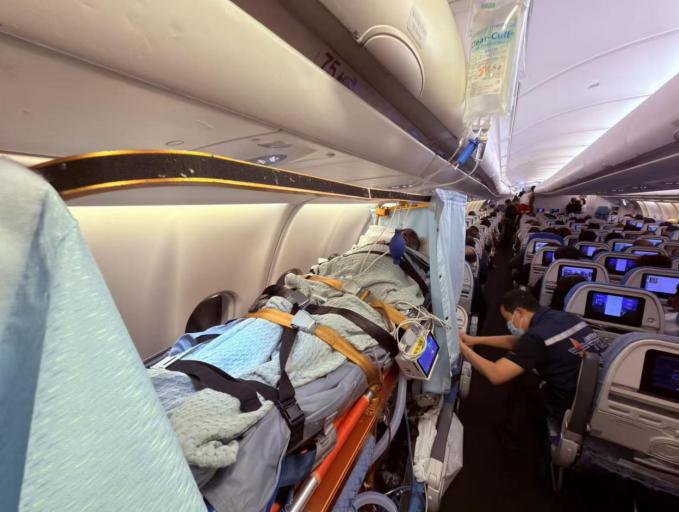
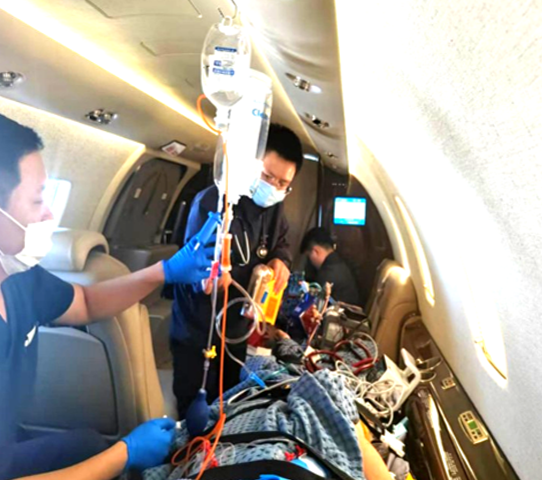
A special compartment is furnished with medical equipment, oxygen tanks, intravenous medication pumps, emergency medicines, and telemedicine screens to contact a specialist remotely.
- Onboard Transfer
On board medical staff promote real-time monitoring in transit, which ensures critical care in transit. They monitor vital parameters with vital monitors and telecommunication channels to be able to control any unexpected alterations in the state of the patient.
- Arrival and Handover
On arrival, the patient successfully gets transferred through ambulance or stretcher to the target hospital, which completes the hospital-to-hospital transfer by rail.
Medical Transfer: Purpose and Applications of High-Speed Rail
Rail patient transfer is aimed at making clinical mobility quicker, safer, and more inclusive. It has many medical and logistical purposes, including:
- Offering substitutes to air ambulance services where flight is not possible.
- Decreasing recovery transfer time, better patient outcome.
- Ensuring medical evacuation over long distances in a cost-effective manner.
- Increase emergency access to rural or landlocked areas.
- Increasing the comfort of stable patients on the road.
Technical Insight: Design and Infrastructure
The technical support of this system is the train’s specialized infrastructure. Medical compartments are also designed to be high-speed, with stability and reduced noise and vibrations. They feature:
- Medical Compartment Design: This comes with the ICU-like apparatus and plenty of room to allow the doctors and attendants to work.
- Onboard ICU Preparation: Ventilation, defibrillators, and continuous oxygen, which can support the patient.
- Digital Communication: It provides the opportunity to receive medical updates and consultations with specialists in real time.
- Power Backup Systems: Caution: the continued operation of life-support equipment.
- Smart Railway Systems: Incorporate GPS positioning, safety checking, and auto-notifications.
This medical transport technological efficiency and rail innovation promise patient safety and clinical reliability along the journey.
Why Choose TKP Assistance?
Are you in need of a reliable company to complete international medical transfers with? TKP Assistance is the place to be.
- Having 20+ years of experience and 10000 successful missions, TKP specializes in the area of air ambulance, commercial stretcher, and currently high-speed rail patient transfers.
- Our network provides secure, harmonized, and consistent transfers – both locally and abroad – with professional medical escorts, ICU-trained personnel, and state-of-the-art equipment.
Conclusion
What is high-speed rail patient transfer? It is the future of healthcare mobility – combining medical accuracy, transportation efficiency, and environmentally-friendly innovation. This system is transforming the way patients access care within cities and across borders by integrating speed, safety, and sustainability. High-speed rail medical transfers will keep on revolutionizing the logistics of healthcare in the world as a whole, as rail networks continue to expand and technology continues to improve, making sure that no patient is left behind to get to destinations in safe, comfortable, and quick ways. Visit TKP Assistance.
Submit Your Request
Recent Posts
Tags
- Air Ambulance
- Bedside To Bedside
- Cross Border Aid
- Emergency Evacuation
- Global Medical Rescue
- How can I ensure the patient's stability while in the air?
- How do I request an air medical transport?
- How is it different from an air ambulance
- how to activate emergency aircraft service
- how to request an air ambulance
- Is air medical transport safe
- Is international transport possible
- Medical Rescue
- Medical Transport
- Patient Repatriation
- Remote Rescue
- Seamless Coordination
- Telemedicine Support
- Tourists And Expats Medical Escort
- What are the benefits of a cross-border medical transfer
- What are the different types of transfers
- What are typical use cases
- What documents do I need to prepare for a transfer?
- What does high-speed rail patient transfer stands for
- What is air ambulance
- What is air medical transport?
- What is cross-border medical transfer
- What is emergency aircraft
- what is high-speed rail patient transfer
- What is medical charter flight
- what is neonatal ICU transfer
- What is patient air transfer
- What medical equipment is available on board the aircraft
- What situations shouldn't use air medical transport?
- What types of air ambulance are there?
- What types of air ambulance exist
- What's the difference between international and domestic transfers?
- what’s the difference between air medical transport and regular ambulance?
- When is emergency air transport necessary
- Which patients require air medical transport?
- who is included in the medical team
- who needs an air ambulance