


What is Patient Air Transfer and How Does it Work? Process


What is Patient Air Transfer?
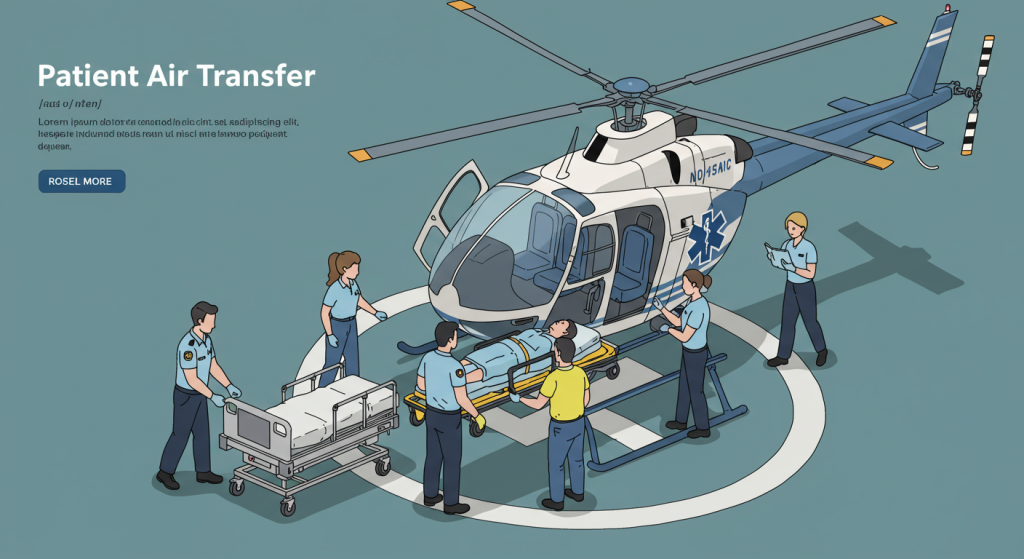
- What is patient air transfer? When time is of the essence and each second counts, patient air transfer is a lifeline; a lifeline to life and advanced care. But what exactly does it mean? In simple terms, patient air transfer is the action of transporting patients by air, and it is normally carried out using air ambulances that have ICU standards of medical attention and a well-trained escort crew.
- In this service, patients in critical conditions or those that require specialized care are transported to their destinations safely and within the shortest time, even when in other countries and locations that are other locations.
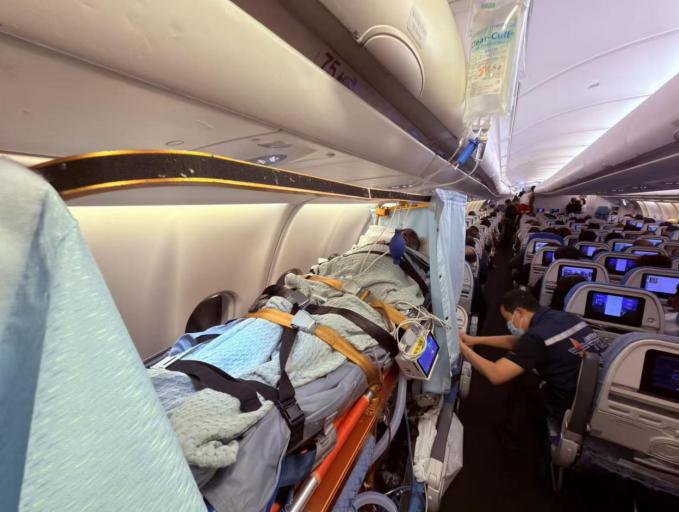
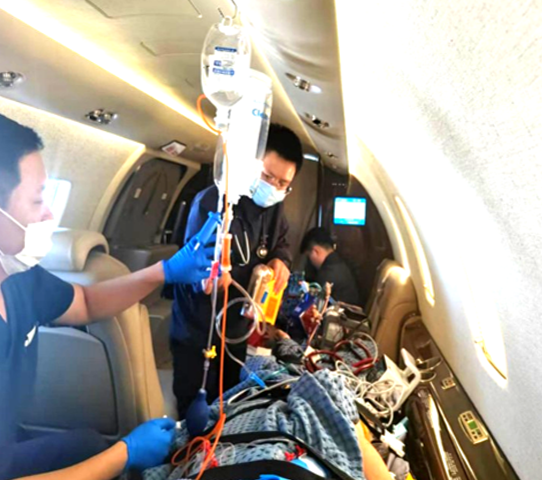
- The term patient air transfer is used to refer to a hospital-to-hospital airlift service, where a patient is airlifted to a different medical facility in an air ambulance. These are not generic planes but rather customized medical platforms that are fitted with ventilators, monitors, oxygen, and even onboard ICU systems. The medical team is accompanied by the paramedics, doctors, nurses, or medical escort staff who provide 24-hour the clock care and life support.
- To illustrate the point, TKP Medical Assistance, a trusted cross-border air evacuation service provider, provides bed-to-bed medical air transport within China, Hong Kong, and the Greater Bay Area to ensure that patients receive the right care at the right time.
How Does Patient Air Transfer Work?
The understanding of the process of air transfer to patients helps in the evaluation of the coordination and technicality of such missions. We would now only break it down into steps:
- Premedical Examination
Before take-off, a pre-flight medical check-up is conducted. His or her health reports, oxygen requirements, and air travel stability are investigated by a flight physician or medical coordinator. This offers aviation medical clearance that ensures that the patient is fit to fly.
- Flight and Logistics
It has a coordination team that handles all the arrangements of the aircraft, ground ambulances, and customs and immigration documents. This is known as the bedside-to-bedside transfer, i.e., the patient is carried out of his or her bed within the hospital to the targeted hospital without leaving.
- In-Flight Nursing
There is a paramedic and nurse escort crew that constantly monitors vital signs and provides life support and comfort-oriented transportation during the flight. Existing air ambulances are furnished with ICU airplanes that are ventilated, defibrillated, suctioned, and ALS (Advanced Life Support) outfitted.
- Post-Flight Transfer
This is substituted by ground handling services once it lands, and the patient is then ferried into the receiving hospital. This continuity and risk minimization are achieved with this seamless transition.
Who Needs to Receive Patient Air Transfer?
It does not require air transfer in all cases; it is typically employed in cases where speed, intensity, or special care is paramount for a patient. Common situations include:
- Emergent cases of injury or trauma need high-level care.
- Long-distance ICU transfer of patients.
- Stroke or heart attack victims are patients who need special facilities.
- Patients who demand to be repatriated to their native country.
- Time-sensitive organ transplant patients who require relocation.
- Disaster zone and remote medical evacuations.
Every minute that involves the transfer of a patient to a local hospital or his or her international repatriation depends on air medical evacuation.
Benefits of Patient Air Transfer in an Emergency
Speed is not the sole issue in patient air transfer, but it is the safety, accuracy, and compassion. We might have a look at the high profits:
- Short time response and Shorter Shipping Time.
- Air ambulances can fly over long distances 5-10 times faster than a vehicle.
- Continuity of Critical Care
- Onboard ICU devices place patients on life support.
- Access to Specialized Treatment Centers.
Moves patients to higher hospitals that are not available in the localities promptly.
Comfort-Focused Transport
- Designed to eliminate the strain of traveling and the agony of traveling.
- 24/7 Emergency Coordination
- Medical assistance networks are everywhere on the planet and provide 24/7 support.
- Across the border, Medical Evacuation.
- Important for international travelers or expats who suffer a medical emergency in a foreign nation.
According to the Aerospace Medical Association, air transfers can be quite useful in saving lives during emergency medical evacuation, especially in cases of trauma and heart problems (source).
Who are the Providers of the Air Transfer Services to Patients?
A typical air transfer operation includes several professionals, one of them being:
- Medical Coordinator: Designs and reviews medical preparedness.
- Flight Doctor: Manages on-board support.
- Flight Nurses/Paramedics: Responsible for monitoring and life support.
- Team in Logistics: Handles flight permits and coordination, and customs at the airport.
- Ground Ambulance Crew: This gives delivery and pick up at the bedside.
This kind of multi-disciplinary teamwork will ensure ease and safety of air evacuation.
Is Patient Air Transfer Safe?
- Yes, when performed by certified providers, patient air transfer is highly safe. All the aircraft and crew are subjected to aviation medical standards and the safety protocols of the ICU. There is constant supervision, real-time health monitoring, and medical escort provision, which ensures that patients are under professional supervision.
- Air ambulance safety history is evidenced by a paper by the European Aeromedical Institute (EURAMI) that indicated that of the 100-plus air ambulance services, the air ambulance transfer had occurred without any complications in over 98 percent.
Conclusion
What is patient air transfer? Patient air transfer can save the patient between crises and care in case of emergency when on-ground transportation is inappropriate due to its slow speed or hazards. It is a very technical process, medically safe, and emotionally supportive, and puts the best interest of the patient first. By utilizing services like TKP Medical Assistance, families will be comfortable knowing their loved ones are receiving safe, efficient, and compassionate care wherever they go in the global scene.
Submit Your Request
Recent Posts

Tags
- Air Ambulance
- Bedside To Bedside
- Cross Border Aid
- Emergency Evacuation
- Global Medical Rescue
- How can I ensure the patient's stability while in the air?
- How do I request an air medical transport?
- How is it different from an air ambulance
- how to activate emergency aircraft service
- how to request an air ambulance
- Is air medical transport safe
- Is international transport possible
- Medical Rescue
- Medical Transport
- Patient Repatriation
- Remote Rescue
- Seamless Coordination
- Telemedicine Support
- Tourists And Expats Medical Escort
- What are the benefits of a cross-border medical transfer
- What are the different types of transfers
- What are typical use cases
- What documents do I need to prepare for a transfer?
- What does high-speed rail patient transfer stands for
- What is air ambulance
- What is air medical transport?
- What is cross-border medical transfer
- What is emergency aircraft
- what is high-speed rail patient transfer
- What is medical charter flight
- what is neonatal ICU transfer
- What is patient air transfer
- What medical equipment is available on board the aircraft
- What situations shouldn't use air medical transport?
- What types of air ambulance are there?
- What types of air ambulance exist
- What's the difference between international and domestic transfers?
- what’s the difference between air medical transport and regular ambulance?
- When is emergency air transport necessary
- Which patients require air medical transport?
- who is included in the medical team
- who needs an air ambulance