


What Types of Air Ambulance are There? | Complete Guide


Which are the Air Ambulances?
What types of air ambulance are there? In the case of a medical emergency, every second counts. Local transfers require ground ambulances, which are necessary due to the unavailability of roads to deliver the urgency of care. Air ambulance services come in at this stage and offer long-distance patient transportation, rapid and specialized transportation. Nonetheless, a lot of people pose a question: what are the types of air ambulance? Being aware of the types, classifications, and technical differences of air ambulances can make the correct choice in a situation of critical importance for patients, family members, and even medical workers.
Categories of Air Ambulance Explained
- An air ambulance is the name given to an aircraft that carries special equipment to transport patients. These are either rotary wing air ambulances (helicopters) or fixed wing air ambulances (jets or turboprops). Among these types of air ambulances, there are emergency air ambulances, non-emergency air ambulances, and international types of air ambulances, which are used to transfer patients across national borders.
- TKP Assistance is a company that has a specialty in cross-border medical evacuation, providing solutions of bed-to-bed patient transport that encompass air ambulance aircraft, commercial stretcher approval, as well as combined ground ambulance coverage.
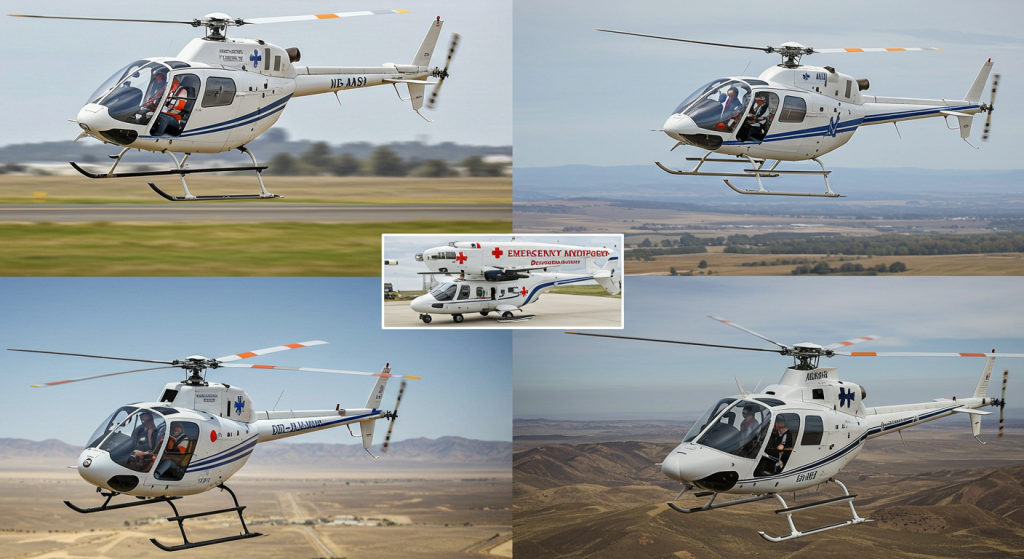
Rotary-Wing Helicopter Air Ambulance
The helicopter ambulance, also referred to as HEMS (Helicopter Emergency Medical Services), is one of the most familiar forms of air ambulance services.
Key Features:
- Between 150-200 miles, short to medium range.
- Trauma patients require Rapid response in case of accidents, natural disasters, or critical emergencies.
- The capability to arrive at the accident areas, highways, or rural locations where the runway is not available.
- Outfitted in the air as a mobile ICU with ventilators, oxygen, defibrillators, and paramedic units.
Use Cases:
- After an accident, airlift services are provided to trauma patients.
- When speed is an issue, an organ transplant air ambulance service is used.
- Seniors in remote areas that do not have hospitals nearby are air ambulanced.
Nevertheless, helicopter air ambulances cannot operate in adverse weather conditions, in remote areas, or in sensitive areas in the city.
Southwest Airlines (Jet Aircraft)
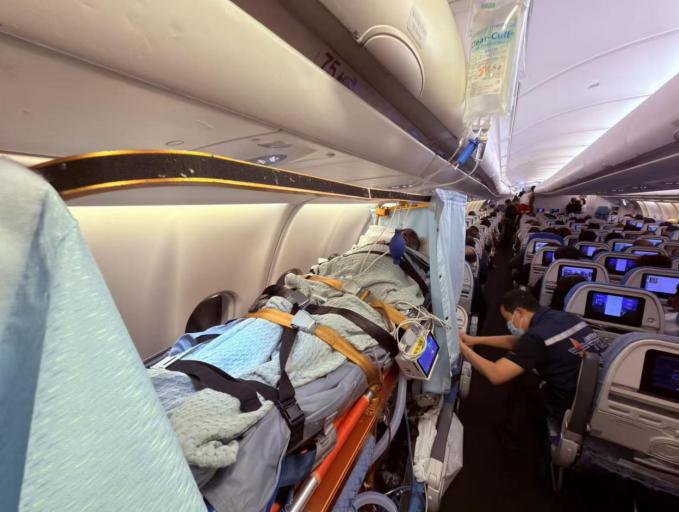
The other significant category of different types of air ambulance is the fixed-wing category, commonly referred to as jet air ambulance services.
Key Features:
- Both domestic and international flights are Suitable for long-distance medical flight solutions.
- Departs and arrives by air, and necessitates a ground ambulance transfer.
- High-altitude and turbulence-free medical flights are made possible through pressurized cabin flights.
- Equipped with high-tech critical care air transportation units, neonatal incubators, and ventilator support.
Use Cases:
- Patient evacuation abroad to get international treatment.
- Patient ambulance services worldwide, for patients requiring specialized attention in other countries.
- Medical flights are used in cases where the distance is above the road limit in order to get the organs transplanted.
The transport of patients worldwide by fixed-wing aircraft is vital to prevent discontinuity of care, and the medical escort team is also on board.
Turboprop Air Ambulance
Turboprop planes, a subtype of fixed-wing air ambulance aircraft, are a compromise between cost and availability.
Key Features:
- Works on shorter runways on which jets are unable to land.
- Being cheaper than jet air ambulances, they are a cheaper kind of air ambulance that can be used to transport people within a region.
- Appropriate for medium-range medical flights.
Use Cases:
- In countries with smaller airports, domestic air ambulance services are offered.
- The flights by turboprop can form a cost-efficient option in the insurance coverage of air ambulance types.
- The turboprops are the compromise choice between patient transfer by helicopter versus jet.
Special Air Ambulance Set-ups
In addition to helicopters, jets, and turboprops, other classifications of air ambulances are based on the medical needs:
- Medical aircraft with stretchers in commercial airlines (airline-approved).
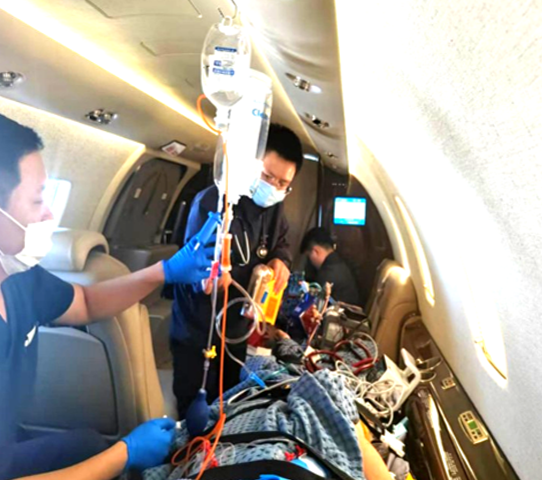
- Portable ICU airborne to serve patients who are to be provided with total intensive care.
- Incubator-equipped, pediatric-staffed air ambulance services of the neonatal and pediatric type.
- Critical care patients who need ventilators, cardiac monitoring, and in-flight invasive procedures are flown by air ambulance.
At TKP Assistance, we also combine commercial stretcher transport, full medical escort using air ambulance, and even high-speed rail with ground ambulance so that patients travel between destinations without any inconveniences.
Types of Emergency and Non-Emergency Air Ambulances
Not every type of air ambulance is similar.
- Types of emergency air ambulance: These are used in cases of life threat, i.e., flight to save a trauma victim, cardiac arrest, or organ transplant.
- Non-emergency air ambulance services: Planned air ambulance for patients requiring specialized care, further air ambulance for seniors, or a long-range medical evacuation aircraft for stable patients.
Such a distinction is important since there could be variations in insurance coverage of various air ambulances based on urgency and medical necessity.
The Importance of Knowing the Types of Air Ambulances
- Families and healthcare professionals can make informed decisions by understanding the kind of air ambulance services that are on offer. It can be a helicopter emergency medical service to provide roadside trauma, a jet air ambulance to move someone internationally, or a turboprop to travel through the region, but either way, all types are important in the chain of care.
- The classification of air ambulance does not necessarily concern the aircraft; it concerns the level of medical assistance, distance, cost implications, and requirements of patients.
Conclusion
Then what types of air ambulance are there? This can be solved with a range of helicopter ambulances (rotary-wing) so that they can respond quickly to emergencies and more distant routes, and aircraft-based solutions (jets and turboprops) with fixed wings. Or even neonatal, elderly, or critically ill patients. With providers such as TKP Assistance, patients may be sure that they are getting safe, efficient, and compassionate solutions of air medical transport all over the globe.
Submit Your Request
Recent Posts

Tags
- Air Ambulance
- Bedside To Bedside
- Cross Border Aid
- Emergency Evacuation
- Global Medical Rescue
- How can I ensure the patient's stability while in the air?
- How do I request an air medical transport?
- How is it different from an air ambulance
- how to activate emergency aircraft service
- how to request an air ambulance
- Is air medical transport safe
- Is international transport possible
- Medical Rescue
- Medical Transport
- Patient Repatriation
- Remote Rescue
- Seamless Coordination
- Telemedicine Support
- Tourists And Expats Medical Escort
- What are the benefits of a cross-border medical transfer
- What are the different types of transfers
- What are typical use cases
- What documents do I need to prepare for a transfer?
- What does high-speed rail patient transfer stands for
- What is air ambulance
- What is air medical transport?
- What is cross-border medical transfer
- What is emergency aircraft
- what is high-speed rail patient transfer
- What is medical charter flight
- what is neonatal ICU transfer
- What is patient air transfer
- What medical equipment is available on board the aircraft
- What situations shouldn't use air medical transport?
- What types of air ambulance are there?
- What types of air ambulance exist
- What's the difference between international and domestic transfers?
- what’s the difference between air medical transport and regular ambulance?
- When is emergency air transport necessary
- Which patients require air medical transport?
- who is included in the medical team
- who needs an air ambulance