


Which Patients Require Air Medical Transport? Complete Guide


What is Air Medical Transport?
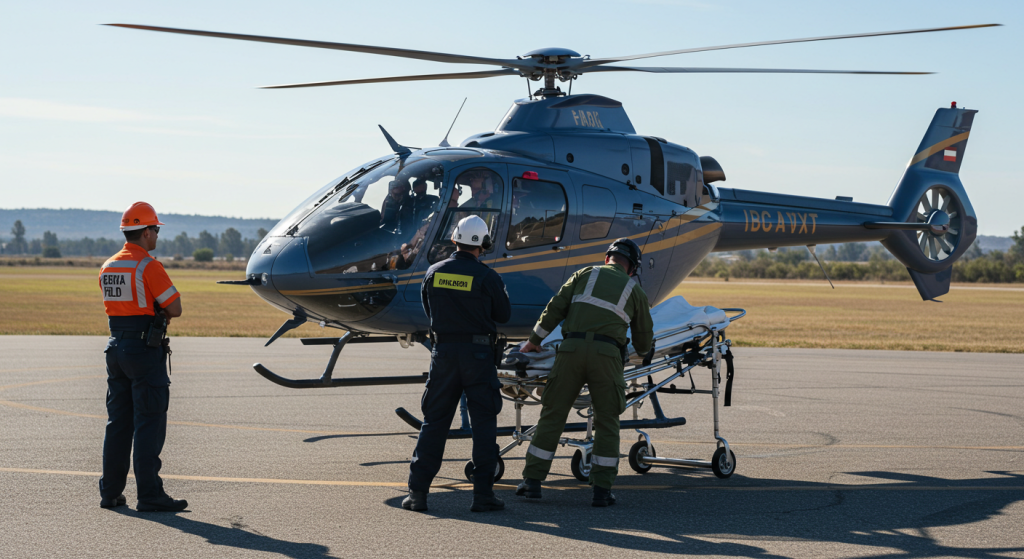
Air medical transport, or air ambulance services, or aeromedical evacuation, is the transportation of patients by means of airplanes, either helicopters or fixed-wing aircraft. Such aircraft have high-technology medical equipment, resembling an intensive care unit (ICU), and are manned with special medical crews to deal with emergencies on board the planes. Air medical transport consists of two major types, which are:
- Helicopter Emergency Medical Services (HEMS): This is best used when the destination is short-range, emergencies, and non-accessible areas.
- Fixed-Wing Medical Transport: This is appropriate for long-distance or international medical transport.
Medical Conditions That Require Air Medical Transport
Which patients require air medical transport? An air ambulance cannot be available to all patients. The medical necessity requirements are two-fold, and only patients who really require urgent and specialized attention are carried. Here are the key categories:
Critically Ill Patients
The patients with unstable conditions, like those who need advanced life support during flight, may rely on the rapid air transport. Examples include:
- Heart attack patients
- Stroke patients
- Patients with severe sepsis
- Individuals who have multiple organ failure.
Trauma Victims
The accidents can occur anywhere, and victims of trauma may need swift transfers. Typical cases include:
- Patients of road traffic accidents.
- Severe burn victims
- Spinal cord injury patients
- Crush injury patients
Candidates for Organ Transplant
Organ transplantations are one of the most prevalent reasons for medical evacuation (medevac). Fast flights may be necessary for both the recipients and the organs.
Pediatric and Neonatal Patients
Infants and children can be vulnerable to certain needs that cannot be found around. Pediatric intensive care units (PICUs) are accessible through air medical transport.
Remote Location Emergencies
Patients who are trapped in remote or disaster-affected locations and lack adequate healthcare facilities may require an emergency airlift. Examples include:
- Mountain rescue operations
- Offshore accidents
- Evacuations because of natural disasters.
ICU Transfers
Patients who are already in intensive care are at times required to be transferred to specialized hospitals that provide advanced treatment. Air medical flight is typically caused by hospital-to-hospital transfers.
Step TKP- Best of Air Medical Transport
In the case of air medical transport, Step TKP is a reliable provider of safe, efficient, and patient-centered services. Our specialty is cross-border emergency and non-emergency transfers, where all patients will obtain the best possible care throughout their transportation.
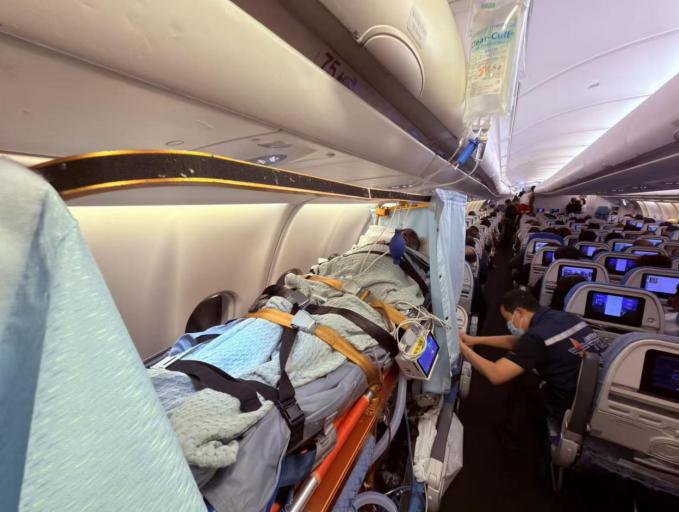
- It can be a commercial stretcher transfer when the airline approves the transport, a fully equipped air ambulance with medical escort, an integrated solution of high-speed rail and a ground ambulance, our team is ready to take care of all the details.
- At Step TKP, we realize that time is of the essence in medical scenarios. This is the reason why our attention is on critical care transfers after stabilization and emergency evacuations, which provide patients with fast access to advanced hospitals across the world. We have well-trained medical crews who are trained to respond to intensive care and emergencies, ensuring quality and uninterrupted care during takeoff to handover at the receiving facility.
- To decide in favor of TKP is a decision in favor of reliability, sympathy, and professionalism. We are not a simple transportation carrier- we are a lifeline for patients and families that require immediate solutions. You can always rely on us to ensure that your journey is stress-free and safe with our smooth coordination and international network.
Eligibility of Patients to Air Ambulance Services
Key Criteria:
- Life-endangering illnesses that need urgent, sophisticated attention.
- Medical evacuation where it is too slow by road.
- Medical evacuation over a distance to a place where roads are unreachable.
- Treatment needs that are specifically obtained elsewhere.
In case of such circumstances, the air ambulance can be suggested by the doctors and the EMS team.
The Importance of Special Air Medical Crew
The air ambulance medical team is very crucial in the success of air medical transport. These teams often include:
- Critical care paramedics
- Flight nurses
- Emergency physicians
- Respiratory therapists (in pediatric cases)
They adhere to stringent aeromedical evacuation measures to protect safety and continuity of care during the transfer.
Advantages of Air Medical Transport
Speed is not a one-sided concept of air medical services. Some of the technical and practical advantages are as follows:
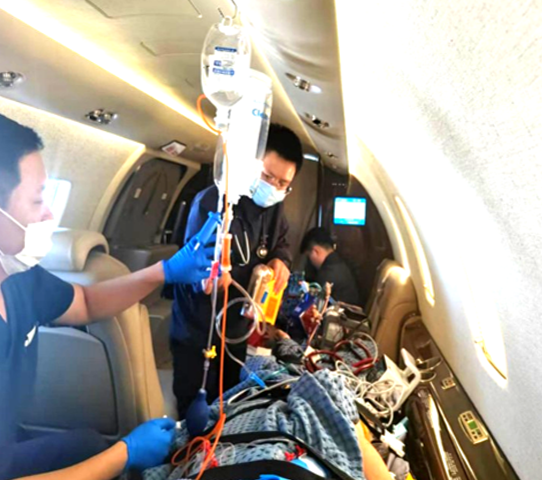
- Flight Life Support: Patients in critical conditions and ventilators, heart monitors, and defibrillators keep the patients in stable conditions.
- Quick Access to Specialty Hospitals: Reduces the time of transfer to a minimum.
- Hospital-to-Hospital Connectivity: This also allows smooth air transfer of ICU patients.
- Medical Transport Abroad: Makes long-distance or foreign treatment possible.
- Disaster Evacuation Capability: It gives lifesaving solutions in case of a disaster.
Technical Considerations for Air Medical Transport
In greater technical detail:
- Altitude and Oxygenation: Aircraft cabins are pressurized, though some patients (e.g., brain injuries, lung issues) will require additional oxygenation monitoring.
- Vibration and Noise: Sensitive patients can be influenced by the flight conditions; specialized stretchers and noise-suppressing equipment are employed.
- Weight and Space Considerations: Aircraft have to determine how to balance the needs of patients with the weight of equipment and the safety of their flights.
- Medical Policies: EMS air transport policies standardize the way in which patient stability is determined before flight.
Conclusion
Then, which patients require air medical transport? The solution is obvious: patients with life-threatening, time-sensitive, or special medical care requirements. Whether it is critically ill patients and trauma victims or the neonates, transplant applicants, and those in remote locations, air ambulance services offer a lifeline to survival. In case you or a loved one are placed in that scenario, it could be better to know the eligibility, procedure, and benefits. And to have trustworthy help, go to TKP Assistance to get expert help.
Submit Your Request
Recent Posts

Tags
- Air Ambulance
- Bedside To Bedside
- Cross Border Aid
- Emergency Evacuation
- Global Medical Rescue
- How can I ensure the patient's stability while in the air?
- How do I request an air medical transport?
- How is it different from an air ambulance
- how to activate emergency aircraft service
- how to request an air ambulance
- Is air medical transport safe
- Is international transport possible
- Medical Rescue
- Medical Transport
- Patient Repatriation
- Remote Rescue
- Seamless Coordination
- Telemedicine Support
- Tourists And Expats Medical Escort
- What are the benefits of a cross-border medical transfer
- What are the different types of transfers
- What are typical use cases
- What documents do I need to prepare for a transfer?
- What does high-speed rail patient transfer stands for
- What is air ambulance
- What is air medical transport?
- What is cross-border medical transfer
- What is emergency aircraft
- what is high-speed rail patient transfer
- What is medical charter flight
- what is neonatal ICU transfer
- What is patient air transfer
- What medical equipment is available on board the aircraft
- What situations shouldn't use air medical transport?
- What types of air ambulance are there?
- What types of air ambulance exist
- What's the difference between international and domestic transfers?
- what’s the difference between air medical transport and regular ambulance?
- When is emergency air transport necessary
- Which patients require air medical transport?
- who is included in the medical team
- who needs an air ambulance