


Who Needs an Air Ambulance? Guide to When and Why It’s Required


What is an Air Ambulance?
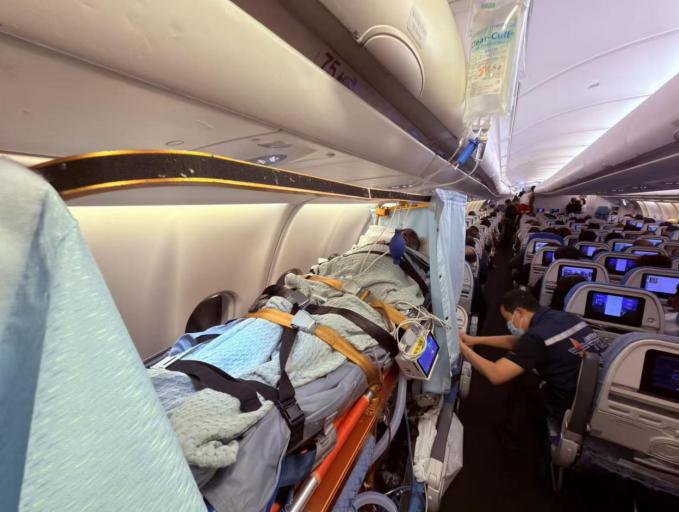
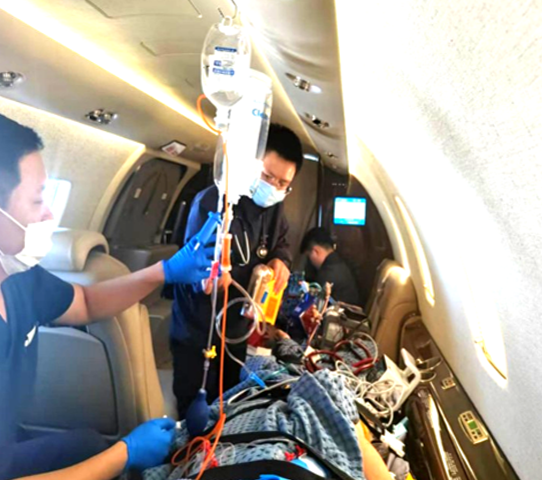
- An air ambulance is a specially designed aircraft, either a helicopter or fixed-wing plane, that is designed to transport patients in need of critical care air transport. It is a flying intensive care unit(ICU), equipped with life-support machines, oxygen, ventilators, heart monitors, and defibrillators.
- Trained flight medics, paramedics, and critical care nurses staff these aircraft, guarantee that patients will be provided with continued care throughout the trip.
Who Needs an Air Ambulance?
Who needs an air ambulance? Air ambulances are not a daily travel mode; they are used where patients need emergency evacuation of the patients or special in-flight services. The following is a list of people who may require one:
- Patients who are critically ill and need an ICU level of care need to be transferred.
- The victims of accidents who require immediate transportation to trauma units.
- Patients who live far away and ground ambulances are unable to arrive in time.
- The seniors or the handicapped who require long-distance medical services.
- Patients who must use oxygen 24 hrs/day must undergo monitoring after surgery.
- Foreigners who require medical repatriation services in their home countries.
- Children or neonatal patients with special needs of airway care in pediatrics.
The cases are decided individually, according to the air ambulance eligibility criteria and flight requirements to ascertain medical necessity.
Medical Repatriation: Home is a Long Way Away
Medical repatriation is a lifesaver when sickness or injury strikes a foreign nation. Patients are transported either back to their country of origin or to a special facility to treat them.
Air ambulances provide continuity of care by providing the bed-to-bed services to the patient between the originating hospital and the destination facility.
An illustration is the TKP Assistance, which offers international medical evacuation services out of China and Southeast Asia to hospitals around the world–enabling recovery to be closer to family and known physicians.
[?] Repatriation Visit TKP Medical Assistance to learn about repatriation.

Several Types of Air Ambulance Patients
Various patients need various degrees of medical assistance. Common categories include:
- ICU Patients: Needing ventilators, cardiac monitors, or ECMO.
- Victims of Stroke or Heart Attack: In urgent, critical need of transportation.
- Burn or Trauma Patients: They may often require isolation or pain management.
- Patients After the Operation: Stable, not allowed to fly commercially.
- Pediatric Patients or Neonatal Patients: They are taken in incubators with pediatric experts.
Pre-flight medical evaluation is done on each patient to make decisions regarding equipment requirements, crewing, and the suitability of the flight distance.
Medical Necessity/Eligibility Criteria
Air transport is not appropriate for all patients. Based on:
- Stability: Does the patient have altitude or cabin pressure intolerance?
- Supplies: Does the case need ventilators or high-tech monitors?
- Urgency: Does the patient need to be transported urgently to stay alive?
- Distance: Is ground transportation more efficient than air transportation?
- Accessibility: Is it possible to load in hospitals using airports?
These aspects comprise the air ambulance eligibility criteria, which make the use of this resource safe and justified.
The Cross-Border Coordination: Its Operation
There is the issue of cross-border medical evacuation, which implies high complexity of the logistics, particularly when it comes to international evacuation. The process includes:
- Primary medical briefing by the hospital in question.
- Crew and patient flight clearance and visa.
- Coordination of ground ambulances both at departure and arrival points of the airports.
- Reservation of a bed in the receiving hospital.
- Constant health care on the trip.
All the documentation, the customs, and the aviation permissions are all taken care of by the providers, such as the TKP Assistance, so that families can concentrate on recovery and not on red tape.
The Role of Air Medical Teams
An average air medical transport crew consists of:
- Flight physician (advanced critical care cases only)
- Flight nurse or paramedic
- respiratory therapist (ventilated patients)
- Operations coordinator
All the members are trained in specialty fields, each with regard to the importance of altitude physiology, aeromedical protocols, and handling of equipment. This guarantees the safety of the patients at an altitude of 35,000 feet.
Airport Operations and Ground Movements
The international flights may cost between USD 10,000 and USD 200,000, depending on the complexity of the case. Medical evacuation is a feature of many insurance policies, and you should never forget to check them.
Internal Coordination: Bed-to-Bed Transfers
- One of the most prominent characteristics of an air ambulance service is the bed-to-bed transfer model.
- This provides continuity of care- never drop out between hospital bed A to hospital bed B with medical care following the patient.
- This model eliminates stress, eliminates communication problems, and does not disrupt treatment at the critical stage.
Why Choose TKP Assistance?
Who needs an air ambulance? TKP Medical Assistance can be trusted when it comes to critical care in the skies. Having more than 20 years in terms of experience in air ambulance service in both China and the Greater Bay Area, TKP is known as a reliable, professional, and compassionate company.
- In 2001, TKP was able to complete 10,000+ missions, including ICU-level patient transfers, ECMO-flights, and VIP medical evacuations. Every operation is done with medical accuracy, meaning that patients get hospital-quality treatment at a cruising level.
- The key difference with TKP is that it has a strong international network and a 24/7 mission control based in Shenzhen that effectively coordinates cross-border evacuations of medical personnel in Hong Kong, Southeast Asia, and Europe. All the steps involved, from documentation to customs clearance, are handled smoothly.
- The certified medical teams at TKP are trained to global aeromedical standards and specialists in critical care, pediatric transportation, and long-distance repatriation.
- When time is of the essence, TKP Assistance has time, safety, and caring, allowing families to trust the experts with their loved ones.
Conclusion
Who needs an air ambulance? Air ambulances are the last resort when time, distance, or location are unavailable. They attend to patients who are in serious conditions, passengers who are miles away, and families who want to transfer their patients to the hospital. It is not limited to a cross-border emergency, relocation of an ICU, or international repatriation; air ambulances bring assurance that care is not disrupted even during cruising altitudes. To get professional, caring, and fast air medical services, visit TKP Assistance.
Submit Your Request
Recent Posts

Tags
- Air Ambulance
- Bedside To Bedside
- Cross Border Aid
- Emergency Evacuation
- Global Medical Rescue
- How can I ensure the patient's stability while in the air?
- How do I request an air medical transport?
- How is it different from an air ambulance
- how to activate emergency aircraft service
- how to request an air ambulance
- Is air medical transport safe
- Is international transport possible
- Medical Rescue
- Medical Transport
- Patient Repatriation
- Remote Rescue
- Seamless Coordination
- Telemedicine Support
- Tourists And Expats Medical Escort
- What are the benefits of a cross-border medical transfer
- What are the different types of transfers
- What are typical use cases
- What documents do I need to prepare for a transfer?
- What does high-speed rail patient transfer stands for
- What is air ambulance
- What is air medical transport?
- What is cross-border medical transfer
- What is emergency aircraft
- what is high-speed rail patient transfer
- What is medical charter flight
- what is neonatal ICU transfer
- What is patient air transfer
- What medical equipment is available on board the aircraft
- What situations shouldn't use air medical transport?
- What types of air ambulance are there?
- What types of air ambulance exist
- What's the difference between international and domestic transfers?
- what’s the difference between air medical transport and regular ambulance?
- When is emergency air transport necessary
- Which patients require air medical transport?
- who is included in the medical team
- who needs an air ambulance